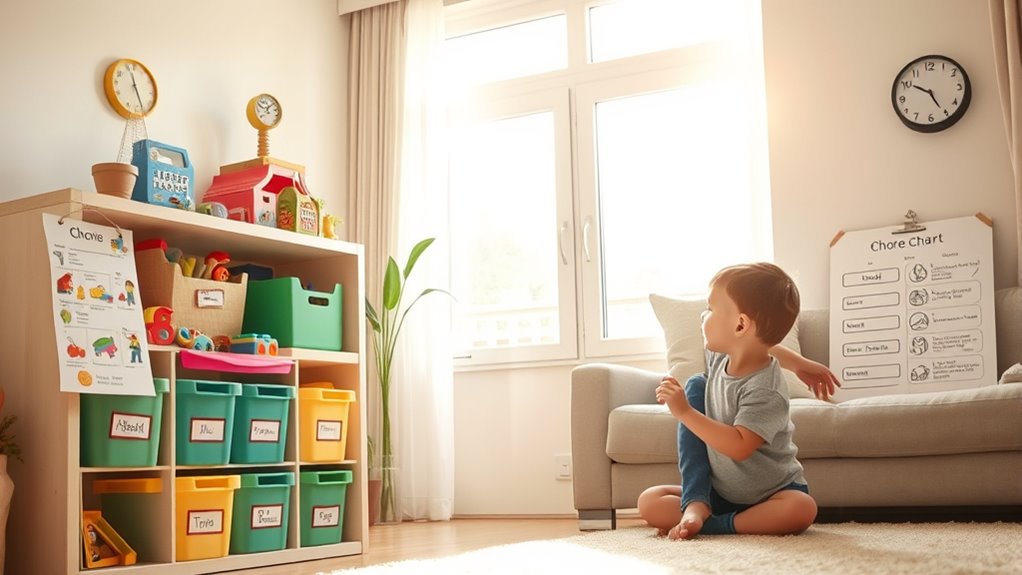

Building consistent routines helps your kids feel secure, manage their emotions, and develop responsibility. By setting clear times for activities like meals, play, and bedtime, you create predictability that reduces stress and chaos. When you communicate routines calmly and reinforce them consistently, your child learns trust and resilience. Incorporating calming activities and sensory tools can further support emotional stability. Keep exploring to discover more ways to help your child thrive with routines.
Key Takeaways
- Establish set times for daily activities to create predictability and reduce stress for children.
- Communicate routines clearly to help children understand expectations and build trust.
- Incorporate calming activities and sensory tools to support emotional regulation and relaxation.
- Maintain consistency even during plan changes to foster resilience and adaptability.
- Use visual schedules or reminders to reinforce routines and promote independence in children.
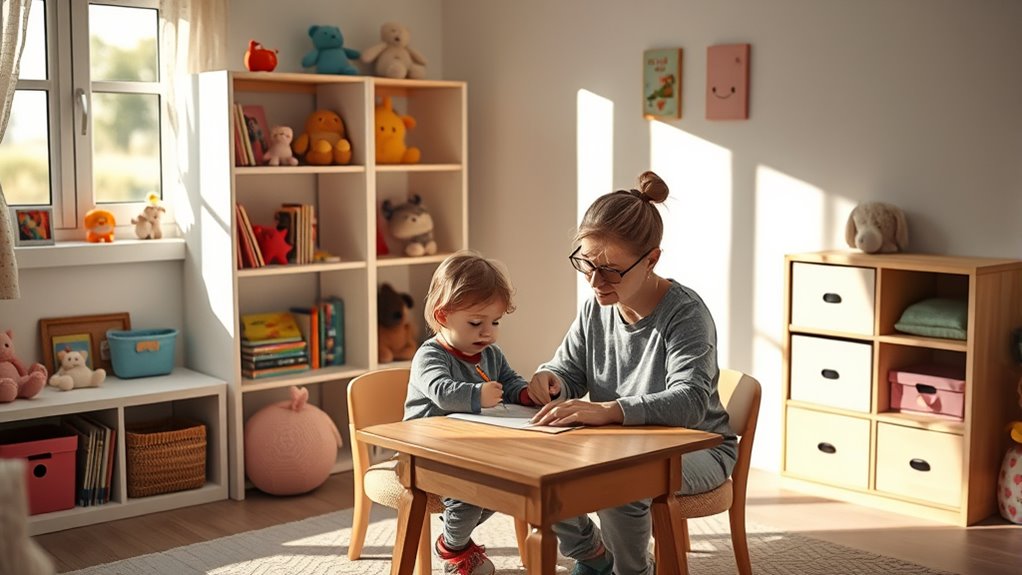
Establishing routines for kids can make daily life more predictable and less stressful for both parents and children. When you create consistent schedules, your child begins to understand what to expect each day, which helps develop important skills like time management. By setting specific times for waking up, meals, homework, and bedtime, you give your child a clear framework to follow. This predictability reduces anxiety and chaos, allowing your kid to settle into a rhythm that feels safe and manageable. As they learn to anticipate daily activities, they also start to manage their own time better, knowing what comes next and when it’s expected. This sense of order not only streamlines your day but also encourages your child to take responsibility for their routines, fostering independence and self-discipline.
Beyond practical time management, routines play a crucial role in supporting emotional regulation. When kids know what to expect, they tend to feel more secure, which can considerably decrease emotional outbursts or tantrums. Consistent routines provide a sense of stability that helps children feel in control of their environment, even during stressful moments. For example, a predictable bedtime routine signals to your child that it’s time to wind down, making it easier for them to relax and fall asleep peacefully. This regularity helps regulate their emotions by creating a calm, structured environment where they don’t feel overwhelmed by sudden changes or surprises. When routines include calming activities like reading or quiet time, they further reinforce emotional stability by giving children tools to manage feelings of frustration or anxiety. Incorporating sensory toys into calming routines can also enhance emotional regulation by providing tactile comfort and focus.
Implementing routines also involves clear communication. When you explain the daily schedule and the reasons behind it, your child begins to understand the importance of following rules and sticking to routines. This understanding reinforces their emotional regulation, as they recognize that routines help them feel safe and in control. It’s essential to remain consistent, even when plans change unexpectedly, by gently guiding your child back to the routine. Over time, this consistency builds trust and resilience, helping your kid adapt more easily to new situations and challenges.
Frequently Asked Questions
How Can Routines Adapt During Travel or Holidays?
During travel or holidays, you can adapt routines by adding travel flexibility and holiday adjustments. Maintain core elements like bedtime and mealtime, but be adaptable with timings. Incorporate familiar activities in new settings and prepare your kids for changes in advance. This approach helps them feel secure while embracing the holiday spirit. Keeping some consistency amidst the changes ensures your kids stay balanced and happy during these special times.
What if a Child Resists Following the Routine?
Did you know that children with consistent routines are 30% more likely to cooperate? If your child resists following the routine, stay calm and use behavior management techniques like positive reinforcement. Praise small successes and offer choices to give them a sense of control. Remember, patience helps build cooperation, and consistent responses will gradually encourage your child to adapt and follow routines more willingly.
How Do Routines Impact a Child’s Independence?
Routines boost your child’s independence development by giving them clear expectations and opportunities to practice skills. As they master daily tasks, they gain confidence building abilities, making them more self-reliant. Consistent routines encourage your child to take initiative and make decisions within structured boundaries, fostering autonomy. This steady environment helps them feel secure while developing essential life skills, ultimately supporting their growth into confident, independent individuals.
Are Routines Beneficial for Teenagers as Well?
Absolutely, routines are a game-changer for teenagers. They support teenage independence by providing structure, helping them manage their time effectively. Plus, consistent mental health routines can reduce stress and boost emotional resilience. When teens know what to expect, they feel more secure and in control, making it easier to navigate life’s challenges. Routines aren’t just for kids—adults benefit too by creating a stable environment that promotes growth and well-being.
How Can Parents Maintain Consistency With Multiple Caregivers?
You can maintain consistency with multiple caregivers by establishing clear caregiver communication, ensuring everyone understands the routines and expectations. Use regular check-ins to discuss your child’s needs and adapt routines for routine flexibility when necessary. Set shared goals, create a written plan, and trust each caregiver to follow it. This consistency helps your child feel secure while allowing for adjustments when unexpected situations arise.
Conclusion
By establishing consistent routines, you create a stable environment where kids can thrive. For example, if you set a regular bedtime, your child knows what to expect and feels secure. Over time, this predictability builds confidence and independence. Remember, small daily habits—like morning hugs or reading before bed—add up. Keep it simple and steady, and you’ll see your child grow happier, more confident, and ready to face each day with a sense of security and joy.