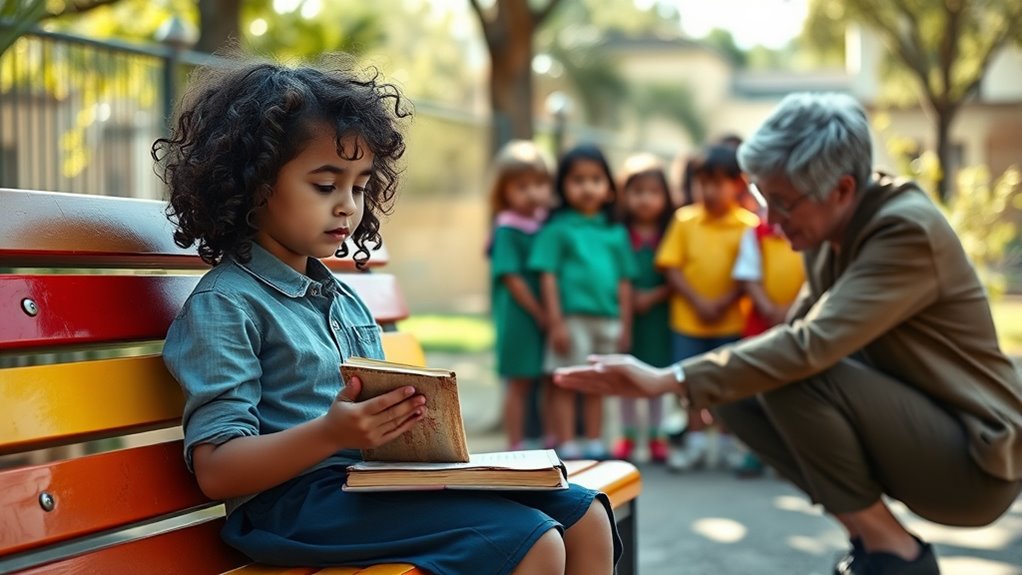

To coach kids through social exclusion at school, focus on fostering empathy, kindness, and respect. Help children understand how others feel through activities like role-playing or storytelling. Address exclusion or teasing promptly and model inclusive behavior yourself. Encourage teamwork and celebrate everyone’s strengths to promote connection. By creating a safe, supportive environment, you can turn social challenges into learning opportunities. Keep exploring how you can empower kids to build healthier, more inclusive relationships.
Key Takeaways
- Address social exclusion promptly by discussing feelings and promoting understanding among children.
- Foster empathy through role-playing, storytelling, and perspective-taking activities to help kids understand others’ emotions.
- Model inclusive behaviors and reinforce kindness to create a safe, supportive school environment.
- Encourage peer support and celebrate individual strengths to reduce feelings of isolation.
- Teach children that everyone deserves respect and kindness, empowering them to intervene and promote inclusivity.
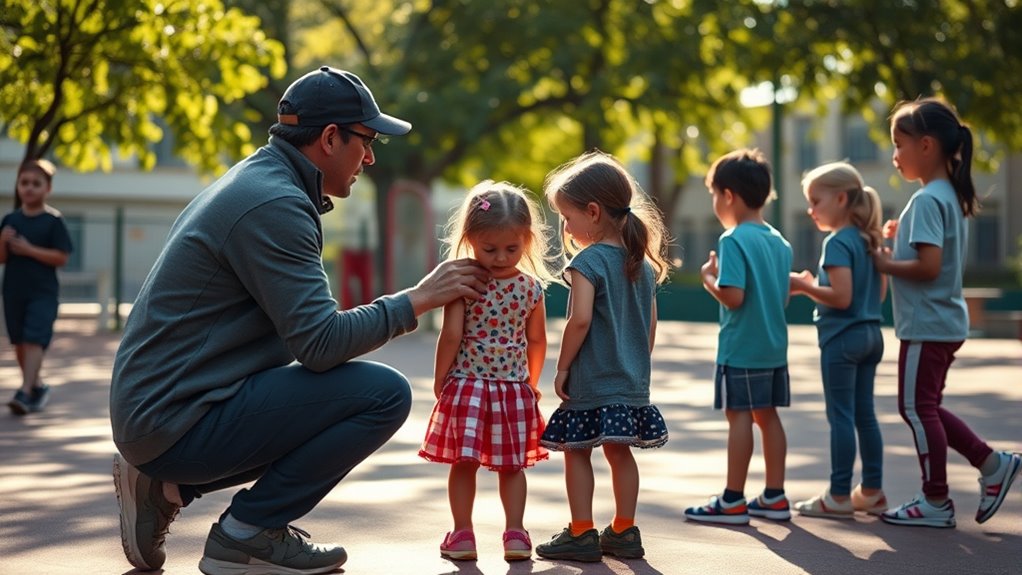
Social exclusion can be a confusing and painful experience for kids, but as a coach or adult, you have the power to guide them through it. When children feel left out or ignored, it can deeply impact their self-esteem and sense of belonging. Your role is vital in helping them navigate these feelings while fostering a safe environment that promotes understanding and kindness. One of your key responsibilities is bullying prevention. By addressing behaviors that lead to social exclusion early, you can create a space where kids learn to respect differences and stand against hurtful actions. Teaching children about the consequences of bullying and encouraging them to speak up helps build a community rooted in safety and support.
Empathy development is another essential aspect of coaching kids through social exclusion. When you help children understand how others feel, you’re equipping them with the tools to be more compassionate. Encourage them to put themselves in their classmates’ shoes, to consider how it might feel to be excluded, ignored, or teased. This practice not only nurtures empathy but also discourages aggressive or exclusive behaviors. You can facilitate activities that promote perspective-taking, like role-playing or group discussions, which make empathy more tangible and relatable. Recognizing the importance of diverse genres such as action, romance, and fantasy in storytelling can also help children appreciate different perspectives and experiences.
You should also model inclusive behavior yourself. Children are keen observers, and your actions set the tone for how they interact with others. Show empathy in your daily interactions, listen actively, and demonstrate respect for everyone, regardless of differences. When you notice someone being left out or teased, step in promptly and constructively. Address the issue directly but kindly, reinforcing the idea that everyone deserves kindness and acceptance. Your responses teach children that exclusion isn’t acceptable and that they can be part of the solution.
Creating opportunities for positive social interactions is another effective strategy. Organize team activities that encourage cooperation and friendship-building. Celebrate each child’s strengths and encourage peer support, which can diminish feelings of isolation. When children experience success in working together, they learn to value diversity and develop stronger bonds. Over time, these experiences help reduce social exclusion and promote a culture of inclusion.
Ultimately, your goal is to empower kids to be empathetic, respectful, and proactive. By integrating bullying prevention strategies and nurturing empathy development, you help children build healthier relationships and foster a more inclusive environment. Your guidance can turn moments of social exclusion into opportunities for growth, understanding, and connection, shaping kinder, more compassionate individuals.
Frequently Asked Questions
How Can Parents Support Their Child After Social Exclusion Incidents?
After social exclusion incidents, you can help your child build emotional resilience by listening without judgment and validating their feelings. Encourage open communication, so they feel safe sharing their experiences. Foster peer support by helping them reconnect with friends and find new social opportunities. Your reassurance and guidance strengthen their confidence, showing them that setbacks are temporary and they’re capable of overcoming challenges with resilience and a strong support system.
What Signs Indicate a Child Is Experiencing Social Exclusion?
You might notice signs like peer rejection and social withdrawal indicating your child is experiencing social exclusion. They could become less interested in friends, avoid social activities, or seem sad and anxious. Pay attention if they withdraw from conversations or group events. These behaviors often signal they’re feeling isolated. Recognizing these signs early helps you support them, encourage open communication, and seek help if needed, to foster their emotional well-being.
How Do Teachers Effectively Address Social Exclusion in the Classroom?
To effectively address social exclusion, you should facilitate open discussions using a classroom circle, helping students express feelings and build understanding. Use peer mediation to empower students to resolve conflicts and foster inclusion. Actively listen, promote empathy, and create a safe environment where everyone feels valued. By combining these strategies, you help students develop social skills, reduce exclusion, and build a more connected classroom community.
Are There Long-Term Psychological Effects of Social Exclusion on Kids?
You might notice that social exclusion can cause long-term trauma, impacting a child’s emotional resilience. For example, a student who faces ongoing exclusion may develop anxiety or trust issues later in life. These effects highlight how social rejection can shape mental health well beyond childhood. Addressing these issues early helps build emotional resilience, reducing the risk of lasting psychological harm and fostering healthier social development over time.
What Strategies Promote Inclusive Social Environments in Schools?
You can promote inclusive social environments by implementing peer mediation programs that resolve conflicts peacefully. Encourage students to develop social skills like empathy, active listening, and cooperation, which foster understanding and respect. By creating opportunities for diverse interactions and teaching these skills, you help build an environment where all students feel valued and included, reducing social exclusion and promoting positive peer relationships in schools.
Conclusion
As you guide kids through social exclusion, remember it’s both a challenge and an opportunity. While rejection stings, it also teaches resilience and empathy. You hold the power to turn pain into growth, showing them that setbacks aren’t the end but a chance to build strength. In embracing their struggles, you help shape compassionate individuals who can navigate exclusion with kindness—proving that even in rejection, there’s a path to connection.