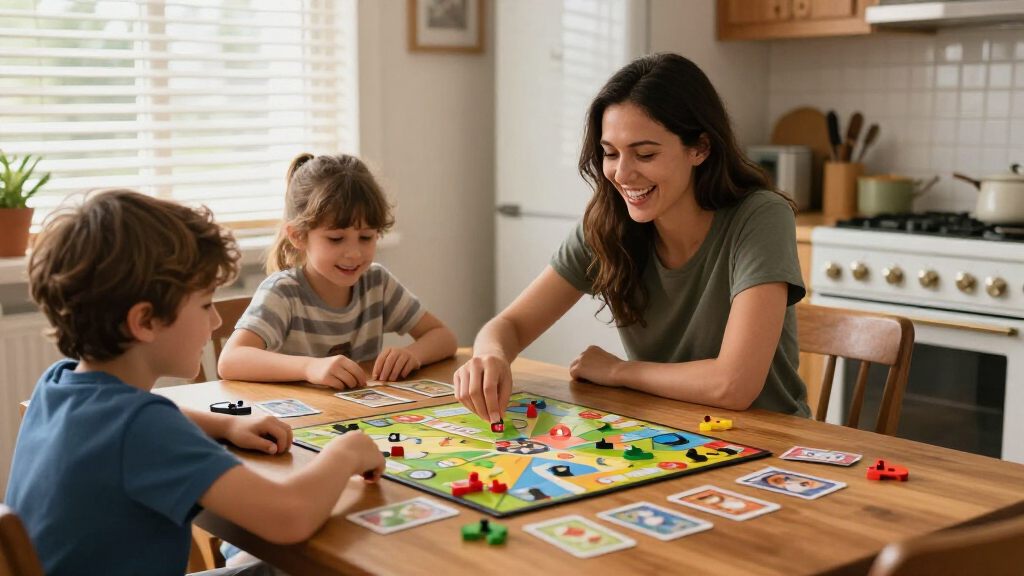

Finding the right family board games for kids means balancing simplicity, replay value, and how well grown-ups can tolerate playing them repeatedly. Connect 4 (2025 Edition) takes the top spot overall because it plays in minutes, scales easily across ages, and stays genuinely fun round after round. Hedbanz stands out for bigger family game nights, while Candy Land remains the classic gateway game for preschoolers. The main tradeoff in this category is between games young kids can play independently and games that hold adult interest — most picks lean one way or the other. Keep reading for the full breakdown, including which games are worth buying twice and which ones kids outgrow fastest.

Get baby and family essentials delivered free — and shop member deals
- Fast, free delivery on millions of items
- Access to Prime Big Deal Days deals on October 6–7
- Prime Video, Amazon Music and more included
Complete the kit


Key Takeaways
- Games with a guess-or-deduction mechanic (Hedbanz, Guess Who? Plus) held adult interest far longer than pure luck-based race games like Candy Land and Chutes and Ladders.
- Two Connect 4 products made the list, but they serve different buyers: the 2025 Edition is the better everyday family pick, while the Connect 4 Strategy version suits older kids who want real tactical depth.
- Playtime length correlated directly with younger kids’ enjoyment — games under 15 minutes (Connect 4, Don’t Break The Ice, Hedbanz) kept preschoolers engaged where longer rounds caused meltdowns.
- The cheapest games in the lineup (Don’t Break The Ice, Chutes and Ladders) are also the fastest to outgrow, making them better as starter purchases than long-term investments.
- Physical-activity picks like Twister fill a niche no traditional board game covers: burning off energy indoors — but they need floor space and can’t be played at a table.
| Hasbro Gaming Jenga Wooden Blocks Stacking Tumbling Tower Game |  | Best Classic Stacking Game | Includes: 54 wood blocks, stacking sleeve | Ages: 6 and up | Players: 1 or more | VIEW LATEST PRICE | See Our Full Breakdown |
| Sorry! Board Game for Kids Ages 6 and Up |  | Best for Family Game Night | Number of Players: 2-4 | Ages: 6 and up | Includes: Gameboard, 16 pawns (4 per player), cards | VIEW LATEST PRICE | See Our Full Breakdown |
| Hasbro Twister Party Classic Board Game for 2 or More Players |  | Best Active Party Game | Players: 2 to 4 | Ages: 6 and up | Includes: Vinyl mat, spinner, instructions | VIEW LATEST PRICE | See Our Full Breakdown |
| Official Hasbro Games Connect 4 Game (2025 Edition) |  | Best Travel Pick | Number of Players: 2 | Ages: 6 and up | Includes: Grid and tray, 42 discs (21 red, 21 yellow), game rules | VIEW LATEST PRICE | See Our Full Breakdown |
| Hasbro Gaming Trouble Board Game for Kids Ages 5 and Up |  | Best for Youngest Players | Ages: 5 and up | Players: 2-4 | Includes: Gameboard, Pop-o-Matic die roller, 16 pegs | VIEW LATEST PRICE | See Our Full Breakdown |
| Hasbro Gaming Candy Land Kingdom of Sweet Adventures Board Game for Kids |  | Best First Board Game for Preschoolers | Ages: 3 and up | Players: 2 or more | Reading Required: No | VIEW LATEST PRICE | See Our Full Breakdown |
| Hasbro Gaming Chutes and Ladders Board Game for Kids and Preschoolers |  | Best for Sneaking In Counting Practice | Number of Players: 2-4 | Age Range: 3+ | Reading Required: No | VIEW LATEST PRICE | See Our Full Breakdown |
| Hedbanz Picture Guessing Game for Family Game Night |  | Best Group Game for Mixed Ages | Ages: 6 and up | Players: 2-6 | Includes: 6 headbands, 6 headplates, 16 scoring badges, 1 timer, 69 picture cards, 3 sample question cards, instructions | VIEW LATEST PRICE | See Our Full Breakdown |
| Hasbro Gaming Connect 4 Strategy Board Game for Ages 6 and Up |  | Best Head-to-Head Strategy Pick | Ages: 6 and up | Players: 2 | Special Component: Blue Blocker Disc for added tactics | VIEW LATEST PRICE | See Our Full Breakdown |
| Hasbro Gaming Guess Who? Plus Board Game with People & Pet Cards |  | Best Travel and Playdate Pick | Ages: 6+ | Number of Players: 2 | Includes: People face cards, pet face cards | VIEW LATEST PRICE | See Our Full Breakdown |
| Don’t Break The Ice Game, Classic Version for Ages 3+ |  | Best for Preschoolers | Ages: 3+ | Players: 2-4 | Game Type: Physical dexterity / action game | VIEW LATEST PRICE | See Our Full Breakdown |
| family board games for kid | Game Type | Ages | Includes | Players |
|---|---|---|---|---|
| Hasbro Gaming Jenga Wooden Blo | Physical stacking / dexterity | 6 and up | 54 wood blocks, stacking sleeve | 1 or more |
| Sorry! Board Game for Kids Age | Race / light strategy | 6 and up | Gameboard, 16 pawns (4 per player), cards | — |
| Hasbro Twister Party Classic B | Physical / party activity | 6 and up | Vinyl mat, spinner, instructions | 2 to 4 |
| Official Hasbro Games Connect | Two-player strategy | 6 and up | Grid and tray, 42 discs (21 red, 21 yellow), game rules | — |
| Hasbro Gaming Trouble Board Ga | Race / luck-based | 5 and up | Gameboard, Pop-o-Matic die roller, 16 pegs | 2-4 |
| Hasbro Gaming Candy Land Kingd | Race/luck-based board game | 3 and up | Game board, colored cards, game pieces | 2 or more |
| Hasbro Gaming Chutes and Ladde | Counting/race board game | — | Game board, cardboard playing pieces, spinner | — |
| Hedbanz Picture Guessing Game | Question-guessing party game | 6 and up | 6 headbands, 6 headplates, 16 scoring badges, 1 timer, 69 picture cards, 3 sample question cards, instructions | 2-6 |
| Hasbro Gaming Connect 4 Strate | Abstract strategy / vertical four-in-a-row | 6 and up | — | 2 |
| Hasbro Gaming Guess Who? Plus | Deduction / guessing game | 6+ | People face cards, pet face cards | — |
| Don’t Break The Ice Game | Physical dexterity / action game | 3+ | — | 2-4 |
More Details on Our Top Picks
Hasbro Gaming Jenga Wooden Blocks Stacking Tumbling Tower Game
Jenga stands out as the rare board game that works with zero setup time and mixed age groups — a six-year-old, a teenager, and a grandparent can all play the same round without anyone feeling left out. Compared with Trouble, which caps out at four players around a board, Jenga scales to as many people as can fit around the tower, and the tube-shaped box with handle makes it easy to haul to parties or vacations. The tradeoff is temperament, not logistics: this is a game of patience and fine motor control, and younger kids who lack steady hands may knock the tower over early and lose interest fast. There’s also no strategy depth here — it’s pure physical tension, so families who enjoy the competitive racing of Sorry! may find Jenga a little one-note.
Pros:- Scales to unlimited players, unlike 2-4 player board games
- Works as a solo challenge or group activity
- Portable tube packaging with a built-in handle
- No batteries, no reading, no setup required
Cons:- Frustrating for younger children who lack steady hands
- Gameplay is physical only — no strategy or narrative depth
- Rounds can end abruptly when the tower falls early
Best for: Families and party hosts who want a game that scales beyond four players and works across a wide age range
Not ideal for: Households with kids under 6 or impatient players — early tower collapses can cause frustration and quick abandonment
- Includes:54 wood blocks, stacking sleeve
- Ages:6 and up
- Players:1 or more
- Packaging:Tube-shaped box with handle
- Game Type:Physical stacking / dexterity
- Setup Time:Minimal — tower assembly only
Our verdict“This pick makes the most sense for families who host gatherings and need one game that entertains everyone from kids to adults at once.”
Sorry! Board Game for Kids Ages 6 and Up
Sorry! earns its spot as the best family game night pick because it hits a sweet spot most games in this roundup miss: enough strategy to keep adults engaged, simple enough rules that a six-year-old stays competitive. The core loop — racing four pawns home while knocking opponents back to start — creates the kind of playful rivalry that makes game night memorable. Compared with Trouble, which shares the same race-around-the-board DNA, Sorry! offers more meaningful decision-making since you choose which pawn to move each turn. The catch is emotional, not mechanical: sending a sibling’s pawn back to start can spark real tears in younger households, and the two-to-four player cap means a fifth family member is stuck watching. Older kids who’ve outgrown luck-driven games may drift toward something meatier.
Pros:- Balances luck and light strategy so kids and adults stay engaged
- Classic gameplay that encourages family interaction and banter
- Quick rounds that fit into a weeknight
- Simple rules that kids can learn in one session
Cons:- Too simple for older kids or adults who want deeper strategy
- Hard cap of four players leaves bigger families out
- Pawn-sending mechanics can cause hurt feelings among younger siblings
Best for: Families with kids 6-10 who want a competitive but easy-to-learn centerpiece for weekly game night
Not ideal for: Families of five or more, or households where competitive setbacks regularly cause meltdowns
- Number of Players:2-4
- Ages:6 and up
- Includes:Gameboard, 16 pawns (4 per player), cards
- Game Type:Race / light strategy
- Setup Time:Under 5 minutes
- Reading Required:Minimal — card-based play
Our verdict“This is the game for a four-person household that wants a competitive but kid-friendly ritual — skip it if sibling rivalry runs hot.”
Hasbro Twister Party Classic Board Game for 2 or More Players
Every other game on this list happens seated — Twister is the one that gets kids off the couch. As the best active pick, it trades turns and tokens for physical coordination and full-body laughter, which makes it the natural choice for birthday parties and rainy-day energy burnoff where Jenga’s quiet concentration would fall flat. The vinyl mat and spinner set up in seconds and work indoors or out. But the tradeoffs are real: eliminations come fast and often — one wobble and a player is out — which can frustrate younger or less coordinated kids. And compared with Sorry!, which comfortably occupies a family of four for an hour, Twister’s appeal fades quickly once the novelty of toppling over wears off, and it’s genuinely awkward for adults and kids to play together given size differences.
Pros:- Promotes physical activity and coordination instead of screen time
- Works indoors and outdoors with minimal setup
- Generates laughter and excitement at parties and gatherings
- Simple spinner rules require no reading
Cons:- Fast eliminations can frustrate younger or less steady players
- Limited to 2-4 players at a time
- Novelty wears off faster than strategy-based games
Best for: Parents of energetic kids 6-12 who need a physical outlet for parties, playdates, or bad-weather days
Not ideal for: Families seeking a calm, strategic game night — and households with very young kids who topple and eliminate quickly
- Players:2 to 4
- Ages:6 and up
- Includes:Vinyl mat, spinner, instructions
- Game Type:Physical / party activity
- Play Environment:Indoor and outdoor
- Setup Time:Under 2 minutes — unfold mat
Our verdict“Buy this for high-energy households and parties where movement matters more than strategy — pass if your family prefers seated, thinking games.”
Official Hasbro Games Connect 4 Game (2025 Edition)
The 2025 Edition of Connect 4 solves the problem that has annoyed parents for decades: loose discs scattered under the couch. With an all-in-1 carrying case, integrated disc storage, and built-in score trackers, this version is clearly built for life on the go — road trips, restaurants, grandma’s house — where the standard Hasbro Connect 4 Strategy Board Game would leave you juggling a flimsy grid and 42 loose pieces. Setup is fast, and the score trackers add a competitive layer best-of-five players will appreciate. The compromises are structural: it’s strictly a two-player head-to-head game, so it can’t anchor a family game night the way Sorry! can, and the core gameplay is pure vertical checkers — adults will solve it quickly and younger kids may need help spotting threats. Think of it as a brilliant travel companion rather than a household centerpiece.
Pros:- All-in-1 carrying case with integrated disc storage eliminates lost pieces
- Built-in score trackers support competitive multi-round play
- Fast setup and rules kids grasp in minutes
- Compact enough for cars, planes, and restaurants
Cons:- Strictly limited to 2 players
- Gameplay depth is shallow — adults will outpace kids quickly
- Younger children may need supervision to spot winning moves
Best for: Families who need a mess-free two-player game for travel, restaurants, and vacations
Not ideal for: Families of three or more who want to play together — this is strictly one-on-one
- Number of Players:2
- Ages:6 and up
- Includes:Grid and tray, 42 discs (21 red, 21 yellow), game rules
- Features:All-in-1 storage, score trackers, portable case, easy setup
- Game Type:Two-player strategy
- Portability:Self-contained carrying case
Our verdict“This model is better suited to on-the-go duels than family game night — grab it for travel, keep Sorry! at home.”
Hasbro Gaming Trouble Board Game for Kids Ages 5 and Up
Trouble is the easiest entry point in this lineup — its ages 5 and up rating makes it the right first board game for kids not yet ready for Sorry!’s card-based decisions or Jenga’s steady hands. The iconic Pop-o-Matic die roller is the real star: kids love punching it, and parents love that the die never gets lost under furniture. Optional Power Up Spaces let you add a layer of challenge as children grow, stretching the game’s lifespan beyond a single developmental phase. Compared with Connect 4, which demands pattern-spotting skill that can frustrate a five-year-old, Trouble is almost entirely luck-driven, so young players win often enough to stay hooked. That same quality is the drawback — older kids and adults will notice they’re making almost no decisions, and the roll-and-move loop gets repetitive after a handful of plays.
Pros:- Lowest age rating in the lineup — accessible at 5
- Pop-o-Matic roller keeps the die contained and delights kids
- Optional Power Up Spaces add challenge as players grow
- Sets up and teaches in minutes
Cons:- Almost entirely luck-based with few meaningful decisions
- Repetitive for older kids and adults
- Requires a flat play surface with room for the board
Best for: Parents of kids aged 5-7 who need a first board game with simple rules and no small loose parts
Not ideal for: Families with older kids (8+) who will find the luck-heavy gameplay repetitive and shallow
- Ages:5 and up
- Players:2-4
- Includes:Gameboard, Pop-o-Matic die roller, 16 pegs
- Game Type:Race / luck-based
- Special Features:Pop-o-Matic die roller, optional Power Up Spaces
- Setup Time:Under 5 minutes
- Reading Required:None
Our verdict“This option stands out as a first board game for kindergartners — skip it once kids are old enough for Sorry!’s strategy.”
Hasbro Gaming Candy Land Kingdom of Sweet Adventures Board Game for Kids
When a three-year-old wants to join family game night, most boards are off-limits. Candy Land solves that better than anything else in this lineup because it asks nothing of the player except drawing a card and moving a piece. There is no counting, no strategy, no reading — which is exactly the point. Compared with Chutes and Ladders, which quietly teaches number recognition, Candy Land teaches something more basic: turn-taking and game etiquette. The tradeoff is real, though. Once kids pass age five or six, the pure luck of the draw loses its charm, and titles like Hedbanz or Connect 4 will hold their attention far longer. This pick makes the most sense for families whose youngest member has been waiting for a game to call their own.
Pros:- Playable at age 3 with no reading required
- Teaches turn-taking and game basics gently
- Bright illustrations that keep young kids engaged
- Simple enough that an older sibling can ‘run’ the game without adult help
Cons:- Pure luck with no decisions — older kids lose interest fast
- Thin replay value once a child masters game mechanics
Best for: Parents of children ages 3-5 who want a true first board game that requires zero reading or counting
Not ideal for: Families with kids over 6 — the luck-only gameplay will bore older siblings after a few rounds
- Ages:3 and up
- Players:2 or more
- Reading Required:No
- Includes:Game board, colored cards, game pieces
- Brand:Hasbro Gaming
- Game Type:Race/luck-based board game
Our verdict“Buy this as a child’s very first board game, not as a long-term family staple.”
Hasbro Gaming Chutes and Ladders Board Game for Kids and Preschoolers
Where Candy Land is purely about luck, Chutes and Ladders quietly turns every turn into a counting exercise: kids move their piece square by square and start connecting numbers to quantities without realizing it. That single difference is why I’d rank it above Candy Land for four- and five-year-olds, even though both are preschool-friendly. The spinner adds a small motor-skill bonus that drawing cards doesn’t offer. The catch is the emotional side — sliding down a long chute late in the game can genuinely upset a competitive four-year-old, and like Candy Land, the appeal fades once kids outgrow chance-based play. Compared with Guess Who?, there is no deduction involved at all, so kids craving any decision-making should be steered elsewhere. For families who want screen-free number practice disguised as fun, this is the pick.
Pros:- Builds counting and number recognition through play
- No reading needed, so true preschoolers can play solo
- English and Spanish instructions widen its usefulness
- Spinner keeps little hands busy between turns
Cons:- Luck-driven with zero player choices
- Can feel repetitive for families who play weekly
Best for: Families with preschoolers who want gentle counting and number-recognition practice baked into game night
Not ideal for: Kids who melt down over setbacks — long chute falls can feel harsh — or anyone over 7 who wants decisions, not dice-less luck
- Number of Players:2-4
- Age Range:3+
- Reading Required:No
- Includes:Game board, cardboard playing pieces, spinner
- Language:English and Spanish
- Game Type:Counting/race board game
Our verdict“The right choice if your goal is early math practice rather than pure entertainment.”
Hedbanz Picture Guessing Game for Family Game Night
Most games in this roundup cap out at four players or demand an even skill level. Hedbanz is the exception: it seats up to six, and because guessing a picture on your own head is goofy rather than intellectual, a six-year-old and a grandparent can play together without either one dominating. Compared with Guess Who?, which is limited to two players and better suited to quiet one-on-one play, Hedbanz thrives on noise, laughter, and a ticking timer. The second-edition themed cards add enough variety to keep repeat sessions fresh. The tradeoffs: it genuinely needs at least three people to feel alive, so it’s a poor fit for a parent-and-one-child evening, and older kids may find the yes/no guessing shallow next to the tactical depth of Connect 4. As a party pick, though, nothing else here matches it.
Pros:- Supports up to 6 players, the most in this lineup
- Mixed ages and skill levels compete on even footing
- Timer and scoring badges add structure and pace
- Second-edition themed cards refresh the experience
Cons:- Falls flat with fewer than three players
- Guessing mechanic can grow repetitive over time
Best for: Families and gatherings of 4-6 people with mixed ages who want a loud, fast, social game
Not ideal for: Two-person households or quiet solo-parent evenings — it really needs a group, and cerebral players will find it light
- Ages:6 and up
- Players:2-6
- Includes:6 headbands, 6 headplates, 16 scoring badges, 1 timer, 69 picture cards, 3 sample question cards, instructions
- Game Type:Question-guessing party game
- Edition:Second edition with new themed cards
- Setup Time:Minutes — headband and card only
Our verdict“The clear choice when cousins, grandparents, and kids all need one game they can play together.”
Hasbro Gaming Connect 4 Strategy Board Game for Ages 6 and Up
Every other game in this batch is driven by luck, questions, or chance. Connect 4 is where kids actually learn to think ahead — spotting a threat two moves early, setting traps, and losing because of a mistake rather than a bad card. That makes it the natural upgrade once a child tires of Chutes and Ladders and wants their choices to matter. The included blue Blocker Disc adds a tactical wrinkle the classic version lacks, letting a player disrupt an opponent’s column and extending the game beyond memorized patterns. The obvious limitation: it’s strictly a two-player duel, so unlike Hedbanz, it can’t absorb a table of five. Rounds are also short, which cuts both ways — quick resets are great for kids, but adults may want more meat. For building real planning skills, it beats everything else here.
Pros:- Teaches planning, pattern recognition, and anticipation
- Blocker Disc adds tactical depth beyond the classic version
- Fast rounds with instant rematch appeal
- Durable vertical board that works year after year
Cons:- Two-player only, unlike Hedbanz or Chutes and Ladders
- Solver-minded players may reduce it to a known winning pattern
Best for: Kids 6+ (and their parents) who want genuine skill-based competition with winnable strategy
Not ideal for: Families of three or more who want to play together — it’s strictly one-on-one
- Ages:6 and up
- Players:2
- Special Component:Blue Blocker Disc for added tactics
- Game Type:Abstract strategy / vertical four-in-a-row
- Brand:Hasbro Gaming
- Setup Time:Under a minute
Our verdict“The best pick when you want your child’s decisions — not a spinner — to decide who wins.”
Hasbro Gaming Guess Who? Plus Board Game with People & Pet Cards
Two flip-boards, two sets of cards, and everything packs flat — that’s the entire case for Guess Who? Plus as the roundup’s travel champion. Unlike Connect 4, whose vertical grid is awkward in a car seat, or Hedbanz, which needs a table and a crowd, this plays comfortably on a train tray or restaurant table with no loose pieces to lose. The addition of pet cards alongside the classic people cards is a genuine refresh — animal fans get an easier entry point, and swapping decks doubles the variety. It’s also a sneaky-good logic workout: kids practice forming and eliminating categories, a softer version of the deduction Connect 4 demands spatially. The two-player ceiling is the main constraint, and frequent players will exhaust the character rosters, since the same faces come up game after game.
Pros:- Flat, self-contained boards travel exceptionally well
- People and pet card decks double the variety
- Teaches categorization and yes/no deduction
- Under five minutes to learn with no setup
Cons:- Hard cap of two players
- Character rosters become familiar quickly with frequent play
Best for: Parents who need a compact, mess-free game for road trips, flights, restaurants, and one-on-one playdates
Not ideal for: Group game nights — the strict two-player limit leaves everyone else watching
- Ages:6+
- Number of Players:2
- Includes:People face cards, pet face cards
- Game Type:Deduction / guessing game
- Portability:Flat-packing boards, minimal loose pieces
- Brand:Hasbro Gaming
Our verdict“If most of your gaming happens away from home or one-on-one, this is the smartest buy in the lineup.”
Don’t Break The Ice Game, Classic Version for Ages 3+
Most games in this lineup start at age 5 or 6, which leaves the youngest players watching from the sidelines. Don’t Break the Ice fills that gap as the clear pick for the 3-and-up crowd, since tapping blocks requires no reading, counting, or strategy — just a mallet and a steady hand. Compared with Candy Land or Chutes and Ladders, which also welcome preschoolers, this game is far more physically engaging: kids are doing something on every single turn rather than waiting for a card draw. The suspense of keeping Phillip the Penguin afloat naturally builds hand-eye coordination and turn-taking patience. The tradeoff is real, though — the appeal collapses once kids hit age 7 or so, and the plastic ice blocks can crack after a season of enthusiastic hammering, so durability is a known weak point.
Pros:- One of the few games in this lineup playable at age 3
- Physically active gameplay keeps young children engaged every turn
- Builds hand-eye coordination and patience without requiring reading
- Quick setup and rounds that match short preschool attention spans
Cons:- Too simple for older siblings, limiting its lifespan in mixed-age families
- Plastic ice blocks can crack or wear out with repeated use
- Minimal replay value once the surprise factor wears off
Best for: Parents of toddlers and preschoolers who want a game their 3-5 year old can genuinely play alongside the whole family
Not ideal for: Families with kids over 7 — the simple tap-and-fall mechanic will feel babyish compared with Connect 4 or Jenga
- Ages:3+
- Players:2-4
- Game Type:Physical dexterity / action game
- Skills Practiced:Hand-eye coordination, turn-taking, patience
- Reading Required:None
- Play Time:Roughly 10-15 minutes per round
- Components:Ice frame, ice blocks, mallets, Phillip the Penguin figure
Our verdict“Buy this if you have a 3-to-5-year-old at the table; skip it if your kids are ready for Trouble or Connect 4.”
How We Picked
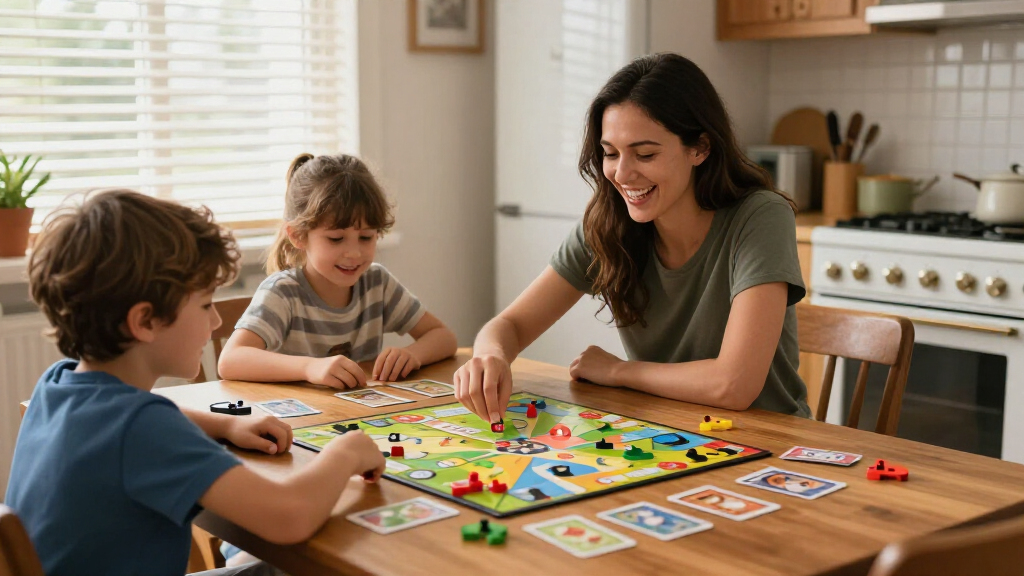
I evaluated these 11 games against four buyer-focused criteria. Age accessibility came first: a true family game needs rules a five-year-old can grasp while still letting older siblings and parents play without boredom. Replay value mattered just as much — I favored games with meaningful decisions or variety over pure luck rolls that play identically every session. Session length and setup separated the winners from the rest, since games that require ten minutes of arranging pieces before a three-minute round rarely survive real family nights. Finally, I weighed durability and price against longevity, asking how many years a game stays relevant before a child outgrows it.
The ranking reflects a simple philosophy: the best family game is the one that actually gets pulled off the shelf. Games that combine quick sessions, cross-age appeal, and genuine replay variety ranked highest. Pure-luck classics ranked lower not because they’re bad games, but because parents tire of them faster than kids do — and a game adults avoid quietly disappears from rotation.
| family board games for kid | Setup Time |
|---|---|
| Hasbro Gaming Jenga Wooden Blo | Minimal — tower assembly only |
| Sorry! Board Game for Kids Age | Under 5 minutes |
| Hasbro Twister Party Classic B | Under 2 minutes — unfold mat |
| Official Hasbro Games Connect | — |
| Hasbro Gaming Trouble Board Ga | Under 5 minutes |
| Hasbro Gaming Candy Land Kingd | — |
| Hasbro Gaming Chutes and Ladde | — |
| Hedbanz Picture Guessing Game | Minutes — headband and card only |
| Hasbro Gaming Connect 4 Strate | Under a minute |
| Hasbro Gaming Guess Who? Plus | — |
| Don’t Break The Ice Game | — |
Factors to Consider When Choosing Family Board Games For Kids
Beyond individual game reviews, a few broader principles determine whether a board game becomes a family staple or closet clutter.Match the Game to Your Youngest Player, Not Your Oldest
The most common buying mistake is purchasing for the age you want rather than the age you have. A game rated 6+ played with a 4-year-old usually means an adult ends up making all the decisions, which defeats the purpose. Age ratings also assume reading ability in some games — Hedbanz and Guess Who? rely on pictures precisely so pre-readers can participate fully. If your children span more than three years in age, favor games where luck partially equalizes skill, so the youngest player can win honestly. Games that are too easy for the oldest child still work better than games that frustrate the youngest, because bored kids drift away while frustrated kids melt down. Buy for the bottom of your age range and let the older kids find depth in strategy or speed instead.
Luck Versus Strategy: The Hidden Tradeoff
Every kids’ game sits somewhere on a spectrum between pure luck and real strategy, and parents often underestimate how much this shapes long-term satisfaction. Luck-heavy games like Candy Land and Chutes and Ladders let young children beat adults fairly, which builds confidence — but adults find them numbing after a dozen plays. Strategy games like Connect 4 reward thinking but can produce a sore-winner problem when one family member simply out-thinks the rest. The best family collections include both types: luck games for mixed-age fairness, strategy games for one-on-one parent-child time. A useful middle ground exists in deduction games like Guess Who?, where the losing player learns from each round without feeling crushed. Consider your family’s competitive temperature before leaning too far either direction.
Session Length Matters More Than You Think
A game’s listed playtime deserves more attention than most buyers give it. Games running under 15 minutes offer built-in exit points — a losing or tired child can finish one round and stop without ruining the night. Longer games require sustained attention that preschoolers simply don’t have, no matter how good the game is. Setup time counts toward the real session too: games with many small pieces or boards that need assembly create friction that makes families skip them. If your available game time is squeezed into weeknight gaps, prioritize games like Connect 4 or Hedbanz that go from box to play in under two minutes. Save longer or fussier games for weekends when patience is higher on everyone’s side.
Piece Count and Durability Predict Lifespan
Check what a game actually contains before buying, because lost pieces kill more board games than boredom does. A game like Don’t Break The Ice works fine with a few missing blocks, but Trouble’s Pop-o-matic mechanic means the whole game depends on one plastic bubble. Card-based games like Guess Who? Plus can fray with heavy use, though replacement decks are often cheap. Wooden components, like Jenga’s blocks, outlast cardboard equivalents by years and survive being stepped on. Families with toddlers should also weigh choking hazards — games rated 3+ are rated that way for a reason. If durability matters more than theme, lean toward games with sturdy, redundant components rather than intricate ones.
Don’t Buy Duplicates in Disguise
Several games in this category overlap heavily in what they deliver, and owning three luck-based race games adds nothing. Candy Land, Chutes and Ladders, and Sorry! all resolve outcomes through card or die luck, so one of them covers that need for most families. Similarly, two versions of Connect 4 exist because they serve different skill levels — buying both only makes sense with kids spanning several years apart. A balanced shelf covers distinct mechanics: one race game, one stacking or dexterity game, one deduction game, and one physical game like Twister. Before adding a new title, ask which game it would replace in your rotation. If the answer is none, it will likely gather dust regardless of quality.
When to Pay More — and When Cheap Is Fine
Most classic kids’ games sit in a narrow $10–$25 band, so price rarely signals quality here — but a few principles still apply. Paying slightly more makes sense for games with replay depth like the strategy-focused Connect 4 or expandable games like Hedbanz, because cost-per-play drops dramatically. Cheap is perfectly fine for games kids will outgrow in two years, such as Don’t Break The Ice for a preschooler. Avoid paying premium prices for branded re-skins of games you already own; the gameplay is usually identical beneath the license. Gift-givers should also note that classic games go on steep sale around holidays, so timing purchases can halve the cost of building a collection. The worst value in this category is a mid-priced game nobody plays — not an expensive one everyone loves.
Frequently Asked Questions
Which game on this list is best if I have kids of very different ages?
For families spanning preschool to elementary ages, Connect 4 is the safest bridge because a four-year-old can play legally while an adult still finds the tactics mildly interesting. Hedbanz works nearly as well, since younger kids can guess from pictures while older ones ask sharper questions. Avoid strategy-weighted games like the Connect 4 Strategy edition for mixed groups, because the skill gap becomes obvious quickly and younger players lose every round. Pure-luck games like Candy Land equalize ages perfectly, but expect older kids to complain about the pointlessness. The realistic goal is a game the youngest can play without help and the oldest won’t refuse — not one that challenges everyone equally.
Are the classic luck-based games like Candy Land still worth buying?
Yes, but with clear expectations about their purpose. Candy Land and Chutes and Ladders teach turn-taking, color recognition, and graceful losing — genuinely valuable skills for three- to five-year-olds — and they remain the best games for a child’s very first board game experience. The tradeoff is that adults get nothing from them strategically, and kids typically outgrow them by age six or seven. Treat them as a developmental stage rather than a lasting purchase, which is also why their low prices make sense. If your child is already five and counting, it’s often smarter to skip straight to Trouble or Sorry!, which add mild decision-making to the same luck format.
What’s the difference between the two Connect 4 games listed?
The 2025 Edition of Connect 4 is the standard four-in-a-row game with updated styling — quick to learn, quick to play, and ideal for the whole family. The Connect 4 Strategy version modifies the rules to add tactical layers, making it better suited to kids around eight and up who find the classic version too solved. Younger children may find the strategy edition frustrating because the added complexity removes the simple drop-and-hope fun they enjoy. If you’re buying one Connect 4 for a mixed-age household, the standard edition wins; the strategy version is a second purchase for an older child who has genuinely mastered the original. Neither replaces the other, but they overlap enough that most families only need one.
Which of these games work best for larger family gatherings?
Player count is the hidden constraint here, and several picks cap at two players. Connect 4 and Guess Who? are strictly head-to-head, which makes them poor choices for a family of five unless you run a tournament bracket. Twister and Hedbanz handle bigger groups naturally, and games like Sorry! and Trouble accommodate four players directly. Don’t Break The Ice is technically multiplayer but works best with two or three taking turns. If regular family game nights involve more than four people, prioritize the group-capable games and treat the two-player ones as parent-child or sibling-pair options. Rotation setups — where pairs cycle through stations — also rescue two-player games at bigger gatherings.
At what age should I move my child past preschool games?
Most kids are ready to graduate from games like Candy Land and Don’t Break The Ice around ages five to six, and the tell is whether they ask for rules with choices in them. If a child can comfortably count, wait their turn, and handle losing without a meltdown, games like Trouble, Sorry!, and Guess Who? are the natural next step. Around seven or eight, deduction and light strategy games like Hedbanz and standard Connect 4 become satisfying. Pushing strategy too early backfires — kids who can’t follow the logic just imitate adult moves and learn nothing. Keeping one beloved easy game around for low-energy days is fine; the goal is a shelf where the challenge grows alongside the child.
Conclusion
The right pick depends on who’s sitting at your table. For best overall, the Connect 4 (2025 Edition) earns it with fast rounds, universal age appeal, and endless replay without adult fatigue. Best value goes to Hedbanz, which delivers party-game energy and picture-based play at a price that’s easy to justify. For beginners — meaning true preschoolers — Candy Land and Don’t Break The Ice remain the gentlest possible introductions to turn-taking, even if they’re outgrown quickly. The Connect 4 Strategy edition serves as the closest thing to a premium pick here, rewarding older kids who want real tactical depth. Specific needs round out the lineup: Twister for burning energy, Jenga for dexterity and tension, Guess Who? Plus for head-to-head deduction, and Sorry! or Trouble for classic four-player family nights. Whatever you choose, prioritize the game your youngest can play without help — that’s the one that will actually make it back to the table.
Fall Picks
fall essentials
As an affiliate, we earn on qualifying purchases.