The best kids board games balance easy-to-follow rules with enough choice, laughter, or suspense to keep children playing. I’d put Outfoxed first overall for its cooperative mystery-solving, while Sequence for Kids suits families seeking light strategy and Candy Land gives younger children a very simple starting point. The main tradeoff is between quick, accessible games and more involved play that asks kids to think, communicate, or wait their turn. Age labels help, but attention span, reading ability, and tolerance for competition matter just as much. Read on for how all 14 options compare and which one fits your game nights.

Turn the school run and nap time into listening time
- Thousands of audiobooks, podcasts and originals
- Listen on your phone, tablet or Echo — also offline
- Cancel anytime
Complete the kit


Key Takeaways
- Outfoxed leads for shared play: Its cooperative mystery format gives children a common goal, unlike the head-to-head focus of Connect 4, Battleship, or Sorry!.
- Simple rules do not always mean the same experience: Candy Land is built around color matching, while Trouble adds a pop-o-matic die and direct competition.
- Sequence for Kids is the clearest step toward strategy: It asks children to match cards and plan placements, without the heavier deductions of Battleship or Guess Who?.
- Physical play changes the game-night fit: The Floor Is Lava adds movement, while Mouse Trap and Operation bring tactile appeal but require more setup or careful handling.
- Age and attention span shape the shortlist: Candy Land targets preschool entry play, while Clue Junior, Hedbanz, and Guess Who? ask children to follow clues, ask questions, or sustain a longer round.
| Hasbro Connect 4 Game, 2025 Edition |  | Best for Quick Two-Player Strategy | Players: 2 | Recommended age: 6 years and up | Edition: 2025 Edition | VIEW LATEST PRICE | See Our Full Breakdown |
| Hasbro Gaming Trouble Board Game |  | Best for Multigenerational Family Races | Players: 2–4 | Age range: 5 years and up | Edition: Classic Edition | VIEW LATEST PRICE | See Our Full Breakdown |
| Spin Master Games Hedbanz Picture Guessing Game |  | Best for Talkative Groups | Players: 2–6 | Age range: 6 years and up | Included components: 6 headbands, 6 headplates, 16 scoring badges, 1 timer, 69 picture cards, 3 sample question cards, instructions | VIEW LATEST PRICE | See Our Full Breakdown |
| Hasbro Gaming Operation Electronic Board Game for Ages 6+ |  | Best for Fine-Motor Practice | Players: 1 or more | Age range: 6 years and up | Funatomy parts: 12 | VIEW LATEST PRICE | See Our Full Breakdown |
| The Floor Is Lava! Classic Edition Family Game | 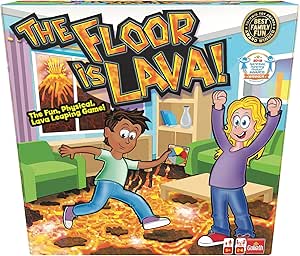 | Best for Active Play | Players: Listing states 2–6 and also 2 or more | Recommended age: 5 years and up | Playing time: 20 minutes | VIEW LATEST PRICE | See Our Full Breakdown |
| Sorry! Classic Board Game for Kids Ages 6 and Up |  | Best for Lively Family Rivalries | Players: 2–4 | Recommended age: 6 years and up | Listed playing time: 120 minutes | VIEW LATEST PRICE | See Our Full Breakdown |
| Hasbro Gaming Guess Who? Plus Board Game with People and Pet Cards | 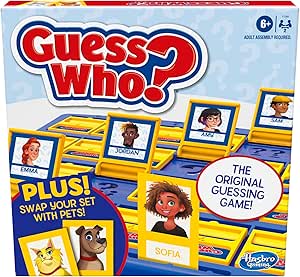 | Best for Two-Player Questioning | Players: 2 | Recommended age: 6 years and up | Brand: Hasbro Gaming | VIEW LATEST PRICE | See Our Full Breakdown |
| Mouse Trap Board Game for Kids Ages 6 and Up |  | Best for Hands-On Cause and Effect | Players: 2–4 | Recommended age: 6 years and up | Playing time: 30 minutes | VIEW LATEST PRICE | See Our Full Breakdown |
| Hasbro Gaming Battleship Classic Board Game |  | Best for Older Kids Who Like Strategy | Players: 2 | Recommended age: 7 years and up | Playing time: 30 minutes | VIEW LATEST PRICE | See Our Full Breakdown |
| Monopoly Junior Super Mario Edition Board Game |  | Best for Young Super Mario Fans | Players: 2 or more | Recommended age: 5 years and up | Estimated playing time: 30 minutes | VIEW LATEST PRICE | See Our Full Breakdown |
| Sequence for Kids Strategy Game |  | Best for Early Strategy | Players: 2–4 | Recommended age: 3–6 years | Game objective: Match animal cards to board spaces and get four chips in a row | VIEW LATEST PRICE | See Our Full Breakdown |
| Hasbro Gaming Candy Land Board Game for Kids Ages 3 and Up |  | Best for First-Time Board Gamers | Players: 2–4 | Recommended age: 3 years and up | Estimated playing time: 15 minutes | VIEW LATEST PRICE | See Our Full Breakdown |
| Outfoxed – Classic Whodunit Game for Preschoolers (4 Players) |  | Best Cooperative Game | Players: 4 | Age range: 5+ years | Genre: Cooperative | VIEW LATEST PRICE | See Our Full Breakdown |
| Hasbro Gaming Clue Junior Board Game: Case of the Broken Toy |  | Best for Young Detectives | Players: 2–6 | Age range: 5 years and up | Theme: Mystery | VIEW LATEST PRICE | See Our Full Breakdown |
| kids board game | Players | Included components | Brand | Recommended age |
|---|---|---|---|---|
| Hasbro Connect 4 Game | 2 | Grid and tray, 42 discs (21 red and 21 yellow), game rules | Hasbro Gaming | 6 years and up |
| Hasbro Gaming Trouble Board Ga | 2–4 | Gameboard, plastic game unit with Pop-O-Matic die roller, 16 pegs, and instructions | Hasbro | — |
| Spin Master Games Hedbanz Pict | 2–6 | 6 headbands, 6 headplates, 16 scoring badges, 1 timer, 69 picture cards, 3 sample question cards, instructions | Spin Master Games | — |
| Hasbro Gaming Operation Electr | 1 or more | Gameboard with Cavity Sam, tweezers, 26 cards, 12 Funatomy parts, play money, rubber band, instructions | Hasbro Gaming | — |
| The Floor Is Lava! Classic Edi | Listing states 2–6 and also 2 or more | 25 foam stepping stones, 27 challenge cards, game spinner, instructions | — | 5 years and up |
| Sorry! Classic Board Game for | 2–4 | Gameboard, 12 pawns, 45 cards, and instructions | Hasbro Gaming | 6 years and up |
| Hasbro Gaming Guess Who? Plus | 2 | 2 gameboards, 48 people face cards, 24 people mystery cards, 48 pets face cards, 24 pets mystery cards, 2 scorekeepers, and game rules | Hasbro Gaming | 6 years and up |
| Mouse Trap Board Game for Kids | 2–4 | Game board, 4 plastic mice, 2 metal marbles, 25 trap parts and accessories, and 52 cheese pieces | Hasbro Gaming | 6 years and up |
| Hasbro Gaming Battleship Class | 2 | 2 portable battle cases, 10 plastic ships, 73 red hit pegs, 168 green miss pegs, and instructions | Hasbro Gaming | 7 years and up |
| Monopoly Junior Super Mario Ed | 2 or more | Gameboard, 4 cardboard character tokens with plastic bases, 4 character cards, Coin Sound Unit, 20 Chance cards, 48 Sold Signs, power-up die, numbered die, 90 cardboard coins, label sheet, and game guide | — | 5 years and up |
| Sequence for Kids Strategy Gam | 2–4 | Folding game board, 42 playing cards, 84 chips, instructions | — | 3–6 years |
| Hasbro Gaming Candy Land Board | 2–4 | Gameboard, 4 gingerbread pawns, card deck, instructions | Hasbro Gaming | 3 years and up |
| Outfoxed | 4 | — | Gamewright | — |
| Hasbro Gaming Clue Junior Boar | 2–6 | Gameboard, 6 character pawns, 6 furniture tokens, 7 white bases, 7 yellow bases, detective notepad, die, label sheet, game guide | Hasbro Gaming | — |
More Details on Our Top Picks
Hasbro Connect 4 Game, 2025 Edition
Connect 4 is my pick for fast head-to-head play: kids take turns dropping discs and try to make a row of four while blocking their opponent. Its rules are easy to grasp, but each move gives children a simple way to practice planning ahead. Compared with Trouble, which adds more players and a luck-driven race, Connect 4 is strictly for two and puts more weight on tactical choices. The grid and tray fold into a handled case, so it is easier to carry and store than a board that stays open. The tradeoff is its narrow player count, and the small discs need to be gathered and put away after each game. I’d choose it for siblings or an adult and child who want short, direct matches.
Pros:- Simple rules make it quick for children to start playing.
- Two-player turns encourage basic planning and blocking.
- Folds into a handled carrying case with disc storage.
- Built-in sliding trackers record wins across rounds.
Cons:- Designed for exactly two players.
- Small discs must be collected and stored after play.
Best for: Two children, siblings, or an adult and child looking for a compact game with simple strategic choices.
Not ideal for: Families who want one game to include three or more players, or households where loose small pieces are hard to keep track of.
- Players:2
- Recommended age:6 years and up
- Edition:2025 Edition
- Included components:Grid and tray, 42 discs (21 red and 21 yellow), game rules
- Storage:Discs store in the tray; grid and tray fold into a carrying case with handle
- Score tracking:Built-in sliding score trackers
- Brand:Hasbro Gaming
- Model number:G1500
Our verdict“Choose Connect 4 for portable, quick two-player strategy, but pick Trouble when the whole family needs to join.”
Hasbro Gaming Trouble Board Game
Trouble suits families who want a simple shared race with room for up to four players. The Pop-O-Matic roller keeps the die attached to the board, which helps reduce loose-piece fuss compared with games that use separate dice. Players move pegs toward the finish, while the optional Power Up spaces add a variation for groups ready for a little more complexity. Compared with Connect 4, Trouble includes more people but relies more on luck than tactical blocking. Its main source of drama can also frustrate younger players: an opponent can send a peg back to the start by landing on its space. I’d pick it for casual family rounds, not for children who dislike setbacks or want each move to be under their control.
Pros:- Supports two to four players for family play.
- Pop-O-Matic keeps the die attached and contained.
- Classic rules are easy to learn, with optional Power Up spaces.
- Race format works for children and adults playing together.
Cons:- Landing on an opponent’s space can send a peg back to the beginning.
- Movement depends heavily on die rolls, limiting player control.
Best for: Families with children around five and older who want an easy-to-teach race that supports two to four players.
Not ideal for: Children who get upset when their progress is reversed, or players seeking strategy with more control over the outcome.
- Players:2–4
- Age range:5 years and up
- Edition:Classic Edition
- Included components:Gameboard, plastic game unit with Pop-O-Matic die roller, 16 pegs, and instructions
- Gameplay options:Classic rules and optional Power Up spaces
- Brand:Hasbro
- Model number:A5064
Our verdict“Pick Trouble for a larger group that enjoys a luck-based race, and choose Connect 4 for more deliberate two-player decisions.”
Spin Master Games Hedbanz Picture Guessing Game
Hedbanz makes asking questions the main event: players wear a picture card and use yes-or-no questions to work out what they are. That social format gives it a different feel from the turn-by-turn races in Trouble and rewards clear questions and listening rather than movement or luck. Six headbands and play for up to six people make it a fit for family gatherings, while the timer and badge race give each round a clear goal. The tradeoff is that children need to be comfortable speaking aloud and responding to questions; it is less suitable for a quiet group or a child who finds guessing in front of others stressful. Compared with Connect 4, it accommodates a bigger group but needs more conversation and participation.
Pros:- Supports two to six players.
- Yes-or-no questions make the basic game easy to learn.
- Includes six themed headbands and 69 picture cards.
- Encourages deductive reasoning and listening.
Cons:- Relies on players asking and answering questions aloud.
- The listed age range starts at six, so it is not aimed at younger preschoolers.
Best for: Families or groups of children ages six and up who enjoy spoken guessing games and can play together in a lively setting.
Not ideal for: Quiet players, children uncomfortable answering questions in front of others, or anyone seeking a low-conversation game.
- Players:2–6
- Age range:6 years and up
- Included components:6 headbands, 6 headplates, 16 scoring badges, 1 timer, 69 picture cards, 3 sample question cards, instructions
- Gameplay:Ask yes-or-no questions to guess a picture card and race to collect three scoring badges
- Brand:Spin Master Games
- Model year:2023
- Edition:2029 Edition
Our verdict“Choose Hedbanz for a talkative group that wants shared guessing, rather than a quieter, turn-based game like Connect 4.”
Hasbro Gaming Operation Electronic Board Game for Ages 6+
Operation turns careful hand control into the challenge: players use tweezers to remove ailment pieces without touching the cavity edges and triggering the buzzer. That physical precision sets it apart from Hedbanz, which depends on spoken deduction, and from the race-based Trouble. Operation can be played solo or with a group, giving it more flexibility when only one child is available. The buzzer adds pressure, but that same tension may frustrate children who find delicate tasks difficult. It also needs two D batteries, unlike The Floor Is Lava!, which runs without batteries but calls for more space and movement. I’d choose Operation for children who enjoy careful hand tasks, while keeping its battery requirement and buzzer in mind.
Pros:- Can be played solo or with a group.
- Tweezers gameplay practices fine motor coordination.
- Includes 12 ailment pieces and 26 cards.
- Buzzer provides immediate feedback during play.
Cons:- Requires two D batteries.
- Touching the metal cavity edges sets off the buzzer, which may frustrate some players.
- The careful tweezers task may be challenging for children with limited hand control.
Best for: Children ages six and up who enjoy precision challenges, including families wanting a solo-play option.
Not ideal for: Children who are easily discouraged by buzzer mistakes, or households that prefer games requiring no batteries.
- Players:1 or more
- Age range:6 years and up
- Funatomy parts:12
- Included components:Gameboard with Cavity Sam, tweezers, 26 cards, 12 Funatomy parts, play money, rubber band, instructions
- Batteries required:2 D batteries
- Skills:Fine motor coordination and strategy
- Instruction languages:English and Spanish
- Brand:Hasbro Gaming
Our verdict“Choose Operation for a child who likes careful hands-on challenges, but opt for Hedbanz if conversation and deduction are a better fit.”
The Floor Is Lava! Classic Edition Family Game
The Floor Is Lava! is the active pick in this group, replacing most seated turns with jumps between cushioned foam stones. Challenge cards and a spinner add prompts to the movement, making it a better fit for children who want to get up and play than Connect 4 or Operation. Its indoor-and-outdoor design and lack of battery requirements add flexibility, though play needs a clear area and active participants. The listed weight is eight pounds, so it is less convenient to carry around than Connect 4’s folding case. The product information also gives two different player counts—two to six and two or more—so group size is not fully clear. Small parts present a choking hazard, making age-appropriate supervision important.
Pros:- Encourages physical activity and imaginative play.
- Cushioned, slip-resistant foam stones are designed for indoor and outdoor use.
- Includes challenge cards and a spinner to vary play.
- Does not require batteries.
Cons:- Requires a clear area for jumping and placing stones.
- Small parts present a choking hazard.
- Product details give conflicting player counts.
Best for: Active children ages five and up who have room to jump and want a movement-based game for indoor or outdoor play.
Not ideal for: Families with limited floor space, children who need a seated game, or households with young children who could access small parts.
- Players:Listing states 2–6 and also 2 or more
- Recommended age:5 years and up
- Playing time:20 minutes
- Included components:25 foam stepping stones, 27 challenge cards, game spinner, instructions
- Stone material:Cushioned, durable, slip-resistant foam
- Use:Indoor and outdoor
- Batteries:Not required
- Item weight:8 pounds
- Dimensions:10.5 x 2.5 x 10.5 inches
Our verdict“Choose The Floor Is Lava! when children want active play and space is available; choose Trouble for a seated game with a clearer player limit.”
Sorry! Classic Board Game for Kids Ages 6 and Up
Sorry! is the pick for families who want direct competition rather than a quiet puzzle or team effort. Players draw cards to move three pawns home, with slides and send-backs that can change who is ahead in a single turn. That mix of luck and move choices gives children chances to plan while keeping rules easier to grasp than coordinate-heavy Battleship. Unlike Mouse Trap, it does not depend on assembling a multi-part contraption, so setup is simpler. The tradeoff is the same feature that fuels the drama: a pawn sent back to start can erase progress and frustrate children who dislike setbacks. The listed 120-minute playing time also makes this a less predictable choice for families seeking a short game.
Pros:- Simple race-to-home objective makes the central goal easy to follow.
- Card draws create changing movement choices from turn to turn.
- Slides and send-backs give players direct interaction.
- Supports two to four players and includes 12 pawns.
Cons:- Being sent back to start can undo substantial progress.
- The listed playing time is 120 minutes, which may not suit a short family game slot.
Best for: Families with children six and older who enjoy playful rivalry, card-driven turns, and a game for two to four players.
Not ideal for: Families seeking a reliably short session or children who become upset when opponents can send their pieces back to start.
- Players:2–4
- Recommended age:6 years and up
- Listed playing time:120 minutes
- Brand:Hasbro Gaming
- Included components:Gameboard, 12 pawns, 45 cards, and instructions
- Edition:Standard
- Language:English
Our verdict“Choose Sorry! for an interactive family race where sudden reversals are part of the fun, not a reason to stop playing.”
Hasbro Gaming Guess Who? Plus Board Game with People and Pet Cards
Guess Who? Plus is a focused choice for two children who like asking questions and narrowing down possibilities. The yes-or-no format gives each turn a clear job: use an answer to eliminate faces until the mystery person or pet is identified. Its separate people and pet card sets add variety without changing the basic rules, while the fold-up cases make it easier to pack than a sprawling setup such as Mouse Trap. Compared with Battleship, this game relies on descriptive clues rather than calling grid coordinates, which may suit younger players who are still building spatial skills. Its main limitation is the player count: it is built for exactly two, and the repeated question-and-elimination rhythm can feel slow to children who want more physical action.
Pros:- Includes both people and pet mystery sets for variety.
- Yes-or-no questions provide a straightforward turn structure.
- Fold-up cases support storage and portable play.
- Easy-to-load frames help simplify setup.
Cons:- Designed for exactly two players, so it does not include a larger group.
- Turn-by-turn questioning and elimination may feel repetitive to action-seeking kids.
Best for: Two children aged six or older who enjoy verbal clues, face recognition, and a compact game to take along.
Not ideal for: Families looking for one game that lets three or more children play together, or kids who prefer hands-on movement and fast-changing action.
- Players:2
- Recommended age:6 years and up
- Brand:Hasbro Gaming
- Included components:2 gameboards, 48 people face cards, 24 people mystery cards, 48 pets face cards, 24 pets mystery cards, 2 scorekeepers, and game rules
- Material:Plastic
- Model number:F1360
- Edition:Standard Edition
Our verdict“Pick Guess Who? Plus for a portable, talk-focused game between two children rather than a group game.”
Mouse Trap Board Game for Kids Ages 6 and Up
Mouse Trap stands apart through its chain-reaction contraption: children collect cheese and build trap parts that can capture an opponent’s mouse. That construction gives the game a tactile appeal that Sorry! does not offer, and it makes cause and effect part of the play rather than just a talking point. Its listed 30-minute playing time also gives families a clearer time frame than Sorry!’s listed 120 minutes. The tradeoff is setup and upkeep: the trap uses many parts, so assembling it takes more effort than unfolding the cases in Guess Who? Plus, and pieces need managing during play. The game supports up to four players, but not a larger group, and its action depends on the trap working as intended rather than on open-ended building.
Pros:- Chain-reaction trap makes cause and effect visible during play.
- Building the trap adds a hands-on activity beyond moving pawns.
- Supports two to four players.
- Includes 25 trap parts and accessories plus 52 cheese pieces.
Cons:- The trap requires assembly from multiple parts before and during play.
- Limited to four players, so it may not fit a larger family group.
- The many small components require careful handling and storage.
Best for: Children aged six and older who enjoy assembling mechanisms, handling game pieces, and seeing how one action triggers another.
Not ideal for: Families wanting minimal setup, very simple component management, or a game for more than four players.
- Players:2–4
- Recommended age:6 years and up
- Playing time:30 minutes
- Brand:Hasbro Gaming
- Included components:Game board, 4 plastic mice, 2 metal marbles, 25 trap parts and accessories, and 52 cheese pieces
- Edition:Standard Edition
- Instruction languages:English and Spanish
Our verdict“Choose Mouse Trap when the appeal of building and triggering a mechanism outweighs the extra setup and piece management.”
Hasbro Gaming Battleship Classic Board Game
Battleship is the more deliberate, deduction-led pick in this group: players call coordinates, mark hits and misses, and use the results to locate a hidden fleet. That makes it a stronger fit for children who like tracking patterns than the more luck-driven pawn movement in Sorry!. The included Salvo option adds a harder mode for players ready for a change, while portable battle cases keep ships and pegs together for travel. It is also listed at 30 minutes, unlike Sorry!’s much longer listed session. The tradeoff is that it serves only two players, and calling coordinates asks children to manage a grid and keep track of information. Families wanting a shared group game may get more use from Mouse Trap, which accommodates up to four.
Pros:- Coordinate calls encourage deduction and tracking.
- Portable battle cases store ships and pegs for travel.
- Salvo option provides a more advanced way to play.
- Red hit pegs and green miss pegs make results easy to distinguish.
Cons:- Designed for exactly two players.
- Players need to understand and track grid coordinates.
- The hidden-fleet format offers less direct physical action than Mouse Trap.
Best for: Two players aged seven or older who enjoy grid-based deduction, tracking information, and a more strategic head-to-head game.
Not ideal for: Families needing a game for three or more children, or younger players who find coordinate calls and tracking hits difficult.
- Players:2
- Recommended age:7 years and up
- Playing time:30 minutes
- Brand:Hasbro Gaming
- Included components:2 portable battle cases, 10 plastic ships, 73 red hit pegs, 168 green miss pegs, and instructions
- Edition:Classic
- Language:English
Our verdict“Choose Battleship for a two-player game built around careful deduction rather than group interaction or hands-on construction.”
Monopoly Junior Super Mario Edition Board Game
Monopoly Junior Super Mario Edition is the most theme-driven pick here, pairing familiar characters and Mushroom Kingdom locations with a simplified property-and-coin race for children aged five and up. The coin sound unit gives turns an extra sensory cue, while choosing Mario, Peach, Yoshi, or Luigi can help young fans feel invested from the start. Compared with Sorry!, it introduces buying spaces and collecting currency instead of focusing on sending opponents back; unlike Guess Who? Plus, it works for a group rather than just two players. The tradeoff is that the Super Mario theme is a major part of its appeal, so children without an interest in the characters may prefer a less branded game. The included cardboard coins and signs also mean more loose pieces to keep track of.
Pros:- Super Mario characters and locations give fans a recognizable setting.
- Junior-style property buying and coin collection introduce basic game-economy choices.
- Coin Sound Unit adds an audible reward to some turns.
- Supports two or more players and is designed for ages five and up.
Cons:- Its appeal depends heavily on interest in Super Mario.
- Cardboard coins and sold signs add loose pieces to manage.
- The sound unit requires batteries, and the supplied product details list conflicting battery types.
Best for: Super Mario fans aged five and older who are ready for a first property-trading game with character choices and simple coin collection.
Not ideal for: Children who do not care for the Super Mario theme, or families seeking a game with minimal loose pieces and no sound unit.
- Players:2 or more
- Recommended age:5 years and up
- Estimated playing time:30 minutes
- Edition:Kids Edition
- Included components:Gameboard, 4 cardboard character tokens with plastic bases, 4 character cards, Coin Sound Unit, 20 Chance cards, 48 Sold Signs, power-up die, numbered die, 90 cardboard coins, label sheet, and game guide
- Item dimensions:13.13 × 10.5 inches
- Material:Plastic
- Battery information:Battery powered; product details list 2 AA batteries and also state 2 AAA batteries required
Our verdict“Pick this edition for a young Super Mario fan who wants a themed introduction to buying properties and collecting coins.”
Sequence for Kids Strategy Game
Sequence for Kids gives preschoolers a first taste of planning: match an animal card to the board, then try to line up four chips. No reading is required, so children can focus on spotting patterns and deciding where to play. Unicorn and dragon cards add special moves that make each turn less predictable than the color-matching path in Candy Land. The folding board and included chips also make this a more hands-on choice than a simple card-draw race.
The tradeoff is that its strategy depends on children being ready to notice patterns and hold a plan in mind; younger players may need help. Small chips require supervision, and at least two people must play. Compared with the cooperative deduction of Outfoxed, this is a better fit for simple head-to-head play, but it offers less shared problem-solving.
Pros:- No reading is needed to match animal cards and board spaces.
- Four-in-a-row play introduces pattern spotting and basic planning.
- Unicorn and dragon cards add special moves beyond ordinary matching.
- Includes a folding board, 42 cards, and 84 chips for a complete game.
Cons:- Small chips pose a choking hazard and call for adult supervision with young children.
- Requires at least two players, so it cannot fill solo play time.
- Children at the youngest end of the age range may need help with planning and turn choices.
Best for: Families with children ages 3–6 who want a no-reading game that introduces pattern recognition and simple tactical choices.
Not ideal for: Caregivers of children who still put small pieces in their mouths, or families seeking a solo game or cooperative mystery.
- Players:2–4
- Recommended age:3–6 years
- Game objective:Match animal cards to board spaces and get four chips in a row
- Included components:Folding game board, 42 playing cards, 84 chips, instructions
- Game mechanics:Card game, racing, variable player powers
- Educational objective:Logical thinking and STEM
- Batteries required:No
- Dimensions:10.5 x 2 inches
Our verdict“Choose Sequence for Kids when you want a reading-free first strategy game with more planning than Candy Land.”
Hasbro Gaming Candy Land Board Game for Kids Ages 3 and Up
Candy Land is the most straightforward starting point in this group: children draw a color-coded card and move a gingerbread pawn along the path. Since reading and tactical planning are not required, preschoolers can join in quickly and practice color matching, taking turns, and following a route. Its roughly 15-minute playing time suits families looking for a short activity, while four pawns let up to four players share the board.
That simplicity is also its main limit. Movement comes from the cards, so players have little control over the outcome; children ready to make choices may prefer Sequence for Kids, which adds basic strategy. Outfoxed offers more teamwork and deduction for older preschoolers, but its clues and shared decisions ask more of young players. Candy Land is a gentle introduction, not a game with much strategic depth.
Pros:- Color-coded cards make play accessible without reading.
- Simple matching and turn-taking suit young first-time players.
- Supports 2–4 players with four gingerbread pawns.
- About 15 minutes of play fits a short family game session.
Cons:- Card draws determine movement, leaving players with little say in their progress.
- The simple rules may not hold the interest of older children looking for strategy.
- Offers less problem-solving than Sequence for Kids or Outfoxed.
Best for: Families introducing children ages 3 and up to turn-taking and color matching, especially when a short, no-reading game is the goal.
Not ideal for: Families whose children want meaningful control over moves, strategic choices, or a mystery to solve together.
- Players:2–4
- Recommended age:3 years and up
- Estimated playing time:15 minutes
- Included components:Gameboard, 4 gingerbread pawns, card deck, instructions
- Instruction languages:English and Spanish
- Skills:Color recognition, matching, taking turns
- Movement:Color-coded card draws
- Brand:Hasbro Gaming
Our verdict“Pick Candy Land for a short, no-reading introduction to board games, but choose Sequence for Kids if your child wants more decisions.”
Outfoxed – Classic Whodunit Game for Preschoolers (4 Players)
Outfoxed turns a children’s board game into a shared investigation: players gather clues and use a decoder to narrow down which fox took Mrs. Plumpert’s pie. Because everyone works toward the same goal, younger players can discuss evidence instead of competing over who gets ahead. That gives it a different family feel from the head-to-head chip placement in Sequence for Kids or the card-determined race in Candy Land. Its clue-based play also makes logical reasoning part of each round rather than an optional extra.
The game is aimed at children ages 5 and up, so it asks for more attention and discussion than the preschool-simple Candy Land. The product description cites quick 15–20 minute rounds, while the listed playing-time spec says 30 minutes, so session length may vary. Cooperation will not suit children who want a direct contest, and repeated investigations may feel familiar over time.
Pros:- Cooperative play encourages players to share clues and reason together.
- A decoder and suspect clues give children concrete tools for deduction.
- The shared objective avoids a winner-versus-loser focus.
- Designed for four players and suited to family or group play.
Cons:- Cooperation may disappoint children who prefer individual competition.
- The same mystery format can feel repetitive after many sessions.
- Listed playing time is 30 minutes, longer than the 15–20 minute rounds described in the product details.
Best for: Families with children ages 5 and up who enjoy solving clues together and want a cooperative alternative to competitive games.
Not ideal for: Players seeking direct competition, or families who need a reliably very short game and a large supply of changing scenarios.
- Players:4
- Age range:5+ years
- Genre:Cooperative
- Edition:Standard Edition
- Language:English
- Listed playing time:30 minutes
- Game elements:Dice, clues, decoder, suspect deduction
- Brand:Gamewright
Our verdict“Choose Outfoxed for shared clue-solving with older preschoolers, rather than the simpler solo-turn race of Candy Land.”
Hasbro Gaming Clue Junior Board Game: Case of the Broken Toy
Clue Junior: Case of the Broken Toy gives children ages 5 and up a structured mystery to solve: players search for clues about which toy was broken, who broke it, and when. The detective notepad supports the process of tracking information and eliminating possibilities, making this a stronger choice for early deductive reasoning than Candy Land, where card draws decide movement. With room for 2–6 players, it also suits a wider group than the four-player version of Outfoxed.
That extra deduction comes with a higher reading and reasoning bar. Children who are not ready to interpret clues may need adult support, while the manual play and indoor setting offer no active or electronic element. Unlike Outfoxed, this is not described as cooperative, so it may suit young detectives who enjoy solving their own case better than a group that wants everyone working toward one shared result.
Pros:- The broken-toy mystery gives children a clear deduction task.
- A detective notepad helps players record clues and eliminate possibilities.
- Supports 2–6 players, more than the listed four-player Outfoxed edition.
- Builds critical thinking, problem-solving, and deductive reasoning.
Cons:- Reading clues and keeping track of possibilities may require adult help for some children.
- The indoor, manual format does not offer active or electronic play.
- Its detective mechanics ask more of players than the no-reading Candy Land.
Best for: Families with children ages 5 and up who can work with written clues and want a mystery game for groups of up to six.
Not ideal for: Younger children who are not ready to read and track clues, or families looking for cooperative play or an active game.
- Players:2–6
- Age range:5 years and up
- Theme:Mystery
- Included components:Gameboard, 6 character pawns, 6 furniture tokens, 7 white bases, 7 yellow bases, detective notepad, die, label sheet, game guide
- Educational objectives:Critical thinking, problem-solving, deductive reasoning, reading comprehension
- Operation mode:Manual
- Usage:Indoor
- Brand:Hasbro Gaming
Our verdict“Choose Clue Junior for reading-ready children who want a more structured mystery and space for a group of up to six.”
How We Picked
I ranked these games by how well their core play fits common family needs: accessible rules, age-appropriate decisions, manageable setup, interaction, and potential for repeat play. I also weighed whether a game gives children meaningful choices or relies mostly on luck, and whether its format works for the people likely to gather around the table. Those differences matter: a simple first game can be a better choice than a more involved title when younger children are still learning turn-taking.
Outfoxed ranks first because cooperation and deduction give players a shared purpose without making one child the sole winner. Sequence for Kids and Guess Who? Plus follow for their approachable thinking and conversation; quick classics such as Connect 4 and Trouble work best for direct competition. The list also includes movement, dexterity, and preschool options, but those rank lower for broad household fit when setup, physical space, or limited decision-making narrows their audience.
| kids board game | Brand |
|---|---|
| Hasbro Connect 4 Game | Hasbro Gaming |
| Hasbro Gaming Trouble Board Ga | Hasbro |
| Spin Master Games Hedbanz Pict | Spin Master Games |
| Hasbro Gaming Operation Electr | Hasbro Gaming |
| The Floor Is Lava! Classic Edi | — |
| Sorry! Classic Board Game for | Hasbro Gaming |
| Hasbro Gaming Guess Who? Plus | Hasbro Gaming |
| Mouse Trap Board Game for Kids | Hasbro Gaming |
| Hasbro Gaming Battleship Class | Hasbro Gaming |
| Monopoly Junior Super Mario Ed | — |
| Sequence for Kids Strategy Gam | — |
| Hasbro Gaming Candy Land Board | Hasbro Gaming |
| Outfoxed | Gamewright |
| Hasbro Gaming Clue Junior Boar | Hasbro Gaming |
Factors to Consider When Choosing Best Kids Board Games
I’d choose by the kind of game night your household can realistically sustain, not by the longest feature list. A child’s age is a useful starting point, but the best fit also depends on reading comfort, patience, group size, and whether players enjoy competition or prefer a shared goal.
Match the rules to the youngest regular player
For a mixed-age table, choose rules the youngest player can follow without an adult translating every turn. A game that is technically age-appropriate can still frustrate a child if it depends on reading, multi-step planning, or remembering several special rules. Check whether the box’s age guidance reflects the skills your child has now, not just the birthday they are approaching. Adults can simplify play, but frequent rule changes may leave older children feeling that the game has lost its point. When in doubt, try a short, familiar mechanic before buying a game built around layered decisions.
Decide how much competition works for your group
Some children enjoy trying to beat a sibling, while others find direct rivalry upsetting, especially when luck can undo a good move. Cooperative games let players share information and work toward one outcome, which can ease tension and help adults join without dominating. Competitive games can still be a good fit when children are comfortable with winning and losing and the rounds are short enough for a quick rematch. Avoid assuming that every child wants a game that teaches strategy through head-to-head play. Think about how your family responds to setbacks before choosing the game’s social format.
Look at downtime, not just total play time
A game may finish quickly yet still feel slow if a child waits through several long turns. For younger players, frequent chances to act can matter more than a short advertised session. Games with simultaneous discussion or shared decisions can keep everyone involved, while guessing and deduction games need enough attention for children to follow what others say. If your group includes restless players, favor a format with brief turns or movement rather than a long sequence of individual actions. A good match keeps children engaged between their own turns, not only when they are moving a piece.
Account for setup, storage, and lost pieces
Small cards, tokens, and specialized components can make a game fun to handle but add work before and after play. Before buying, consider where the pieces will be stored and whether a child can help reset them without losing track of parts. A more elaborate setup may be worthwhile for a household that plays often, but it can deter families who want a game ready in a few minutes. Dexterity games and games with many components also call for a clear play surface. Choose a format your family will actually bring out, rather than one that sounds appealing only in the box.
Choose the kind of thinking your child enjoys
Matching, guessing, memory, deduction, and planning are different skills, and a child who loves one may not enjoy another. Look for a mechanic that feels playful to your child rather than treating every game as a lesson. Picture clues can help children who are still building reading confidence, while questions and deduction suit kids who enjoy narrowing down possibilities. Strategy games can offer more replay as children learn, but they may frustrate a child who wants immediate action. A varied game shelf is useful, but one well-matched game is more likely to become a regular favorite.
Pay more for fit and repeat play, not component count
A larger board or more pieces do not automatically create a better family game. The useful question is whether the play changes enough from round to round to hold your child’s interest and whether the components support that experience. A simple game can be a strong choice if it gets played often, while a more involved title may earn its place when it offers lasting decisions or a format multiple ages can enjoy. Check for replaceable or easy-to-store pieces if wear and loss are likely in your household. Spend extra only when the added play style solves a real need for your family.
Frequently Asked Questions
Which game is the best choice when children dislike losing?
I’d start with a cooperative format such as Outfoxed, where children work toward the same result instead of competing against each other. That can make mistakes feel like part of solving the puzzle rather than a reason one player loses. Cooperative play does not remove frustration entirely, since the group can still fail to meet its goal. An adult can help keep discussion shared by inviting each child to contribute a clue or idea. If your child likes competition in short bursts, a quick head-to-head game may still work with a rematch built in.
What should I choose for a child who is still learning to read?
Favor games where turns rely on pictures, colors, or simple visual choices instead of reading cards or instructions aloud. Candy Land offers a very direct matching structure, while picture-based guessing can let children participate without strong reading skills. Check the specific edition’s components, since versions can differ and an adult may still need to explain the rules. For a child who is ready for more interaction, a game based on asking questions can build confidence with an adult nearby. The aim is to let the child make decisions independently rather than depend on someone to interpret every turn.
Are strategy games a good fit for younger children?
They can be, if the decisions are visible and the rules stay manageable. Sequence for Kids offers a gentler way to practice planning than a game that asks children to track several clues or possibilities at once. A child may enjoy strategy more when an adult explains one choice at a time, then lets the child decide what to do. Avoid turning the session into a lesson or correcting every move, since that can make play feel like a test. If the child loses interest while waiting or thinking, try a shorter game before moving to more involved deduction.
Should I buy a game that works for a wide age range or one made for my youngest child?
Choose based on who will play most often. A game aimed at the youngest child can help them participate independently, but older siblings may want more choices or a stronger challenge. A broader family game is useful when its central play stays engaging across ages, rather than relying on adults to handicap every round. For occasional mixed-age gatherings, an accessible shared-goal game can be easier to manage than a highly competitive one. If game nights are mostly for one child and a parent, matching that child’s current interests is usually the safer choice.
How can I tell whether a game will hold a child’s attention?
Look beyond the listed play time and ask how often the child gets to act, talk, or make a choice. A quick game can still feel drawn out when turns are slow, while a longer round can stay lively if everyone contributes clues or decisions. Consider whether your child enjoys sitting at a table, moving around, handling pieces, or talking through a mystery. A short explanation of the core mechanic can reveal whether it matches their interests before you buy. When possible, borrow or try a similar game first to see how your child responds to that style of play.
Conclusion
Best overall: I’d choose Outfoxed for families who want cooperation and clue-solving in one shared game. Best value in play style: Connect 4 is a straightforward pick for quick competitive rounds, while best for beginners is Candy Land for children who benefit from simple color-based turns. For best premium-style experience, Mouse Trap offers a more elaborate, hands-on setup, though it asks for more space and patience than the simpler options. Families seeking movement can look to The Floor Is Lava, and those wanting approachable strategy should start with Sequence for Kids. Match the game to your child’s attention, reading comfort, and attitude toward competition, and the right choice is the one your family will want to play again.