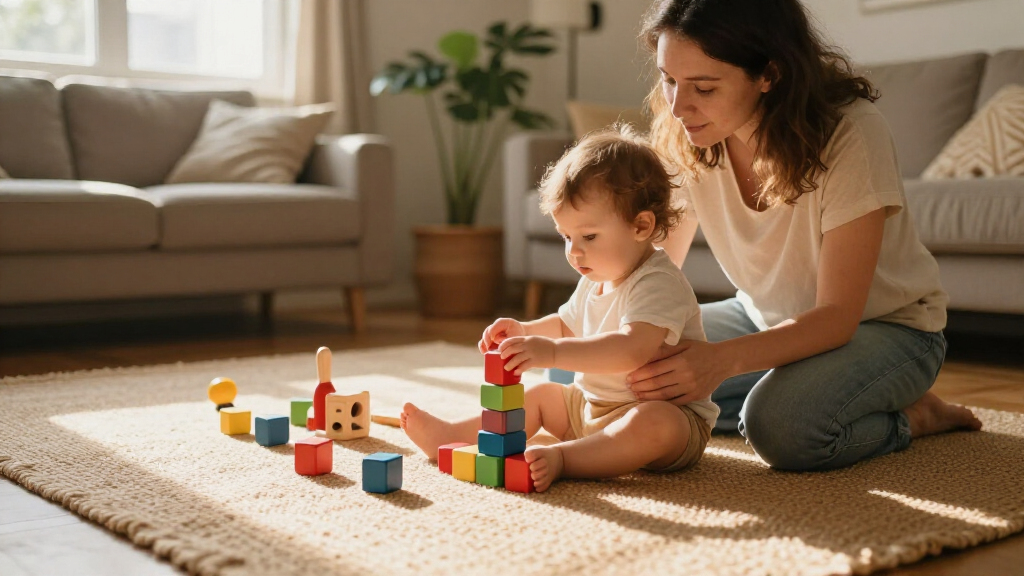
The best baby and toddler learning toys match a child’s current abilities while giving them a reason to try again. My best overall pick is the Melissa & Doug Shape Sorting Cube, which pairs hands-on problem-solving with a sturdy, simple design; the LeapFrog Learning Friends 100 Words Book stands out for interactive language play, while Fisher-Price Baby’s First Blocks is a straightforward starting point for younger learners. The main tradeoff is choosing between open-ended toys that invite repetition and electronic options that provide prompts but need batteries and can be noisier. Age labels help, but a child’s interest, dexterity, and tolerance for small pieces matter just as much. Read on for how all 15 options compare and which one fits your family’s priorities.

Turn the school run and nap time into listening time
- Thousands of audiobooks, podcasts and originals
- Listen on your phone, tablet or Echo — also offline
- Cancel anytime
Complete the kit


Key Takeaways
- Hands-on sorting leads the field: The Shape Sorting Cube earns the overall spot by combining a clear learning goal, repeated play, and a more substantial build than the simpler Baby’s First Blocks set.
- Language toys serve different play styles: The Learning Friends 100 Words Book offers a broad vocabulary experience, while Talking Flash Cards put the child in a more direct listen-and-repeat routine.
- Busy boards trade range for portability: The LED Switches board and Gojmzo travel board suit children drawn to knobs, switches, and practical actions, but parents should check attachment security and supervise use.
- Wooden puzzles reward patience: The Jumlys, Montessori stacking puzzles, sorting cube, and activity cube build matching and fine-motor practice, though piece size and task difficulty need to fit the child.
- Theme can help sustain play: The farm train, fishing set, and fruit-and-vegetable sensory set use familiar objects to invite sorting and pretend play, but they are less flexible than toys with broader uses.
| Busy Board with LED Light Switches – Montessori Toys for Toddlers |  | Best for Hands-On Cause and Effect | Material: Solid natural wood | Number of switches: 13 | LED lights: 24 | VIEW LATEST PRICE | See Our Full Breakdown |
| Fisher-Price Laugh & Learn Smart Stages Chair Toddler Toy, Teal |  | Best for Music and Growing Skill Levels | Age range: 1 year and older | Maximum weight: 55 lb / 25 kg | Songs and phrases: 120+ | VIEW LATEST PRICE | See Our Full Breakdown |
| Talking Flash Cards for Toddlers Ages 1-4, 224 Words – Blue |  | Best for Early Vocabulary Practice | Brand: Airbition | Set name: 224 Words | Number of illustrated words: 224 | VIEW LATEST PRICE | See Our Full Breakdown |
| Montessori Wooden Sorting and Stacking Puzzle Toys for Toddlers 1-3 Years Old |  | Best for Foundational Shape Sorting | Number of pieces: 20 | Material: Wood | Colors: Red, orange, yellow, green, and blue | VIEW LATEST PRICE | See Our Full Breakdown |
| Hahaland Montessori Fishing Toy Set for Toddlers |  | Best for Pretend Play and Fine-Motor Practice | Number of pieces: 22 | Materials: Felt and fabric | Suitable age: 12 to 36 months | VIEW LATEST PRICE | See Our Full Breakdown |
| Jumlys Wooden Shape Learning Puzzles for Toddlers 1-3 Years Old |  | Best for Early Shape Practice | Number of shapes: 12 | Colors: Red, orange, yellow, green, blue, and purple | Material: Natural wood | VIEW LATEST PRICE | See Our Full Breakdown |
| Play-Act Learning Toys for 1-3 Years Old, Counting, Matching & Sorting Farm Train with 9 Farm Animals |  | Best for Pretend-and-Learn Play | Number of barns: 9 | Includes: Farm animals, figures, locomotive, and wagons | Suitable age: 1–3 years | VIEW LATEST PRICE | See Our Full Breakdown |
| Melissa & Doug Shape Sorting Cube – Classic Wooden Toy with 12 Shapes |  | Best for Shape-Sorting Problem Solving | Number of shapes: 12 | Material: Wood | Age range: 2–4 years | VIEW LATEST PRICE | See Our Full Breakdown |
| LeapFrog Spin and Sing Alphabet Zoo |  | Best for Interactive Early Learning | Brand: LeapFrog | Age range: 6–36 months | Material: Plastic | VIEW LATEST PRICE | See Our Full Breakdown |
| Montessori Shape Sorter Activity Cube for 1 Year Olds – 6 Pieces |  | Best Sensory Starter | Number of pieces: 6 | Recommended age: 12 months and up | Material: Plastic | VIEW LATEST PRICE | See Our Full Breakdown |
| Gojmzo Montessori Busy Board for Toddlers – Educational Travel Toy |  | Best for Travel and Practical Skills | Pages: 8 | Activities: Over 30 | Material: Soft felt | VIEW LATEST PRICE | See Our Full Breakdown |
| Hahaland Baby Sensory Toys Montessori Fruit & Vegetable Set, 16 Pieces |  | Best for Early Sensory Exploration | Number of pieces: 16 | Recommended age: 6 months to 3 years | Material: Plush fabric | VIEW LATEST PRICE | See Our Full Breakdown |
| Montessori Sensory Toys for 1-3 Year Olds – Wooden Stacking Puzzle for Toddlers |  | Best for Shape and Stacking Basics | Pieces: 20 | Materials: Wood and non-toxic paint | Suitable age: 1–3 years | VIEW LATEST PRICE | See Our Full Breakdown |
| Fisher-Price Baby’s First Blocks Toy Set, Navy Fawn |  | Best First Shape Sorter | Number of blocks: 10 | Age range: 6 months and up | Material: Plastic | VIEW LATEST PRICE | See Our Full Breakdown |
| LeapFrog Learning Friends 100 Words Book |  | Best for Bilingual Vocabulary | Age range: 18 months and up | Dimensions: 9.4 in W × 9.4 in H × 1.9 in D | Batteries: 2 AA included for demo; recommended for regular use | VIEW LATEST PRICE | See Our Full Breakdown |
| baby toddler learning toy | Material |
|---|---|
| Busy Board with LED Light Swit | Solid natural wood |
| Fisher-Price Laugh & Learn Sma | — |
| Talking Flash Cards for Toddle | — |
| Montessori Wooden Sorting and | Wood |
| Hahaland Montessori Fishing To | — |
| Jumlys Wooden Shape Learning P | Natural wood |
| Play-Act Learning Toys for 1-3 | — |
| Melissa & Doug Shape Sorting C | Wood |
| LeapFrog Spin and Sing Alphabe | Plastic |
| Montessori Shape Sorter Activi | Plastic |
| Gojmzo Montessori Busy Board f | Soft felt |
| Hahaland Baby Sensory Toys Mon | Plush fabric |
| Montessori Sensory Toys for 1- | — |
| Fisher-Price Baby’s First Bloc | Plastic |
| LeapFrog Learning Friends 100 | — |
More Details on Our Top Picks
Busy Board with LED Light Switches – Montessori Toys for Toddlers
This compact board suits toddlers who want to press, flip, and see an immediate result. Its 13 switches and 24 LED lights give little hands repeated practice with grasping and coordinated movements, while the engraved letters and numbers add early visual exposure. Compared with the Fisher-Price Laugh & Learn Smart Stages Chair, it offers quieter, more tactile play rather than songs and spoken prompts; that makes it easier to pack and use during calm play, but less varied for children who learn through language and music. The wooden build and small footprint are practical for travel, though the light-up play depends on batteries and may lose appeal as children outgrow simple switch exploration. I’d choose it for short, supervised play sessions, not as a broad early-learning curriculum.
Pros:- 13 switches offer repeated fine-motor practice
- 24 lights provide immediate visual feedback
- Compact wooden board is easy to take along
- Engraved letters and numbers add early visual exposure
Cons:- Requires two AAA batteries, which are not included
- Switch-and-light play may be too limited for older toddlers
- Its described use is limited to indoor play
Best for: Families with toddlers around 12 months to 3 years who want a portable, hands-on toy for practicing switch movement and cause and effect.
Not ideal for: Caregivers seeking spoken vocabulary lessons, varied pretend play, or a toy that does not require batteries.
- Material:Solid natural wood
- Number of switches:13
- LED lights:24
- Batteries required:2 AAA
- Dimensions:6.7 x 5.3 x 1.1 inches
- Item weight:11.84 ounces
- Recommended age:12 months to 3 years
Our verdict“Choose this board for portable, tactile cause-and-effect play, but pick a language-rich toy if spoken learning is the priority.”
Fisher-Price Laugh & Learn Smart Stages Chair Toddler Toy, Teal
This chair stands apart from the more compact toys here by combining a seat with songs, phrases, and several activity elements. Sitting or standing prompts a response, so toddlers can connect their movement to sound, then explore the light-up remote, flipbook, and hidden surprises. Its three Smart Stages levels give families a way to vary the learning prompts as a child develops, while the 120+ songs and phrases make it more language-forward than the Busy Board with LED Light Switches. The tradeoff is a larger, more feature-led play experience that depends on batteries and may not suit families who want quiet, open-ended materials. With a stated maximum weight of 55 pounds, it can support seated play as a child grows, but its toddler-scale design may still feel small to older children.
Pros:- Responds to sitting and standing with songs, sounds, and phrases
- Three learning levels offer different prompts as skills develop
- Remote, flipbook, and hidden surprises provide varied activities
- More than 120 songs and phrases support sound-rich play
Cons:- Requires batteries, which are not included
- May be too small for older toddlers
- Electronic prompts offer less open-ended play than simple wooden toys
Best for: Families with a one-year-old or older toddler who enjoys music and interactive prompts, and who want multiple activities in one play seat.
Not ideal for: Buyers looking for a compact travel toy, battery-free play, or an open-ended wooden activity with minimal sound.
- Age range:1 year and older
- Maximum weight:55 lb / 25 kg
- Songs and phrases:120+
- Learning levels:3 Smart Stages
- Activities:Light-up remote, flipbook, and hidden surprises
- Interactive response:Responds with music and phrases when a child sits or stands
Our verdict“Pick this chair for a toddler who learns through music and interactive prompts, rather than for families prioritizing quiet portability.”
Talking Flash Cards for Toddlers Ages 1-4, 224 Words – Blue
For families focused on naming objects and hearing words clearly, this set offers more direct vocabulary practice than the shape and sorting toys in this roundup. It pairs 224 illustrated words across subjects such as animals, food, and vehicles with spoken sounds, giving a child a visual cue and an audio prompt without a screen. That format can also support speech practice at home, though it is not a substitute for professional guidance when a child receives speech therapy. Unlike the Hahaland Montessori Fishing Toy Set, which invites pretend play and movement, these cards keep attention on listening and identifying. The rechargeable design and volume control suit travel, but charging is still part of ownership, and the English-only content limits its use for bilingual vocabulary practice. Cards also depend on careful handling by young children.
Pros:- 224 illustrated words cover several familiar subject areas
- Spoken audio pairs vocabulary with clear visual cues
- Rechargeable design and volume control support travel use
- Screen-free format avoids adding another device-based activity
Cons:- English-only content may not suit bilingual learning goals
- Requires charging, which adds upkeep
- Card durability depends on how carefully young children handle them
Best for: Caregivers of toddlers and preschoolers who want screen-free English vocabulary practice, including families seeking simple audio prompts for speech activities.
Not ideal for: Families looking for bilingual content, active pretend play, or a set that can be handled roughly without concern.
- Brand:Airbition
- Set name:224 Words
- Number of illustrated words:224
- Age range:1+ years
- Recommended age:12 months to 6 years
- Educational objective:Cognitive skills
- Included components:Flash cards
- Model number:KPJ01
Our verdict“Choose these cards for focused, screen-free English word practice, but choose a hands-on play set for movement and imaginative exploration.”
Montessori Wooden Sorting and Stacking Puzzle Toys for Toddlers 1-3 Years Old
This wooden set focuses on the basics: recognizing colors and shapes, then moving pieces into sorting and stacking play. Its 20 pieces and five named shapes give toddlers repeated chances to compare forms and practice hand control without music, lights, or spoken directions. That simplicity makes it a more direct early-shape choice than the Talking Flash Cards for Toddlers, which emphasize listening and vocabulary; it is also less theme-driven than the Hahaland fishing set, so play can stay centered on matching rather than pretend stories. The water-based, non-toxic, odorless paint is a useful material detail for families choosing a wooden toy. The tradeoff is a narrow learning scope: children who already recognize basic shapes or want more varied challenges may move on quickly.
Pros:- 20 pieces provide multiple opportunities to sort and stack
- Five shape types support basic shape recognition
- Wooden construction offers a tactile alternative to electronic toys
- Water-based, non-toxic, odorless paint is specified
Cons:- Learning focus is limited to basic shapes, colors, and sensory play
- May be too simple for older children
- Does not provide songs, spoken prompts, or a broader pretend-play theme
Best for: Families with children aged 1 to 3 who want a straightforward wooden activity for practicing basic shapes, colors, and sorting.
Not ideal for: Parents of older toddlers who need more advanced puzzles, language prompts, or a wider range of play themes.
- Number of pieces:20
- Material:Wood
- Colors:Red, orange, yellow, green, and blue
- Shapes:Pentagon, square, rectangle, triangle, and circle
- Paint:Water-based, non-toxic, and odorless
- Designed age range:1 to 3 years
Our verdict“Pick this set for a simple, hands-on introduction to shapes and colors, but skip it if your toddler needs more advanced play.”
Hahaland Montessori Fishing Toy Set for Toddlers
This set makes early learning feel like a small play scene rather than a structured lesson. With a fishing pole, fish, stackable buckets, and an ocean mat, toddlers can practice reaching and handling pieces while inventing simple ocean-themed games. The 22 soft felt and fabric pieces offer a gentler, more portable alternative to wooden sorting toys such as the Montessori Wooden Sorting and Stacking Puzzle, while adding a pretend-play theme that the puzzle does not have. Its storage bag and easy-clean description are practical for families who want to pack pieces away after play. The tradeoff is focus: children who are not interested in fishing or ocean play may use fewer parts, and the set needs adult supervision for very young toddlers. It is active and imaginative, but not as direct for vocabulary or shape instruction as other picks.
Pros:- 22 soft felt and fabric pieces support hands-on play
- Fishing pole, fish, buckets, and mat invite themed pretend play
- Portable design includes storage
- Described as easy to clean and suitable for active play
Cons:- Fishing theme may limit interest for children who prefer other play
- Requires adult supervision for very young toddlers
- Offers less direct shape or vocabulary instruction than sorting toys or talking cards
Best for: Families with children aged 12 to 36 months who enjoy pretend play and want a soft, portable set for practicing hand control and sensory exploration.
Not ideal for: Caregivers seeking structured shape or word instruction, or children who have little interest in fishing-themed play.
- Number of pieces:22
- Materials:Felt and fabric
- Suitable age:12 to 36 months
- Included pieces:Fishing pole, fish, stackable buckets, and ocean mat
- Storage:Storage bag included
- Play focus:Cognitive development, imaginative play, and sensory exploration
Our verdict“Choose this set for soft, portable pretend play and motor practice, rather than for focused lessons in letters, shapes, or vocabulary.”
Jumlys Wooden Shape Learning Puzzles for Toddlers 1-3 Years Old
For a toddler just beginning to match pieces, the Jumlys Wooden Shape Learning Puzzles keep the task clear: pick up a shape, notice its color, and find where it fits. Its 12 large pieces with handles give little hands a more manageable grip than small loose sorting pieces, while the wood and water-based, non-toxic paint suit families seeking a straightforward hands-on toy. Compared with the Melissa & Doug Shape Sorting Cube, this set is better suited to simple puzzle-style matching, while the cube asks children to work out which opening accepts each shape. The tradeoff is a narrow learning range: it focuses on shapes, colors, and coordination rather than sounds, pretend play, or varied sensory activities. I’d choose it for focused practice, not as a toy expected to hold an older toddler’s attention alone.
Pros:- 12 colorful shapes support repeated shape and color recognition practice.
- Large pieces with reinforced handles are designed for easier toddler grasping.
- Natural wood construction with water-based, non-toxic paint.
- Puzzle placement gives children practice with fine motor control and hand-eye coordination.
Cons:- Learning activities center on shapes and colors, so broader play may require other toys.
- Children who need changing activities may lose interest without adult interaction or play ideas.
Best for: Caregivers of children 12–36 months who want large, easy-to-grasp pieces for practicing basic shape and color matching.
Not ideal for: Families seeking a toy with pretend play, sounds, or several kinds of learning activity; its focus stays on shape and color puzzles.
- Number of shapes:12
- Colors:Red, orange, yellow, green, blue, and purple
- Material:Natural wood
- Paint:Water-based, non-toxic
- Recommended age:12–36 months
- Handles:Yes; reinforced for durability
Our verdict“Choose this for a young toddler who benefits from large handled pieces and focused shape practice, rather than a toy with varied play modes.”
Play-Act Learning Toys for 1-3 Years Old, Counting, Matching & Sorting Farm Train with 9 Farm Animals
The Play-Act Farm Train turns early sorting and counting into a small-world play session: children can load animals into numbered barns, attach wagons, and make up farm stories. That mix gives it a broader imaginative-play angle than the Jumlys Wooden Shape Learning Puzzles, which focus on matching shapes and colors. Detachable parts and hand puppets add ways to interact, so this is a stronger fit for caregivers who want to join the play and prompt counting or naming. The tradeoff is that its learning is less focused: it offers basic farm-themed activities rather than one clear matching challenge, and the set may feel simple once a child has explored its parts. Because it includes detachable pieces, caregivers should supervise play, particularly with children who still mouth toys.
Pros:- Combines counting and sorting with imaginative farm play.
- Nine numbered barns provide a simple way to introduce number order.
- Detachable parts support loading, unloading, and stacking activities.
- Farm animals and figures offer prompts for shared storytelling and naming.
Cons:- Detachable components call for adult supervision, especially for children who mouth toys.
- The activities stay within basic farm-themed sorting, counting, and role-play.
- Children may outgrow the simple play pattern after exploring the set.
Best for: Families with children ages 1–3 who enjoy animal pretend play and want to introduce counting and sorting with an adult nearby.
Not ideal for: Caregivers seeking a compact, self-contained matching toy or a set with fewer detachable parts for unsupervised play.
- Number of barns:9
- Includes:Farm animals, figures, locomotive, and wagons
- Suitable age:1–3 years
- Play activities:Sorting, counting, loading, unloading, stacking, and role-play
- Interactive features:Detachable roof and hand puppets
Our verdict“Pick this farm train for a toddler who learns through pretend play and shared interaction, not for focused shape-matching practice.”
Melissa & Doug Shape Sorting Cube – Classic Wooden Toy with 12 Shapes
The Melissa & Doug Shape Sorting Cube makes the child do more than match a picture: each of its 12 shapes must pass through the corresponding opening, building trial-and-error problem solving alongside color and shape recognition. That makes it a more demanding choice than the Jumlys Wooden Shape Learning Puzzles, where pieces are matched to puzzle spaces and handles help with gripping. The cube’s wood construction and screen-free play suit families after a simple, reusable activity for ages 2–4. Its limits are just as clear: sorting is the central activity, with no pretend-play elements or electronic prompts, and older children may master the openings and move on. I’d favor it when the goal is to practice matching and persistence, rather than provide a toy with changing modes like the LeapFrog Spin and Sing Alphabet Zoo.
Pros:- Twelve shapes provide repeated practice recognizing and matching forms.
- Matching each piece to an opening encourages problem solving through trial and error.
- Wooden construction offers a durable alternative to the plastic, electronic LeapFrog Spin and Sing Alphabet Zoo.
- Screen-free activity supports independent hands-on play.
Cons:- The play is limited to shape and color sorting.
- Children who master the openings may find it too simple as they get older.
Best for: Caregivers of children ages 2–4 who want a hands-on toy that adds trial-and-error problem solving to shape and color practice.
Not ideal for: Families whose child prefers sound, music, pretend play, or changing activities; this cube centers on placing shapes through matching holes.
- Number of shapes:12
- Material:Wood
- Age range:2–4 years
- Toy format:Shape-sorting cube with matching holes
- Model number:575
- UPC:681147005709
Our verdict“Choose this cube for a preschool-bound toddler ready to work through shape-matching challenges without lights, sounds, or pretend-play features.”
LeapFrog Spin and Sing Alphabet Zoo
For babies and toddlers who respond to movement and sound, the LeapFrog Spin and Sing Alphabet Zoo offers more varied prompts than the wooden sorters in this roundup. Its letter, animal, and music modes pair spinning, pressing, and sliding with lights and audio, giving little hands several actions to explore while introducing letters and animal sounds. Compared with the Melissa & Doug Shape Sorting Cube, it trades quiet, open-ended sorting for guided electronic responses; compared with the Play-Act Farm Train, it has less room for child-created stories. Batteries are included, but replacement will eventually be needed, and the listed cons flag volume as a possible concern. I’d choose it for early cause-and-effect play, not for families who prioritize quiet, screen-free toys or want a toy that grows well beyond age three.
Pros:- Three modes introduce letters, animals, and music through different prompts.
- Spinning, pressing, and sliding give small hands varied motor actions.
- Lights and sounds provide immediate responses to a child’s actions.
- Three AA batteries are included for use out of the box.
Cons:- Battery-powered play means the three included AA batteries will eventually need replacement.
- Some caregivers may find the sound volume loud.
- Its listed age range ends at 36 months, limiting its fit for older toddlers.
Best for: Caregivers of children 6 months to 3 years who want an interactive toy combining simple motor actions with letters, animals, and music.
Not ideal for: Families prioritizing quiet, battery-free play, or caregivers seeking an open-ended toy for children older than three.
- Brand:LeapFrog
- Age range:6–36 months
- Material:Plastic
- Size:7.1 × 8.5 × 6.5 inches
- Item weight:1.9 pounds
- Batteries:3 AA batteries included
- Power source:Battery-powered
- Modes of play:Letter, animal, and music
Our verdict“Choose this for a younger child who enjoys lights and sound and is beginning to explore letters, animals, and cause and effect.”
Montessori Shape Sorter Activity Cube for 1 Year Olds – 6 Pieces
The Montessori Shape Sorter Activity Cube is the most compact-feeling concept in this group: six colorful blocks with textured surfaces invite a young toddler to touch and match, rather than face a larger set of pieces. Its elastic bands and shape-matching feature add a tactile element that the smooth wooden pieces in the Jumlys Wooden Shape Learning Puzzles do not emphasize. That makes this a plausible early sensory starter for children 12 months and up, especially when caregivers want a simple activity to explore independently. The compromise is scale and material: with only six pieces, it offers fewer matching opportunities than the 12-shape Jumlys and Melissa & Doug options, and the product information gives little detail about construction durability beyond identifying plastic. It is best as an introductory toy, not a long-term challenge.
Pros:- Textured surfaces add tactile exploration alongside basic shape and color learning.
- Six pieces keep the activity simple for a young child’s first sorting attempts.
- Shape matching supports early fine motor practice.
- Designed to encourage independent play.
Cons:- Six pieces offer less variety than the 12-shape Jumlys and Melissa & Doug sorters.
- Activities remain focused on basic shapes and colors, with limited scope for older toddlers.
- Plastic construction is listed, but the provided product data offers little detail about durability.
Best for: Caregivers of children 12 months and up seeking a simple first sorter with tactile surfaces and a small set of pieces.
Not ideal for: Families wanting a larger variety of shapes, established material durability details, or activities that stay challenging as a toddler grows.
- Number of pieces:6
- Recommended age:12 months and up
- Material:Plastic
- Features:Textured surfaces, elastic bands, and shape matching
- Brand:BLCXTOYZ
Our verdict“Choose this as a simple tactile first sorter for a young toddler, but pick a 12-shape set for more matching variety.”
Gojmzo Montessori Busy Board for Toddlers – Educational Travel Toy
The Gojmzo busy board earns its place for toddlers who learn by trying everyday fasteners and hand movements. Across 8 soft-felt pages, more than 30 activities—including zippers, shoelaces, and buttons—offer variety without needing loose pieces or a table setup. Compared with Fisher-Price Baby’s First Blocks, it focuses less on shape sorting and more on fine-motor practice and problem-solving; it is also lighter and more book-like for travel. The tradeoff is a narrower age window: older children may master the activities quickly, while repeated pulling and tugging can test the stitching. I’d choose it for quiet, supervised practice on trips, not as a toy with the open-ended building possibilities of blocks.
Pros:- More than 30 activities provide varied fine-motor practice in one compact format.
- Soft felt pages are lightweight and easy to carry.
- Fasteners and learning games encourage hands-on problem-solving.
- Reinforced sewing supports regular use when handled appropriately.
Cons:- Activities may be too simple once a child has mastered basic fasteners.
- Frequent hard pulling can wear the stitching over time.
Best for: Caregivers seeking a portable, hands-on activity for toddlers to practice zippers, buttons, and laces during travel or quiet time.
Not ideal for: Families looking for a toy that grows with older preschoolers or withstands rough, unsupervised handling.
- Pages:8
- Activities:Over 30
- Material:Soft felt
- Fastener activities:Zippers, shoelaces, and buttons
- Play focus:Fine motor skills, problem-solving, and cognitive development
- Suitable for:Toddlers
Our verdict“Choose this busy board for portable practice with everyday fasteners; pick Baby’s First Blocks instead for shape sorting and stacking.”
Hahaland Baby Sensory Toys Montessori Fruit & Vegetable Set, 16 Pieces
For babies beginning to explore by touch, sound, and color, this 16-piece plush set offers a softer and more sensory-led option than the wooden stacking puzzle. Textured fruit and vegetable toys, rattles, and baskets give caregivers plenty to name, match, and sort with a child, while the soft fabric suits gentle handling. Its strongest learning value comes from repeated shared play—identifying colors and objects or comparing textures—rather than from a structured puzzle challenge. Compared with the LeapFrog Learning Friends 100 Words Book, it has no spoken vocabulary or bilingual audio, but it invites hands-on exploration without batteries. Some pieces may be small for very young infants, so I’d keep play supervised; buyers wanting broader activity types may find the set limited to sensory and sorting play.
Pros:- Sixteen pieces offer varied textures, colors, and rattling sounds.
- Soft plush construction is suited to tactile exploration.
- Fruits, vegetables, and baskets support naming and simple matching games.
- Can be used for sorting and color recognition as a child grows.
Cons:- Some pieces may be small for very young infants and need supervision.
- Play is mainly sensory and sorting, with fewer activity types than an interactive book.
- Does not provide spoken words or songs.
Best for: Caregivers of babies and young toddlers who want soft tactile toys for naming, color matching, and supervised sensory play.
Not ideal for: Families seeking a toy with sound-based language lessons, complex puzzles, or pieces suitable for unsupervised play with very young infants.
- Number of pieces:16
- Recommended age:6 months to 3 years
- Material:Plush fabric
- Includes:Fruits, vegetables, and baskets
- Example item dimensions:Red Pepper: 2.56 × 2.36 inches
- Play focus:Sensory exploration, fine motor skills, color sorting, and matching
Our verdict“Pick this set for supervised, tactile discovery with babies; choose the LeapFrog book if spoken vocabulary and bilingual audio matter more.”
Montessori Sensory Toys for 1-3 Year Olds – Wooden Stacking Puzzle for Toddlers
This wooden stacking puzzle is a focused choice for toddlers who are ready to place, stack, and compare simple shapes. Its 20 colorful pieces create repeated chances to practice hand-eye coordination and recognize five colors and four geometric shapes, without screens or electronic prompts. Compared with Fisher-Price Baby’s First Blocks, it offers more pieces and a wooden format, but it is less clearly suited to drop-in shape sorting and lacks the bucket’s built-in storage. The limited set of shapes keeps the challenge approachable for ages 1 to 3, though it may not hold the attention of older children for long. Younger toddlers may also need an adult nearby during play. I’d choose it for straightforward tabletop learning, not for buyers seeking evolving puzzles or broader pretend play.
Pros:- Twenty pieces allow repeated stacking and placement practice.
- Five colors and four geometric shapes support early classification.
- Wood and non-toxic paint offer a non-electronic play format.
- Encourages fine motor skills, coordination, and basic problem-solving.
Cons:- The shape and color range is limited, which can reduce challenge over time.
- Younger toddlers may need adult supervision during play.
- Unlike Baby’s First Blocks, it does not include a storage bucket.
Best for: Families with children ages 1 to 3 who want a screen-free tabletop activity for practicing stacking, shape recognition, and coordination.
Not ideal for: Caregivers seeking a toy with advanced puzzles, a wide range of play modes, or built-in storage for pieces.
- Pieces:20
- Materials:Wood and non-toxic paint
- Suitable age:1–3 years
- Colors:5
- Shapes:4 geometric shapes
- Play format:Wooden stacking puzzle
Our verdict“Choose this puzzle for simple wooden stacking and shape practice; opt for Baby’s First Blocks if easy storage and drop-in sorting are priorities.”
Baby’s First Blocks is the most straightforward starting point here for babies learning to grasp, stack, and match shapes. Ten blocks and a shape-sorting lid turn basic play into an easy cause-and-effect loop: a child tries a shape, adjusts it, and drops it into the bucket. The handle also makes it simpler to carry and pack away than the loose pieces in the wooden stacking puzzle. That simplicity is the main compromise. Unlike the Gojmzo busy board, it does not offer fasteners or varied fine-motor tasks, and it has no songs or electronic feedback. The plastic set keeps the activity simple and needs no batteries, but children who already know basic colors and shapes may outgrow its limited challenge. I’d pick it as a first sorter rather than a long-term learning system.
Pros:- Ten blocks support early grasping, stacking, and shape matching.
- Sorting lid gives babies a clear, repeatable activity.
- Bucket and handle keep the pieces together and make the set portable.
- Requires no batteries.
Cons:- Learning is limited mainly to basic shapes and colors.
- It lacks sound, language content, and other interactive features.
- Children who have mastered simple sorting may want a greater challenge.
Best for: Caregivers looking for a simple, portable first shape-sorting toy for babies 6 months and older.
Not ideal for: Families whose toddlers already handle basic sorters or who want language lessons, varied tactile tasks, or more advanced puzzles.
- Number of blocks:10
- Age range:6 months and up
- Material:Plastic
- Item weight:12.8 ounces
- Item dimensions:4.92 × 5.12 × 8.27 inches
- Included components:Bucket with handle, shape-sorting lid, and 10 shape blocks
- Battery requirement:No batteries required
Our verdict“Choose Baby’s First Blocks as a portable first sorter; pick the Gojmzo board for a wider range of toddler fine-motor tasks.”
LeapFrog Learning Friends 100 Words Book
Among these picks, the LeapFrog Learning Friends book puts language learning first. It introduces over 100 age-appropriate words through sound effects, songs, and English and Spanish instructions, giving caregivers a way to connect listening with naming and repetition. That makes it a more direct vocabulary tool than Hahaland’s plush fruit and vegetable set, which relies on adults and children to supply the words during play. The tradeoff is that this book is electronic: it needs two AA batteries for regular use, and the light-up features may be vulnerable to rough handling. Its recommended age starts at 18 months, so it is not the earliest-starting option in this group. I’d choose it for families who want guided bilingual listening, but not for buyers prioritizing quiet, battery-free tactile play.
Pros:- Introduces over 100 age-appropriate words across categories.
- English and Spanish content supports bilingual listening and repetition.
- Sound effects, songs, and buttons offer guided interaction.
- Book format gives children a defined activity with familiar characters.
Cons:- Requires two AA batteries for regular use.
- Light-up features may be sensitive to rough handling.
- The 18-month age guidance makes it less suited to younger infants.
Best for: Families with children 18 months and older who want guided English and Spanish word exposure through songs and sound.
Not ideal for: Caregivers of younger babies or families seeking a quiet, battery-free toy that centers on hands-on sensory play.
- Age range:18 months and up
- Dimensions:9.4 in W × 9.4 in H × 1.9 in D
- Batteries:2 AA included for demo; recommended for regular use
- Words:Over 100 age-appropriate words
- Languages:English and Spanish
- Interactive features:Sound effects, songs, instructions, buttons, and lights
- Characters:Turtle, Tiger, and Monkey
Our verdict“Choose this book for interactive bilingual vocabulary practice; pick Hahaland’s plush set for quieter, battery-free sensory exploration.”

How We Picked
I compared the 15 toys by the learning actions they invite, how independently a young child can use them, and whether the play can change as skills grow. I gave more weight to options with a clear, repeatable activity—such as fitting shapes, stacking pieces, or exploring words—than to toys whose appeal depends mainly on lights or sound. Build materials, piece handling, storage, cleaning needs, and the likely need for adult supervision also shaped the assessment.
The ranking favors toys that offer a useful balance of learning value, usability, and repeat play rather than one narrow feature. The Shape Sorting Cube leads because its cause-and-effect challenge is easy to understand and supports repeated practice; the 100 Words Book ranks strongly for families prioritizing language, while Baby’s First Blocks offer a simpler entry point. More specialized sets sit lower when their theme, piece count, or adult setup makes them a better fit for a particular child than for a wide range of households.
| baby toddler learning toy | Material |
|---|---|
| Busy Board with LED Light Swit | Solid natural wood |
| Fisher-Price Laugh & Learn Sma | — |
| Talking Flash Cards for Toddle | — |
| Montessori Wooden Sorting and | Wood |
| Hahaland Montessori Fishing To | — |
| Jumlys Wooden Shape Learning P | Natural wood |
| Play-Act Learning Toys for 1-3 | — |
| Melissa & Doug Shape Sorting C | Wood |
| LeapFrog Spin and Sing Alphabe | Plastic |
| Montessori Shape Sorter Activi | Plastic |
| Gojmzo Montessori Busy Board f | Soft felt |
| Hahaland Baby Sensory Toys Mon | Plush fabric |
| Montessori Sensory Toys for 1- | — |
| Fisher-Price Baby’s First Bloc | Plastic |
| LeapFrog Learning Friends 100 | — |
Factors to Consider When Choosing Best Baby Toddler Learning Toys
Before choosing, I would match the toy to the kind of play a child returns to—not just the skill printed on the package. These broader checks can help avoid toys that are too difficult, too noisy, or awkward to keep in rotation.
Match the challenge to the child, not just the age label
Age guidance is a useful safety starting point, but children develop hand control, attention, and language at different rates. A child who enjoys dropping objects into containers may be ready for basic blocks before they can solve a multi-step puzzle. If a toy causes repeated frustration, put it aside and offer a simpler version of the same action, such as stacking before shape matching. Avoid buying a set with many tiny pieces for a child who still mouths toys. Choose a toy that allows an easy first success and a harder next step, rather than one that only works when an adult demonstrates every move.
Choose the learning action you want to encourage
“Educational” can mean very different things: naming words, matching shapes, practicing coordination, or exploring cause and effect. Decide which action would add variety to the child’s current play instead of buying several toys that all teach the same basic sorting task. Interactive books and talking cards can prompt listening and naming, while blocks and puzzles ask the child to manipulate objects and solve a physical problem. Neither format is automatically better; the right choice depends on whether the child tends to respond to spoken prompts or prefers figuring things out with their hands. A varied small collection can offer more kinds of practice than a large set focused on one skill.
Treat electronic features as a tradeoff, not a learning guarantee
Lights, music, and spoken instructions can attract attention and give children clear feedback, but they also add sound, battery needs, and another feature that may dominate play. Check whether the toy still has a useful activity when the sound is off or the batteries run down. If a child is easily distracted by noise, a wooden puzzle or block set may be easier to use during quiet play. For language-focused toys, listen for whether prompts leave room for the child to answer rather than continually talking over them. A simpler toy can support longer stretches of child-led exploration, while an electronic option may help a child who benefits from cues.
Look closely at pieces, supervision, and storage
Piece count can make a set feel versatile, but more pieces also mean more items to misplace and more sorting after play. For children who mouth toys, check the manufacturer’s age guidance and inspect each component for size, loose parts, and wear. Fishing games and busy boards may call for closer adult attention than a single-piece block toy, depending on their design and the child’s habits. Consider where the toy will live: a compact travel board is easier to carry, while a larger activity cube needs a stable play area. A toy that is easy to put away is more likely to remain part of the daily rotation.
Compare materials and care before buying a set
Wood can feel substantial and hold up to frequent handling, but painted surfaces and joints still need regular checks for chips or looseness. Fabric or card-based options may be easier to handle in some settings but can require different cleaning and storage routines. Food-themed sensory pieces and multi-part activity sets often involve more surfaces to wipe and more components to count. Read the care instructions rather than assuming a toy is washable because it is aimed at babies or toddlers. The better fit is the material you can maintain comfortably, not simply the one that sounds most durable.
Pay for variety only when the child will use it
A larger set can support several play ideas, but a young child may focus on one part at a time. Before choosing a multi-activity toy, ask whether its extra functions are distinct or just variations on the same task. A single well-matched puzzle can be more engaging than a busy toy that requires constant adult direction. Premium features make more sense when they add genuine flexibility, such as different ways to play over time or a format the child will use often. For a first learning toy, a clear, repeatable activity is usually a better bet than a crowded feature list.
Frequently Asked Questions
Should I choose a wooden sorting toy or an electronic learning toy first?
I would start with the kind of interaction the child already enjoys. A wooden sorter encourages touching, turning, trial and error, and repeated attempts without sound or prompts. An electronic toy can be a better match for a child who responds to music, spoken cues, or call-and-response play, but it may need batteries and can be more stimulating. If you are unsure, a simple hands-on toy is a flexible first choice, and an electronic option can add variety later. Check whether the electronic toy remains engaging with sound turned off.
Are toys labeled for ages one to three suitable for a child who still mouths objects?
Age ranges do not replace checking individual components and the child’s behavior. A set intended for toddlers may contain pieces that are not a good fit for a child who regularly mouths toys. Read the manufacturer’s age and safety guidance, inspect pieces for size and damage, and supervise play when needed. Larger, single-piece toys may be easier to manage than multi-piece puzzles or themed sets. If a toy’s pieces raise doubts, choose a simpler option and ask the manufacturer for safety details.
Do talking flash cards teach words better than a sound book?
They support different routines rather than offering a single clear winner. Flash cards can invite a child to select a picture and hear a word, which suits short, focused practice. A sound book usually places words within a broader page-based activity and may be easier to share with an adult. Either format works best when a caregiver pauses, names the object, and connects it to something the child can see or touch. If independent handling matters most, check how easily the child can operate the controls and manage the cards or pages.
Is a multi-activity toy cube worth choosing over a basic block set?
A cube can offer several actions in one footprint, which may be useful when play space is limited or a child likes switching tasks. A basic block set is simpler to store, easier to repurpose, and may leave more room for open-ended play. The cube’s extra activities only add value if the child can reach and use them comfortably without an adult constantly repositioning it. Consider stability, access to each side, and whether the components can be stored together. If the child is just beginning to stack or sort, the basic set may be the less complicated fit.
Which type of learning toy is easiest to bring on trips?
Compact busy boards and self-contained books are usually more convenient than activity cubes or sets with many loose pieces. Before packing, check whether parts stay attached or whether cards, animals, or puzzle pieces can scatter in a bag. Also think about noise: a toy with sound may be less suitable for quiet travel spaces, even if it holds a child’s attention at home. A small, familiar activity is often more useful on a trip than a toy with many functions that need setup. Keep adult supervision and the child’s mouthing habits in mind when choosing portable pieces.
Conclusion
For most families seeking one versatile starting point, I recommend the Melissa & Doug Shape Sorting Cube as the best overall, with a clear physical challenge and repeat play. The best value-style choice for uncomplicated first practice is Fisher-Price Baby’s First Blocks; it is also my best pick for beginners who are just exploring how objects fit and stack. For families ready to prioritize a wider language activity, the LeapFrog Learning Friends 100 Words Book is my premium-leaning pick, while the Gojmzo Busy Board makes more sense for travel and children drawn to switches and hands-on mechanisms. Choose the fishing set, farm train, or fruit-and-vegetable set when a familiar theme is likely to hold your child’s interest; choose a simpler puzzle or block set if fewer pieces and easier cleanup matter more.
Halloween Picks
halloween
As an affiliate, we earn on qualifying purchases.