
Finding the right athome science experiment kit depends on your child’s age, interests, and your budget. The National Geographic Amazing Chemistry Set stands out as the overall best for its comprehensive experiments suitable for ages 8-12. For younger kids, the Doctor Jupiter My First Science Experiments Kit offers safe, engaging activities with minimal supervision. Meanwhile, the UNGLINGA 250+ Science Experiments Kit appeals to older kids or those eager for a wide variety of experiments. The main tradeoffs involve balancing complexity, safety, and value—more extensive kits often require more supervision and can be pricier. Keep reading for a full breakdown to find the best fit for your needs.

Turn the school run and nap time into listening time
- Thousands of audiobooks, podcasts and originals
- Listen on your phone, tablet or Echo — also offline
- Cancel anytime
Complete the kit


Key Takeaways
- The most versatile kits combine multiple disciplines like chemistry, physics, and biology, offering broad educational value.
- Safety features and age-appropriate instructions are critical, especially for younger children or first-time experimenters.
- Larger kits with more experiments tend to be more cost-effective but may require greater supervision and setup time.
- Premium kits with high-quality components often provide a more durable experience but come at a higher price point.
- Choosing a kit with clear instructions and supplemental learning materials helps maximize educational impact and reduces frustration.
| National Geographic Amazing Chemistry Set with 100+ Experiments for Ages 8-12 |  | Best Overall for Comprehensive Chemistry Exploration | Number of Experiments: 100+ | Age Range: 8-12 | Includes: test tubes, beakers, pipettes, crystal growing materials | VIEW ON AMAZON | See Our Full Breakdown |
| National Geographic Mega Science Lab with 75 Experiments for Kids 8-12 |  | Best for Multidisciplinary Science and Collecting | Number of Experiments: 75 | Age Range: 8-12 | Includes: rock and mineral specimens | VIEW ON AMAZON | See Our Full Breakdown |
| National Geographic Science Magic Kit for Kids with 100+ Experiments and Tricks |  | Best for Fun and Entertainment with Scientific Magic | Number of Experiments: 100+ | Magic Tricks Included: 20 | Bonus Experiments: 85+ | VIEW ON AMAZON | See Our Full Breakdown |
| UNGLINGA 250+ Science Experiments Kits for Kids, Chemistry Set, STEM Educational Toy |  | Best for Extensive STEM Exploration | Number of Experiments: 250+ | Includes: chemistry tools, test tubes, pipettes | Recommended for: Kids, Boys, Girls | VIEW ON AMAZON | See Our Full Breakdown |
| Doctor Jupiter My First Science Experiments Kit for Kids Ages 4+ |  | Best for Early STEM Introduction | Number of Experiments: 100+ | Recommended Age: 4+ | Safety Standards: ASTM F963-17 | VIEW ON AMAZON | See Our Full Breakdown |
| Science Kit for Kids, 80 Experiments, STEM Educational Toy for Children Ages 6-9 |  | Best for Young Beginners with a Wide Range of Activities | Included Components: Goggles, chemical materials, petri dishes, balloons, pigment, effervescent tablets, measuring cups, test tubes, gloves, rubber bands, droppers, straws, toothpicks, rotary needles, measuring spoons, balloons, twisting rods, rainbow candy, color changing flower | Age Range: 6-9 years | Number of Experiments: 80 | VIEW ON AMAZON | See Our Full Breakdown |
| Science Kit with 220+ Experiments for Kids Ages 3-12 |  | Best for Wide Age Range and Extensive Exploration | Number of Experiments: 220+ | Pieces Included: 47 | Recommended Age: 3-12 years | VIEW ON AMAZON | See Our Full Breakdown |
| National Geographic Earth Science Kit with 100+ Activities for Kids 8-12 | 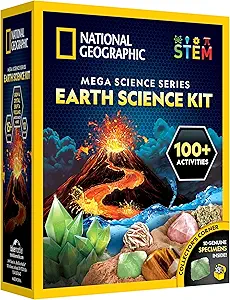 | Best for Earth Science Enthusiasts and Explorers | Number of Activities: 100+ | Recommended Age: 8-12 | Included Experiments: Dueling water tornadoes, erupting volcano, crystal growing, geologic dig kits | VIEW ON AMAZON | See Our Full Breakdown |
| National Geographic Gross Science Kit with 45 Experiments for Kids 8-12 |  | Best for Gross and Creepy Science Enthusiasts | Included Components: Gross Science Kit with 45 experiments | Age Range: 8 years and up | Educational Objective: STEM | VIEW ON AMAZON | See Our Full Breakdown |
| UNGLINGA 150 Experiments Science Kit for Kids – STEM Chemistry and Physics Lab Toys |  | Best for Comprehensive STEM Exploration for Older Kids | Included Components: Science experiments tools and materials | Age Range: 8 to 60 years | Maximum Age: 60 years | VIEW ON AMAZON | See Our Full Breakdown |
| 1000X Digital Microscope for Kids Handheld 2-in-1 Binoculars Portable STEM Toy |  | Best for Versatile Exploration and Outdoor Use | Magnification: 1000X | Display: 2.0-inch IPS | Camera: 2MP | VIEW ON AMAZON | See Our Full Breakdown |
| UNGILINGA 272 Experiments Science Kit for Kids, Chemistry Set, STEM Educational Toys for Boys and Girls |  | Best for Extensive Hands-On Science Learning | Number of Experiments: 272 | Includes: Test tube, measuring spoon, beaker, conical flask | Material: Plastic | VIEW ON AMAZON | See Our Full Breakdown |
| athome science experiment kit | Number of Experiments | Age Range |
|---|---|---|
| National Geographic Amazing Ch | 100+ | 8-12 |
| National Geographic Mega Scien | 75 | 8-12 |
| National Geographic Science Ma | 100+ | Kids |
| UNGLINGA 250+ Science Experime | 250+ | — |
| Doctor Jupiter My First Scienc | 100+ | — |
| Science Kit for Kids | 80 | 6-9 years |
| Science Kit with 220+ Experime | 220+ | — |
| National Geographic Earth Scie | — | — |
| National Geographic Gross Scie | — | 8 years and up |
| UNGLINGA 150 Experiments Scien | — | 8 to 60 years |
| 1000X Digital Microscope for K | — | — |
| UNGILINGA 272 Experiments Scie | 272 | — |
More Details on Our Top Picks
National Geographic Amazing Chemistry Set with 100+ Experiments for Ages 8-12
This chemistry set stands out for its impressive variety of over 100 experiments, covering crystal growing, color-changing solutions, and glowing test tubes. Compared with the National Geographic Mega Science Lab, it offers a broader range of activities focused specifically on chemistry, making it ideal for kids truly interested in chemical reactions. The included materials and safety guidelines support independent exploration, although younger children may need adult supervision. Some experiments require household items not included, which could pose a challenge for complete beginners. This kit excels at fostering curiosity and foundational science skills, but isn’t as suited for children seeking a more multidisciplinary experience.
Pros:- Extensive variety of over 100 engaging experiments
- All necessary materials included for safe, independent fun
- Encourages STEM learning and creative problem-solving
Cons:- Younger children may need adult supervision for some activities
- Some experiments require household items not included in the kit
Best for: Kids aged 8-12 with a keen interest in chemistry who enjoy hands-on experiments and creative exploration.
Not ideal for: Parents seeking a quick, mess-free activity or for children under 8, as some experiments may be complex or require supervision.
- Number of Experiments:100+
- Age Range:8-12
- Includes:test tubes, beakers, pipettes, crystal growing materials
- Bonus Experiments:85
Our verdict“This set is perfect for older kids who want a broad and deep chemistry experience and are comfortable with some supervision.”
National Geographic Mega Science Lab with 75 Experiments for Kids 8-12
This kit offers a well-rounded selection of 75 experiments across Earth science, chemistry, and science magic, making it a versatile choice. Unlike the National Geographic Amazing Chemistry Set, which is more chemistry-focused, this set emphasizes physical sciences and offers real rock and mineral specimens, appealing to kids interested in geology and hands-on collecting. The inclusion of magic tricks also makes it more playful, though some experiments can be messy or require additional household items. It’s ideal for children who enjoy exploring different science fields but may need supervision for some activities. Its broad scope makes it suitable for curious kids eager to explore multiple disciplines, but it might be overwhelming for those seeking a specialized chemistry kit.
Pros:- 75 experiments spanning multiple science disciplines
- Includes real rock, mineral, and crystal specimens for collection
- Combines educational value with fun through magic tricks
Cons:- Some experiments may be messy or require extra household items
- Requires adult supervision for certain activities
Best for: Kids aged 8-12 who want a diverse science experience with collecting and hands-on discovery.
Not ideal for: Children who prefer focused chemistry or need a less messy, simpler setup with minimal supervision.
- Number of Experiments:75
- Age Range:8-12
- Includes:rock and mineral specimens
- Bonus Experiments:30
Our verdict“Ideal for kids seeking variety and hands-on exploration across science fields, especially geology and physical sciences.”
National Geographic Science Magic Kit for Kids with 100+ Experiments and Tricks
This kit combines science and magic, offering over 100 experiments and 20 magic tricks that captivate children while teaching scientific principles. Compared to the National Geographic Amazing Chemistry Set or Mega Science Lab, this set leans heavily into entertainment, making it perfect for kids who love performing and showmanship. The included materials support a variety of tricks like floating coins and bending metal, fostering curiosity through visual effects. However, household items are often needed for some experiments, and younger children may require adult help with certain tricks. It’s a fantastic pick for children who enjoy interactive, playful science but less suitable for those seeking detailed scientific understanding.
Pros:- Engages kids with over 100 science magic tricks and experiments
- Includes materials for 20 magic tricks and bonus experiments
- Encourages creativity and presentation skills
Cons:- Requires household items, which may complicate setup
- Some experiments need adult supervision for safety
Best for: Children who love performing magic tricks and want a fun, interactive way to learn basic science concepts.
Not ideal for: Parents looking for straightforward, serious science experiments without the magic component or for very young children who need close supervision.
- Number of Experiments:100+
- Magic Tricks Included:20
- Bonus Experiments:85+
- Age Range:Kids
Our verdict“Best suited for children who enjoy playful science and performing tricks, especially those interested in magical effects.”
UNGLINGA 250+ Science Experiments Kits for Kids, Chemistry Set, STEM Educational Toy
This comprehensive kit offers over 250 experiments across chemistry, physics, and earth sciences, making it a powerhouse for curious learners. Unlike the smaller sets, such as the National Geographic Amazing Chemistry Set or Mega Science Lab, its sheer volume of activities provides hours of exploration. The included real science tools and detailed manual help children conduct experiments like lava lamps and volcanoes with confidence. However, the large number of experiments means some may be messy or complex for younger children, and the manual might be too detailed for the very young. This set is ideal for older kids or those with a strong interest in multiple science disciplines, but less so for beginners or very young children seeking straightforward activities.
Pros:- Over 250 experiments covering multiple science disciplines
- Includes real science tools and clear instructions
- Encourages prolonged, in-depth scientific investigation
Cons:- Some experiments may be messy or difficult for small children
- The detailed manual can be too complex for very young users
Best for: Older children or those with a broad curiosity about science who can handle complex setups and messy experiments.
Not ideal for: Parents seeking a quick, simple, or very beginner-friendly kit for younger children, as the scope may be overwhelming.
- Number of Experiments:250+
- Includes:chemistry tools, test tubes, pipettes
- Recommended for:Kids, Boys, Girls
- Educational Focus:STEM, Science Learning
Our verdict“Perfect for ambitious kids eager for an extensive, multi-disciplinary science adventure and capable of handling detailed instructions.”
Doctor Jupiter My First Science Experiments Kit for Kids Ages 4+
This kit is designed to introduce very young children to science through over 100 simple, safe experiments. Compared with the more advanced National Geographic Amazing Chemistry Set, it emphasizes basic concepts and safety suitable for ages 4 and up. The easy-to-follow instructions and colorful materials make science accessible for beginners, promoting curiosity and early critical thinking. However, the limited scope means it covers only fundamental science ideas, and some experiments will likely require adult help. The safety standards meet ASTM F963-17, ensuring peace of mind for parents. This set is ideal for parents wanting to cultivate a love for science early on, but less suitable for children who are ready for more complex or independent activities.
Pros:- Encourages early interest in science and STEM concepts
- Includes easy-to-follow, detailed instructions
- Safe materials meeting ASTM standards
- Promotes critical thinking and problem-solving skills
Cons:- Some experiments require adult supervision
- Limited to basic science concepts suitable for young children
Best for: Parents of preschool or early elementary children seeking safe, simple science activities to foster early interest.
Not ideal for: Older children or those looking for in-depth experiments, as the scope is limited and geared toward beginners.
- Number of Experiments:100+
- Recommended Age:4+
- Safety Standards:ASTM F963-17
Our verdict“An excellent starter kit for introducing preschoolers to science in a safe, engaging way.”
Science Kit for Kids, 80 Experiments, STEM Educational Toy for Children Ages 6-9
This kit stands out for its extensive 80 experiments tailored to spark curiosity in children aged 6-9. Compared to larger, more complex sets like the National Geographic Earth Science Kit, it offers a broader variety of simple, hands-on activities designed for early learners. The inclusion of safety gear and detailed instructions makes it approachable for parents and educators, though the chemical bottles require careful handling and adult supervision. Its focus on fundamental scientific concepts makes it ideal for introducing young children to STEM, but it may feel limited for older kids seeking more advanced experiments. For parents wanting a comprehensive, age-appropriate science experience, this kit balances fun and education well.
Pros:- Offers 80 engaging experiments to foster curiosity
- Includes comprehensive safety gear and tools
- Guided with clear instructions and scientific principles
Cons:- Requires adult supervision for younger children
- Some chemical bottles may need careful handling
Best for: Parents of children aged 6-9 looking for a safe, guided STEM introduction with lots of variety.
Not ideal for: Older children or those seeking more advanced experiments, as the chemical components and complexity are geared toward younger users.
- Included Components:Goggles, chemical materials, petri dishes, balloons, pigment, effervescent tablets, measuring cups, test tubes, gloves, rubber bands, droppers, straws, toothpicks, rotary needles, measuring spoons, balloons, twisting rods, rainbow candy, color changing flower
- Age Range:6-9 years
- Number of Experiments:80
- Manufacturer:Kuovei
- ASIN:B09XB4QGM3
Our verdict“This kit makes the most sense for parents seeking a broad, age-appropriate STEM activity set for young beginners.”
Science Kit with 220+ Experiments for Kids Ages 3-12
This kit offers over 220 experiments, making it a versatile choice for a broad age range from 3 to 12 years old. Unlike the National Geographic Earth Science Kit, which emphasizes earth sciences, this set covers a variety of scientific fields, including chemistry, physics, and biology, providing more variety for curious kids. The included tools like goggles, beakers, and test tubes are suitable for most experiments, though some younger children may need adult help, especially with the more delicate plastic tools. Its wide scope makes it ideal for multi-age families or classrooms, but the omission of certain liquids like oil and water means additional supplies are needed for full experimentation. For parents seeking a comprehensive, multi-disciplinary starter kit, this provides excellent value.
Pros:- Includes over 220 experiments for extensive exploration
- Comes with comprehensive tools and easy instructions
- Encourages critical thinking and hands-on learning
Cons:- Oil and water are not included for some experiments
- Plastic tools may lack durability over time
Best for: Families or educators seeking a large, multi-topic science kit suitable for children from preschool to early teens.
Not ideal for: Children under 3 or those who prefer highly structured or age-specific experiments, due to the broad age range and variable complexity.
- Number of Experiments:220+
- Pieces Included:47
- Recommended Age:3-12 years
- Tools:Goggles, beakers, test tubes, flasks, funnels
Our verdict“This pick is best for households or classrooms wanting a flexible, large-scale science kit for multiple ages.”
National Geographic Earth Science Kit with 100+ Activities for Kids 8-12
This kit excels in offering over 100 activities focused specifically on Earth sciences, such as volcano eruptions and rock digging, which makes it stand out from more general science sets like the Science Kit for Kids, 80 Experiments. Its detailed learning guide and varied activities foster a deeper understanding of geology and earth phenomena. However, it requires adult supervision for some activities and may be too advanced or detailed for children outside the 8-12 age range. The limited information on included tools suggests that many experiments may rely on household items, which could be a plus or a drawback depending on availability. For young geologists eager to explore our planet’s processes, this kit provides engaging hands-on learning with a focus on earth sciences.
Pros:- Extensive variety of earth science experiments
- Includes a detailed educational guide
- Encourages hands-on exploration and curiosity
Cons:- Requires adult supervision for some activities
- Limited info on the number of tools included
Best for: Kids ages 8-12 with a passion for earth sciences and geology, or classrooms emphasizing earth science curriculum.
Not ideal for: Younger children or those interested in general science outside of geology, as some activities may be too complex or require adult assistance.
- Number of Activities:100+
- Recommended Age:8-12
- Included Experiments:Dueling water tornadoes, erupting volcano, crystal growing, geologic dig kits
Our verdict“This kit makes the most sense for young explorers interested in geology and Earth sciences, seeking detailed activities and guides.”
National Geographic Gross Science Kit with 45 Experiments for Kids 8-12
This set offers 45 experiments centered on gross science, such as slime making and brain dissection, appealing to kids who enjoy the messy, creepy side of STEM. Compared to more traditional chemistry sets like the Science Kit for Kids, it emphasizes fun gross-out activities that also teach concepts like polymers and chemical reactions. It’s perfect for kids who find science amusingly gross and are eager to learn about the human body or strange materials. However, the experiments can be quite messy, and younger children may require thorough adult supervision. Its focus on entertainment and gross-out factor can overshadow deeper scientific understanding, making it more suitable for casual curiosity than serious STEM learning.
Pros:- Engages kids with fun, gross experiments
- Includes detailed, kid-friendly instructions
- Teaches STEM concepts through entertaining activities
Cons:- Experiments can be messy and difficult to contain
- Requires adult supervision for safety
Best for: Kids aged 8-12 who love gross, slime, and creepy science projects, and parents looking for fun, engaging activities.
Not ideal for: Children seeking more traditional or less messy science experiments, or those sensitive to mess and dissection activities.
- Included Components:Gross Science Kit with 45 experiments
- Age Range:8 years and up
- Educational Objective:STEM
Our verdict“This kit is ideal for kids who love gross science and slime, offering fun experiments that teach core STEM ideas in a playful way.”
UNGLINGA 150 Experiments Science Kit for Kids – STEM Chemistry and Physics Lab Toys
This extensive kit includes 150 experiments spanning chemistry, physics, and earth science, making it a robust choice for older children or serious young scientists. Unlike the Science Kit for Kids with fewer experiments, this set emphasizes diverse, in-depth exploration, supported by high-quality tools and clear illustrations. Its wide scope means it can be used at home, school, or as a gift for children 8 and older who want a challenging, multi-disciplinary experience. That said, the complexity of some experiments and the need for adult supervision may make it less suitable for younger children or beginners. For those seeking an all-in-one STEM kit that offers depth and variety, this is a compelling option.
Pros:- Includes 150 diverse, challenging experiments
- High-quality, kid-safe tools and materials
- Easy-to-follow manual with illustrations
Cons:- Requires adult supervision for many experiments
- Some experiments need household items not included
Best for: Older kids or teens with a solid interest in chemistry and physics, or educators designing advanced science projects.
Not ideal for: Younger children or beginners who may find the experiments too complex or overwhelming, especially without adult help.
- Included Components:Science experiments tools and materials
- Age Range:8 to 60 years
- Maximum Age:60 years
- Bestseller Rank:#1,908 in Toys & Games
Our verdict“This kit is best suited for older children or motivated science enthusiasts seeking a comprehensive, multi-disciplinary STEM experience.”
1000X Digital Microscope for Kids Handheld 2-in-1 Binoculars Portable STEM Toy
This handheld microscope stands out for combining a powerful 1000X magnification with a 10X landscape telescope, offering a dual-function tool that appeals to curious kids who want to explore both tiny details and distant landscapes. Unlike the simpler microscopes designed purely for indoors, this model’s HD image and video capture, along with built-in storage, make it a compelling choice for children ready to document their discoveries. The bright LED lighting ensures clear viewing in various settings, but its 2-hour battery life limits extended outdoor adventures, and its manual focus can be challenging for younger users. Compared with less sophisticated microscopes, this device provides a broader scope of exploration, yet its complexity and limited battery life may require adult assistance for younger children. Overall, this pick makes the most sense for families seeking a multi-use, portable device that encourages science curiosity both indoors and outside.
Pros:- Combines high-magnification microscope and landscape telescope in one device
- HD image and video capture with built-in storage for easy documentation
- Bright LED lighting enhances viewing clarity in various conditions
- Portable and lightweight, suitable for outdoor use
Cons:- Battery life is limited to only 2 hours, restricting longer activities
- Manual focus and zoom adjustments may be tricky for beginners
- Designed for ages 3-12, potentially too complex for very young children
Best for: Parents of children aged 8-12 who want a multi-faceted device for both microscopy and stargazing or outdoor exploration.
Not ideal for: Very young children under 5, as the device’s complexity and manual adjustments may be overwhelming and difficult to operate safely.
- Magnification:1000X
- Display:2.0-inch IPS
- Camera:2MP
- Built-in Storage:200 photos
- Lighting:8 LED bulbs
- Battery Life:2 hours
Our verdict“This versatile handheld microscope is ideal for older children and families seeking both microscopic and outdoor viewing capabilities, despite its short battery life and manual operation challenges.”
UNGILINGA 272 Experiments Science Kit for Kids, Chemistry Set, STEM Educational Toys for Boys and Girls
This science kit offers a vast array of 272 experiments, making it the ideal choice for children eager to immerse themselves in multiple science disciplines. Unlike smaller kits like the National Geographic sets, this one provides a broad variety of activities—ranging from volcano eruptions to crystal growing—that promote critical thinking and problem-solving. It includes real lab-quality tools, which enhances the authenticity and educational value, but the manual instructions can be challenging for younger children without adult help. Also, some experiments require household items, adding a layer of prep work. Compared with kits that focus on a limited number of experiments, this set offers more variety, though it demands more supervision and patience from parents. This kit makes sense for curious kids who want to spend hours exploring many different science concepts in one package.
Pros:- Includes 272 diverse experiments covering multiple science topics
- Kid-friendly, real lab-quality tools for authentic experiments
- Encourages critical thinking and problem-solving skills
- Provides hours of educational fun
Cons:- Requires adult supervision for safety and guidance
- Instruction manual may be difficult for very young children to follow
- Some experiments need additional household items, adding prep time
Best for: Parents of children aged 8-12 who want a comprehensive, hands-on science experience with many experiments in one kit.
Not ideal for: Very young children under 6, as the instructions and experiment complexity may be too demanding without adult assistance.
- Number of Experiments:272
- Includes:Test tube, measuring spoon, beaker, conical flask
- Material:Plastic
Our verdict“This extensive science kit is perfect for eager young scientists ready to explore many concepts, provided they have adult support and patience for setup.”

How We Picked
I evaluated these science experiment kits based on several key factors that matter to buyers: the variety and quality of experiments included, safety features, age appropriateness, build quality, and overall value for the price. Kits with comprehensive instructions and educational content scored higher, ensuring a rewarding experience for kids and peace of mind for parents. I prioritized products that balance affordability with educational richness, noting where larger or more advanced kits might be better suited for dedicated young scientists while simpler options excel for beginners or younger children. The ranking reflects how well each kit meets these criteria, helping buyers find options aligned with their specific needs and expectations.Factors to Consider When Choosing Athome Science Experiment Kits
When selecting an athome science experiment kit, it’s important to consider several factors to ensure the best fit for your child’s interests and your safety standards. A well-chosen kit can foster curiosity and learning, but a poor match might lead to frustration or safety concerns. Here are key considerations to keep in mind to make an informed decision and avoid common pitfalls.Age Appropriateness and Safety
Always check the recommended age range and safety features of the kit. Younger children, especially under 6, need kits with non-toxic, child-safe materials and simple instructions. For older kids, look for kits that challenge their skills without overwhelming them, integrating safety warnings and supervision guidelines to prevent accidents. Overestimating age suitability can lead to safety issues, while underestimating can result in boredom or frustration.
Experiment Variety and Educational Content
Consider how many experiments are included and whether they cover different scientific disciplines. Kits with a broad range of activities tend to keep children engaged longer and foster a deeper understanding of science. However, more experiments can sometimes mean less depth per activity, so balance is key. Check if the kit provides explanations of scientific concepts to maximize learning beyond just following steps.
Build Quality and Durability
Invest in kits with sturdy, well-made components, especially if your child is enthusiastic or plans to repeat experiments. Cheaply made parts tend to break easily, which can lead to safety hazards and added costs. Premium kits often include higher-quality tools and containers, making the experience more rewarding and long-lasting. Remember, a durable kit can be used multiple times, providing ongoing educational value.
Ease of Use and Instructions
Clear, step-by-step instructions are essential, particularly for children conducting experiments independently or with minimal supervision. Visual aids, educational guides, and safety tips enhance the experience and reduce mistakes. Beware of kits with overly complicated instructions or vague guidance, which can frustrate young scientists and diminish learning outcomes.
Value and Price
Balance the number of experiments and quality of materials against the price. Larger kits with dozens of activities often provide better value, but only if they meet safety and educational standards. Cheaper kits may be tempting, but they often include lower-quality parts or fewer experiments, which can limit engagement. Consider your child’s interests and how often they will use the kit to determine if a higher investment is justified.
Frequently Asked Questions
Are athome science experiment kits safe for young children?
Safety is paramount, especially for children under 8. Look for kits with non-toxic, child-safe materials, and clear age recommendations. Many kits designed for younger kids include safety warnings and simplified experiments that minimize risks. Always supervise younger children during experiments, regardless of safety features, and follow all safety instructions carefully to prevent accidents.
How many experiments should I expect in a good kit?
Quality over quantity matters here. A well-designed kit typically offers between 10 and 50 experiments, providing enough variety to keep kids engaged without overwhelming them. Larger kits with 100 or more experiments can be appealing but may sacrifice depth and quality. Consider whether the experiments are diverse and educational, rather than just numerous.
Can these kits support repeated use?
Many kits include durable components that can be reused multiple times, especially those made with high-quality plastics and tools. Reusable parts add value, allowing children to revisit experiments or explore variations, deepening their understanding. However, some kits with consumable supplies may require replacements or additional purchases over time.
Are digital microscopes or STEM gadgets worth including in these kits?
Incorporating tools like digital microscopes can greatly enhance the learning experience by allowing kids to observe details beyond what the naked eye can see. They add an interactive element that fosters curiosity and technical skills. However, these gadgets often increase the overall cost and may require batteries or additional setup, so consider whether your child is ready for this level of engagement.
What should I consider if I want a kit for a specific science discipline?
If your child is particularly interested in chemistry, look for kits with a variety of chemical experiments and safety features. For physics or engineering, choose kits that include building components or mechanical experiments. Biology-focused kits should have tools like magnifying glasses or microscopes and materials for plant or animal studies. Matching the kit to their interests ensures ongoing engagement and educational value.
Conclusion
Choosing the right athome science experiment kit depends on your child’s age, interest level, and your safety concerns. The National Geographic Amazing Chemistry Set makes a great overall choice for kids ages 8-12 who want a broad introduction to science, offering a balance of fun and education. For parents seeking the best value, the UNGLINGA 250+ Experiments Kit provides extensive activities at a reasonable price. Beginners or younger children will appreciate the Doctor Jupiter My First Science Experiments Kit for its simplicity and safety. For those looking for a premium experience with high-quality tools and advanced experiments, the National Geographic Earth Science Kit or the UNGLINGA 272 Experiments Kit are excellent options. Ultimately, matching the kit to your child’s age, curiosity, and your budget will deliver the most rewarding science adventures at home.
Fall Picks
fall essentials
As an affiliate, we earn on qualifying purchases.