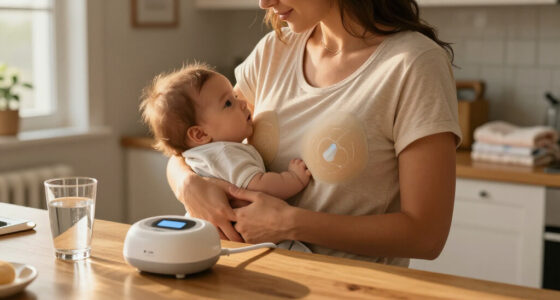
When choosing a baby monitor with a breathing sensor, safety and reliability are key. The Owlet Dream Sock stands out as the best overall pick, offering accurate monitoring with a comfortable sock design. For those seeking a more versatile video option, the Nanit Smart Baby Monitor System provides detailed insights with a sleek setup. Meanwhile, the Philips Avent Premium Connected Baby Monitor offers high-definition video with basic breathing alerts. The main tradeoffs in this category often involve balancing advanced sensor accuracy against ease of use, comfort, and price. Keep reading to explore detailed reviews and help you find the right monitor for your needs.

Turn the school run and nap time into listening time
- Thousands of audiobooks, podcasts and originals
- Listen on your phone, tablet or Echo — also offline
- Cancel anytime
Complete the kit


Key Takeaways
- Top picks balance sensor accuracy with ease of use; overly complex models often sacrifice simplicity.
- Most highly-rated monitors use wearable sensors, but comfort and skin sensitivity are important considerations.
- Video monitors with integrated breathing sensors tend to be more versatile but also more expensive.
- Battery life and connectivity stability are common issues that impact everyday usability.
- Price varies widely; investing in a premium model generally offers better sensor reliability and features.
| Baby Movement Monitor with Gentle Vibration Alerts |  | Best Overall for Versatile Movement Monitoring | Battery Life: Up to 7 days | Recharge Time: 1 hour | Connectivity: Bluetooth Low Energy | VIEW ON AMAZON | See Our Full Breakdown |
| Owlet Dream Sock Smart Baby Monitor |  | Best for Infant Health Monitoring and Secure Data | Compatibility: iOS and Android | Age Range: 1–18 months | Weight Range: 6–30 lbs | VIEW ON AMAZON | See Our Full Breakdown |
| Nanit Smart Baby Video Monitor System with Floor Stand & 8″ Display Screen |  | Best for Comprehensive Sleep and Milestone Tracking | Display Screen: 8 inches | Video Resolution: 1080p HD | Battery Life: 3-6 hours | VIEW ON AMAZON | See Our Full Breakdown |
| Philips Avent Premium Connected Baby Monitor, 1080p Camera, 5″ HD Screen |  | Best for High-Quality Video with Smart Features | Camera Resolution: 1080p | Screen Size: 5 inches | Range: 1300 ft | VIEW ON AMAZON | See Our Full Breakdown |
| Momcozy Smart Baby Monitor, 2K HD & Night Vision Contact-Free Baby Monitor |  | Best for High-Resolution Video & AI Cry Detection | Resolution: 2K HD | Night Vision: Infrared, 940nm | Zoom: 8x digital | VIEW ON AMAZON | See Our Full Breakdown |
| Babysense 7 Baby Sleep Movement Monitor for Newborns and Infants |  | Best Overall for Safe, Non-Contact Movement Monitoring | Sensor Type: Under-mattress passive sensors | Coverage: Full crib or bed area | Connectivity: No WiFi | VIEW ON AMAZON | See Our Full Breakdown |
| Sense-U AI 2.5K PTZ Baby Camera Monitor with Sensor-Free Sleep Movement Detection |  | Best for High-Resolution Room Coverage and Sensor-Free Monitoring | Video Resolution: 2.5K HD | Pan-Tilt-Zoom: 345° pan, 50° tilt | Monitoring Features: Movement detection, cry detection, background audio | VIEW ON AMAZON | See Our Full Breakdown |
| Owlet Dream Sock Smart Baby Monitor |  | Best for Real-Time Vital Sign Monitoring of Healthy Infants | Material: Nylon and Spandex | Battery Life: 16 hours | Connectivity: Bluetooth, 2.4 GHz Wi-Fi | VIEW ON AMAZON | See Our Full Breakdown |
| Sense-U Pro Baby Movement & Sleep Position Monitor |  | Best for Detailed Movement and Sleep Position Data | Brand: Sense-U | Unit Count: 1 | UPC: 198715880410 | VIEW ON AMAZON | See Our Full Breakdown |
| Babysense Video & Movement Monitor Bundle Pack |  | Best for Complete Video and Movement Monitoring in a Secure System | Video Monitor Screen Size: 2.4 inches | Connectivity: 2.4GHz FHSS | Camera Expandability: up to 4 cameras | VIEW ON AMAZON | See Our Full Breakdown |
| Owlet Dream Sock Smart Baby Monitor |  | Best for Real-Time Health Monitoring and Sleep Insights | Compatibility: U.S. only | Battery Life: 16 hours | Connectivity: Bluetooth, 2.4 GHz Wi-Fi | VIEW ON AMAZON | See Our Full Breakdown |
| baby monitor with breathing sensor | Connectivity | Battery Life |
|---|---|---|
| Baby Movement Monitor with Gen | Bluetooth Low Energy | Up to 7 days |
| Owlet Dream Sock Smart Baby Mo | Bluetooth and 2.4 GHz Wi-Fi | 16 hours |
| Nanit Smart Baby Video Monitor | WiFi, iOS/Android, Alexa, Google Home | 3-6 hours |
| Philips Avent Premium Connecte | — | Up to 12 hours |
| Momcozy Smart Baby Monitor | WiFi | — |
| Babysense 7 Baby Sleep Movemen | No WiFi | — |
| Sense-U AI 2.5K PTZ Baby Camer | Wi-Fi | — |
| Owlet Dream Sock Smart Baby Mo | Bluetooth, 2.4 GHz Wi-Fi | 16 hours |
| Sense-U Pro Baby Movement & Sl | Bluetooth Low Energy (BLE) 4.0+ | 7+ days |
| Babysense Video & Movement Mon | 2.4GHz FHSS | — |
| Owlet Dream Sock Smart Baby Mo | Bluetooth, 2.4 GHz Wi-Fi | 16 hours |
More Details on Our Top Picks
Baby Movement Monitor with Gentle Vibration Alerts
This monitor stands out for its simplicity and portability, making it ideal for parents who want to ensure their baby’s gentle abdominal movements are tracked without complicated setup. Unlike the Nanit system, it doesn’t offer video streaming or sleep insights but excels in providing real-time movement alerts through a smartphone app. Its two-step alert system, combining vibration and sound, gently encourages baby to move, reducing false alarms common with purely audio-based monitors. The reliance on Bluetooth means limited range and no Wi-Fi connection, which might be a drawback for those wanting remote access from multiple locations. Still, its battery life of up to 7 days and compact design make it a practical choice for everyday use across different sleep spaces.
Pros:- Real-time movement alerts via smartphone app
- Portable and easy to use across multiple sleep areas
- Gentle vibration encourages natural movement without disturbance
Cons:- Requires a compatible smartphone for alerts
- Limited Bluetooth range restricts remote monitoring
- Battery life can vary with usage intensity
Best for: Parents seeking a straightforward, portable movement sensor that alerts via app without the need for video.
Not ideal for: Families wanting video monitoring or integration with smart home devices, as this monitor lacks video and Wi-Fi connectivity.
- Battery Life:Up to 7 days
- Recharge Time:1 hour
- Connectivity:Bluetooth Low Energy
- App Compatibility:Android & iOS
- Materials:Baby-safe skin-contact materials
Our verdict“This monitor is best suited for parents who want a simple, portable device to track baby movement without video or Wi-Fi dependence.”
Owlet Dream Sock Smart Baby Monitor
The Owlet Dream Sock makes its mark by focusing on health metrics, offering real-time pulse and oxygen level monitoring that parents of infants 1–18 months find invaluable. Compared with the Nanit system, it doesn’t offer video streaming but provides detailed health insights, helping to identify potential issues early. Its secure 256-bit encryption and strict data privacy make it suitable for parents who prioritize data security. The sock’s comfort and long battery life of 16 hours enhance usability during sleep, yet its dependency on Wi-Fi and incompatibility with 5 GHz networks can be limiting in some homes. It’s best for parents who want health metrics and peace of mind over video monitoring or sleep tracking.
Pros:- Real-time pulse and oxygen level monitoring
- Secure data with industry-leading encryption
- Comfortable fabric sock with long battery life
Cons:- Not compatible with 5 GHz Wi-Fi networks
- Limited to infants up to 18 months
- Requires Wi-Fi for full functionality
Best for: Parents of infants who want to monitor pulse and oxygen levels securely during sleep.
Not ideal for: Those seeking a full video monitoring system or compatibility with all Wi-Fi networks, as it only works with 2.4 GHz Wi-Fi and up to 18 months age.
- Compatibility:iOS and Android
- Age Range:1–18 months
- Weight Range:6–30 lbs
- Battery Life:16 hours
- Connectivity:Bluetooth and 2.4 GHz Wi-Fi
- Security:256-bit encryption
Our verdict“This pick is ideal for parents prioritizing health metrics and data security over video features.”
Nanit Smart Baby Video Monitor System with Floor Stand & 8″ Display Screen
The Nanit system elevates monitoring with its high-definition video, sleep tracking, and milestone features, making it ideal for parents who want detailed insights into their baby’s sleep patterns and growth. Unlike the Owlet sock, it provides HD video streaming accessible via an 8″ display or app, offering a more complete monitoring experience. Its advanced sleep analysis and nursery condition sensors allow parents to track sleep quality and environment, but the initial setup requires a subscription and reliable internet access. The battery life of the portable display is limited, and WiFi dependence may be inconvenient for some. This system is best for tech-savvy parents who want a full-featured, all-in-one monitoring solution.
Pros:- Advanced sleep insights and automatic tracking
- HD live streaming with remote access
- Flexible setup with floor stand or wall mount
Cons:- Requires subscription for full features
- Limited battery life on the portable display
- WiFi dependency for complete functionality
Best for: Parents seeking a comprehensive, video-based system with sleep and milestone tracking.
Not ideal for: Families who prefer simple movement or health monitoring without video or who lack stable WiFi, as it relies heavily on internet connectivity.
- Display Screen:8 inches
- Video Resolution:1080p HD
- Battery Life:3-6 hours
- Charging Time:Under 2.5 hours
- Connectivity:WiFi, iOS/Android, Alexa, Google Home
- Sensors:Temperature and humidity
Our verdict“Ideal for parents wanting detailed sleep data and video monitoring in a single system, accepting the need for internet access and subscription costs.”
Philips Avent Premium Connected Baby Monitor, 1080p Camera, 5″ HD Screen
The Philips Avent monitor offers crisp 1080p video and night vision, making it a strong choice for parents who prioritize visual clarity. It includes cry detection and two-way talk, offering more interaction than the Nanit or Owlet sock, but falls short of comprehensive sleep tracking. Its privacy-focused WiFi connection ensures data security, while features like cry translation are optional and require a trial. Its 5″ screen is smaller than the Nanit’s, which might matter for parents who want a larger viewing area. This monitor suits those who want high-quality video combined with basic smart features but don’t need detailed sleep analytics.
Pros:- 1080p HD video with night vision
- Secure, private WiFi connection
- Includes cry detection and two-way talk
Cons:- Cry translation requires a trial and isn’t diagnostic
- Smaller 5″ screen limits viewing area
- Limited to video and audio without sleep insights
Best for: Parents wanting high-resolution video with basic smart features like cry detection and two-way talk.
Not ideal for: Families seeking in-depth sleep tracking or health monitoring, as it lacks those features and focuses on visual and audio monitoring.
- Camera Resolution:1080p
- Screen Size:5 inches
- Range:1300 ft
- Night Vision:Yes
- Battery Life:Up to 12 hours
- Additional Features:Cry detection, talkback, night light
Our verdict“Suitable for parents who prioritize visual clarity and basic interaction features over detailed sleep or health monitoring.”
Momcozy Smart Baby Monitor, 2K HD & Night Vision Contact-Free Baby Monitor
The Momcozy BM08 offers stunning 2K HD resolution, making it ideal for parents who want clear, detailed video of their baby. Its AI cry detection reduces false alarms, and its sleep summaries help track sleep without subscriptions. Compared to the Philips Avent, it provides higher video quality and smart detection features, though it does not offer video recording or a dedicated display—viewing is app-based only. Its 8x digital zoom enhances close-ups, and encryption ensures privacy. However, it’s not a medical device and requires WiFi for operation, making it less suitable for those needing health alerts or offline use. Perfect for tech-savvy parents who want high-quality visuals and AI-driven alerts.
Pros:- 2K HD resolution with clear night vision
- AI cry detection reduces false alarms
- No subscription needed for sleep summaries
Cons:- Requires WiFi for operation
- Not suitable for medical or health diagnosis
- Limited to monitoring, no medical alerts
Best for: Parents wanting a high-resolution, contactless video monitor with smart cry detection.
Not ideal for: Those needing health-specific monitoring or offline operation, as it’s solely a WiFi-based camera.
- Resolution:2K HD
- Night Vision:Infrared, 940nm
- Zoom:8x digital
- Encryption:128-bit AES
- Features:Cry detection, motion detection, sleep summaries
- Connectivity:WiFi
Our verdict“Best for parents seeking high-definition video with smart detection features and no ongoing subscription costs.”
Babysense 7 Baby Sleep Movement Monitor for Newborns and Infants
The Babysense 7 stands out for its non-contact design, making it a safe choice for parents who prefer to avoid wearable devices. Its under-mattress sensors cover the entire crib, providing reliable detection of infant movements without the complexity of WiFi setup—ideal for those wary of internet-connected devices. Compared to the Sense-U Pro, which offers more detailed sleep tracking and alerts, Babysense prioritizes safety and simplicity, though it doesn’t provide continuous monitoring or remote access. This model is best for parents who want straightforward movement alerts without additional features or connectivity concerns but may find the alerts limited to no-movement detection only, which isn’t as comprehensive as other options.Pros:- Non-contact, safe for infants with no skin contact needed
- Full crib coverage with two sensor pads for comprehensive monitoring
- High sensitivity reduces false alarms
Cons:- Requires placement under mattress, which can be inconvenient during setup
- No WiFi or remote access limits real-time monitoring
Best for: Parents seeking a safe, contactless movement monitor with full crib coverage and no WiFi dependency.
Not ideal for: Tech-savvy parents wanting real-time remote monitoring and detailed sleep analytics, as it lacks WiFi and app integration.
- Sensor Type:Under-mattress passive sensors
- Coverage:Full crib or bed area
- Connectivity:No WiFi
- Contact:Non-wearable, non-contact
- Detection:Detects baby’s movements and alerts if no movement or slowing occurs
Our verdict“This pick is perfect for parents prioritizing simple, contactless safety monitoring over detailed data or remote features.”
Sense-U AI 2.5K PTZ Baby Camera Monitor with Sensor-Free Sleep Movement Detection
The Sense-U AI 2.5K combines sharp 2.5K video with 345° pan and 50° tilt, making it ideal for parents who want broad room visibility. Its sensor-free movement detection and cry alerts provide a reliable, non-contact way to monitor sleep and distress, setting it apart from the Babysense 7, which only detects movement via sensors. While the high-res video and wide coverage make it suitable for larger rooms or multiple angles, it requires Wi-Fi for remote access, and some features depend on optional cloud services—potential tradeoffs for enhanced video clarity and comprehensive monitoring. This model suits tech-savvy parents who want detailed visuals along with movement and cry detection but might be less attractive for those seeking a standalone, no-internet device.Pros:- Ultra HD 2.5K video with wide pan and tilt for full room coverage
- Sensor-free movement and cry detection for reliable alerts
- Secure Wi-Fi connection with encryption and optional cloud storage
Cons:- SD card not included, additional purchase needed for local storage
- Requires Wi-Fi for remote viewing and some features
Best for: Parents needing a detailed, high-resolution camera with wide room coverage and movement detection without contact sensors.
Not ideal for: Families with limited Wi-Fi bandwidth or those preferring a simple, non-connected device, as it relies heavily on Wi-Fi and optional cloud storage.
- Video Resolution:2.5K HD
- Pan-Tilt-Zoom:345° pan, 50° tilt
- Monitoring Features:Movement detection, cry detection, background audio
- Connectivity:Wi-Fi
- Storage:Local SD card (not included), optional cloud
Our verdict“Best suited for parents who want detailed visuals and sensor-free monitoring with flexible room coverage, accepting Wi-Fi dependency.”
Owlet Dream Sock Smart Baby Monitor
The Owlet Dream Sock offers continuous tracking of pulse and oxygen levels, making it ideal for parents who want to monitor their baby’s health directly. Its comfortable sock fits infants from 6 to 30 pounds, providing real-time alerts if readings fall outside preset zones, unlike motion-only monitors like Babysense 7. While it excels in health monitoring, it doesn’t track movement or sleep position, so parents seeking full sleep analytics may find it lacking. Its reliance on Bluetooth and 2.4 GHz Wi-Fi ensures steady connection for healthy babies, but it’s less suitable for infants with medical concerns or those seeking comprehensive sleep data. This product targets health-conscious families who want reassurance about vital signs, not just movement.Pros:- Real-time pulse and oxygen level alerts for peace of mind
- Comfortable, easy-to-wear sock suitable for infants
- Reliable Bluetooth and Wi-Fi connectivity with secure data security
Cons:- Limited to healthy infants; not suitable for medical monitoring
- Requires stable 2.4 GHz Wi-Fi and Bluetooth connection
Best for: Parents of healthy infants wanting continuous pulse and oxygen monitoring for peace of mind.
Not ideal for: Parents seeking comprehensive sleep tracking or monitoring infants with health issues, as it focuses solely on vital signs.
- Material:Nylon and Spandex
- Battery Life:16 hours
- Connectivity:Bluetooth, 2.4 GHz Wi-Fi
- Compatibility:iOS and Android
- Age Range:1–18 months
- Security:256-bit encryption
Our verdict“Ideal for health-focused parents wanting continuous vital sign monitoring during sleep, with less emphasis on movement or sleep position.”
Sense-U Pro Baby Movement & Sleep Position Monitor
The Sense-U Pro offers a blend of movement, sleep position, and temperature tracking, making it suitable for parents who want detailed sleep insights. Its ability to detect abnormal movements and warmth with vibrations and sounds provides added safety, contrasting with Babysense 7’s simpler movement alerts. Its portability and long battery life of over a week make it a good choice for travel and overnight monitoring. However, full functionality depends on a smartphone app, and some users report that alerts can be overly sensitive, leading to false alarms. For parents who value comprehensive sleep analysis and positional safety, the Sense-U Pro provides a versatile option, though it might be less suitable for those wanting a standalone device.Pros:- Provides detailed sleep, movement, and position reports
- Gently alerts with vibrations and sounds for safety
- Lightweight, portable design with over a week of battery life
Cons:- Requires smartphone app for full use, adding complexity
- Sensitivity of alerts may cause false alarms
Best for: Parents needing detailed sleep, movement, and position data with portable and long-lasting monitoring.
Not ideal for: Parents seeking a simple, contactless solution or those sensitive to frequent alerts and app dependence.
- Brand:Sense-U
- Unit Count:1
- UPC:198715880410
- Warranty:1 Year
- Connectivity:Bluetooth Low Energy (BLE) 4.0+
- Battery Life:7+ days
Our verdict“A good pick for tech-savvy parents wanting comprehensive sleep and safety insights in a portable monitor, accepting some sensitivity tradeoffs.”
Babysense Video & Movement Monitor Bundle Pack
This bundle combines the Babysense V24R video monitor with Babysense 7 movement sensors, offering a comprehensive setup. The video monitor provides interference-free streaming with digital zoom, pan, and tilt, ideal for parents who want visual reassurance alongside movement alerts. Its sensor pads ensure full crib coverage without WiFi, contrasting with Sense-U AI’s Wi-Fi-dependent camera. While the bundle offers robust features, it requires multiple sensor pads for full coverage, which can be cumbersome during setup. The 2.4GHz technology limits flexibility compared to WiFi-based systems, but the security and reliability of the wired connection appeal to parents prioritizing privacy and interference-free operation. It’s best for families who want a secure, multi-sensor setup without relying on internet for movement detection.Pros:- Secure, interference-free digital video streaming with pan/tilt
- Non-contact movement monitoring for full crib coverage
- Supports multiple cameras for expanded monitoring
Cons:- Requires multiple sensor pads for complete coverage, which may be cumbersome
- Limited to 2.4GHz frequency, less flexible than WiFi systems
Best for: Parents seeking a secure, non-WiFi video and movement monitoring combo with full crib coverage.
Not ideal for: Tech-oriented families wishing for wireless, app-based video monitoring or minimal setup, as it relies on multiple sensor pads and no WiFi.
- Video Monitor Screen Size:2.4 inches
- Connectivity:2.4GHz FHSS
- Camera Expandability:up to 4 cameras
- Sensor Pads:2
- Monitoring Features:Room temperature alerts, night light, lullabies, white noise, digital zoom, auto scan
Our verdict“Perfect for parents who value a secure, wired video system combined with contactless movement detection, accepting setup complexity.”
Owlet Dream Sock Smart Baby Monitor
The Owlet Dream Sock stands out for its focus on tracking vital signs like pulse rate and oxygen levels, making it ideal for parents who prioritize health data over video monitoring. Compared with the Sense-U Pro, which combines movement and sleep position, the Dream Sock offers more detailed health metrics, but it sacrifices video capabilities. Its fabric sock design ensures comfort and long battery life, with 16 hours of use, facilitating overnight monitoring without frequent charging. However, its reliance on 2.4 GHz Wi-Fi and US-only compatibility limits its usability in some homes, and it doesn’t support 5 GHz networks, which are common in newer setups. This makes it best suited for families seeking continuous health insights without the need for a camera feed, but not for those wanting visual monitoring or with international setups.
Pros:- Real-time pulse and oxygen level alerts for proactive care
- Provides sleep trend insights to improve baby’s sleep routines
- Comfortable fabric sock with 16-hour battery life
Cons:- Limited to 2.4 GHz Wi-Fi networks, excluding 5 GHz support
- Only compatible within the U.S., restricting international use
- Requires Wi-Fi setup, which could be complex for some users
Best for: Parents who need continuous, real-time health data for infants 1-18 months and are comfortable with Wi-Fi setup.
Not ideal for: Families looking for a full video monitoring system or residing outside the U.S., due to compatibility limitations.
- Compatibility:U.S. only
- Battery Life:16 hours
- Connectivity:Bluetooth, 2.4 GHz Wi-Fi
- Weight Range:6-30 lbs
- Age Range:1-18 months
- Security:256-bit encryption, elliptic curve authentication
Our verdict“This pick is best for parents prioritizing detailed health monitoring and sleep insights over video, especially in U.S. homes with compatible Wi-Fi.”

How We Picked
I focused on evaluating each baby monitor with a breathing sensor based on performance, user experience, build quality, and value. Critical factors included sensor accuracy, comfort, ease of setup, app reliability, and additional features like video quality or alerts. Products were ranked by balancing these elements against user reviews and technical specifications, aiming to identify options that provide reliable safety monitoring without unnecessary complexity or cost. The goal was to highlight models suited for different needs—whether for new parents, tech enthusiasts, or budget-conscious families—ensuring each recommendation offers meaningful benefits and clear tradeoffs.Factors to Consider When Choosing Baby Monitor With Breathing Sensor
Choosing the right baby monitor with a breathing sensor requires considering several important factors beyond just sensor accuracy. Understanding these can help you avoid common pitfalls and select a device that fits your lifestyle and safety priorities. From comfort and connectivity to additional features, each aspect impacts how well the monitor will serve your family over time.Sensor Accuracy and Reliability
The core reason for choosing a breathing monitor is its ability to accurately detect your baby’s breathing patterns. Some sensors are contact-based, like socks or mats, offering high precision but potentially impacting comfort. Others use non-contact methods, which may be less invasive but sometimes less reliable. Consider how critical sensor accuracy is for your peace of mind and whether additional features like alerts compensate for potential limitations.
Comfort and Ease of Use
Since many breathing sensors are wearable, comfort becomes a key concern—especially for prolonged use. Look for designs that are gentle on sensitive skin and easy to put on or remove. User-friendly controls, straightforward app interfaces, and quick setup also influence daily usability. Beware of overly complicated systems that require frequent calibration or maintenance, as they can become burdensome over time.
Video and Audio Features
While the primary focus is safety, many parents want visual reassurance through video feeds. Monitors that combine video with breathing sensors offer a comprehensive view but can increase costs and setup complexity. Consider whether high-definition video, night vision, two-way audio, or temperature sensors are priorities for your household. Balance these extras against your budget and space constraints.
Connectivity and Battery Life
Reliable Wi-Fi connection is essential for uninterrupted alerts and video streaming. Some models are prone to disconnections, which can cause missed alerts or degraded video quality. Battery life varies significantly—some monitors need daily charging, while others last several days. Think about your daily routine and how much maintenance you’re willing to handle to keep the monitor functioning optimally.
Price and Value
Prices for baby monitors with breathing sensors range from budget-friendly to premium. Cheaper models often compromise on sensor accuracy, app stability, or additional features. Investing in a higher-end model usually results in better reliability and more comprehensive monitoring, but it’s essential to assess whether the added cost aligns with your safety priorities. Consider long-term value over initial savings, especially for devices critical to your child’s well-being.
Frequently Asked Questions
Are wearable breathing sensors safe for newborns?
Most wearable breathing sensors, such as socks or bands, are designed with baby safety in mind, made from soft, hypoallergenic materials. However, comfort and skin sensitivity vary between infants, so it’s important to choose a product with good reviews on comfort and to follow usage instructions carefully. Regularly inspecting the sensor and ensuring it fits properly can help mitigate any discomfort or skin issues.
Can a baby monitor with a breathing sensor replace regular supervision?
While these monitors offer valuable peace of mind by alerting you to abnormal breathing patterns, they should not replace active supervision. They are intended to supplement your awareness, not serve as the sole safety measure. Always keep an eye on your baby and use the monitor as an additional layer of security, especially during sleep or when you’re not in the same room.
How accurate are non-contact breathing monitors?
Non-contact monitors typically use radar or other signals to detect breathing, which can be less precise than contact sensors like socks. Environmental factors, movement, or interference can impact their performance. While they are convenient, it’s wise to understand their limitations and consider combining them with other safety measures if you need the highest accuracy for medical reasons.
What should I do if the monitor’s app frequently disconnects?
Frequent disconnections often stem from Wi-Fi issues or compatibility problems. First, ensure your router provides a stable connection and that the monitor is within range. Updating the app and firmware can resolve bugs, and reducing network congestion may help. If problems persist, consider a model with better connectivity features or dedicated hardware to improve stability.
Is investing in a premium baby monitor with a breathing sensor worth it?
Premium models often offer more reliable sensors, better build quality, and additional features like high-definition video or expanded alerts. If your primary concern is safety and peace of mind, investing in a higher-end monitor can be justified, especially for high-risk situations or if you want less fuss with false alarms. Conversely, if budget is a concern, mid-range options can still provide effective safety monitoring without the extra bells and whistles.
Conclusion
For parents prioritizing overall safety and reliability, the Owlet Dream Sock remains the best choice, especially for those seeking a proven wearable sensor. Budget-conscious families may find the Babysense 7 offers solid performance at a lower price point, though with some compromises on convenience. For tech enthusiasts who want comprehensive monitoring, the Nanit System combines high-quality video with sensor data, justifying a higher investment. Beginners or those new to safety tech should focus on user-friendly models like the Philips Avent monitor, which balances features with simplicity. Ultimately, your decision should match your specific needs, comfort level, and budget to ensure your little one’s safety and your peace of mind.Halloween Picks
halloween
As an affiliate, we earn on qualifying purchases.