
For a clear starting point, I’d choose The Whole-Brain Child as the best overall book to learn parenting because it connects child development with practical ways to respond to everyday behavior. How to Talk So Little Kids Will Listen is a more focused pick for communication with children ages 2–7, while Cribsheet suits readers who want a data-driven guide to early childhood decisions. The main tradeoff is whether you need broad guidance, a specific method for discipline or emotions, or help with one age range. I compare all 15 books by their audience, approach, and practical usefulness so you can choose a guide that fits your parenting questions.

Turn the school run and nap time into listening time
- Thousands of audiobooks, podcasts and originals
- Listen on your phone, tablet or Echo — also offline
- Cancel anytime
Complete the kit


Key Takeaways
- The Whole-Brain Child earns the broadest recommendation in this lineup by linking developing minds to strategies parents can apply during emotional moments.
- How to Talk So Little Kids Will Listen is the clearest age-specific choice, while its focus on ages 2–7 makes it less suited to parents of older children.
- Discipline books take different routes: 1-2-3 Magic offers a defined step-based method, while Parenting with Love and Logic emphasizes responsibility and choices.
- Cribsheet stands apart from the relationship and communication guides with a data-driven lens on decisions from birth to preschool.
- Several books center the parent’s own reactions, including Raising Good Humans, Good Inside, and How to Stop Losing Your Sh*t with Your Kids; choose among them based on whether you want mindfulness, a broader framework, or a direct focus on staying calm.
| Raising an Emotionally Intelligent Child: The Heart of Parenting |  | Best for Emotional Understanding | Format: Book | ISBN-10: 0684838656 (ASIN) | Topic: Children’s emotional intelligence | VIEW ON AMAZON | See Our Full Breakdown |
| 1-2-3 Magic: Gentle 3-Step Child and Toddler Discipline |  | Best for a Simple Discipline Framework | Format: Book | ISBN-10: 149262988X | Approach: Three-step discipline | VIEW ON AMAZON | See Our Full Breakdown |
| How to Stop Losing Your Sh*t with Your Kids: A Practical Guide to Becoming a Calmer, Happier Parent |  | Best for Parents Working on Their Reactions | Format: Book | ISBN-10: 1523505427 (ASIN) | Primary focus: Managing parental stress | VIEW ON AMAZON | See Our Full Breakdown |
| Parenting with Love and Logic: Teaching Children Responsibility |  | Best for Building Responsibility | Format: Book | ISBN-10: 1631469061 (ASIN) | Approach: Love and logical consequences | VIEW ON AMAZON | See Our Full Breakdown |
| The Big Book of Parenting Solutions: 101 Answers to Your Everyday Challenges and Wildest Worries |  | Best for Broad Everyday Questions | Format: Book | ASIN: B002M0HH66 | Number of answers: 101 | VIEW ON AMAZON | See Our Full Breakdown |
| The Whole-Brain Child: 12 Revolutionary Strategies to Nurture Your Child’s Developing Mind |  | Best for Understanding Child Development | Product type: Book | ASIN: 0553386697 | Title focus: Strategies for nurturing a child’s developing mind | VIEW ON AMAZON | See Our Full Breakdown |
| The Book You Wish Your Parents Had Read (And Your Children Will Be Glad That You Did) |  | Best for Reflective Parenting | ASIN: 1984879553 | Product type: Book | Author: Philippa Perry | VIEW ON AMAZON | See Our Full Breakdown |
| Raising Good Humans: A Mindful Guide to Breaking the Cycle of Reactive Parenting and Raising Kind, Confident Kids |  | Best for Breaking Reactive Patterns | ASIN: 1684033888 | Product type: Book | Primary approach: Mindful parenting | VIEW ON AMAZON | See Our Full Breakdown |
| How to Talk So Little Kids Will Listen: A Survival Guide to Life with Children Ages 2–7 |  | Best for Parents of Ages 2–7 | ASIN: 150113163X | Product type: Book | Named audience: Children ages 2–7 | VIEW ON AMAZON | See Our Full Breakdown |
| Tiny Humans, Big Emotions: How to Navigate Tantrums, Meltdowns, and Defiance to Raise Emotionally Intelligent Children |  | Best for Tantrums and Meltdowns | ASIN: 0063306271 | Product type: Book | Named audience: Children from infancy to age eight | VIEW ON AMAZON | See Our Full Breakdown |
| How to Talk So Kids Will Listen & Listen So Kids Will Talk | 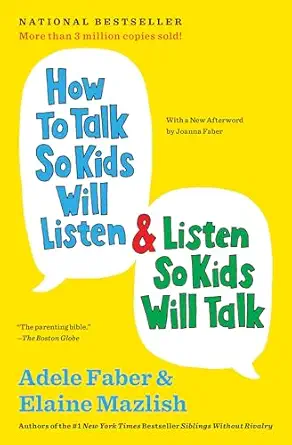 | Best for Everyday Communication | Title: How to Talk So Kids Will Listen & Listen So Kids Will Talk | ASIN: 1451663889 | Series: How to Talk series | VIEW ON AMAZON | See Our Full Breakdown |
| Raising Mentally Strong Kids: How to Combine the Power of Neuroscience with Love and Logic to Grow Confident, Kind, Responsible, and Resilient Children and Young Adults |  | Best for Building Resilience | Title: Raising Mentally Strong Kids | Subtitle: How to Combine the Power of Neuroscience with Love and Logic to Grow Confident, Kind, Responsible, and Resilient Children and Young Adults | ASIN: 1496484797 | VIEW ON AMAZON | See Our Full Breakdown |
| Cribsheet: A Data-Driven Guide to Better, More Relaxed Parenting from Birth to Preschool |  | Best for Data-Led Early Parenting | Title: Cribsheet | Subtitle: A Data-Driven Guide to Better, More Relaxed Parenting from Birth to Preschool | ASIN: 0525559272 | VIEW ON AMAZON | See Our Full Breakdown |
| No-Drama Discipline: The Whole-Brain Way to Calm the Chaos and Nurture Your Child’s Developing Mind |  | Best for Calm, Connected Discipline | Title: No-Drama Discipline | Subtitle: The Whole-Brain Way to Calm the Chaos and Nurture Your Child’s Developing Mind | ASIN: 034554806X | VIEW ON AMAZON | See Our Full Breakdown |
| Good Inside: A Guide to Becoming the Parent You Want to Be |  | Best for Empathy and Parent Reflection | Title: Good Inside | Subtitle: A Guide to Becoming the Parent You Want to Be | ASIN: 0063159481 | VIEW ON AMAZON | See Our Full Breakdown |
| book to learn parenting | ASIN | Format |
|---|---|---|
| Raising an Emotionally Intelli | — | Book |
| 1-2-3 Magic: Gentle 3-Step Chi | — | Book |
| How to Stop Losing Your Sh*t w | — | Book |
| Parenting with Love and Logic: | — | Book |
| The Big Book of Parenting Solu | B002M0HH66 | Book |
| The Whole-Brain Child: 12 Revo | 0553386697 | — |
| The Book You Wish Your Parents | 1984879553 | — |
| Raising Good Humans: A Mindful | 1684033888 | — |
| How to Talk So Little Kids Wil | 150113163X | — |
| Tiny Humans | 0063306271 | — |
| How to Talk So Kids Will Liste | 1451663889 | Book |
| Raising Mentally Strong Kids: | 1496484797 | Book |
| Cribsheet: A Data-Driven Guide | 0525559272 | Book |
| No-Drama Discipline: The Whole | 034554806X | Book |
| Good Inside: A Guide to Becomi | 0063159481 | Book |
More Details on Our Top Picks
Raising an Emotionally Intelligent Child: The Heart of Parenting
Emotional awareness is the focus here: the book offers parents practical ways to help children identify and manage feelings, while building empathy and self-awareness. That gives it a different purpose from 1-2-3 Magic, which centers on a structured discipline method, and from How to Stop Losing Your Sh*t with Your Kids, which focuses more directly on the parent’s stress and reactions. This pick makes sense if your main goal is to strengthen the emotional side of everyday parent-child conversations. Its emphasis can also help parents think beyond immediate behavior toward the feelings behind it. The tradeoff is that the supplied product information does not identify an age range, chapter structure, or specific exercises, so readers seeking a clearly scoped, step-by-step program may prefer a more narrowly defined guide.
Pros:- Offers practical strategies for children’s emotional development
- Centers empathy and self-awareness
- Aims to strengthen parent-child relationships
- Addresses emotional resilience as part of healthy development
Cons:- The supplied information does not specify a target age range
- No particular exercises or chapter structure are described
Best for: Parents who want practical guidance for helping children name emotions, build empathy, and develop emotional resilience
Not ideal for: Parents looking for a clearly age-specific discipline plan or a documented sequence of exercises, since those details are not provided
- Format:Book
- ISBN-10:0684838656 (ASIN)
- Topic:Children’s emotional intelligence
- Key focus:Understanding and managing emotions
- Development areas:Empathy, self-awareness, and emotional resilience
- Parenting aim:Healthier child development
Our verdict“Choose this book if emotional understanding is your main parenting goal; choose 1-2-3 Magic if you want a defined discipline framework.”
1-2-3 Magic: Gentle 3-Step Child and Toddler Discipline
A memorable three-step approach is the main reason this book stands apart: it gives parents a defined discipline framework for children and toddlers, with an emphasis on calm, gentle responses. Compared with Parenting with Love and Logic, which focuses on responsibility and logical consequences, 1-2-3 Magic is the more directly structured choice for parents who want a named sequence to follow. It may be easier to reach for when a household needs consistency around discipline. The tradeoff is its narrower scope: the supplied description centers discipline, not the broader emotional development explored in Raising an Emotionally Intelligent Child. The product details also do not explain the steps themselves or identify a precise age range, so parents should not assume the same guidance fits every child or situation.
Pros:- Presents a simple three-step discipline approach
- Emphasizes gentle, calm responses
- Addresses both toddlers and children
- Aims to support a happier family environment
Cons:- The supplied description focuses on discipline rather than broad parenting topics
- The product information does not explain the steps or give a precise age range
Best for: Parents of toddlers and children who want a calm, repeatable structure for everyday discipline
Not ideal for: Parents primarily seeking guidance on emotional development, or those who want detailed age-specific information before choosing a method
- Format:Book
- ISBN-10:149262988X
- Approach:Three-step discipline
- Stated audience:Children and toddlers
- Discipline style:Gentle
- Stated aim:Calmer, more effective discipline
Our verdict“Pick this for a structured discipline method; choose Raising an Emotionally Intelligent Child for a wider focus on children’s feelings.”
How to Stop Losing Your Sh*t with Your Kids: A Practical Guide to Becoming a Calmer, Happier Parent
The parent’s own stress is the starting point for this guide, which offers practical strategies for becoming calmer and improving family relationships. That makes it a distinct fit beside Raising an Emotionally Intelligent Child: the latter centers children’s emotional skills, while this title focuses on how a parent can respond under pressure. Compared with 1-2-3 Magic, it is less clearly presented as a fixed discipline system and more directly aimed at the adult’s state of mind. This is a useful angle for readers who find their reactions getting in the way of the kind of parent they want to be. The description does not provide an age range, specific techniques, or edition details, so parents seeking a concrete, age-targeted routine may find the available information too broad.
Pros:- Focuses on practical ways to manage parental stress
- Aims to support calmer responses
- Connects parent well-being with family relationships
Cons:- The supplied information does not name specific strategies or exercises
- No target age range or edition details are provided
Best for: Parents who want practical help managing stress and responding more calmly during difficult family moments
Not ideal for: Parents seeking a defined child-discipline sequence or guidance tailored to a specific developmental age
- Format:Book
- ISBN-10:1523505427 (ASIN)
- Primary focus:Managing parental stress
- Stated outcome:Becoming a calmer, happier parent
- Approach:Practical strategies
- Family focus:Improving relationships with children
Our verdict“Choose this if your priority is changing your own stress-driven reactions; choose 1-2-3 Magic for a more defined discipline structure.”
Parenting with Love and Logic: Teaching Children Responsibility
Responsibility and independent decision-making define this book’s role in the roundup. Its love-and-logical-consequences approach points parents toward helping children learn from choices, which gives it a different emphasis from 1-2-3 Magic and its three-step discipline framework. Where that title offers a simple structure for discipline, this one is better suited to parents focused on fostering independence and responsibility through their responses to children’s decisions. It also presents those lessons within a relationship-oriented approach. The description, however, does not specify the consequences or give a target age range, so readers looking for a clearly laid-out method may have trouble judging how it applies to their family. For emotional coaching, Raising an Emotionally Intelligent Child has the more direct focus.
Pros:- Focuses on teaching responsibility
- Promotes children’s independence and decision-making
- Frames guidance around love and logical consequences
Cons:- The supplied description does not detail how consequences are applied
- No target age range or specific product features are provided
Best for: Parents who want to encourage children’s responsibility, independence, and decision-making
Not ideal for: Parents who need a clearly specified age-based discipline sequence or detailed examples of how to apply the approach
- Format:Book
- ISBN-10:1631469061 (ASIN)
- Approach:Love and logical consequences
- Primary focus:Teaching children responsibility
- Development aim:Fostering independence
- Decision-making focus:Encouraging good choices
Our verdict“Choose this for a responsibility-centered approach; choose 1-2-3 Magic if a defined three-step discipline framework matters more.”
The Big Book of Parenting Solutions: 101 Answers to Your Everyday Challenges and Wildest Worries
Range is the appeal of this guide: its 101 answers are presented as practical help for common parenting challenges and worries. That breadth makes it a different choice from Parenting with Love and Logic, which centers on teaching responsibility, and from How to Stop Losing Your Sh*t with Your Kids, which focuses on parental stress. This pick may suit readers who want a broad reference for varied everyday questions rather than a book built around one parenting approach. The tradeoff is that a wide-ranging guide may not offer the same concentrated treatment of emotional development found in Raising an Emotionally Intelligent Child or the clearly named discipline framework of 1-2-3 Magic. The supplied description does not list the 101 topics or identify age coverage, making it hard to tell whether a particular concern is included.
Pros:- Offers 101 answers to parenting questions
- Addresses everyday challenges as well as broader worries
- Presents itself as a source of practical solutions and expert advice
Cons:- The supplied description does not list the topics covered
- No age range or specific method is identified
Best for: Parents who want a broad reference for a range of everyday challenges and parenting worries
Not ideal for: Readers seeking an age-specific guide or a focused, step-by-step method for discipline or emotional coaching
- Format:Book
- ASIN:B002M0HH66
- Number of answers:101
- Content:Practical solutions and expert advice
- Stated scope:Everyday parenting challenges and worries
- Age range:Not specified in the supplied product information
Our verdict“Choose this for broad coverage of everyday parenting questions; choose Raising an Emotionally Intelligent Child for focused emotional guidance.”
The Whole-Brain Child: 12 Revolutionary Strategies to Nurture Your Child’s Developing Mind
The Whole-Brain Child is a strong fit for parents who want a developmental framework behind everyday behavior, with strategies aimed at supporting a child’s developing mind. That focus gives it a different job from How to Talk So Little Kids Will Listen, which centers on practical communication for ages 2–7. I’d choose this book when understanding why a child may react intensely matters as much as finding words for the moment. Its tradeoff is that a brain-based approach may feel less immediately actionable for a caregiver seeking a quick script or a step-by-step discipline system. Compared with Raising Good Humans, it places more emphasis on the child’s development than on the parent’s mindful response patterns.
Pros:- Focuses on strategies for supporting a child’s developing mind.
- Connects parenting choices with child development.
- Offers a distinct perspective alongside communication-focused guides.
- Useful for parents seeking a broad framework for everyday behavior.
Cons:- The supplied product information does not specify the strategies in detail.
- A developmental framework may be less direct than a book centered on scripts or discipline steps.
Best for: Parents who want strategies framed around how a child’s developing mind affects behavior and emotional responses.
Not ideal for: Caregivers looking mainly for ready-to-use conversation scripts or a narrowly age-specific guide for toddlers and preschoolers.
- Product type:Book
- ASIN:0553386697
- Title focus:Strategies for nurturing a child’s developing mind
- Strategy count in title:12
- Named approach:Whole-brain
- Author:Not provided
Our verdict“Choose it if you want child-development context to guide your parenting; pick a communication-focused book for scripts you can use in the moment.”
The Book You Wish Your Parents Had Read (And Your Children Will Be Glad That You Did)
The Book You Wish Your Parents Had Read centers on how a parent’s own childhood experiences can shape relationships with their children. That makes it a more reflective choice than How to Talk So Little Kids Will Listen, whose stated focus is communication with children ages 2–7. I’d put Perry’s book high on the list for readers who want to examine connection and family patterns, not just troubleshoot a particular conversation. The tradeoff is that its relationship-centered lens may offer less age-specific guidance than a book built around a defined childhood stage. Compared with Raising Good Humans, this pick is described through the influence of past experience, while that guide emphasizes mindfulness and reactive parenting patterns.
Pros:- Addresses how childhood experiences can shape parent-child relationships.
- Focuses on building a stronger connection with a child.
- Offers a reflective angle distinct from age-specific communication guides.
Cons:- The supplied description does not identify a target age range.
- The provided product data does not spell out specific exercises or step-by-step methods.
Best for: Parents who want to reflect on how their own upbringing affects the way they connect with their children.
Not ideal for: Caregivers looking for age-banded advice or specific scripts for handling a current toddler communication challenge.
- ASIN:1984879553
- Product type:Book
- Author:Philippa Perry
- Primary focus:How childhood experiences shape relationships with children
- Guidance focus:Building a stronger parent-child connection
- Target age range:Not specified
Our verdict“Pick this book if examining family patterns and connection is your priority, and choose an age-specific guide for more targeted day-to-day advice.”
Raising Good Humans: A Mindful Guide to Breaking the Cycle of Reactive Parenting and Raising Kind, Confident Kids
Raising Good Humans is aimed at parents who want to change their own responses as they encourage kindness and confidence in their children. Its mindfulness focus separates it from The Whole-Brain Child, which frames its strategies around the child’s developing mind. I’d favor this book when a caregiver wants to pay attention to reactive habits and build a calmer parent-child relationship; its stated aim connects that work with children’s behavior and confidence. The tradeoff is that the supplied description gives no target age range or detailed account of the techniques, so readers cannot tell how closely its guidance fits a specific stage. Compared with The Book You Wish Your Parents Had Read, this guide is more explicitly about mindfulness and changing reactive parenting patterns.
Pros:- Centers mindfulness as part of parenting.
- Directly addresses breaking reactive parenting cycles.
- Connects parenting approaches with kindness and confidence in children.
Cons:- The supplied product information does not specify a target age range.
- No particular exercises or techniques are described in the provided details.
- Its broad focus may be less targeted than an age-specific communication guide.
Best for: Parents who notice reactive habits and want a mindful approach to encouraging kindness and confidence in their children.
Not ideal for: Caregivers who need age-specific instructions or detailed examples of the book’s methods before choosing a guide.
- ASIN:1684033888
- Product type:Book
- Primary approach:Mindful parenting
- Stated focus:Breaking reactive parenting cycles
- Child outcomes named:Kindness and confidence
- Target age range:Not specified
Our verdict“Choose it if changing your own reactive patterns is a central parenting goal, and look to an age-banded guide for stage-specific advice.”
How to Talk So Little Kids Will Listen: A Survival Guide to Life with Children Ages 2–7
How to Talk So Little Kids Will Listen is the most age-specific pick in this group: its stated audience is children ages 2–7, and its focus is communicating with young children. That makes it a practical match for caregivers who want help with conversations at this stage, rather than the broader developmental framing of The Whole-Brain Child or the mindful-parenting emphasis of Raising Good Humans. The age range gives buyers a clear reason to choose it, but also sets a boundary: parents of older children may get less direct value from its stated focus. The supplied description does not list particular techniques, so readers seeking a specific discipline method may prefer a guide whose product details spell that out.
Pros:- Clearly identifies children ages 2–7 as its audience.
- Keeps its focus on communication with young children.
- Offers a more targeted age fit than broad parenting guides.
Cons:- Its stated age range may limit relevance for parents of older children.
- The supplied description does not detail specific communication techniques.
- It is less directly focused on mindfulness or the parent’s own childhood experiences.
Best for: Parents and caregivers of children ages 2–7 who want a guide focused on communicating with young kids.
Not ideal for: Families seeking an age-neutral parenting framework or guidance aimed primarily at children older than seven.
- ASIN:150113163X
- Product type:Book
- Named audience:Children ages 2–7
- Primary focus:Communicating with young children
- Series:How to Talk
- Age range:2–7 years
Our verdict“Choose it for communication guidance tailored to ages 2–7, and choose a broader guide if your children are outside that range.”
Tiny Humans, Big Emotions: How to Navigate Tantrums, Meltdowns, and Defiance to Raise Emotionally Intelligent Children
Tiny Humans, Big Emotions focuses on tantrums, meltdowns, and defiance, with guidance described for children from infancy to age eight. That makes it the most directly targeted choice here for caregivers facing intense emotional moments across several early childhood stages. Compared with How to Talk So Little Kids Will Listen, it covers a wider stated age span and puts emotional challenges, rather than communication generally, at the center. Its tradeoff is that the provided description does not name particular strategies, so buyers cannot judge the methods’ detail from the available product information. The Whole-Brain Child also addresses a child’s developing mind, but this title more explicitly signals tantrums and emotional intelligence as its subject.
Pros:- Directly focuses on tantrums, meltdowns, and defiance.
- The stated audience spans infancy through age eight.
- Connects emotional challenges with fostering emotional intelligence.
- Targets a specific need more directly than broad parenting guides.
Cons:- The supplied description does not detail its specific strategies.
- Its focus may be narrow for readers seeking guidance on wider parenting topics.
- The stated age span is broad, with no age-by-age breakdown provided.
Best for: Caregivers of children from infancy through age eight who want guidance focused on tantrums, meltdowns, and defiance.
Not ideal for: Readers seeking a general parenting reference or a guide with specified step-by-step methods in the product details.
- ASIN:0063306271
- Product type:Book
- Named audience:Children from infancy to age eight
- Age range:Infancy–8 years
- Primary topics:Tantrums, meltdowns, and defiance
- Stated outcome:Fostering emotional intelligence
Our verdict“Choose it when emotional outbursts are your main parenting challenge, and pick a broader guide for general communication or family patterns.”
How to Talk So Kids Will Listen & Listen So Kids Will Talk
Communication is the focus here: the book centers on ways parents can listen to children and talk through everyday conflicts. That makes it a practical choice for readers who want help with cooperation and connection, rather than a broad guide to child development. Compared with No-Drama Discipline, which concentrates on responding to challenging behavior, this title takes a wider view of parent-child conversations. Its place in the roundup rests on that distinct emphasis and its direct, skill-building premise. The tradeoff is that the supplied product details do not identify age guidance, specific exercises, or the range of situations covered, so parents looking for a tightly age-targeted guide may prefer How to Talk So Little Kids Will Listen. It is a communication-oriented option, not a complete parenting curriculum.
Pros:- Focuses on both listening to children and speaking with them
- Targets everyday parent-child communication
- Offers a distinct communication focus compared with discipline-centered books
Cons:- Provided product information does not specify age range or chapter-level coverage
- May not meet readers’ needs for focused discipline or child-development guidance
Best for: Parents seeking practical guidance for listening to children and handling everyday conversations more constructively.
Not ideal for: Caregivers looking specifically for a toddler-focused guide, detailed age-based advice, or a book centered on neuroscience and discipline.
- Title:How to Talk So Kids Will Listen & Listen So Kids Will Talk
- ASIN:1451663889
- Series:How to Talk series
- Format:Book
- Primary focus:Parent-child communication
- Communication topics:Listening to children and talking with them
Our verdict“Choose this book if improving everyday conversations with your child is your main parenting goal.”
Raising Mentally Strong Kids: How to Combine the Power of Neuroscience with Love and Logic to Grow Confident, Kind, Responsible, and Resilient Children and Young Adults
Resilience and responsibility define this pick. Its stated approach combines neuroscience with love and logic to help parents support children’s confidence, kindness, and mental strength, including young adults. Compared with Cribsheet, which guides early-childhood decisions through data, this book aims at longer-term emotional and behavioral capacities rather than choices from birth through preschool. That wider developmental ambition gives it a different role in the roundup, especially for parents thinking beyond the toddler years. The tradeoff is that the available description offers few details about the book’s structure, age-by-age guidance, or specific techniques, so readers who want a clearly mapped set of exercises may find its scope hard to judge beforehand. It suits parents looking for a resilience framework more than a narrowly targeted how-to manual.
Pros:- Connects neuroscience insights with love and logic principles
- Emphasizes resilience and confidence
- Includes kindness and responsibility among its parenting aims
Cons:- Available description gives little detail about specific strategies or chapter structure
- Broad age span may be less targeted for parents seeking guidance for one developmental stage
Best for: Parents of school-age children or young adults who want a framework for supporting resilience, responsibility, and confidence.
Not ideal for: Expecting parents or caregivers seeking data-led guidance on infant and preschool decisions, or a detailed preview of specific exercises.
- Title:Raising Mentally Strong Kids
- Subtitle:How to Combine the Power of Neuroscience with Love and Logic to Grow Confident, Kind, Responsible, and Resilient Children and Young Adults
- ASIN:1496484797
- Format:Book
- Approach:Neuroscience combined with love and logic
- Intended age scope:Children and young adults
- Stated outcomes:Confidence, kindness, responsibility, and resilience
Our verdict“Pick this if your priority is helping older children build resilience and responsibility through a neuroscience-informed parenting approach.”
Cribsheet: A Data-Driven Guide to Better, More Relaxed Parenting from Birth to Preschool
Birth through preschool is this book’s clear lane: it uses data to help parents think through decisions during early childhood. That makes it a strong fit for readers who want an evidence-oriented lens on the many choices that arise in those years. Compared with Raising Mentally Strong Kids, whose stated scope reaches children and young adults and emphasizes resilience, Cribsheet stays with the early years and decision-making. The ParentData series affiliation reinforces that data-led positioning. The tradeoff is that the supplied description does not name the specific topics, methods, or decisions covered, so readers seeking a preview of its advice will have limited information here. It is a more defined age-stage pick than the broader books in this batch, but not a discipline manual by description.
Pros:- Clearly focuses on the birth-to-preschool years
- Uses a data-driven approach to parenting decisions
- Offers a defined early-childhood scope compared with broader-age guides
Cons:- Provided description does not list the decisions or topics covered
- May be less useful for parents seeking guidance beyond preschool
Best for: Expecting and new parents who want a data-oriented guide to decisions from birth through preschool.
Not ideal for: Parents of school-age children seeking guidance for later developmental stages, or readers primarily looking for discipline scripts.
- Title:Cribsheet
- Subtitle:A Data-Driven Guide to Better, More Relaxed Parenting from Birth to Preschool
- ASIN:0525559272
- Series:The ParentData Series
- Format:Book
- Age scope:Birth to preschool
- Approach:Data-driven parenting guidance
Our verdict“Choose this for data-oriented help with parenting decisions from birth through preschool.”
No-Drama Discipline: The Whole-Brain Way to Calm the Chaos and Nurture Your Child’s Developing Mind
Discipline through connection is the central promise of this book. Its description emphasizes calm, empathetic responses that support emotional regulation and a child’s developing mind, making it more focused than a general guide to parenting. Compared with How to Talk So Kids Will Listen & Listen So Kids Will Talk, which centers on communication across everyday interactions, this title is specifically about responding to behavior and reducing conflict. That focus gives parents a clearer reason to choose it when discipline is their pressing concern. The tradeoff is that the provided information does not name an age range or show how its techniques are organized, so it may be difficult to judge fit for a particular stage. Parents wanting broad decision guidance may be better served by Cribsheet.
Pros:- Centers calm and empathetic approaches to discipline
- Connects discipline with emotional regulation and brain development
- Has a more focused discipline remit than general communication guides
Cons:- Provided details do not specify an age range
- Description does not outline the techniques or how they are structured
Best for: Caregivers who want discipline guidance that prioritizes empathy, emotional regulation, and a child’s developing mind.
Not ideal for: Parents seeking broad early-childhood decision support, a clearly age-specific discipline plan, or details about the book’s exercises before choosing.
- Title:No-Drama Discipline
- Subtitle:The Whole-Brain Way to Calm the Chaos and Nurture Your Child’s Developing Mind
- ASIN:034554806X
- Format:Book
- Primary focus:Discipline
- Approach:Calm, empathetic parenting
- Developmental emphasis:Emotional regulation and brain development
Our verdict“Choose this if you want a focused guide to calmer discipline grounded in empathy and child development.”
Good Inside: A Guide to Becoming the Parent You Want to Be
Empathy and the parent-child relationship are at the heart of this guide. Its stated aim is to help parents become the kind of parent they want to be, with practical advice built around understanding and supportive connection. That makes it a reflective, relationship-centered choice alongside the more specialized books in this batch. Compared with No-Drama Discipline, which narrows its focus to discipline and emotional regulation, Good Inside presents a broader parenting aim. The tradeoff is that the supplied description does not clarify its age range or the specific practices it teaches, so readers seeking a step-by-step method for a particular challenge may prefer a more narrowly framed title such as How to Talk So Kids Will Listen & Listen So Kids Will Talk. This pick makes most sense for parents seeking a general empathy-centered guide.
Pros:- Focuses on empathy and understanding
- Aims to support a healthy parent-child relationship
- Offers a broader relationship-centered lens than a discipline-only guide
Cons:- Provided description does not specify an age range
- Specific practices and chapter coverage are not detailed in the available information
Best for: Parents who want practical, empathy-centered guidance for building a supportive relationship with their children.
Not ideal for: Caregivers looking for a defined age-specific program or detailed discipline steps for one immediate behavior challenge.
- Title:Good Inside
- Subtitle:A Guide to Becoming the Parent You Want to Be
- ASIN:0063159481
- Format:Book
- Primary focus:Supportive parent-child relationships
- Approach:Empathy and understanding
- Stated content:Practical parenting advice and positive parenting techniques
Our verdict“Choose this if you want broad, empathy-centered guidance for becoming a more supportive parent.”

How We Picked
I ranked these books by how well their stated focus helps a reader learn parenting in a usable, specific way. I weighed clarity of approach, fit for the ages or situations named in each title, and whether the book appears designed for broad guidance or a narrower need such as discipline, communication, emotional development, or early childhood decisions. A book with an identifiable framework ranks ahead of one whose appeal depends on a reader needing a particular topic.
The order also reflects versatility and audience fit. Broad guides such as The Whole-Brain Child place high because their focus can inform more than one recurring parenting challenge; more specialized books rank higher for readers whose needs match their focus. These are editorial recommendations based on the books’ described topics and approaches, not claims of firsthand testing. I also account for tradeoffs, including age limits, a narrower subject, or a method that may not match every family’s preferences.
Factors to Consider When Choosing Book To Learn Parenting
Before choosing a parenting book, I’d pin down the decision or recurring situation you want help with. A broad guide can give you a useful framework, but a focused book may offer more relevant advice when one challenge is taking up most of your attention.
Match the book to your child’s age
Parenting advice can change with a child’s language, independence, and ability to manage emotions, so check the age range before choosing a guide. A book aimed at toddlers may offer examples that feel distant from life with a school-age child, even if its core ideas still interest you. If your children span several ages, a broad development-focused book may be easier to use across the household. For one immediate challenge, an age-specific guide can make the advice feel more applicable. A common mistake is choosing by a familiar title alone without checking who the book addresses. Decide whether you want advice for the stage you are in now or a framework you can revisit later.
Choose a subject before choosing a method
Start with the kind of help you need: communication, discipline, emotional development, parental reactions, or early childhood decisions. Those topics overlap, but one book is unlikely to give equal attention to all of them. If arguments about limits are the main problem, a discipline-centered guide may serve you better than a general book on development. If you are trying to respond more calmly, a book that examines the parent’s own reactions may fit more closely. Avoid expecting a specialized guide to answer questions outside its scope. A short list of the situations you want to handle differently can help you check whether a book’s focus matches your needs.
Check whether the advice style fits your family
Parenting books can frame change through step-by-step discipline, mindful self-reflection, child development, or data. Think about whether you are looking for a clear sequence to try or a set of ideas you can adapt as situations change. A structured method can make it easier to act consistently, but its rules may feel restrictive if your family prefers a flexible approach. Reflective guidance may help you notice patterns, though it can feel less direct when you want an immediate response to a specific behavior. A data-focused book can support decision-making, but it may not speak to the emotional side of daily interactions. Choose the style you are most likely to return to when parenting gets busy.
Separate broad principles from ready-to-use tools
Some books aim to explain why children behave as they do; others focus on what a parent might say or do in a particular moment. These serve different purposes, and a book can offer one more strongly than the other. If you want language to use in a recurring conversation, prioritize practical examples and scripts. If you want a foundation for interpreting behavior, a developmental framework may have more lasting value. A common buying mistake is expecting insight alone to provide a quick solution, or expecting a list of techniques to explain every situation. Consider whether your next step is to understand a pattern or respond to one specific challenge. That distinction can guide your choice more reliably than a promise of a complete parenting solution.
Decide how broad a guide you need
A broad book can connect behavior, communication, and development, while a focused title can give more room to a single concern. If you are new to parenting books, a general framework may help you identify which questions matter most. If you already know what is not working, a narrower guide can make better use of your reading time. You do not need to buy several books that cover the same ground before you know what approach suits you. Start with one whose audience and subject clearly match your situation, then use its gaps to decide whether another perspective would add value. This keeps your reading focused instead of turning book selection into another parenting task.
Think about who else will use the advice
A useful book is easier to apply when caregivers can discuss its ideas and respond with some consistency. If two parents or other caregivers share decisions, consider whether the book’s framework is clear enough to explain and adapt together. Different approaches can still work across a family, but conflicting rules around discipline may confuse children or make follow-through harder. You might choose one shared guide, or each caregiver might read from a different perspective and compare notes. Avoid treating any single book as a rulebook that overrides what you observe about your child. The most useful choice is one that supports thoughtful, consistent decisions among the adults involved.
Frequently Asked Questions
Which book should I start with if I do not have one specific parenting problem?
I’d start with The Whole-Brain Child if you want a broad framework connected to child development and everyday responses. It offers a more general entry point than books focused only on discipline, early childhood choices, or a particular age group. If your main interest is how your own reactions shape family patterns, The Book You Wish Your Parents Had Read or Raising Good Humans may feel more relevant. Pick one that addresses questions you already have rather than trying to read several overlapping books at once. You can choose a narrower guide later if a particular challenge remains.
Should I choose a discipline book or a communication book first?
Choose based on where interactions tend to break down. If the hard part is setting limits and following through, a discipline-centered guide may address your immediate need. If conflict grows because children do not feel heard or directions turn into arguments, a communication-focused book may be a better first choice. The approaches can complement each other, but reading both at once can make it harder to tell which ideas are helping. Think of a recent difficult moment and ask whether the main issue was the limit itself or how the conversation unfolded. That answer can point you toward a more useful starting place.
Can one parenting book work for children at different ages?
A broad book may offer principles that apply across ages, but its examples and suggested responses can be more useful at some stages than others. For a household with children of different ages, look for a guide centered on development, communication, or family patterns rather than one built around a narrow age band. How to Talk So Little Kids Will Listen, for example, explicitly focuses on ages 2–7, which makes it a more targeted choice. You may need to adapt advice as children grow, and a single guide cannot cover every stage equally. If the age range is wide, choose for the child or challenge that needs the most attention now.
How do I choose between a data-driven book and an advice-focused guide?
Ask what kind of uncertainty you are trying to resolve. A data-driven title such as Cribsheet is aimed at early childhood decisions, while advice-focused books more often address communication, discipline, or emotional responses. Data can help you examine choices, but it may not provide a script for a hard conversation or a plan for handling conflict. Practical guidance can help in the moment, though it may not answer every question about competing evidence or decisions. If you need both, choose the book that matches your immediate decision first, then look for a second perspective only if a gap remains. The subject and age range matter as much as the style.
What if I want a book that helps me stay calmer as a parent?
Look for a book that directly addresses the parent’s own reactions, rather than assuming that child-focused techniques will resolve every tense moment. How to Stop Losing Your Sh*t with Your Kids puts staying calm in the foreground, while Raising Good Humans emphasizes mindfulness and breaking reactive patterns. Good Inside offers a broader guide to becoming the parent you want to be, which may suit readers looking beyond one kind of stressful interaction. These books differ in framing, so the best fit depends on whether you want direct help with reactivity, a mindful approach, or a wider perspective. Consider whether you prefer practical prompts or reflective guidance before choosing.
Conclusion
For the best overall starting point, I recommend The Whole-Brain Child for its connection between development and everyday parenting responses. Readers who want the best value in focused guidance can look to How to Talk So Little Kids Will Listen for communication with ages 2–7, while Cribsheet is the strongest fit for a data-driven early childhood perspective. If you are new to parenting books, begin with a broad guide such as The Whole-Brain Child; for a premium-level investment in a specialized subject, choose the book whose focus most closely matches your current need, such as Raising Mentally Strong Kids for resilience and responsibility. Parents seeking help with discipline can compare 1-2-3 Magic with Parenting with Love and Logic, while those focused on their own reactions can start with Raising Good Humans or How to Stop Losing Your Sh*t with Your Kids. The right choice is the one that fits your child’s stage and gives you the kind of guidance you will use.
Fall Picks
fall essentials
As an affiliate, we earn on qualifying purchases.