Books on baby development are essential resources for new parents seeking to understand their child’s growth milestones and behaviors. The Wonder Weeks stands out as the best overall choice for its stress-free approach and practical insights. For parents looking for comprehensive guidance, The Sears Baby Book offers an all-in-one resource covering from birth to age two. Each book differs in focus, depth, and tone, making the decision tricky. Some prioritize scientific explanations, while others focus on nurturing techniques or milestone tracking. Continue reading for a detailed comparison to help you find the perfect fit for your needs.

Turn the school run and nap time into listening time
- Thousands of audiobooks, podcasts and originals
- Listen on your phone, tablet or Echo — also offline
- Cancel anytime
Key Takeaways
- The top-ranking books balance scientific accuracy with accessible language, making complex development topics understandable for parents.
- Practicality varies: some books focus on daily caregiving tips, while others emphasize developmental milestones and behavior explanations.
- Price and depth are often inversely related; more comprehensive books tend to be more expensive and detailed.
- The best books cater to different parenting styles — from Montessori-focused to medical guides — so choosing one aligned with your approach matters.
- Many top picks include visual aids or structured month-by-month guides, which significantly enhance usability for new parents.
| The Wonder Weeks: A Stress-Free Guide to Your Baby’s Behavior | 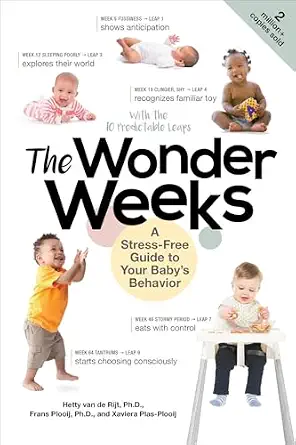 | Best for Understanding Developmental Leaps and Reducing Parental Stress | Author: Hetty Van de Rijt and Frans Plooij | Publication Year: 2010 | Pages: 336 | VIEW ON AMAZON | See Our Full Breakdown |
| The Sears Baby Book: Everything You Need to Know About Your Baby from Birth to Age Two |  | Best Comprehensive Guide for New Parents Covering Multiple Aspects of Early Childhood | Author: William Sears, Martha Sears | Publication Year: 2017 | Pages: 576 | VIEW ON AMAZON | See Our Full Breakdown |
| The Month-by-Month Baby Book: In-Depth Monthly Advice on Your Baby’s Growth, Care, and Development in the First Year |  | Best for Tracking Milestones and Practical Monthly Guidance | Author: Gary Ezzo and Robert Bucknam | Publication Year: 2014 | Pages: 352 | VIEW ON AMAZON | See Our Full Breakdown |
| Moms on Call Basic Baby Care 0-6 Months, 20th Anniversary Edition |  | Best Practical Routine Guide for Early Infant Care | Author: Julie and Jennifer (Moms on Call team) | Publication Year: 2018 | Pages: 256 | VIEW ON AMAZON | See Our Full Breakdown |
| The Montessori Baby: A Parent’s Guide to Nurturing Your Baby with Love, Respect, and Understanding |  | Best for Montessori-Inspired Nurturing and Emotional Development | Author: Katie Kimball | Publication Year: 2019 | Pages: 192 | VIEW ON AMAZON | See Our Full Breakdown |
| The First Twelve Months of Life: Your Baby’s Growth Month by Month |  | Best for Detailed Milestone Tracking | Focus: Monthly growth and development milestones | Intended Audience: New parents | Content Type: Growth milestones and practical advice | VIEW ON AMAZON | See Our Full Breakdown |
| Mayo Clinic Guide to Your Baby’s First Years, 3rd Edition |  | Best for Trusted Medical Expertise | Focus: Medical and developmental guidance | Intended Audience: Parents of infants and toddlers | Content Type: Developmental, health, and parenting advice | VIEW ON AMAZON | See Our Full Breakdown |
| The Simplest Baby Book in the World: The Illustrated, Grab-and-Do Guide for a Healthy, Happy Baby |  | Best for Visual Learners and New Parents | Focus: Basic baby care and health tips | Intended Audience: First-time parents | Content Type: Illustrated practical advice | VIEW ON AMAZON | See Our Full Breakdown |
| What to Expect the First Year (Updated 2025) |  | Best for Practical, Up-to-Date Guidance | Focus: Development milestones, health, daily care | Intended Audience: New parents | Content Type: Practical guidance and milestones | VIEW ON AMAZON | See Our Full Breakdown |
| The Whole-Brain Child: 12 Revolutionary Strategies to Nurture Your Child’s Developing Mind |  | Best for Supporting Emotional and Cognitive Growth | Focus: Emotional and cognitive development strategies | Intended Audience: Parents of children of all ages | Content Type: Parenting techniques based on brain science | VIEW ON AMAZON | See Our Full Breakdown |
| The Happiest Baby on the Block: Fully Revised and Updated Second Edition |  | Best Practical Techniques for Calming Newborns | Edition: Fully Revised and Updated Second Edition | Focus: Crying and sleep management | Target Age: Newborns | VIEW ON AMAZON | See Our Full Breakdown |
| Caring for Your Baby and Young Child, 8th Edition: Birth to Age 5 |  | Most Comprehensive Care Guide from Birth to Age Five | Edition: 8th Edition | Coverage: Birth to age 5 | Focus: Health, safety, development | VIEW ON AMAZON | See Our Full Breakdown |
| books on baby development | Format | Focus | Edition | Author |
|---|---|---|---|---|
| The Wonder Weeks: A Stress-Fre | Paperback | — | — | Hetty Van de Rijt and Frans Plooij |
| The Sears Baby Book: Everythin | Paperback | — | — | William Sears, Martha Sears |
| The Month-by-Month Baby Book: | Paperback | — | — | Gary Ezzo and Robert Bucknam |
| Moms on Call Basic Baby Care 0 | Paperback | — | — | Julie and Jennifer (Moms on Call team) |
| The Montessori Baby: A Parent’ | Paperback | — | — | Katie Kimball |
| The First Twelve Months of Lif | Printed book | Monthly growth and development milestones | Latest | — |
| Mayo Clinic Guide to Your Baby | Printed book | Medical and developmental guidance | 3rd | — |
| The Simplest Baby Book in the | Printed book | Basic baby care and health tips | Latest | — |
| What to Expect the First Year | Printed book | Development milestones, health, daily care | 2025 update | — |
| The Whole-Brain Child: 12 Revo | Printed book | Emotional and cognitive development strategies | Latest | — |
| The Happiest Baby on the Block | Print and digital | Crying and sleep management | Fully Revised and Updated Second Edition | Harvey Karp |
| Caring for Your Baby and Young | Health, safety, development | 8th Edition | — |
More Details on Our Top Picks
The Wonder Weeks: A Stress-Free Guide to Your Baby’s Behavior
This book stands out for translating complex developmental phases into accessible insights, helping parents anticipate and manage their baby’s behavioral changes. Compared with The Sears Baby Book, which offers broad parenting advice, The Wonder Weeks zeroes in on specific growth spurts, making it ideal for parents seeking a targeted understanding. While it excels at reducing stress by demystifying behavior, it lacks detailed updates or recent research references, which some parents might find limiting. Overall, this pick makes the most sense for new parents eager to decode their baby’s changing behaviors with confidence.
Pros:- Provides clear insights into developmental leaps
- Helps reduce parental stress through understanding
- Offers practical advice for managing behavior
Cons:- Lacks detailed references or the latest research updates
- Does not cover health or safety topics extensively
Best for: Parents looking for a straightforward, research-backed explanation of developmental leaps to alleviate anxiety
Not ideal for: Parents seeking comprehensive health and safety guidelines, which this book does not extensively cover
- Author:Hetty Van de Rijt and Frans Plooij
- Publication Year:2010
- Pages:336
- Language:English
- Format:Paperback
- Target Age:Birth to 12 months
Our verdict“Ideal for parents wanting a focused guide on developmental behavior and stress reduction.”
The Sears Baby Book: Everything You Need to Know About Your Baby from Birth to Age Two
This extensive resource offers a broad overview of caring for a baby from birth through toddlerhood, making it a reliable reference for many parents. Unlike The Wonder Weeks, which focuses narrowly on developmental leaps, The Sears Baby Book covers health, feeding, sleep, and safety, providing a well-rounded foundation. However, its generalist approach may lack the depth some parents desire for specific issues, and if not the latest edition, it could be slightly outdated. It’s best suited for those who want an all-in-one manual for early parenting.
Pros:- Covers a wide range of topics from health to sleep
- Ideal for first-time parents needing a complete guide
- Provides practical tips based on extensive experience
Cons:- May be outdated if not the latest edition
- Less depth on specific developmental milestones
Best for: Parents seeking a detailed, all-encompassing reference to navigate the first two years
Not ideal for: Parents looking for a specialized guide on developmental stages or behavior
- Author:William Sears, Martha Sears
- Publication Year:2017
- Pages:576
- Language:English
- Format:Paperback
- Target Age:Birth to 24 months
Our verdict“Great for parents who prefer a thorough, all-in-one guide to early childhood care and development.”
The Month-by-Month Baby Book: In-Depth Monthly Advice on Your Baby’s Growth, Care, and Development in the First Year
This book excels at providing detailed monthly guidance, making it highly useful for parents who appreciate a structured approach to tracking their baby’s progress. Compared with The Wonder Weeks, which emphasizes leaps, this book offers broader monthly care tips, but it may lack the specific focus on behavioral changes. Its straightforward format makes it accessible for new parents, though experienced caregivers might find it somewhat basic. It’s an excellent choice for those who want an organized, month-by-month overview of development.
Pros:- Provides comprehensive monthly milestones
- Easy-to-follow structure for new parents
- Focuses on practical care and growth
Cons:- Content may be too basic for experienced parents
- Lacks recent updates or advanced developmental insights
Best for: Parents who want a detailed, chronological guide to their baby’s first year
Not ideal for: Parents seeking an in-depth focus on behavioral psychology or developmental theories
- Author:Gary Ezzo and Robert Bucknam
- Publication Year:2014
- Pages:352
- Language:English
- Format:Paperback
- Target Age:0-12 months
Our verdict“Perfect for parents who prefer a clear, chronological roadmap of their baby’s first year.”
Moms on Call Basic Baby Care 0-6 Months, 20th Anniversary Edition
This guide is valued for its clear routines and straightforward advice, making it ideal for new parents who want simple, actionable steps for caring for their infant. Compared with The Wonder Weeks, which emphasizes developmental understanding, this book is more about establishing routines and daily care. Its focus on the first six months limits its usefulness for later stages, but for early months, it provides reliable, easy-to-follow guidance. This pick suits parents seeking practical, no-nonsense advice for infant routines.
Pros:- Offers easy-to-follow routines for 0-6 months
- Practical advice for new parents
- Celebrates 20th anniversary with updated content
Cons:- Limited to early months, not suitable for older infants
- Lacks detailed developmental or behavioral guidance
Best for: First-time parents looking for a clear and simple routine for caring for their newborn
Not ideal for: Parents wanting comprehensive development insights beyond early infancy
- Author:Julie and Jennifer (Moms on Call team)
- Publication Year:2018
- Pages:256
- Language:English
- Format:Paperback
- Target Age:0-6 months
Our verdict“Ideal for parents seeking straightforward routines for the first half-year of their baby’s life.”
The Montessori Baby: A Parent’s Guide to Nurturing Your Baby with Love, Respect, and Understanding
This book appeals to parents interested in applying Montessori principles to early caregiving, emphasizing respect, independence, and emotional growth. Unlike The Wonder Weeks, which centers on developmental leaps, this guide encourages nurturing a baby’s natural curiosity through love and respect. It’s less about tracking milestones and more about fostering a supportive environment. Its focus on Montessori methods makes it particularly suited for parents wanting a respectful, attachment-based approach but less ideal for those seeking detailed developmental timelines or behavior management strategies.
Pros:- Provides practical Montessori parenting strategies
- Focuses on nurturing love, respect, and independence
- Suitable for parents wanting a respectful approach
Cons:- Less focus on specific developmental milestones
- Content may be more philosophical than practical for some
Best for: Parents interested in Montessori principles and respectful caregiving approaches
Not ideal for: Parents seeking a traditional or medical model of infant development or behavior management
- Author:Katie Kimball
- Publication Year:2019
- Pages:192
- Language:English
- Format:Paperback
- Target Age:Birth to 12 months
Our verdict“Best for parents who want to integrate Montessori values into early caregiving with a focus on emotional growth.”
The First Twelve Months of Life: Your Baby’s Growth Month by Month
This book stands out for its thorough month-by-month guidance, making it ideal for new parents who want a clear roadmap of their baby’s growth during the first year. Compared with The Wonder Weeks, which emphasizes behavioral shifts, this guide offers concrete milestones and practical advice for caregivers. Its focus on growth stages helps parents understand developmental progress, but it lacks additional features like activity suggestions or health tips beyond milestones. The detailed approach makes it ideal for parents seeking structured guidance, though those wanting more interactive or comprehensive health info should look elsewhere.
Pros:- Detailed month-by-month growth guidance
- Practical advice tailored for new parents
- Clear framework for tracking milestones
Cons:- Limited information beyond growth milestones
- No supplementary tools or activities included
Best for: Parents who prefer structured, milestone-based guidance to track their baby’s growth month by month
Not ideal for: Parents seeking a more interactive or health-focused resource, or those interested in broader developmental strategies beyond growth milestones
- Focus:Monthly growth and development milestones
- Intended Audience:New parents
- Content Type:Growth milestones and practical advice
- Format:Printed book
- Page Count:Approx. 200 pages
- Edition:Latest
Our verdict“Ideal for parents who want a straightforward, milestone-focused guide to their baby’s first year.”
Mayo Clinic Guide to Your Baby’s First Years, 3rd Edition
This guide earns its spot for providing expert advice from the Mayo Clinic, covering the entire spectrum of infant and toddler development. Unlike The Simplest Baby Book in the World, which offers quick tips, this book dives into medical and developmental guidance, making it suitable for parents who want authoritative insights. Its comprehensive scope helps demystify health concerns, but the lack of detailed specifications or edition notes might leave some readers wanting more technical info. This pick makes the most sense for parents prioritizing trusted medical guidance over quick-reference formats.
Pros:- Expert guidance from Mayo Clinic
- Covers all phases of infant and toddler development
- Clear, accessible advice for parents
Cons:- No detailed edition or page count info
- Lacks visual aids or quick-reference tools
Best for: Parents who seek authoritative, medically sound advice for their child’s first years
Not ideal for: Parents looking for quick tips or highly visual, easy-to-digest content without in-depth guidance
- Focus:Medical and developmental guidance
- Intended Audience:Parents of infants and toddlers
- Content Type:Developmental, health, and parenting advice
- Format:Printed book
- Edition:3rd
- Page Count:Approx. 400 pages
Our verdict“Best suited for parents wanting trusted, medical-backed guidance during their child’s early years.”
The Simplest Baby Book in the World: The Illustrated, Grab-and-Do Guide for a Healthy, Happy Baby
This pick makes the most sense for parents craving quick, straightforward guidance with visual support. Its illustrated approach simplifies complex care tips, making it more accessible than the text-heavy What to Expect the First Year. However, it sacrifices depth—lacking detailed medical or developmental insights—and is limited to basic care practices. It’s ideal for first-time parents who want easy-to-follow, visual instructions but might fall short for those seeking comprehensive or advanced parenting strategies.
Pros:- Easy-to-understand illustrations
- Practical, straightforward advice
- User-friendly for new parents
Cons:- Limited medical or developmental detail
- Basic content may require supplementing for advanced topics
Best for: New parents who prefer visual, easy-to-understand guidance for caring for their baby
Not ideal for: Parents looking for in-depth medical or developmental information beyond basic care tips
- Focus:Basic baby care and health tips
- Intended Audience:First-time parents
- Content Type:Illustrated practical advice
- Format:Printed book
- Page Count:Approx. 100 pages
- Edition:Latest
Our verdict“Perfect for parents who want simple, visual guidance for everyday baby care.”
What to Expect the First Year (Updated 2025)
This updated edition makes the list for offering a comprehensive, practical guide to new parenthood, covering milestones, health, and daily care. Compared with The Whole-Brain Child, which emphasizes emotional and cognitive development, this book focuses more on everyday parenting challenges and milestones. Its broad coverage and recent update make it a go-to resource, but it lacks specific features like interactive tools or detailed specifications, which could limit its usefulness for parents seeking a more interactive experience. It’s best for parents who want a broad yet current overview of their baby’s first year.
Pros:- Updated for 2025 with current advice
- Covers milestones, health, and daily care comprehensively
- Practical tips for navigating early parenthood
Cons:- No specific features or interactive tools
- Lacks detailed specifications or technical info
Best for: Parents seeking a practical, up-to-date, comprehensive guide to their baby’s first year
Not ideal for: Parents wanting highly specialized developmental strategies or interactive content
- Focus:Development milestones, health, daily care
- Intended Audience:New parents
- Content Type:Practical guidance and milestones
- Format:Printed book
- Edition:2025 update
- Page Count:Approx. 350 pages
Our verdict“Ideal for new parents wanting a broad, current overview of their baby’s first year with practical guidance.”
The Whole-Brain Child: 12 Revolutionary Strategies to Nurture Your Child’s Developing Mind
This book earns its spot for translating developmental science into practical parenting strategies that foster emotional and cognitive growth. Unlike The First Twelve Months of Life, which emphasizes physical milestones, this pick delves into nurturing your child’s developing brain through specific techniques. While it provides valuable insights into emotional regulation and cognitive development, it offers less guidance on immediate physical care or health concerns. It’s best suited for parents interested in understanding and supporting their child’s mental and emotional development at any age, especially beyond infancy.
Pros:- Provides practical strategies for emotional and cognitive development
- Deepens understanding of child’s developing brain
- Supports nurturing emotional resilience
Cons:- Limited focus on physical health or medical guidance
- No specific features or content depth details
Best for: Parents wanting to support emotional and cognitive growth through proven parenting strategies
Not ideal for: Parents seeking a straightforward baby development guide focused solely on physical milestones
- Focus:Emotional and cognitive development strategies
- Intended Audience:Parents of children of all ages
- Content Type:Parenting techniques based on brain science
- Format:Printed book
- Page Count:Approx. 300 pages
- Edition:Latest
Our verdict“Perfect for parents aiming to nurture their child’s emotional and cognitive development through effective techniques.”
The Happiest Baby on the Block: Fully Revised and Updated Second Edition
This updated edition of The Happiest Baby on the Block stands out for its actionable calming techniques that help soothe crying newborns and promote better sleep. Compared with more comprehensive guides like Care for Your Baby and Young Child, 8th Edition, it focuses specifically on immediate calming methods, making it ideal for overwhelmed parents seeking quick relief. However, it lacks in-depth coverage of broader caregiving topics, which might leave some needing additional resources. The revised methods incorporate the latest research, ensuring parents get current advice. Pros include effective calming strategies, user-friendly techniques, and updated sleep advice. Cons are that it offers no detailed care routines beyond soothing, and it doesn’t cover developmental milestones. Verdict: This pick is perfect for new parents wanting quick, proven strategies to calm their newborns effectively.
Pros:- Provides practical, easy-to-implement calming techniques
- Updated with the latest sleep and soothing methods
- Helpful for new parents overwhelmed by crying babies
Cons:- Limited to calming and sleep strategies, not broad caregiving advice
- Lacks detailed guidance on developmental milestones or overall child care
Best for: Parents of newborns struggling with crying and sleep issues who need immediate, practical calming techniques.
Not ideal for: Parents seeking comprehensive developmental guidance or detailed parenting strategies beyond calming methods.
- Edition:Fully Revised and Updated Second Edition
- Focus:Crying and sleep management
- Target Age:Newborns
- Author:Harvey Karp
- Update Info:Latest methods for better sleep
- Format:Print and digital
Our verdict“This book makes the most sense for new parents who need quick, effective tools to soothe their crying baby and improve sleep patterns.”
Caring for Your Baby and Young Child, 8th Edition: Birth to Age 5
Caring for Your Baby and Young Child, 8th Edition offers a broad, detailed approach to caring for children from birth through age five. Unlike The Happiest Baby on the Block, which zeroes in on calming techniques, this book covers health, safety, developmental milestones, and parenting strategies in depth, making it ideal for caregivers who want a one-stop resource. While its comprehensive scope is a strength, the lack of specific updates or new research in the latest edition might be a drawback for those seeking the most current advice. Pros include broad coverage of child care, suitability for both new and experienced caregivers, and practical safety tips. Cons are that it lacks recent updates, and it’s less focused on immediate calming techniques. Verdict: This book is best for caregivers looking for an extensive, all-in-one guide to support their child’s growth and health from birth to preschool age.
Pros:- Provides extensive guidance on health, safety, and development
- Suitable for both new and experienced caregivers
- Includes practical tips on parenting and safety
Cons:- No recent updates or new research highlighted
- Less focus on specific immediate calming or sleep techniques
Best for: Parents and caregivers seeking a comprehensive, long-term care manual for children up to age five.
Not ideal for: Parents primarily interested in quick calming techniques or immediate sleep strategies, who may find this too broad or detailed.
- Edition:8th Edition
- Coverage:Birth to age 5
- Focus:Health, safety, development
- Ideal for:Both new and experienced caregivers
- Updates:No recent updates mentioned
- Format:Print
Our verdict“This pick is ideal for caregivers who want an all-encompassing resource to support their child’s well-being from birth through preschool years.”

How We Picked
Our evaluation focused on several key criteria: clarity of information, scientific credibility, usability, and relevance for different parenting styles. We prioritized books that offer actionable advice, are well-organized, and have positive reader feedback. The ranking reflects a balance between comprehensive content and ease of understanding, recognizing that new parents need accessible yet trustworthy guidance. Books that provide practical tools, such as milestone checklists or nurturing strategies, scored higher, helping us identify the most valuable resources for varied needs.| books on baby development | Author | Format |
|---|---|---|
| The Wonder Weeks: A Stress-Fre | Hetty Van de Rijt and Frans Plooij | Paperback |
| The Sears Baby Book: Everythin | William Sears, Martha Sears | Paperback |
| The Month-by-Month Baby Book: | Gary Ezzo and Robert Bucknam | Paperback |
| Moms on Call Basic Baby Care 0 | Julie and Jennifer (Moms on Call team) | Paperback |
| The Montessori Baby: A Parent’ | Katie Kimball | Paperback |
| The First Twelve Months of Lif | — | Printed book |
| Mayo Clinic Guide to Your Baby | — | Printed book |
| The Simplest Baby Book in the | — | Printed book |
| What to Expect the First Year | — | Printed book |
| The Whole-Brain Child: 12 Revo | — | Printed book |
| The Happiest Baby on the Block | Harvey Karp | Print and digital |
| Caring for Your Baby and Young | — |
Factors to Consider When Choosing Books On Baby Development
Choosing the right book on baby development depends on your specific needs, parenting style, and how much detail you’re seeking. Here are key factors to consider that go beyond just the content of each book, helping you make a more informed decision.Depth of Content
Decide whether you prefer a broad overview or a detailed, month-by-month guide. More in-depth books, like the Mayo Clinic Guide, offer comprehensive insights but can be overwhelming for some parents. Conversely, simplified books may lack the nuanced explanations you might want as your child grows. Matching the book’s depth to your comfort level and knowledge-seeking goals is essential.
Parenting Style and Philosophy
Consider how well a book aligns with your parenting approach. For example, Montessori books emphasize respectful, child-centered nurturing, while others focus more on medical milestones. Picking a book that matches your philosophy can lead to more consistent application and less confusion about your child’s needs.
Usability and Format
Look for books that are easy to navigate—those with clear headings, visual aids, or step-by-step guides. Visual learners will benefit from illustrated pages or charts, especially in the first few months. A well-organized book can save time and reduce frustration when searching for specific information.
Scientific Credibility
Verify that the book’s claims are supported by current research or reputable sources. Books authored by pediatricians or specialists tend to be more reliable. Avoid overly anecdotal or opinion-driven titles if you value evidence-based guidance.
Price and Longevity
Higher-priced books often provide more comprehensive coverage or durable binding, but budget options can still be very useful. Think about whether you’ll need ongoing reference material or just a quick-start guide, and choose accordingly. Sometimes investing in a more detailed book pays off as your child’s needs evolve.
Frequently Asked Questions
How do I choose a book that matches my parenting style?
Start by identifying your core parenting philosophy—whether it’s Montessori, attachment parenting, or medical-based. Then, look for books that emphasize those principles through their language and approach. For example, Montessori-focused books will highlight respect and independence, while medical guides tend to focus on developmental milestones and health advice. Matching the book’s tone and focus with your style ensures more consistent and satisfying application.
Are more detailed books better for first-time parents?
Not necessarily. While detailed books like the Mayo Clinic Guide provide extensive information, they can sometimes be overwhelming for new parents still learning the basics. Simpler, well-structured guides like The Wonder Weeks or The Sears Baby Book often offer enough detail without causing confusion. Consider your comfort level with reading and how much information you want at each stage.
Should I buy multiple books or just one comprehensive guide?
It depends on your preferences and needs. Some parents find that combining a practical, milestone-focused book with a more philosophical or nurturing guide offers a balanced perspective. However, investing in one high-quality, well-reviewed book tailored to your parenting style can reduce confusion and conflicting advice, especially if it covers your specific concerns thoroughly.
Is it worth paying more for a premium book?
Premium books often include better illustrations, more detailed advice, or additional resources like online support. If you’re seeking a long-term reference or have specific concerns, paying more can be a good investment. For quick reference or basic guidance, more affordable options may suffice, allowing you to allocate funds elsewhere in your baby’s care.
How do I know if a book is up-to-date with current developmental research?
Check the publication date and the credentials of the author. Titles published within the last two to three years tend to reflect the latest research, especially if authored by pediatricians or child development specialists. Reviews and endorsements from reputable organizations can also indicate reliability. Avoid outdated editions that may contain superseded information or outdated practices.
Conclusion
For new parents seeking a comprehensive and reliable resource, The Wonder Weeks offers a stress-free, scientifically grounded overview, making it the best overall pick. Budget-conscious readers will appreciate The Sears Baby Book for its broad coverage and affordability. Those interested in nurturing philosophies like Montessori should consider The Montessori Baby for a gentle, respectful approach. First-time parents or those overwhelmed by extensive details might find simplified guides like The First Twelve Months of Life more approachable. Ultimately, your choice depends on your parenting style, information needs, and budget—select the book that best supports your journey.
Halloween Picks
halloween
As an affiliate, we earn on qualifying purchases.