Choosing the right handwriting practice book can significantly impact a child’s learning and confidence with penmanship. The best overall pick offers a balanced approach with clear instructions and engaging exercises, making it suitable for most learners. The best for beginners focuses on foundational letter formation, ideal for early learners, while the best for advanced practice provides more challenging content for older children or those seeking to refine their skills. Common tradeoffs include balancing fun with educational value and deciding whether to prioritize reusable formats or comprehensive content. Continue reading for a detailed breakdown of the top options to help you select the perfect handwriting book.

Get baby and family essentials delivered free — and shop member deals
- Fast, free delivery on millions of items
- Access to Prime Big Deal Days deals on October 6–7
- Prime Video, Amazon Music and more included
Complete the kit


Key Takeaways
- The top-ranked books balance engaging activities with effective handwriting instruction, making practice both fun and educational.
- Reusable and wipe-clean formats tend to be more cost-effective over time but may offer fewer pages than traditional workbooks.
- Books targeting specific age ranges or skill levels provide better results than one-size-fits-all options, especially for progressing learners.
- High-quality print clarity and paper durability are essential for maintaining a clean writing experience and minimizing frustration.
- Additional features like fun facts or integrated activities can motivate children but should not compromise core handwriting practice.


More Details on Our Top Picks
AALGO Handwriting Practice Book for Kids, Reusable Grooved Handwriting Workbook
This reusable handwriting book stands out for its innovative use of disappearing ink and grooved guides, making it ideal for repeated practice without wasting paper. Compared to traditional paper-based workbooks like the Trace Letters workbook, it offers a more sustainable and interactive experience. However, the ink’s fading time can vary with environmental factors, and it requires careful handling to prevent smudging. Its sturdy, tear-resistant cardboard ensures durability, and its design accommodates both left- and right-handed children, making it versatile for home or classroom use. While it focuses mainly on basic letters, numbers, and simple addition/subtraction, it might be limited for children ready for more advanced writing tasks.
Pros:- Reusable with disappearing ink for endless practice
- Guides correct formation with grooved design
- Made from durable, tear-resistant material
- Suitable for both left- and right-handed children
Cons:- Fading ink can be inconsistent depending on environment
- Limited to basic handwriting and simple math activities
- Requires careful handling to avoid smudging
Best for: Parents or teachers seeking a durable, eco-friendly reusable workbook for children aged 3-8 who are just starting to learn handwriting.
Not ideal for: Older children or those needing advanced writing instruction, as the activities are primarily basic and repetitive.
- Includes:1 addition and subtraction, 1 number, 1 picture, 1 letter, 1 pen, 1 handle, 10 refills
- Size:5.1 x 7.4 inches
- Material:Thick, tear-resistant cardboard
- Suitable Age:3-8 years
- Features:Reusable, disappearing ink, grooved guide
Our verdict“This pick is perfect for early learners and parents wanting a sustainable, durable practice tool with repeated use potential.”
The Print Handwriting Workbook for Kids Ages 8-12: Improve Penmanship and Writing Skills with Science Facts
This workbook makes a compelling choice for older children who want to enhance their handwriting while also engaging with interesting science facts. Compared to the simpler Carson Dellosa K-2 Printing Handwriting Workbook, this one adds a layer of educational content that can motivate reluctant writers. Its main limitation is the lack of detailed content descriptions and the absence of reviews or ratings, which makes assessing its quality challenging. The inclusion of science facts provides a unique twist for students who thrive on contextual learning, but it may not be suitable for younger kids or those focusing solely on handwriting fundamentals. Overall, this resource is best for children who are ready to combine writing improvement with scientific curiosity.
Pros:- Helps improve handwriting and writing skills
- Includes engaging science facts to motivate students
- Suitable for children aged 8-12
Cons:- Lacks detailed content and review information
- No specific price or rating data available
- Limited focus on handwriting techniques alone
Best for: Parents of children aged 8-12 looking to boost handwriting while making science learning fun.
Not ideal for: Young children under 8 or those seeking purely handwriting-focused resources without additional content.
Our verdict“This workbook suits older kids eager to combine handwriting practice with science learning, though it lacks detailed content transparency.”
Carson Dellosa K-2 Printing Handwriting Workbook for Kindergarten to 2nd Grade
This workbook is tailored for early elementary students, emphasizing letter tracing and proper formation. Compared to digital or activity-rich options like the Handwriting Practice Book for Kids with fun phrases, it offers a straightforward approach suitable for foundational skill building. Its primary strength is its focus on letter tracing, making it ideal for kindergarten and early 1st grade learners. However, the lack of detailed content descriptions and absence of information on the number of pages or workbook size can make it harder for educators or parents to gauge its comprehensiveness. This resource is best for those seeking a simple, no-frills handwriting introduction for young children.
Pros:- Suitable for kindergarten to 2nd grade students
- Includes letter tracing activities
- Ideal for classroom or homeschool use
Cons:- No detailed content or page count provided
- Lacks variety of activities beyond tracing
- Limited information on workbook size
Best for: Parents and teachers looking for a basic, effective workbook for beginners in kindergarten and early 1st grade.
Not ideal for: Older children or students with advanced handwriting needs, as it focuses on foundational letter formation only.
Our verdict“This straightforward tracing workbook is a solid choice for beginners needing a basic foundation in handwriting.”
Trace Letters: Alphabet Handwriting Practice Workbook for Kids
This early childhood workbook emphasizes tracing letters, sight words, and basic math, making it a versatile tool for preschool and kindergarten learners. Compared to more comprehensive workbooks like the Handwriting Practice Book for Kids that include humorous phrases for older students, this one targets very young children focusing on simple, foundational skills. Its main limitation is the lack of detailed content descriptions and answer keys, which could hinder independent practice. Designed for early literacy and numeracy, it supports the essential skills for young learners but may fall short for children who need more advanced or varied activities.
Pros:- Supports early literacy and numeracy skills
- Suitable for preschool and kindergarten children
- Encourages handwriting practice
Cons:- No specific content details or answer keys
- Limited activities beyond tracing
- No information on workbook size or total pages
Best for: Parents and educators of children aged 3-5 who need a gentle introduction to handwriting, sight words, and basic math.
Not ideal for: Older children beyond preschool or kindergarten, or those seeking more complex handwriting exercises.
Our verdict“Ideal for preschoolers beginning their literacy and numeracy journey, though it offers limited content depth.”
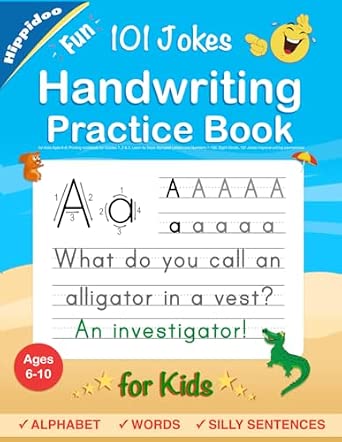
Handwriting Practice Book for Kids: Penmanship and Writing Workbook for Kindergarten to 4th Grade
This versatile workbook caters to a broad age range, from kindergarten through 4th grade, blending handwriting practice with fun phrases and humor. Compared to the Carson Dellosa K-2 workbook, it provides more engaging content suitable for slightly older children, promoting both skill development and enjoyment. Its main drawback is the lack of detailed content descriptions and specific age recommendations beyond grade levels, which could make it harder for parents to determine if it’s right for their child’s current skill level. The inclusion of humorous phrases makes handwriting practice more appealing and can motivate reluctant writers, but it may lack depth for advanced learners.
Pros:- Engages children with fun and humorous phrases
- Suitable for multiple grade levels
- Helps improve handwriting skills
Cons:- No detailed content or age range specifics
- Lacks information on total pages or workbook size
- May not be challenging enough for advanced writers
Best for: Parents seeking a flexible handwriting resource that combines learning and fun for children in kindergarten through 4th grade.
Not ideal for: Children needing intensive handwriting correction or those beyond 4th grade seeking more advanced skills.
Our verdict“This workbook is well-suited for a wide age range of children who enjoy fun activities while practicing handwriting.”
Magic Grooved Writing Practice Books for Kids 3-8
This set stands out for its innovative 3D groove design that guides children in forming letters and numbers accurately, making it an excellent choice for younger learners just starting handwriting. Compared with the Magic Grooved Writing Practice Books for Kids 3-7, it offers a broader age range and includes more accessories, but its reliance on ink refills may be a minor inconvenience. The thick, durable pages and child-safe materials support repeated practice without wear, and the disappearing ink makes it easy to reuse the same pages multiple times. However, some children might find the groove pattern initially challenging, and the need to purchase refills separately could add up over time. This pick makes the most sense for parents seeking a reusable, engaging, and guided handwriting tool for early learners.
Pros:- Guided tracing with tactile 3D grooves enhances pencil control
- Reusable with disappearing ink for endless practice
- Durable, child-safe materials support repeated use
Cons:- Requires ink refills which may need ongoing purchase
- Some children may find the groove pattern initially confusing
Best for: Parents of children aged 3-8 who want an interactive, reusable handwriting system with guided tracing.
Not ideal for: families on a tight budget who prefer fully digital or non-refillable options, or children who might struggle with tactile groove patterns.
- Includes:6 copybooks, 3 pen grips, 6 pens
- Suitable Age:3-8 years
- Design:3D groove for accurate tracing
- Refill Type:Disappearing ink
- Material:Thick, durable pages
- Additional:Silicone pen holder, includes drawing books
Our verdict“This set is best suited for early learners who benefit from tactile guidance and reusable practice, despite the need for ink refills.”
All-in-One Print Handwriting Workbook for Kids: 145 Fun Pages to Master Writing Skills
This workbook makes the list for its engaging approach, combining 145 pages of fun activities, jokes, and science facts that motivate children to practice handwriting in just 15 minutes daily. Compared with the Handwriting Practice Book for Kids Ages 6-10, it emphasizes quick, enjoyable sessions, but lacks specific details on the content scope or page count, which might leave some parents wanting more clarity. The variety of prompts keeps children interested and supports steady skill development without feeling like a chore. However, it doesn’t include additional materials or guided instruction, which might limit its effectiveness for some learners. This choice suits parents seeking a lively, activity-based handwriting resource that also sparks curiosity about the world.
Pros:- Highly engaging with jokes, facts, and prompts to motivate kids
- Short daily sessions promote consistent practice
- Supports handwriting skill development alongside general knowledge
Cons:- Lacks detailed content descriptions or page totals
- No extra materials or guided instructions included
Best for: Parents of children aged 6-10 looking for a quick, engaging handwriting practice with educational content.
Not ideal for: families who prefer structured, curriculum-based workbooks with explicit page counts and instructional guidance.
Our verdict“This workbook is ideal for active kids who thrive on fun activities and want to learn about the world while improving handwriting.”
Magic Grooved Writing Practice Books for Kids 3-7
This collection stands out for its multi-workbook system, tactile 3D grooves, and included accessories, making it a comprehensive choice for developing handwriting, fine motor skills, and early literacy. Compared with the Magic Grooved Writing Practice Books for Kids 3-8, it offers more workbooks and additional tools like stickers and ergonomic grips, but its focus remains primarily on handwriting and early literacy, not higher-level skills. The durable cardboard construction and reusable ink refills support active use, though careful handling is necessary to prevent smudging. While engaging for children who enjoy tactile activities, it might be less appealing to those preferring digital options or broader subject matter. This set is best for parents wanting a well-rounded, reusable handwriting program for preschool and early elementary children.
Pros:- Multiple workbooks and accessories support comprehensive learning
- Reusable with disappearing ink for endless practice
- Tactile 3D grooves aid in proper letter formation
Cons:- Requires careful handling to avoid ink smudging
- Limited to handwriting and early literacy activities
Best for: Parents of children aged 3-7 seeking a durable, multi-activity handwriting and early literacy kit.
Not ideal for: families with older children or those looking for digital or curriculum-based programs, since it’s tailored for early learners.
- Number of Workbooks:5
- Magic Pens:2
- Refills:10
- Ages:3-7
- Material:High-quality cardboard
- Binding:Top-spiral
Our verdict“This versatile, tactile set suits early learners who need a durable, engaging way to develop handwriting and literacy skills at home.”
Print Handwriting Practice for Kids 8-12: 250 Fun Facts about Science, Animals, and History
This book makes the list by pairing handwriting practice with fascinating facts about science, animals, and history, appealing to children aged 8-12 who enjoy learning as they write. Unlike the more straightforward Handwriting Practice Book for Kids Ages 6-10, it offers a broader educational context, making practice sessions more engaging. However, it provides limited details about the number of pages or the specific exercises, which could be important for planning study time. The inclusion of interesting facts helps sustain motivation, but the focus on content might reduce time spent on actual handwriting drills. This book works best for older children who want to combine learning with penmanship practice, rather than those seeking purely handwriting-focused resources.
Pros:- Combines handwriting with engaging facts to motivate learners
- Suitable for older children aiming to expand knowledge
- Makes practice sessions more interesting through varied content
Cons:- No specific page count or exercise details provided
- Limited focus on handwriting drills alone
Best for: Parents of kids aged 8-12 wanting to integrate handwriting with subject-based learning and curiosity.
Not ideal for: Younger children or those seeking detailed handwriting drills without additional content distractions.
Our verdict“Ideal for older kids who enjoy learning about the world while refining their handwriting skills, despite limited content specifics.”
Handwriting Practice Book for Kids Ages 6-10: Printing Workbook for Grades 1-4
This book earns its spot by offering targeted practice for children aged 6-10, focusing on tracing alphabet letters, numbers up to 100, sight words, and basic math drills. Compared with the All-in-One Print Handwriting Workbook for Kids, it emphasizes foundational skills necessary for early grades, but provides fewer details about the number of pages or specific content structure. Its straightforward approach makes it a reliable choice for teachers and parents who want to reinforce basic academic and handwriting skills in a structured way. However, it lacks additional content or personalized instruction, which could limit its appeal for children needing more interactive or varied activities. This workbook suits those seeking a simple, grade-appropriate practice resource for early elementary students.
Pros:- Focuses on essential alphabet, number, and sight word practice
- Supports foundational skill development for early grades
- Suitable for both home and classroom use
Cons:- Limited content variety and details on content volume
- No extra activities or interactive elements
Best for: Parents and teachers working with children in grades 1-4 aiming to strengthen handwriting and basic academic skills.
Not ideal for: Families looking for advanced handwriting practice or more engaging content beyond basic tracing and drills.
Our verdict“This workbook is best for early elementary learners who need straightforward, grade-appropriate handwriting and basic skill reinforcement.”

How We Picked
We evaluated each handwriting practice book based on several key criteria: the clarity of instructions, the quality of the paper and printing, the variety and engagement level of exercises, and overall value for money. We prioritized books that cater to different learning stages, from beginners to more advanced writers, ensuring a broad range of options. Books with positive reviews from parents and educators, as well as those that combine fun and educational content, ranked higher. Our ranking reflects a balance between price, usability, and instructional quality, aiming to help readers find practical, effective options suited to their child’s needs.Factors to Consider When Choosing Handwriting Practice Books
Selecting the right handwriting practice book depends on several important factors. Beyond just the content, you should consider the child’s age, learning style, and the specific handwriting skills they need to develop. Quality materials and design also influence how enjoyable and effective the practice will be. Being aware of common pitfalls, such as choosing books that are too advanced or too simplistic, can save you time and money. Here are key considerations to guide your decision:Age and Skill Level
Matching the book to your child’s age and current handwriting skills is crucial. Books designed for beginners typically focus on letter formation and basic strokes, while those for older children might include cursive or more complex writing tasks. Selecting a book that’s too advanced can lead to frustration, whereas one that’s too simple may not challenge them enough. Pay attention to recommended age ranges and skill descriptions to find a good fit.
Content Quality and Engagement
Look for clear, easy-to-follow instructions paired with engaging exercises. Books that incorporate fun themes, colorful illustrations, or interactive elements tend to keep children motivated. Conversely, overly repetitive or dull content can cause boredom. Striking a balance between educational rigor and engaging design enhances both learning and enjoyment.
Format and Durability
The physical quality of the book influences how long it will last and how pleasant the experience is. Reusable, wipe-clean pages are great for repeated practice, especially if you want to minimize costs. Traditional workbooks with perforated pages are convenient but may wear out faster. Consider the materials used and whether the format suits your child’s learning style.
Additional Features
Extras like fun facts, puzzles, or themed activities can boost motivation. However, these should complement core handwriting practice rather than distract from it. Be wary of books that prioritize entertainment at the expense of instructional quality. The best choices integrate engaging content with solid handwriting exercises for a balanced approach.
Price and Value
While some premium books offer high-quality materials and comprehensive content, they often come at a higher cost. More affordable options can be effective if they meet your child’s needs, but beware of overly cheap books that lack clarity or durability. Consider how many pages or exercises are included relative to the price to determine the best value.
Frequently Asked Questions
Should I choose a handwriting book that focuses on print or cursive?
The choice depends on your child’s current skills and future goals. Print handwriting is typically easier for beginners and essential for early schooling, while cursive can be introduced once they are comfortable with print. If your child is preparing for a specific curriculum or handwriting style, select a book aligned with that. Many comprehensive books offer both styles to provide a balanced approach.
Are reusable handwriting practice books worth the extra cost?
Reusable books with wipe-clean pages can be highly cost-effective over time, especially for repetitive practice. They also allow children to perfect their strokes without wasting paper. However, they might lack the variety found in traditional workbooks. Consider your child’s learning style and whether frequent practice or diverse exercises are more important for their progress.
How do I know if a handwriting book is suitable for my child’s age?
Most books specify an age range or skill level on the packaging. Look for descriptions that match your child’s current abilities—early learners benefit from books emphasizing basic strokes and letter shapes, while older children may need more advanced content. If unsure, reviewing sample pages or consulting reviews can help gauge suitability.
What features should I prioritize for a beginner handwriting book?
For beginners, focus on books that provide clear instructions, large and spaced-out letters, and simple exercises that build confidence. Reusable or wipe-clean formats can help reinforce skills through repetition. Engaging visuals and a gentle progression from basic shapes to full letters also support a smoother learning curve.
Is it better to buy a comprehensive handwriting book or multiple specialized ones?
A comprehensive book offers a well-rounded approach, covering various skills in one package, which can be convenient and cost-effective. Specialized books, however, target specific areas like cursive or speed, which may be beneficial if your child needs extra practice in those areas. Consider your child’s current level and goals to decide whether a single all-in-one resource or multiple focused books will serve best.
Conclusion
For parents seeking an all-around effective option, the best overall handwriting practice book provides a balanced mix of instruction and engagement suitable for most children. If you’re after a budget-friendly choice that still offers quality, the best value picks deliver solid practice at a lower cost. For newcomers or very young learners, the best for beginners focuses on foundational skills with simple exercises. Those looking for premium features or extensive content should consider the best premium options, which often include additional activities or durable formats. Ultimately, selecting the right book depends on your child’s age, skill level, and learning preferences—use this guide to make an informed choice that fosters confident handwriting growth.
Halloween Picks
halloween
As an affiliate, we earn on qualifying purchases.