Choosing the right Montessori math materials can significantly enhance a child’s learning experience, fostering independence and understanding of mathematical concepts. The Wooden Number Tracing Board Set stands out as the best overall, offering versatile tracing activities that develop fine motor skills and number recognition. For a more comprehensive counting experience, the Montessori Hundred Board for Kids provides engaging number sequencing from 1 to 100. Meanwhile, the Little Bud Kids House of Number Buddies Math Game offers an interactive approach that makes learning playful. Each option balances usability, durability, and educational value, but tradeoffs include price, complexity, and suitability for different age groups. Keep reading for a detailed breakdown to find the perfect fit for your child’s needs.

Turn the school run and nap time into listening time
- Thousands of audiobooks, podcasts and originals
- Listen on your phone, tablet or Echo — also offline
- Cancel anytime
Complete the kit


Key Takeaways
- The top-ranked products combine tactile manipulatives with visual aids to support different learning styles.
- Durability and safety are critical; high-quality wood options outperform plastic in longevity and environmental impact.
- Price varies widely; investing in versatile, expandable kits often offers better long-term value.
- Some materials are better suited for beginners or younger children, while others serve more advanced learners.
- Interactive and game-based options tend to engage children longer but may sacrifice some focused skill development.
| Wooden Number Tracing Board Set for Kids |  | Best for Fine Motor Skills and Basic Number Recognition | Number Boards: 1 to 10 | Wooden Balls: 55 | Material: Solid beech wood | VIEW ON AMAZON | See Our Full Breakdown |
| Montessori Hundred Board for Kids Aged 3+ – Educational Math Toy for Counting 1-100 |  | Best for Number Memorization and Counting Skills | Material: Wood | Size: 13.7″ x 13.7″ x 0.4″ | Includes: Hundred board, 1-100 number blocks, storage box, 2 blank blocks | VIEW ON AMAZON | See Our Full Breakdown |
| Montessori Math Board for Multiplication & Division – Wooden Educational Toy for Homeschool and Classroom Learning |  | Best for Visualizing Multiplication and Division Concepts | Material: Wood | Type: Multiplication & Division Board | Intended Users: Children, Kids, Students, Homeschoolers | VIEW ON AMAZON | See Our Full Breakdown |
| Little Bud Kids House of Number Buddies Math Game |  | Best for Multi-Sensory Addition and Subtraction Practice | Age Range: 4-8 years | Pieces: 98 | Material: Wood | VIEW ON AMAZON | See Our Full Breakdown |
| Wooden Math Manipulatives for Ages 3-6 – Farm Counting Board |  | Best for Counting, Sorting, and Early Math Play | Number of animal counters: 30 | Number of math tiles: 16 | Board dimensions: 9.84 x 8.66 x 0.31 inches | VIEW ON AMAZON | See Our Full Breakdown |
| Kghios Montessori Golden Beads Materials Decimal System Bank Game Math Toys |  | Best Overall for Comprehensive Decimal System Practice | Material: Beech wood and durable plastic | Includes: 9 pieces of 1000 beads, 45 of 100 beads, 45 of 10 beads, 45 unit beads, decimal cards, calculation symbols, storage plates | Suitable for: Children over 3 years old | VIEW ON AMAZON | See Our Full Breakdown |
| Kghios Montessori Golden Beads and Cards Math Toys Materials for Toddlers |  | Best for Early Decimal Understanding with Accessible Components | Material: Beech and plastic | Includes: 1000, 100, 10 beads; digital cards for 1-9, 10-90, 100-900, 1000; calculation symbols; wooden cup, fabric bag, wooden tray | Suitable Age: 3+ years | VIEW ON AMAZON | See Our Full Breakdown |
| Montessori Small Wooden Number Cards with Box (1-9000) |  | Best for Number Recognition and Large-Scale Counting | Brand: Elite Montessori | Educational Objective: Math Skills | Age Range: 3 years and up | VIEW ON AMAZON | See Our Full Breakdown |
| Wooden Montessori Math Hundred Board for Kids, Counting 1-100 with Storage Bag | 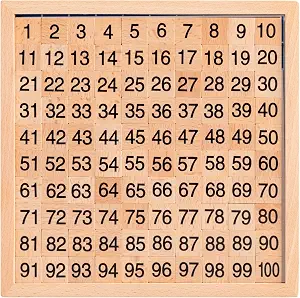 | Best for Basic Counting and Number Sequence Practice | Material: 100% safe wood | Size: 8.35 x 8.35 inches | Tile Size: 0.75 x 0.75 inches | VIEW ON AMAZON | See Our Full Breakdown |
| Asweets 2 in 1 Wooden Montessori Multiplication Addition Board Game |  | Best for Interactive Basic Math Practice | Material: High-quality wood | Design: Double-sided with multiplication and addition boards | Includes: 100 problem cards | VIEW ON AMAZON | See Our Full Breakdown |
| Montessori Math Toys Material for Toddlers – 10 Sets Colored Bead Chains 1-10 |  | Best for Visual Number Relationships and Fine Motor Skills | Number of Sets: 10 | Bead Size: 0.8 cm | Suitable Age: 3 years and above | VIEW ON AMAZON | See Our Full Breakdown |
| Little Bud Kids Counting Pegs – Montessori Math Game with Addition and Subtraction Flash Cards, Wooden Number Peg Boards for Kids 3-7 |  | Best for Hands-On Arithmetic and Multi-Tool Engagement | Number of Pegs: 59 | Number of Boards: 10 | Flashcards: 20 | VIEW ON AMAZON | See Our Full Breakdown |
| montessori math material | Material |
|---|---|
| Wooden Number Tracing Board Se | Solid beech wood |
| Montessori Hundred Board for K | Wood |
| Montessori Math Board for Mult | Wood |
| Little Bud Kids House of Numbe | Wood |
| Wooden Math Manipulatives for | Wood |
| Kghios Montessori Golden Beads | Beech wood and durable plastic |
| Kghios Montessori Golden Beads | Beech and plastic |
| Montessori Small Wooden Number | — |
| Wooden Montessori Math Hundred | 100% safe wood |
| Asweets 2 in 1 Wooden Montesso | High-quality wood |
| Montessori Math Toys Material | — |
| Little Bud Kids Counting Pegs | Wood |
More Details on Our Top Picks
Wooden Number Tracing Board Set for Kids
This set excels at promoting early number recognition and fine motor development through tactile activities like tracing and counting. Compared with the Hundred Board, this product offers more manipulatives and hands-on engagement, but it remains limited to basic numerical skills, making it less suitable for children progressing to more complex math concepts. Its natural beech wood and child-safe finish support safe, eco-friendly learning. However, its simplicity might bore older or more advanced learners, and small parts like tweezers require adult supervision. This pick makes the most sense for preschoolers just starting with numbers, especially those who benefit from tactile, motor-focused learning.
Pros:- Encourages hands-on learning and fine motor skills
- Made from safe, natural wood with child-safe finish
- Supports early math and cognitive development
Cons:- May be too simple for older children or those ready for more complex concepts
- Limited to basic number recognition and counting
- Requires adult supervision for small parts like tweezers
Best for: Parents of children aged 3-5 who want to develop fine motor skills alongside early number recognition
Not ideal for: Families seeking more advanced or comprehensive math tools, such as multiplication or number bonds, as it covers only basic counting and recognition
- Number Boards:1 to 10
- Wooden Balls:55
- Material:Solid beech wood
- Includes:Storage tray, wooden pen, tweezers
Our verdict“This set is an excellent entry-level tool for preschoolers starting with numbers and fine motor coordination.”
Montessori Hundred Board for Kids Aged 3+ – Educational Math Toy for Counting 1-100
This hundred board stands out for its ability to help children memorize and understand the sequence of numbers up to 100, making it ideal for early counting skills. Compared with the wooden number tracing set, it offers a broader view of the number range, fostering logical thinking, but it doesn’t include tactile or motor activities, which might limit engagement for some learners. Its large, easy-to-handle blocks are perfect for small hands, yet it’s confined to basic rote counting without introducing more advanced concepts like addition or multiplication. It’s best suited for children aged 3-5 who need visual reinforcement of number sequences and simple counting.
Pros:- Encourages early math skills and number recognition
- Large, easy-to-grasp blocks suitable for small hands
- Durable wooden construction
Cons:- Limited to numbers 1-100, not suitable for older children
- Requires supervision for writing on blank blocks
- Minor misalignment issues, though already addressed
Best for: Parents seeking a durable, visually focused tool to reinforce counting from 1 to 100 in early childhood
Not ideal for: Children beyond age 5 or those ready for more complex operations such as addition, subtraction, or multiplication
- Material:Wood
- Size:13.7″ x 13.7″ x 0.4″
- Includes:Hundred board, 1-100 number blocks, storage box, 2 blank blocks
Our verdict“This board makes a strong choice for beginner counters learning to memorize number sequences and develop foundational numeracy skills.”
Montessori Math Board for Multiplication & Division – Wooden Educational Toy for Homeschool and Classroom Learning
This math board offers a tactile way to grasp multiplication and division, supporting visual learners better than the simple number boards. Unlike the hundred board, which focuses on counting, this tool introduces contextual understanding of times tables and division through interactive play. Its sturdy wooden design ensures durability, but it’s limited to basic multiplication/division skills and doesn’t include digital or advanced features, making it less suitable for children ready for algebra or more complex math. This product is best for homeschoolers or classroom settings where foundational multiplication and division need reinforcing through hands-on methods.
Pros:- Hands-on approach enhances understanding of multiplication and division
- Suitable for various educational environments
- Durable wooden build
Cons:- Limited to basic multiplication/division concepts
- No electronic features for interactive learning
- May require adult supervision for younger children
Best for: Homeschoolers or teachers looking to introduce multiplication and division with a tactile, visual approach
Not ideal for: Children already proficient in basic multiplication or those seeking digital or more advanced math tools
- Material:Wood
- Type:Multiplication & Division Board
- Intended Users:Children, Kids, Students, Homeschoolers
- Use Cases:Homeschool lessons, classroom activities, math centers, tutoring
Our verdict“Ideal for early learners needing visual, tactile reinforcement of basic multiplication and division, but not for advanced math learners.”
Little Bud Kids House of Number Buddies Math Game
This game offers an engaging way for children aged 4-8 to practice addition, subtraction, and number bonds through multi-sensory activities. Its 98-piece set, including wooden number rods and flash cards, encourages active participation and varied learning modalities, making it more dynamic than static tools like the hundred board or multiplication board. Compared to the farm counting set, this game provides a broader range of mathematical concepts, especially focusing on early arithmetic. However, the size of the set might feel limited for extensive use and it requires adult supervision for younger children to prevent misplacement or choking hazards. It’s a versatile choice for children who thrive on active, hands-on learning.
Pros:- Engages children with multi-sensory learning activities
- Suitable for a wide age range from preschool to early elementary
- Durable, eco-friendly, and safe wooden materials
Cons:- Requires adult supervision for younger children
- Set size may feel limited for long-term use
- Additional storage might be needed for all pieces
Best for: Parents and educators seeking an interactive, multi-sensory math activity for children 4-8 to reinforce addition, subtraction, and number bonds
Not ideal for: Children beyond age 8 or those needing more advanced operations like multiplication or division
- Age Range:4-8 years
- Pieces:98
- Material:Wood
- Certifications:Non-toxic, Kid-safe
Our verdict“This game makes a lively, hands-on addition and subtraction practice tool perfect for active learners in early elementary grades.”
Wooden Math Manipulatives for Ages 3-6 – Farm Counting Board
This farm-themed set is tailored for preschool children learning to count, sort, and perform simple addition or subtraction. Its engaging animal counters and math tiles make basic arithmetic tangible and fun. Compared with the number tracing board, it emphasizes visual and physical engagement with numbers in a thematic context, which can make early math more relatable. However, its scope is limited to basic arithmetic, and the small tiles could pose a choking hazard if young children are unsupervised. The compact size of the set makes it ideal for small spaces but less suitable for children who are ready to explore more complex math concepts or need larger manipulatives for detailed work.
Pros:- Encourages hands-on learning with engaging farm theme
- Develops counting, sorting, and basic math skills
- Made of durable, sanded wood with clear artwork
Cons:- Limited to basic arithmetic, not suitable for advanced concepts
- Small tiles could be a choking hazard if not supervised
- Additional tools needed for more complex math
Best for: Parents of preschoolers who want a farm-themed, tactile introduction to counting and simple math concepts
Not ideal for: Children beyond age 6 or those seeking tools for more advanced math skills like multiplication or division
- Number of animal counters:30
- Number of math tiles:16
- Board dimensions:9.84 x 8.66 x 0.31 inches
- Recommended age:3-6 years
- Material:Wood
Our verdict“A charming, tactile farm set perfect for early math exploration and number recognition in preschoolers.”
Kghios Montessori Golden Beads Materials Decimal System Bank Game Math Toys
This set stands out for its extensive collection of beads, cards, and symbols that facilitate understanding of the decimal system and basic operations. Compared to the smaller bead sets, it offers a more complete toolkit suitable for detailed lessons, but its complexity may overwhelm very young children or those without adult guidance. The durable materials and variety of components make it ideal for sustained use in a classroom or home setting. However, the size and number of pieces require ample storage space, and younger children might need supervision to navigate the multiple parts effectively. This pick makes the most sense for educators or parents seeking a thorough, hands-on approach to foundational math. Pros: Rich set of components for multiple operations; high-quality, durable materials; supports sensory and visual learning. Cons: Can be too complex for beginners without guidance; requires significant space for storage and use.
Verdict: Best suited for committed educators or parents who want a comprehensive, tactile decimal system tool.- Material:Beech wood and durable plastic
- Includes:9 pieces of 1000 beads, 45 of 100 beads, 45 of 10 beads, 45 unit beads, decimal cards, calculation symbols, storage plates
- Suitable for:Children over 3 years old
Our verdict“Best Overall for Comprehensive Decimal System Practice — a strong pick in this lineup.”
Kghios Montessori Golden Beads and Cards Math Toys Materials for Toddlers
This set is tailored for children over 3 to grasp the decimal system through tactile play, combining beads, digital cards, and accessories for a well-rounded early math experience. When compared to the larger decimal set, it simplifies the learning process with fewer pieces, making it more approachable for younger children but possibly limiting advanced exploration. Its inclusion of cards and a wooden cup encourages cognitive development and independent activity. The small parts, however, could pose a choking hazard for the very young and might be too advanced for children under 3. This makes it ideal for toddlers ready to explore basic numeracy but less suitable for very active or unsupervised younger kids. Pros: Facilitates understanding of the decimal system through tactile play; Includes a variety of accessories for engagement; Designed to promote early cognitive and math skills. Cons: Parts may be too small for some children; Not suitable for children under 3 due to small pieces.
Verdict: Best for parents seeking a gentle, hands-on intro to the decimal system for early learners who are developmentally ready.- Material:Beech and plastic
- Includes:1000, 100, 10 beads; digital cards for 1-9, 10-90, 100-900, 1000; calculation symbols; wooden cup, fabric bag, wooden tray
- Suitable Age:3+ years
Our verdict“Best for Early Decimal Understanding with Accessible Components — a strong pick in this lineup.”
Montessori Small Wooden Number Cards with Box (1-9000)
This extensive set of wooden number cards from 1 to 9000 offers a visual foundation for understanding large numbers and number symbols, making it ideal for early learners progressing toward more advanced math skills. Unlike smaller, more focused sets, this collection supports a broad range of activities, from simple recognition to complex number patterning. However, its sheer size can be overwhelming for young children or beginners who need more guided, hands-on activities. The absence of additional educational features or interactive elements means it’s best for visual recognition rather than active manipulation. This set suits older preschoolers or early elementary students who need extensive exposure to large numbers but may be excessive for younger or very new learners. Pros: Massive set with 9000 cards for comprehensive exposure; Durable wood construction; Supports large-scale number recognition. Cons: No additional activity guides or features; Size and volume might be intimidating for some children.
Verdict: Ideal for children ready to explore large numbers and develop number symbol recognition in a visual format.- Brand:Elite Montessori
- Educational Objective:Math Skills
- Age Range:3 years and up
- Number of Items:9000
- Included Components:Cards
Our verdict“Best for Number Recognition and Large-Scale Counting — a strong pick in this lineup.”
Wooden Montessori Math Hundred Board for Kids, Counting 1-100 with Storage Bag
This hundred board offers a simple, tactile way for children to learn counting from 1 to 100. Its colorful tiles and portable design make it accessible for both home and classroom use, especially for introducing number sequences and early counting skills. Compared to digital or more interactive options, this board emphasizes hands-on, visual learning, which is ideal for young children just starting with numbers. However, its limited scope means it isn’t suitable for advanced math concepts or activities beyond basic counting. The absence of interactive features might be a drawback for children who benefit from more engaging or multi-sensory approaches. This makes it perfect for early math learners who need a straightforward tool to strengthen number familiarity. Pros: Encourages early counting skills; Made of safe, high-quality wood; Portable and easy to store. Cons: Limited to basic counting; No interactive or electronic features.
Verdict: Best for children beginning their number journey who need a clear, tactile counting tool.- Material:100% safe wood
- Size:8.35 x 8.35 inches
- Tile Size:0.75 x 0.75 inches
Our verdict“Best for Basic Counting and Number Sequence Practice — a strong pick in this lineup.”
Asweets 2 in 1 Wooden Montessori Multiplication Addition Board Game
This double-sided board combines multiplication and addition activities into a single durable wooden toy, making it suitable for children in kindergarten or early primary grades. Compared with single-focus tools like the hundred board or number cards, it offers a more interactive, problem-solving experience, fostering cognitive skills alongside foundational math understanding. Its inclusion of problem cards encourages independent or guided play, but the focus on only two operations limits its scope for more advanced topics. The need for supervision with younger children is a consideration, especially for handling problem cards and ensuring they understand the tasks. This product is ideal for parents or teachers wanting a versatile, engaging way to reinforce basic operations. Pros: Durable, safe construction; Promotes hands-on problem solving; Combines two core operations in one toy. Cons: Limited to addition and multiplication; May require adult guidance for optimal use.
Verdict: Perfect for early learners who need a multi-faceted, interactive math game to build confidence in basic operations.- Material:High-quality wood
- Design:Double-sided with multiplication and addition boards
- Includes:100 problem cards
- Suitable for:Children, kindergarten age
Our verdict“Best for Interactive Basic Math Practice — a strong pick in this lineup.”
Montessori Math Toys Material for Toddlers – 10 Sets Colored Bead Chains 1-10
This set of 10 colorful bead chains offers a simple yet effective way for toddlers to grasp the concept of numbers and basic addition or subtraction. Compared with the Little Bud Kids Counting Pegs, which includes more tools like flashcards and worksheets, these bead chains focus primarily on visual and tactile number recognition. They are excellent for introducing children to number sequencing and relationships but are limited when it comes to more advanced math concepts or structured activities. The bead size and bright colors make learning engaging, although the set’s simplicity means it won’t support deeper arithmetic teaching without supplementary materials. Handling can be tricky for very young children if care isn’t taken to prevent bead loss.
Pros:- Visually clarifies number sequences and basic arithmetic concepts
- Enhances fine motor and hand-eye coordination skills
- Flexible for use both at home and in classroom settings
Cons:- Limited scope—does not cover advanced math concepts or operations
- Requires careful handling to prevent bead loss, especially with young children
Best for: Families or educators seeking a straightforward, tactile way to introduce number sequences and early arithmetic to toddlers.
Not ideal for: Parents looking for comprehensive math kits that include addition, subtraction, and worksheets, or those needing advanced math tools, as this set is quite basic.
- Number of Sets:10
- Bead Size:0.8 cm
- Suitable Age:3 years and above
Our verdict“This set makes the most sense for caregivers looking for a simple, visual introduction to numbers for toddlers, but it may need additional tools for comprehensive math learning.”
Little Bud Kids Counting Pegs – Montessori Math Game with Addition and Subtraction Flash Cards, Wooden Number Peg Boards for Kids 3-7
Compared to the bead chains, the Little Bud Kids Counting Pegs set offers a broader range of activities, including addition, subtraction, and number recognition through peg insertion, flashcards, and worksheets. This versatility makes it suitable for children from preschool to early elementary, supporting both foundational counting and more complex operations. While the set’s variety is a strength, it might be overwhelming for very young children just beginning to understand numbers, especially without adult guidance. The wooden material and water-based finishes ensure safety and durability, although the small parts demand supervision. Unlike digital math tools, this set relies entirely on tactile and visual engagement, which can be a pro or con depending on the child’s learning style.
Pros:- Supports a wide range of math skills—counting, addition, and subtraction
- Includes various tools like flashcards, number boards, and worksheets for comprehensive learning
- Eco-friendly, non-toxic wooden construction with safe finishes
Cons:- May be too complex for children just learning to count, requiring adult supervision
- Limited digital or interactive features, which might appeal to tech-oriented learners
Best for: Parents and teachers seeking an all-in-one Montessori-inspired tool for early math development, including addition and subtraction practice.
Not ideal for: Caretakers of very young children who are just starting with basic counting, as the multiple components could be confusing or too advanced without a guided approach.
- Number of Pegs:59
- Number of Boards:10
- Flashcards:20
- Material:Wood
- Safety Certifications:Third-party certified non-toxic
Our verdict“This set is ideal for families wanting a versatile, tactile math resource that grows with their child’s skills, but it may be too advanced for absolute beginners without guidance.”

How We Picked
These Montessori math materials were selected based on a combination of durability, educational effectiveness, age appropriateness, usability, and value. We prioritized products that align with Montessori principles, such as hands-on learning and self-correction, while also considering safety and build quality. The ranking reflects how well each product supports foundational math skills like counting, number recognition, and operations, along with their capacity to grow with the child. Cost-effectiveness and ease of integration into both home and classroom settings also influenced our choices, ensuring that each pick offers a balanced mix of quality and educational impact.Factors to Consider When Choosing Montessori Math Materials
When choosing Montessori math materials, it’s important to consider several key factors that influence both learning outcomes and long-term usability. The right materials should match the child’s developmental stage, encourage independent exploration, and withstand active use. Balancing these considerations helps avoid common pitfalls, such as selecting overly complex tools for beginners or inexpensive options that quickly break. Understanding these broader factors enhances your ability to invest wisely in materials that truly support Montessori principles and your child’s growth.Age Appropriateness
Ensuring the material is suitable for your child’s age is crucial. Younger children benefit from tactile, simple tools like number cards and pegboards, while older children can handle more complex manipulatives, such as bead systems for decimal understanding. Misjudging age-appropriateness can lead to frustration or under-stimulation, so look for products explicitly designed for specific age ranges to maximize engagement and learning.
Material Durability and Safety
In Montessori environments, materials are often handled by multiple children, so durability is a key factor. Solid wood tends to outperform plastic in longevity and environmental safety, though it may come at a higher price. Always verify that materials are non-toxic, smoothly finished, and free from small parts that could pose choking hazards, especially for younger children.
Versatility and Expandability
Materials that can be used across multiple activities or that expand as skills develop offer better value. For instance, a set of number cards that can be used for addition, subtraction, and sequencing grows with your child’s abilities. Avoid overly specialized tools that serve only one purpose, as they may become obsolete quickly or require additional purchases to remain useful.
Ease of Use and Maintenance
Materials should be straightforward for children to manipulate independently. Clear labeling, simple assembly, and minimal maintenance are signs of quality. Consider whether the materials are easy to clean and store; cluttered or complicated setups can hinder ongoing engagement and learning.
Price and Long-Term Value
While budget-friendly options are appealing, investing in higher-quality, durable materials often proves more economical over time. Consider whether the product offers enough flexibility and longevity to justify the initial cost. Sometimes, a slightly higher investment in a comprehensive set can reduce the need for frequent replacements and additional purchases.
Frequently Asked Questions
Are Montessori math materials suitable for homeschooling?
Yes, many Montessori math materials are designed specifically for independent or guided use at home. Their tactile and self-correcting nature makes them ideal for homeschooling environments, where children can explore concepts at their own pace. However, it’s important to choose materials that match the child’s developmental level and to supplement them with guided instruction to maximize learning outcomes.
How do I know if a material is age-appropriate?
Check the manufacturer’s recommended age range and the complexity of the activity. Materials meant for early learners typically focus on basic counting and number recognition, while those for older children introduce operations and abstract concepts. Observing your child’s interest and skill level can also guide you; if they struggle or lose interest quickly, it might be too advanced or too simple.
Should I prioritize wood or plastic materials?
Wood generally offers greater durability and a more authentic Montessori feel, often providing a better sensory experience. Plastic options can be lightweight and less expensive but may wear out faster and are less environmentally friendly. Consider your budget, the child’s age, and your preference for tactile quality when making this decision.
Can these materials be used with multiple children?
Absolutely, high-quality Montessori materials are designed to withstand repeated use by multiple children. Look for sturdy construction, especially in wooden sets, and consider storage solutions that facilitate sharing and rotation. Proper cleaning and maintenance will also prolong their lifespan, making them suitable for multi-child homes or classrooms.
Is it better to buy a complete set or individual pieces?
Buying a complete set often provides better value and ensures you have all necessary components for a variety of activities. It also helps create a cohesive learning environment. However, starting with key pieces tailored to your child’s current level and gradually expanding can be more budget-friendly and allows for more personalized learning experiences.
Conclusion
For parents and educators seeking a well-rounded, durable, and versatile choice, the Wooden Number Tracing Board Set earns the title of best overall. Those on a tighter budget or looking for a simple, engaging option might prefer the Montessori Hundred Board for its straightforward approach. For those investing in a premium, long-lasting set that can grow with their child, the Kghios Golden Beads Materials stands out. Beginners or those new to Montessori methods will benefit from straightforward, easy-to-use tools like the Little Bud Kids House of Number Buddies. Ultimately, your selection should align with your child’s age, your educational goals, and your budget to foster an enriching learning environment.
Fall Picks
fall essentials
As an affiliate, we earn on qualifying purchases.