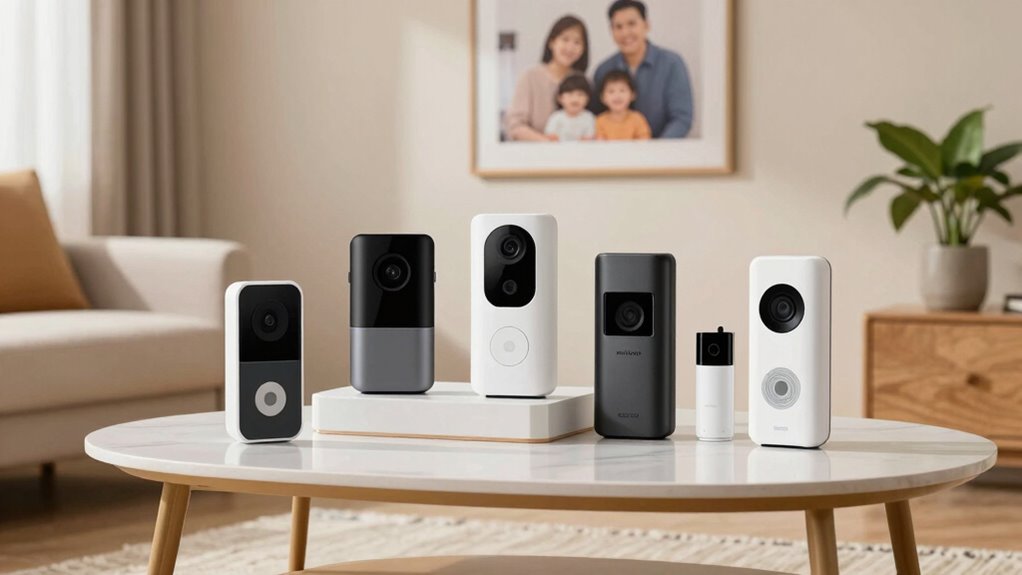

The best video doorbell for families is the Wireless Dual-Lens Video Doorbell with 8-Inch Touchscreen Monitor, because families with kids constantly coming and going need a screen inside the house — not just phone notifications that get missed during homework or dinner. Close behind, the 2-Wire Video Intercom System with Dual 7″ Touch Screen Monitors suits larger homes where two parents need to see and answer the door from different rooms, while the Tapo 2K Wireless Smart Video Doorbell with Chime is the strongest pick if your family already lives on smartphones and wants wide-angle coverage without wiring work. The main tradeoff in this category is convenience versus reliability: battery-powered app-based doorbells install in minutes but depend on Wi-Fi and charging, while monitor-based intercom systems are rock-solid and let kids answer the door without a phone. Subscription fees are another dividing line — several picks here store footage locally, which matters if you don’t want another monthly bill. Keep reading for the full breakdown of all 11 options and which one fits your household.

Turn the school run and nap time into listening time
- Thousands of audiobooks, podcasts and originals
- Listen on your phone, tablet or Echo — also offline
- Cancel anytime
Complete the kit


Key Takeaways
- Indoor monitors were the biggest differentiator for families: the dual-lens 8-inch system, the dual 7-inch 2-wire intercom, and the 7-inch touchscreen system let kids answer the door without a phone, which pure app-based doorbells like the Tapo or Orbitell can’t do.
- Subscription-free local storage appeared in most of the lineup (BOIFUN, TKMARS, the intercom systems), making the Tapo D205 the odd one out if avoiding recurring fees is a family priority.
- The TKMARS stands alone for working without Wi-Fi at all — a genuine advantage for rural families or unreliable internet, but it sacrifices smart notifications and remote viewing.
- Dual-lens and dual-camera models (picks 2 and 10) delivered head-to-toe views that catch packages on the ground and small children at the door, something single-lens 1080p models like the Orbitell miss.
- Battery-powered convenience picks (3, 4, 6, 7) trade steady reliability for easy installation — best for renters and families who can’t or don’t want to run wiring.
- Wired 2-wire intercom systems demand more installation effort upfront but eliminate charging routines entirely, which matters for busy households that will forget battery maintenance.
| Wireless Video Doorbell with Camera and 5-Inch Monitor |  | Best for Flexible Home Monitoring | Camera resolution: 1080p | Camera field of view: 130 degrees | Indoor monitor: 5 inches | VIEW ON AMAZON | See Our Full Breakdown |
| Wireless Dual-Lens Video Doorbell with 8-Inch Touchscreen Monitor, WiFi Dual-Cam Video Door Phone Intercom System |  | Best for Seeing Visitors and Packages | Camera resolution: Dual 1080P | Main camera field of view: 160 degrees | Lower camera field of view: 130 degrees | VIEW ON AMAZON | See Our Full Breakdown |
| Wireless Doorbell Camera, Battery Powered Wi-Fi Video Doorbell |  | Best for App-First Families | Video resolution: 2 MP | Power: Rechargeable lithium-ion battery | Wi-Fi: 2.4 GHz | VIEW ON AMAZON | See Our Full Breakdown |
| BOIFUN Wireless Video Doorbell Camera, 2K HD, No Subscription Required | 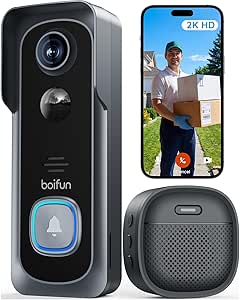 | Best for Subscription-Free Detail | Resolution: 2K HD | Field of view: 166 degrees | Wi-Fi: 2.4 GHz | VIEW ON AMAZON | See Our Full Breakdown |
| TKMARS Wireless Doorbell Camera with Indoor Monitor, 1080P HD, No Subscription or WiFi Required |  | Best for Offline Simplicity | Resolution: 1080P | Indoor monitor: 4.3 inches | Viewing angle: 170 degrees | VIEW ON AMAZON | See Our Full Breakdown |
| Orbitell 1080p Wireless Video Doorbell Camera with Two-Way Audio and Night Vision |  | Best for Cutting False Alerts | Resolution: 1080p | Connectivity: 2.4GHz Wi-Fi only | Audio: Two-way with built-in microphone and speaker | VIEW ON AMAZON | See Our Full Breakdown |
| Tapo 2K Wireless Smart Video Doorbell with Chime |  | Best Image Quality | Resolution: 2K | Field of View: 160° diagonal | Night Vision: Full color with spotlight | VIEW ON AMAZON | See Our Full Breakdown |
| Wireless Smart Video Doorbell System with 7-Inch Touchscreen |  | Best Screen-and-Doorbell Value | Display: 7-inch touchscreen | Video Resolution: 1080p | Lens Angle: 160° | VIEW ON AMAZON | See Our Full Breakdown |
| 2-Wire Video Intercom System with Dual 7″ Touch Screen Monitors |  | Best for Multi-Story Homes | Display: Dual 7-inch touch screens | Video Resolution: 1080p | Viewing Angle: 140 degrees | VIEW ON AMAZON | See Our Full Breakdown |
| Wireless Dual-Camera Video Doorbell System with 8-Inch Touchscreen Monitor |  | Best Coverage King | Cameras: Dual 1080p | Main Camera Angle: 160° | Sub-Camera Angle: 130° | VIEW ON AMAZON | See Our Full Breakdown |
| Tapo 2K Wireless Smart Video Doorbell, D205, 160° Ultra-Wide View | 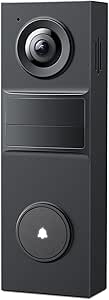 | Best Battery Life for Busy Households | Resolution: 2K | Field of View: 160° ultra-wide | Battery Capacity: 5200mAh rechargeable | VIEW ON AMAZON | See Our Full Breakdown |
| video doorbell for familie | Night vision | Storage |
|---|---|---|
| Wireless Video Doorbell with C | — | — |
| Wireless Dual-Lens Video Doorb | — | — |
| Wireless Doorbell Camera | Infrared LED, up to 30 feet | — |
| BOIFUN Wireless Video Doorbell | HDR, 940 nm infrared, up to 10 m | microSD up to 128GB; card not included |
| TKMARS Wireless Doorbell Camer | — | — |
| Orbitell 1080p Wireless Video | Four infrared LEDs | AES-128 encrypted cloud storage |
| Tapo 2K Wireless Smart Video D | Full color with spotlight | MicroSD up to 512GB; cloud available |
| Wireless Smart Video Doorbell | — | Included TF card |
| 2-Wire Video Intercom System w | Infrared | SD card (included) |
| Wireless Dual-Camera Video Doo | — | Included 32GB memory card |
| Tapo 2K Wireless Smart Video D | Infrared | — |
More Details on Our Top Picks
Wireless Video Doorbell with Camera and 5-Inch Monitor
For a family that wants a screen at home and the option to use the doorbell without Wi-Fi, this system is a practical middle ground. Its 5-inch indoor monitor lets children or relatives see who is at the door without reaching for a phone, while the included 32GB memory card keeps recordings local without a storage subscription. Compared with the TKMARS Wireless Doorbell Camera, it adds app control and Wi-Fi, giving adults remote access when they are away. The tradeoff is a smaller display and narrower view than the dual-camera options, such as the Wireless Dual-Lens Video Doorbell with 8-Inch Touchscreen Monitor. The monitor only supports 2.4 GHz Wi-Fi, metal doors can disrupt the wireless signal, and continuous viewing stops after five minutes. That limit makes it less suited to families who want an always-on indoor feed.
Pros:- Includes a 5-inch indoor monitor for family members who do not want to use a phone
- Comes with a 32GB memory card and does not require a storage subscription
- Can operate with or without Wi-Fi
- Combines motion alerts, two-way audio, and infrared night vision
Cons:- Continuous monitoring is limited to five minutes at a time
- The monitor supports only 2.4 GHz Wi-Fi
- Metal doors may interfere with the wireless signal
Best for: Families who want a dedicated indoor screen, local recordings, and the option to use the system without Wi-Fi.
Not ideal for: Households that need continuous indoor viewing, a large display, or a reliable wireless connection through a metal door.
- Camera resolution:1080p
- Camera field of view:130 degrees
- Indoor monitor:5 inches
- Included storage:32GB memory card
- Monitor Wi-Fi:2.4 GHz
- App:TuyaSmart
- Continuous monitoring limit:5 minutes
- Warranty:2 years
Our verdict“Choose this if your family wants local recording and a dedicated screen with optional app access, and can live with limited continuous viewing.”
Wireless Dual-Lens Video Doorbell with 8-Inch Touchscreen Monitor, WiFi Dual-Cam Video Door Phone Intercom System
The dual-camera view is the reason this system earns a distinct place in a family roundup: its main camera and lower camera are designed to show visitors and the doorstep area, making it easier to check for a delivery while a child answers. The 8-inch touchscreen also gives family members a larger, more approachable display than the 5-inch monitor on the Wireless Video Doorbell with Camera and 5-Inch Monitor. Local recording on the included 32GB card avoids a storage subscription, and dual-band Wi-Fi offers more flexibility than several 2.4 GHz-only picks. That extra coverage comes with practical limits: the indoor monitor battery lasts just 6–8 hours, and the doorbell battery life varies with use. Its power input needs an adapter, so families looking for a hardwired setup should compare other systems.
Pros:- Dual 1080P cameras provide main and lower views of the entry
- Large 8-inch touchscreen is easy for family members to view
- Includes a 32GB TF card for local storage without monthly storage fees
- Supports 2.4 GHz and 5 GHz Wi-Fi
Cons:- Indoor monitor battery lasts only 6–8 hours per charge
- Doorbell battery life varies with usage and may require frequent recharging
- Power input requires an adapter rather than a hardwired connection
Best for: Families with frequent deliveries who want a large indoor touchscreen and a view aimed at both visitors and packages.
Not ideal for: Households seeking a hardwired installation or an indoor monitor that can stay unplugged all day.
- Camera resolution:Dual 1080P
- Main camera field of view:160 degrees
- Lower camera field of view:130 degrees
- Monitor:8-inch touchscreen
- Wi-Fi:2.4 GHz and 5 GHz
- Doorbell battery:7000mAh
- Indoor monitor battery:5000mAh; 6–8 hours per full charge
- Included storage:32G TF card
Our verdict“Pick this for a large screen and a better view of packages, provided your family is comfortable managing battery charging and adapter power.”
Wireless Doorbell Camera, Battery Powered Wi-Fi Video Doorbell
Families who mainly answer the door from their phones may prefer this compact, battery-powered camera to systems built around an indoor monitor. AI human detection is meant to reduce alerts from other motion, which can help keep a shared household’s notifications focused on people at the door. It also offers two-way audio, night vision with a stated 30-foot range, and family sharing through its app. Compared with the TKMARS Wireless Doorbell Camera, it provides remote smartphone access, but it depends on a stable 2.4 GHz Wi-Fi connection and cloud storage requires a separate subscription. Its listed 128MB of flash memory is limited, so families wanting recordings without ongoing storage costs may prefer the BOIFUN Wireless Video Doorbell Camera, which supports microSD cards and does not require a subscription for core features.
Pros:- AI human detection is designed to reduce false motion alerts
- Rechargeable battery supports wireless installation
- Two-way audio and app access allow remote answering
- Night vision has a stated range of 30 feet
Cons:- Cloud storage requires a separate subscription
- Listed 128MB internal memory offers limited local recording capacity
- Requires a stable 2.4 GHz Wi-Fi connection
Best for: Families who want shared smartphone alerts, remote answering, and human detection without adding an indoor monitor.
Not ideal for: Families who want subscription-free recorded video, a dedicated screen for children, or access when home Wi-Fi is unreliable.
- Video resolution:2 MP
- Power:Rechargeable lithium-ion battery
- Wi-Fi:2.4 GHz
- Night vision:Infrared LED, up to 30 feet
- Internal storage:128 MB flash memory
- Installation:Door mount
- Water resistance:Water resistant
- Operating temperature:14 °F to 122 °F
Our verdict“Choose this if your family prefers app-based access and shared alerts over an indoor monitor, and accepts subscription-based cloud storage.”
BOIFUN Wireless Video Doorbell Camera, 2K HD, No Subscription Required
For families who want sharper footage and control over their recordings without a storage subscription, the BOIFUN offers a strong blend of 2K video, a wide 166-degree view, and local microSD storage. Its invisible 940 nm infrared night vision avoids a visible glow at the door, while human detection and an anti-theft alarm add useful entryway features. Compared with the Wireless Doorbell Camera with AI Human Detection, this pick supports larger local storage and does not require a subscription for core features; unlike the Wireless Dual-Lens Video Doorbell with 8-Inch Touchscreen Monitor, it has no indoor screen for children to answer from. The card is not included, and the built-in battery cannot be removed for swapping. Families should also expect battery life to vary with activity, despite the stated maximum of up to 60 days.
Pros:- 2K video and a 166-degree field of view cover a broad entry area
- Core features do not require a subscription
- Supports local microSD storage up to 128GB
- HDR night vision uses invisible 940 nm infrared
Cons:- MicroSD card is not included
- Built-in rechargeable battery is non-removable
- Supports only 2.4 GHz Wi-Fi, and actual battery life varies with use
Best for: Families who want detailed local recordings and a wide view without paying for a storage subscription.
Not ideal for: Households that want a dedicated indoor monitor, 5 GHz Wi-Fi, or a removable battery for quick swaps.
- Resolution:2K HD
- Field of view:166 degrees
- Wi-Fi:2.4 GHz
- Night vision:HDR, 940 nm infrared, up to 10 m
- Battery:Built-in, non-removable rechargeable; up to 60 days stated
- Storage:microSD up to 128GB; card not included
- Subscription:Not required for core features
- Warranty:2 years
Our verdict“Choose the BOIFUN if your family values detailed, subscription-free local video more than a dedicated indoor monitor.”
TKMARS Wireless Doorbell Camera with Indoor Monitor, 1080P HD, No Subscription or WiFi Required
The TKMARS is the clearest fit for families who want a straightforward indoor intercom and prefer not to connect the doorbell to Wi-Fi or an app. Its 4.3-inch monitor lets children or older relatives see and speak with visitors directly, while the 170-degree view covers a broad area around the doorway. That makes it simpler to use than the app-centered Wireless Doorbell Camera, and its listed 1–3 months of standby is a useful contrast with the Wireless Dual-Lens Video Doorbell’s short monitor battery runtime. The tradeoff is that offline operation also means no smartphone remote access or cloud storage. Wireless range is stated for open areas and can drop substantially around obstacles, so placement matters. Families wanting dual camera views, local recorded clips, or remote access should look elsewhere.
Pros:- Works without Wi-Fi, an app, or a subscription
- 4.3-inch indoor monitor supports direct two-way video intercom
- 170-degree viewing angle covers a broad doorway area
- IP65 waterproof rating and stated 1–3 month standby
Cons:- No smartphone remote access or cloud storage
- Wireless range can fall to 5–30m when obstacles are present
Best for: Families with children or older relatives who want a simple indoor screen and intercom without Wi-Fi, apps, or subscriptions.
Not ideal for: Households that need smartphone access while away, stored video clips, or reliable range through walls and other obstacles.
- Resolution:1080P
- Indoor monitor:4.3 inches
- Viewing angle:170 degrees
- Battery:1000mAh polymer
- Standby time:1–3 months
- Water resistance:IP65
- Wireless range:50–80m open area; 5–30m with obstacles
- Dimensions:4 x 2 x 5 inches
Our verdict“Choose this for an easy, private indoor intercom for family members at home, if remote access and recorded clips are not priorities.”
Orbitell 1080p Wireless Video Doorbell Camera with Two-Way Audio and Night Vision
For busy households, the biggest annoyance with budget doorbells isn’t the video — it’s the constant pinging every time a car passes or a squirrel crosses the porch. This is where the Orbitell stands apart: its AI person detection filters vehicles and animals, so the alerts parents receive are the ones that matter, like a delivery driver or a child arriving home from school. Compared with the Tapo D210, the resolution is lower at 1080p, and unlike the Tapo it offers no local microSD slot — pre-capture recording is locked behind a cloud subscription, which undercuts its value over time. The IP65 weather resistance is a genuine plus for exposed entryways, and two-way audio lets parents answer the door remotely. This pick makes the most sense for families whose street-facing doorbells would otherwise generate constant junk notifications.
Pros:- AI person detection filters out vehicles and animals for relevant alerts
- Two-way audio lets parents speak with visitors from anywhere
- Infrared night vision with wide-angle coverage
- IP65 weather resistance for exposed entryways
Cons:- No local storage — pre-capture recording requires a cloud subscription
- 2.4GHz-only Wi-Fi limits compatibility with newer routers
- 1080p resolution trails the 2K detail of rivals like the Tapo D210
Best for: Families on busy streets who are tired of false alerts from passing cars and animals
Not ideal for: Households wanting subscription-free recording — pre-capture footage and cloud storage require ongoing payments, and there’s no local storage option
- Resolution:1080p
- Connectivity:2.4GHz Wi-Fi only
- Audio:Two-way with built-in microphone and speaker
- Night Vision:Four infrared LEDs
- Motion Detection:AI person detection; filters vehicles and animals
- Storage:AES-128 encrypted cloud storage
- Weather Resistance:IP65
Our verdict“Choose this if alert fatigue is your family’s biggest doorbell frustration — but budget for the subscription.”
Tapo 2K Wireless Smart Video Doorbell with Chime
This option stands out for sheer picture detail: 2K resolution combined with a 160° ultra-wide field of view means parents can actually recognize faces and read package labels rather than squinting at grainy footage. Compared with the Orbitell, the extra resolution is immediately noticeable when zooming into recorded clips, and unlike the Orbitell, the Tapo supports local microSD storage up to 512GB — though the card isn’t included, so factor that into the cost. The full-color night vision with an adjustable spotlight is a real advantage for families checking on late-evening visitors, where infrared-only rivals render everything in black and white. The included 15° wedge also helps angle the camera away from a busy sidewalk, reducing irrelevant recordings. Compared with the dual-monitor systems later in this roundup, there’s no indoor screen — everything happens through the app and the included chime.
Pros:- 2K resolution delivers noticeably sharper, more zoomable footage than 1080p rivals
- 160° diagonal field of view covers wide porches and packages left at the edges
- Full-color night vision with adjustable spotlight
- Local microSD storage up to 512GB avoids mandatory subscriptions
Cons:- MicroSD card not included
- 2.4GHz-only connectivity
- Extended cloud features still require a subscription
Best for: Families who prioritize crisp, zoomable footage of deliveries, visitors, and porch activity
Not ideal for: Households without smartphones always at hand, or those unwilling to buy a microSD card or cloud plan for playback
- Resolution:2K
- Field of View:160° diagonal
- Night Vision:Full color with spotlight
- Storage:MicroSD up to 512GB; cloud available
- Connectivity:2.4GHz Wi-Fi
- Battery:Rechargeable
- Compatibility:Alexa, Google Assistant
- Mounting:Includes 15° wedge
Our verdict“The sharpest picture in this lineup — ideal for families who need to identify faces and packages reliably.”
Wireless Smart Video Doorbell System with 7-Inch Touchscreen
Most doorbells in this price territory make everyone check a phone. This system takes a different approach by pairing the camera with a 7-inch indoor touchscreen, so kids, grandparents, and babysitters can see who’s at the door without owning or unlocking a smartphone — a genuinely family-friendly design choice. Compared with the Orbitell, it swaps AI filtering for a physical screen, and recordings land on an included TF card with no subscription fees, a contrast with the Orbitell’s cloud-only model. The dual-band 2.4GHz and 5GHz Wi-Fi support also beats the Tapo D210 and Orbitell, both of which are 2.4GHz-only. Tradeoffs exist: the 60-meter wireless range is quoted for open spaces, so thick interior walls will eat into it, and motion detection tops out at 5 meters — shorter than some rivals — meaning distant approach activity may be missed.
Pros:- 7-inch touchscreen keeps door visibility in the household, not just on parents’ phones
- Included TF card means no subscription fees
- Dual-band 2.4GHz and 5GHz Wi-Fi support
- Wireless installation with no wiring required
Cons:- Motion detection range limited to about 5 meters
- Wireless signal range quoted only for open spaces
- App ecosystem (TuyaSmart) is less polished than Tapo’s
Best for: Families with kids or seniors at home who need to see visitors without relying on a smartphone app
Not ideal for: Large homes with many interior walls — the wireless range is rated for open spaces and will degrade indoors
- Display:7-inch touchscreen
- Video Resolution:1080p
- Lens Angle:160°
- Motion Detection Range:Up to 5 meters
- Wireless Range:Up to 60 meters in open spaces
- Wi-Fi:2.4GHz and 5GHz
- Storage:Included TF card
- App:TuyaSmart
Our verdict“A smart pick for families who want an always-visible indoor screen and zero ongoing storage costs.”
2-Wire Video Intercom System with Dual 7″ Touch Screen Monitors
Where every other entry here is wireless, this system doubles down on reliability: a hardwired 2-wire connection feeding twin 7-inch touchscreens, so a parent upstairs and a teenager downstairs can each see and answer the door independently. Compared with the single-screen system above, the second monitor changes the household dynamic — no more shouting down the stairs when a visitor rings. The wired link also sidesteps the interference and range issues that plague the wireless dual-camera model, and with local SD storage included, there are no monthly fees. The compromises are structural: installation requires running wires, so placement is far less flexible than battery-powered rivals like the Tapo, and the fixed-focus camera offers no optical adjustability. The 140° viewing angle is also the narrowest in this batch, which matters on wide porches.
Pros:- Dual 7-inch monitors give two rooms independent door access
- Wired connection avoids wireless interference and dropouts
- IP65 weatherproof outdoor unit
- Included SD card means no monthly fees
Cons:- Requires wired installation, limiting placement flexibility
- Fixed-focus camera can’t be adjusted
- 140° viewing angle is the narrowest in this lineup
Best for: Families in two-story homes who want door visibility from multiple rooms and rock-solid wired reliability
Not ideal for: Renters or anyone avoiding wiring work — installation is permanent and less flexible than wireless options
- Display:Dual 7-inch touch screens
- Video Resolution:1080p
- Viewing Angle:140 degrees
- Connectivity:Wired (2-wire)
- Power Supply:24 volts
- Water Resistance:IP65
- Night Vision:Infrared
- Storage:SD card (included)
- Remote Access:Yes, via Tuya app
Our verdict“The right choice for multi-story households that value dependable, multi-room access over installation convenience.”
Wireless Dual-Camera Video Doorbell System with 8-Inch Touchscreen Monitor
Two cameras change what a doorbell can see. The main 160° lens handles the porch while the secondary 130° camera covers the blind spot below — exactly where delivery packages land and where single-camera models like the Tapo D210 or 7-inch screen system often lose the frame. Pair that with the largest display here, an 8-inch touchscreen, and a 32GB card included with no subscription, and the package-clearing workflow for busy families becomes genuinely easier. The flexibility of battery or 12–24V wired power is another plus over battery-only rivals. But the weaknesses are real: the monitor lasts only 5–8 hours per charge, so it spends much of its life docked, and continuous monitoring cuts off at about 5 minutes — frustrating if a family member wants to keep watching the porch during a long delivery window.
Pros:- Dual cameras eliminate the package blind spot beneath the doorbell
- Largest display in this lineup at 8 inches
- Included 32GB card means no storage subscription
- Runs on rechargeable battery or existing 12–24V wiring
Cons:- Monitor battery lasts only about 5–8 hours per charge
- Continuous monitoring limited to about 5 minutes
- Signal can be disrupted by metal doors and some wall materials
Best for: Families plagued by package theft who need both porch-wide and under-doorbell camera coverage on a big screen
Not ideal for: Anyone wanting long untethered monitoring — the 5–8 hour monitor battery and 5-minute continuous view limit make it docking-dependent
- Cameras:Dual 1080p
- Main Camera Angle:160°
- Sub-Camera Angle:130°
- Monitor:8-inch HD touchscreen, 5000 mAh battery
- Monitor Battery Life:About 5–8 hours
- Doorbell Battery Life:About 45–60 days (7000 mAh)
- Storage:Included 32GB memory card
- Connectivity:TuyaSmart app; 2.4GHz and 5GHz Wi-Fi
- Water Resistance:IP55
Our verdict“Pick this for unmatched blind-spot coverage and a big screen — just keep the monitor on its charger.”
Tapo 2K Wireless Smart Video Doorbell, D205, 160° Ultra-Wide View
Families with constant foot traffic — kids, deliveries, grandparents letting themselves in — burn through doorbell batteries fast, and that is exactly where the Tapo D205 pulls ahead. Its 5200mAh rechargeable battery is rated for up to 180 days, roughly double what typical budget options like the Orbitell 1080p or the generic BOIFUN 2K doorbells deliver, which means far fewer ladder trips to recharge. The 160° ultra-wide view also captures packages left at the edge of the porch that narrower cameras miss entirely.
The tradeoffs are real, though. Unlike the TKMARS or the Wireless Doorbell with 5-Inch Monitor, there is no dedicated indoor screen — kids or caregivers who prefer glancing at a monitor will need a phone or smart speaker instead. The chime is indoor-only, the microSD card costs extra, and it is restricted to 2.4GHz WiFi, which can frustrate households with mesh networks that prefer the 5GHz band.
Pros:- 2K resolution with a 160° field of view that catches packages and visitors off to the side
- Exceptional battery life of up to 180 days on a single charge
- AI detection with customizable activity zones cuts down false alerts from street traffic
- Local microSD storage up to 512GB means no mandatory subscription
Cons:- No dedicated indoor monitor, unlike touchscreen-based rivals in this lineup
- microSD card sold separately, so usable local storage requires an extra purchase
- 2.4GHz-only WiFi support may conflict with newer mesh router setups
Best for: Busy families who want long battery life, sharp 2K footage, and AI alerts without monthly fees, and who already use Alexa or Google Assistant at home
Not ideal for: Households that want a plug-in indoor monitor for kids or elderly relatives to see visitors — this is phone-app-first, with no dedicated screen
- Resolution:2K
- Field of View:160° ultra-wide
- Battery Capacity:5200mAh rechargeable
- Battery Life:Up to 180 days
- Night Vision:Infrared
- Storage Options:microSD up to 512GB (sold separately) or cloud subscription
- WiFi Compatibility:2.4GHz only
- Weather Resistance:IP54
Our verdict“If your family’s priority is going months between charges while keeping subscription-free 2K footage and wide porch coverage, this is the smart pick — just plan on buying a microSD card.”
How We Picked
Because a video doorbell for families gets used differently than one for a single adult, I evaluated every model against family-specific criteria: whether kids can answer the door without a smartphone, how well the camera captures both packages on the porch and faces at the door, whether footage storage requires an ongoing subscription, and how much maintenance the system demands once mounted. Monitor-equipped systems scored well on independence and reliability, while app-based models scored well on remote access and smart features. Installation burden was also weighted — a doorbell nobody installs properly protects nobody.
The ranking logic places whole-household usability first. Systems with indoor touchscreens and dual lenses sit at the top because they serve parents, kids, and caregivers equally. Subscription-free storage and no-Wi-Fi operation ranked next, since recurring costs and internet dependence are the two most common family complaints. Battery-only models without monitors landed lower — not because they’re bad doorbells, but because their phone-centric design assumes every user has a device in hand, which families with young children can’t count on.
| video doorbell for familie | Night vision | Storage |
|---|---|---|
| Wireless Video Doorbell with C | — | — |
| Wireless Dual-Lens Video Doorb | — | — |
| Wireless Doorbell Camera | Infrared LED, up to 30 feet | — |
| BOIFUN Wireless Video Doorbell | HDR, 940 nm infrared, up to 10 m | microSD up to 128GB; card not included |
| TKMARS Wireless Doorbell Camer | — | — |
| Orbitell 1080p Wireless Video | Four infrared LEDs | AES-128 encrypted cloud storage |
| Tapo 2K Wireless Smart Video D | Full color with spotlight | MicroSD up to 512GB; cloud available |
| Wireless Smart Video Doorbell | — | Included TF card |
| 2-Wire Video Intercom System w | Infrared | SD card (included) |
| Wireless Dual-Camera Video Doo | — | Included 32GB memory card |
| Tapo 2K Wireless Smart Video D | Infrared | — |
Factors to Consider When Choosing Video Doorbell For Families
Choosing a family doorbell involves more than picking the sharpest camera. Below are the factors that actually change daily life with kids, pets, deliveries, and busy schedules.Who Actually Answers the Door?
The single most overlooked question is whether your children, an elderly grandparent, or a babysitter can operate the system. App-only doorbells assume everyone has a smartphone, charged and within reach, with the app installed and notifications enabled — a shaky assumption for kids under 13 or visiting caregivers. Monitor-based systems like the 2-wire intercom or 8-inch touchscreen models put a physical screen in the kitchen or hallway where anyone can see who’s outside and press a button to talk. A common mistake families make is buying a sleek app-based doorbell, then discovering only one parent’s phone reliably receives alerts. If more than two people need door access, prioritize a system with at least one indoor monitor or easy shared-app support across multiple accounts.
Subscription Fees and Storage
Recurring costs compound fast, and many families don’t factor them in until the free trial expires. Cloud plans typically run monthly per device, and over three or four years that can exceed the doorbell’s own price. Local storage — via microSD cards or built-in memory, as found on the BOIFUN, TKMARS, and intercom systems — means one upfront cost and no dependence on a company keeping its cloud service alive. The tradeoff is that local footage is lost if the doorbell itself is stolen, and reviewing clips is less convenient than a polished cloud app. Decide before buying whether you want forensic-grade history (favor cloud) or simple visitor visibility (local storage is plenty). For most families, the honest answer is that they check live views far more often than they scrub archived footage.
Field of View and Dual-Lens Design
A doorbell pointed only at face height misses two things families care about most: packages left on the doormat and small kids standing close to the door. A standard vertical field of view around 150–160° helps, but dual-lens designs solve the problem properly by capturing a head-to-toe vertical panorama. This matters for verifying a delivery actually arrived, seeing whether a child let a stranger in, or identifying someone deliberately crouching below camera range. Single-lens 1080p models remain perfectly serviceable for everyday visitor identification, so don’t pay for dual lenses if your porch is small and shallow. But for wide stoops, side-approach walkways, or homes with frequent deliveries, the extra coverage changes what the camera is actually good for.
Power Source: Battery, Wired, or 2-Wire
Battery-powered doorbells install in fifteen minutes with no electrical knowledge, which is why they dominate the market — but batteries die at the worst times, often during cold snaps when family traffic and package deliveries peak. Charging routines also tend to fall through the cracks in busy households, leaving gaps in coverage. Hardwired and 2-wire intercom systems eliminate charging forever but require running or borrowing existing wiring, which may mean a professional installer and a higher upfront commitment. A practical middle path: if your home already has an existing doorbell transformer and chime wires, choose a wired model. If you rent or have no existing wiring, battery power is the only sensible option — just set a recurring calendar reminder to recharge.
Wi-Fi Dependency and Internet Reliability
Most wireless doorbells stop recording the moment your router reboots or your internet drops, and rural homes with weak Wi-Fi at the front door suffer constant disconnections. A Wi-Fi extender near the doorbell sometimes fixes this, but it adds cost and another failure point. The TKMARS sidesteps the issue entirely with a self-contained wireless link to its monitor, requiring no internet at all — footage stays local and the system works during outages. The tradeoff is losing remote check-ins from work or vacation, since no internet means no phone access. Families should map their priorities honestly: if you travel often, internet connectivity is a must-have; if you work from home and mainly want to screen visitors and deliveries, an offline system can actually be the more dependable choice.
Night Vision and Motion Detection Tuning
Families with pets, kids playing in the yard, or busy sidewalks quickly discover that default motion settings produce an avalanche of false alerts — and alert fatigue leads everyone to mute notifications entirely, defeating the purpose. Look for adjustable motion zones so you can watch the porch but ignore the street, and person-detection if it’s available, which cuts stray-cat and passing-car alerts dramatically. Night vision quality varies more than spec sheets suggest; some infrared modes produce washed-out faces that can’t be identified, while starlight sensors keep color detail useful for describing a visitor to a child or police. Before installing, walk your property at night and check what the camera actually sees — repositioning the doorbell two feet often matters more than any resolution upgrade.
Frequently Asked Questions
Can my kids answer the video doorbell without a smartphone?
Yes — but only with specific models. Monitor-based systems like the 2-Wire Video Intercom and the 8-inch touchscreen dual-lens doorbell put a physical screen inside the house, so a child, grandparent, or babysitter can see and speak to whoever’s at the door with no app, account, or password. App-based doorbells like the Tapo or Orbitell require a device, the app installed, and notification access, which typically limits answering to the adults in the household. Some brands allow shared app access across multiple accounts, but that still assumes the person has a phone at that moment. If independent kid access matters — for latchkey children or elderly relatives living with you — an indoor monitor isn’t a luxury feature, it’s the core requirement. This single factor drove more of the ranking in this roundup than any camera spec.
Are subscription-free video doorbells actually good enough for family use?
For most families, yes. Models like the BOIFUN 2K and TKMARS record to local storage with no monthly fee, and for typical family needs — seeing who rang, checking that a package arrived, talking to a visitor — local storage covers everything. The real gap versus subscription services is footage history and convenience: cloud plans keep weeks of clips searchable from anywhere, while local storage caps out at the size of your memory card and requires removing the card or connecting to the doorbell to export clips. There’s also a security tradeoff — if the doorbell is stolen or damaged, local footage goes with it. Families in neighborhoods with porch theft may find that specific risk justifies a cloud plan. But if your goal is screening visitors and monitoring kids’ comings and goings, subscription-free models perform the job just as well and save real money over years of use.
Is a dual-lens or dual-camera doorbell worth the extra cost for a family?
It depends on your porch, but for many families the answer is yes. Single-lens doorbells, even with wide angles, create a blind zone at the ground directly below the camera — exactly where packages sit and where small children and crouching visitors go unseen. Dual-lens models stitch together a head-to-toe vertical view, so you can verify a delivery is physically on the mat and see a child’s full body at the door. If your front step is deep, your doorbell mounts high, or you get frequent deliveries, this coverage genuinely changes what the camera can confirm. On a narrow, shallow stoop where everything happens within two feet of the lens, a quality single-lens 2K model like the Tapo covers nearly the same ground for less. Match the camera design to your actual entryway geometry rather than assuming more lenses always means better.
What happens to a wireless video doorbell when the Wi-Fi goes out?
For most Wi-Fi-dependent models, the answer is disappointing: live viewing, recording to the cloud, and phone notifications all stop until your router comes back. Some models buffer a limited amount of footage to an internal microSD card during outages, but you shouldn’t count on it unless the manufacturer explicitly promises offline recording. Monitor-based intercom systems behave differently — the TKMARS and the wired 2-wire systems use a direct radio or wired link to their indoor screens, so you can still see and talk to visitors during a full internet blackout. That resilience is why they rank highly for families, since outages and family emergencies don’t schedule around each other. If reliable internet is a known weak point in your home, either choose a system with a dedicated monitor link or invest in a mesh router node near the front door before blaming the doorbell.
Should I choose a battery-powered doorbell or a wired one for a busy family home?
Battery models win on installation — no wiring, no electrician, fifteen minutes with a screwdriver — which makes them the default for renters and anyone without existing doorbell wiring. The catch for families is the maintenance rhythm: high-traffic households trigger motion recordings constantly, draining batteries in weeks rather than months, and a dead doorbell during a holiday delivery rush is a bad surprise. Wired and 2-wire systems never need charging and support continuous features without power anxiety, but they demand either existing wiring or an installation project you may not want to tackle. My practical advice: if your home already has doorbell wires at the frame, use them — the reliability advantage is free. If it doesn’t, a battery model with removable, swappable batteries (rather than ones you recharge in place) softens the main drawback considerably.
Conclusion
Matching a video doorbell for families to your household comes down to who answers the door and how you want to be alerted. For best overall, the Wireless Dual-Lens Video Doorbell with 8-Inch Touchscreen Monitor delivers the rare combination of head-to-toe coverage and an indoor screen the whole family can use. The 2-Wire Video Intercom with Dual 7″ Monitors takes the best premium slot for larger or two-story homes where two screens in different rooms keep everyone in the loop without a single app install. Families watching their budget get the most from the BOIFUN 2K as best value — sharp footage, no subscription, and simple setup — while the Tapo 2K Wireless with Chime earns best for beginners thanks to its polished app, loud included chime, and fast install. For specific needs: the TKMARS is the clear pick for homes with unreliable Wi-Fi, the 7-inch touchscreen system suits households wanting a middle ground between intercom and smart doorbell, and the battery-powered Orbitell and generic wireless models fit renters who need simplicity over expandability. Whatever you choose, prioritize the household member with the least tech — if they can use it, everyone can.
Halloween Picks
halloween
As an affiliate, we earn on qualifying purchases.