You can rotate toys without buying more by sorting your child’s collection into categories and storing some away out of sight. Set a schedule, like weekly or biweekly, to swap toys—using clear bins, labels, or themed groups for easy organization. Let your child pick toys for each rotation to boost excitement and ownership. With simple storage solutions and routine swaps, you’ll keep play fresh and clutter minimal. Keep exploring for more tips to master a smooth, cost-effective rotation system.
Key Takeaways
- Categorize existing toys by type, interest, or developmental stage to facilitate easy rotation without additional purchases.
- Use labeled containers or shelves to store and display toys, making swapping simple and organized.
- Schedule regular toy rotations (weekly or biweekly) to keep play fresh and engaging without buying new items.
- Involve children in selecting toys for rotation to increase their interest and sense of ownership.
- Repurpose or creatively combine toys to create new play opportunities, extending their use without extra spending.

DECOMOMO Storage Bins, Cube Storage Bin with Labels, Fabric Storage Cubes for Shelves (10.5" x 11" / 6pcs, Beige)
Durable & Stable: Made with durable, dust-resistant, and tear-resistant non-woven fabric, our fabric storage bins offers long-lasting durability…
As an affiliate, we earn on qualifying purchases.
As an affiliate, we earn on qualifying purchases.
Why Toy Rotation Saves Space and Money
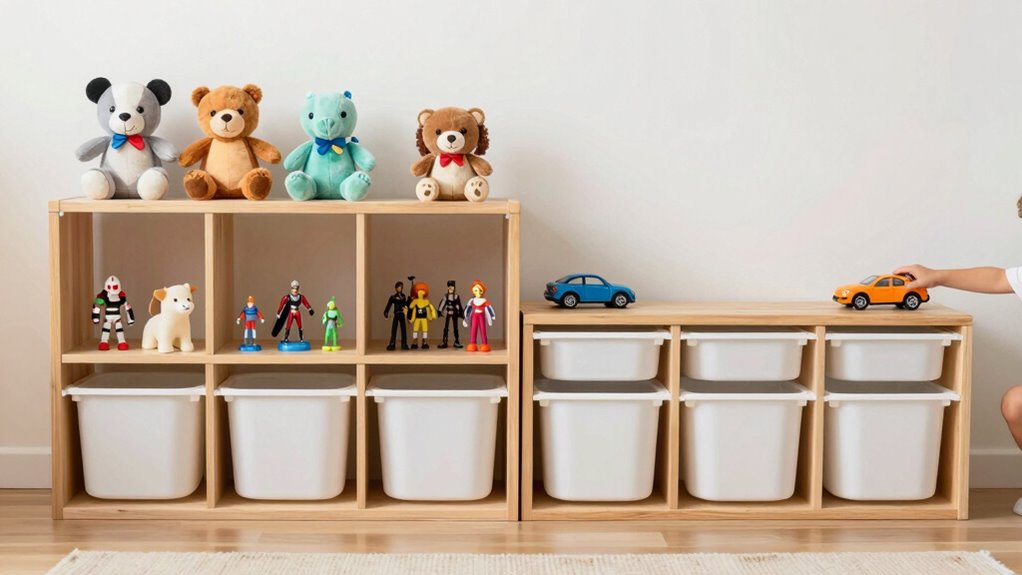
Toy rotation is a simple yet effective way to save both space and money. When you practice toy organization through rotation, you keep your child’s play area tidy and manageable. Instead of having all toys out at once, you select a few to display and store the rest. This clutter reduction makes cleaning easier and creates a more inviting play environment. Plus, rotating toys means you don’t need to buy new ones constantly—your current collection feels fresh, and your budget stays intact. By limiting the number of toys accessible at any time, you encourage your child to focus and appreciate what they have. Incorporating creative storytelling into play can also enhance your child’s emotional engagement and development during these rotations. Additionally, utilizing toy organization techniques can help streamline the process and make toy rotation even more effective. Engaging in consistent rotation schedules can further maximize these benefits, making your toy management more efficient and enjoyable. Overall, toy rotation helps you maintain a more organized home while stretching your toy budget further.

Vtopmart 4 Pack Extra Large Clear Plastic Storage Bins,11×11 Cube Acrylic Organizer Square Containers with Handle for Pantry,Closet,LaundryRoom,Kitchen,Bathroom,UnderSink Organization
Functional Storage for Any Space—You can use these pantry bins for various things throughout your home to organize…
As an affiliate, we earn on qualifying purchases.
As an affiliate, we earn on qualifying purchases.
How to Decide Which Toys to Keep, Store, or Set Aside
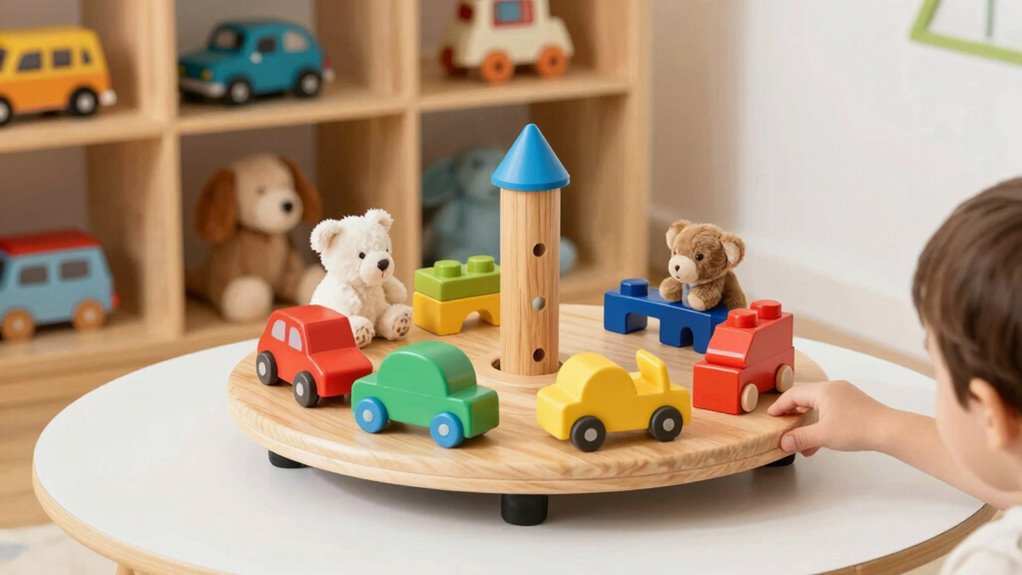
Deciding which toys to keep, store, or set aside is key to maintaining an effective rotation system. Begin with toy evaluation: assess each toy’s condition, age-appropriateness, and how often your child plays with it. Be honest about whether a toy sparks joy or if it’s rarely used. Sentimental attachment can make this tough, but remember, holding onto every toy isn’t necessary. If a toy no longer fits your child’s interests or space, consider setting it aside for later or donating it. Keep a balance between toys your child loves and those that no longer serve a purpose. This process helps you create a manageable collection, making it easier to rotate toys and keep playtime fresh without clutter. Additionally, implementing proper toy storage and maintenance techniques can extend the lifespan of toys and prevent water damage or deterioration. Incorporating environmentally friendly craft ideas for toy organization, such as repurposing tissue paper for decoration or storage, can also add a creative touch to your system. Moreover, understanding the importance of cultural content and its role in social development can help you select meaningful toys that foster cultural awareness and community connection. Maintaining awareness of toy safety standards ensures that your child’s play environment remains secure as you rotate and manage toys effectively.

6-Pack Extra Large Toy Storage Bags with Zippers & Labels, Reusable Clear TPU Waterproof Organizer for Kids Toys, Building Blocks, Puzzles, Dolls, Board Games – Durable, BPA-Free, Travel-Friendly
Extra-Large Clear Design + Stackable Storage – Measuring 12 x 9 x 7 inches, these bags fit bulky…
As an affiliate, we earn on qualifying purchases.
As an affiliate, we earn on qualifying purchases.
Setting Up an Easy Toy Rotation System for Your Family

To set up an easy toy rotation system, start by categorizing toys based on type or activity. Then, decide on how often you want to switch out these groups to keep things fresh. With a simple schedule in place, you’ll make toy management smoother for your family. Incorporating smart design principles can help create a functional and welcoming environment that adapts to your family’s changing needs. Implementing organization strategies can further enhance the system’s effectiveness and reduce clutter. Additionally, considering the dog’s emotional needs ensures that your pet remains happy and engaged with their toys. Exploring sound healing science concepts can also inspire calming environments that make toy transitions more soothing for everyone. Using style guidance principles can assist in choosing storage solutions that blend seamlessly with your home decor.
Categorize Toys Effectively
Have you ever felt overwhelmed by the sheer number of toys cluttering your home? The key to effective toy rotation is categorizing toys clearly. Start by sorting age appropriate toys for different age groups to ensure safety and developmental suitability. Then, create themed toy categories, such as cars, dolls, or building blocks, to make it easier for your child to find and select toys. Use storage bins or baskets labeled with pictures or words to keep each category organized. This way, you’ll streamline the selection process and prevent toys from becoming scattered. When toys are organized into distinct groups, it’s simple to rotate specific categories in and out, keeping play fresh without adding more toys. Clear categories help you maintain a tidy space and encourage independent play. Additionally, understanding cloud services can help you develop digital organization systems to track your toy inventory more efficiently, such as using digital cataloging tools to monitor what toys are in each category. Incorporating inventory management techniques can further optimize your rotation system and reduce clutter, and utilizing cloud-based tracking can make updates seamless and accessible from multiple devices. Using digital tools also allows you to plan rotations in advance, ensuring a balanced variety of toys over time.
Schedule Rotation Periods
Once your toys are organized into clear categories, setting up a rotation schedule becomes straightforward. Begin by labeling each group of toys with simple tags or containers, making it easy to identify and swap them out. Decide on a rotation frequency that works for your family—common options are weekly or biweekly. Consistent labeling helps everyone know which toys are available and which are in storage. Keep the schedule simple: set specific days to introduce new toys and pack away others, preventing clutter and overstimulation. By maintaining a routine, your kids will look forward to the change and adapt quickly. Remember, the key is consistency and clarity, so your family can enjoy a fresh selection of toys without the need for extra purchases. Additionally, understanding toy organization techniques can help streamline the process and keep toys tidy. Incorporating visual cues or color-coding can enhance your system and make toy rotation even easier for children to understand. Applying efficient organization principles, such as categorizing toys by type or frequency of use, can further optimize your rotation schedule. Using storage solutions like clear bins or labeled containers can also simplify access and management. Implementing labeling strategies can further improve clarity and ensure smooth transitions between rotation periods.

Toy Storage Organizer – Toy Organizers and Storage with Bookshelf, Toy Storage Shelf with 3 Shelves and 12 Storage Bins, Kids Bookshelf and Toy Storage for Kids Room, Playroom, Bedroom, Nursery, White
Solid Pine Wood:Unlike other melamine MDF toy storage organizer, which are prone to odours, warping and injury to…
As an affiliate, we earn on qualifying purchases.
As an affiliate, we earn on qualifying purchases.
Best Storage Solutions for Managing Rotating Toys

Effective storage solutions are essential for managing rotating toys and keeping your space organized. Using the right options makes swapping toys easier and prevents clutter. Consider these top solutions:
Organize rotating toys effortlessly with smart storage solutions that prevent clutter and simplify swaps.
- Storage bins: Clear, labeled bins keep toys visible and easy to access. Rotate toys by storing inactive ones in labeled bins, so you know what’s ready to be swapped. Free Floating features can help you identify the best placement for these bins to optimize space. Incorporating POS and consumer tech can also assist in tracking toy inventory and rotation schedules. Additionally, incorporating rendering lard concepts can inspire sustainable and resourceful storage practices, reducing waste and promoting self-sufficiency. Implementing cabling solutions can help organize electronic or charging accessories for toy gadgets, keeping everything neat and accessible.
- Shelving units: Use sturdy shelves to display current favorites. When it’s time to rotate, simply move toys to storage bins and bring out new ones.
- Stackable containers: Maximize space with stackable containers for seasonal or less-used toys. This keeps your play area tidy and makes rotation seamless.
These solutions help you organize toys effectively, making rotation simple and stress-free.
When and How to Swap Toys for Maximum Engagement
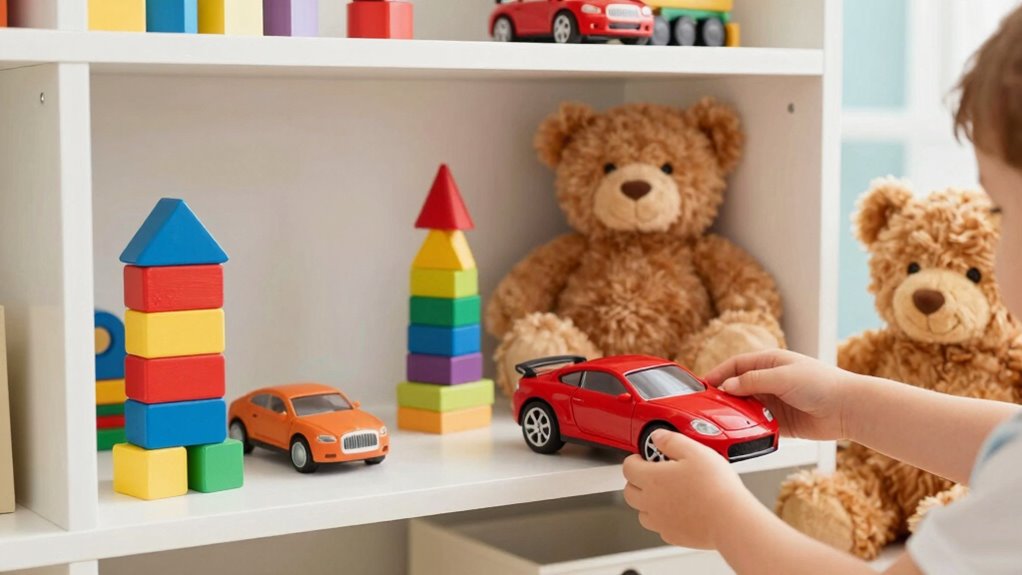
Organizing your toys with the right storage solutions sets the stage for engaging play sessions, but knowing when and how to swap toys keeps play fresh and exciting. You should rotate toys every one to two weeks, aligning with your child’s interests and developmental stage. Swap out items that encourage creative play and suit their age appropriateness, ensuring they remain challenged but not overwhelmed. To maximize engagement, introduce new toys during quiet times or after naps, so curiosity stays high. Use this simple table as a guide:
| Timing | How to Swap |
|---|---|
| Weekly or bi-weekly | Switch toys based on theme or skill focus |
| When interest wanes | Replace less engaging toys with new ones |
| After milestones | Rotate toys to match new abilities |
Implementing toy rotation strategies alongside toy rotation can foster a positive and mindful environment for your child.
How to Get Kids Excited and Involved in Toy Rotation
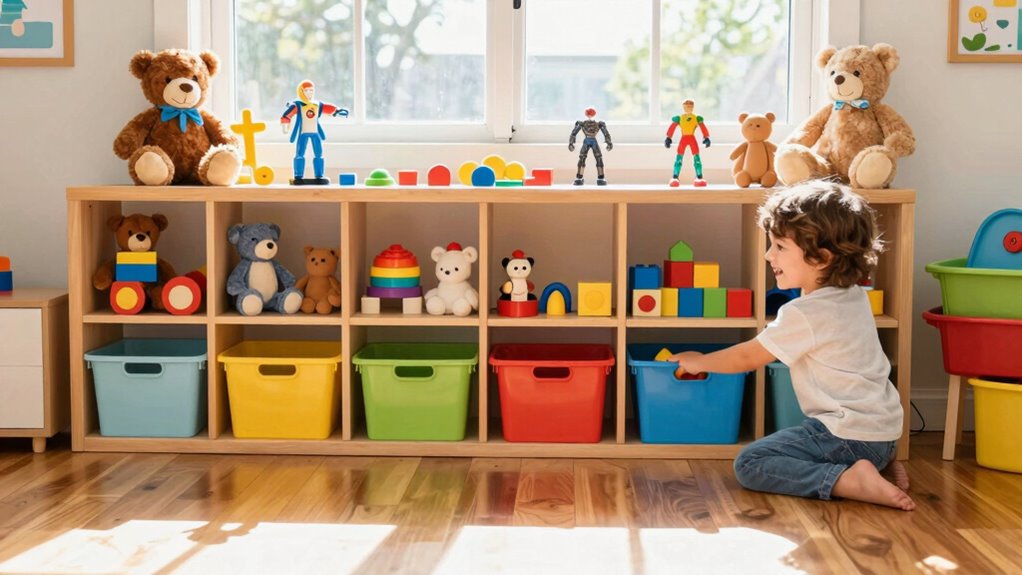
Ever wonder how to make toy rotation an exciting adventure rather than a chore? You can get your kids genuinely involved by turning it into a fun activity. Here are three ways to do it:
Transform toy rotation into a fun adventure kids will love and look forward to.
- Let them choose which toys to rotate, encouraging ownership and excitement.
- Incorporate creative play by setting up themed sensory activities with the new toys, sparking curiosity.
- Create a simple ‘mission’ where they help pack away old toys and uncover hidden treasures, making it feel like an adventure.
Overcoming Common Challenges in Managing Toy Rotation
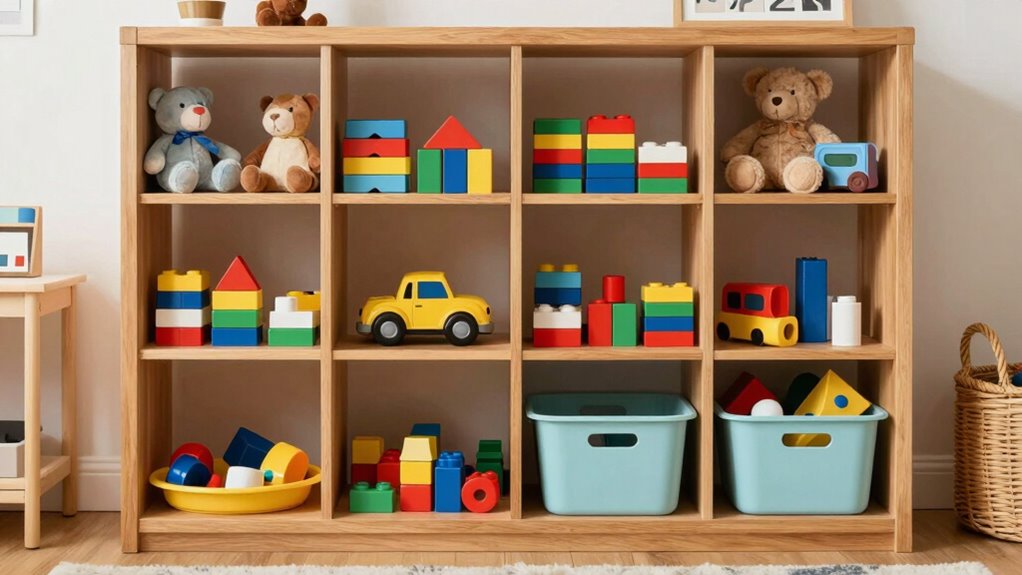
Managing toy rotation can be tricky because kids often resist change or feel attached to their favorite toys. Toy clutter can quickly become overwhelming, making it hard to keep things organized and rotation manageable. To overcome this, focus on effective storage solutions that hide toys out of sight but are easily accessible when needed. Clear bins, labeled containers, and designated shelves help create a visual system that reduces clutter and makes rotation smoother. Communicate with your child about the process to ease their resistance, emphasizing the fun of discovering toys anew. Remember, consistency is key; sticking to a schedule helps minimize surprises and builds comfort with the rotation. By implementing smart storage and clear routines, you’ll face fewer challenges and keep toy management simple and stress-free.
Simple Tips to Keep Your Toy Rotation System Sustainable
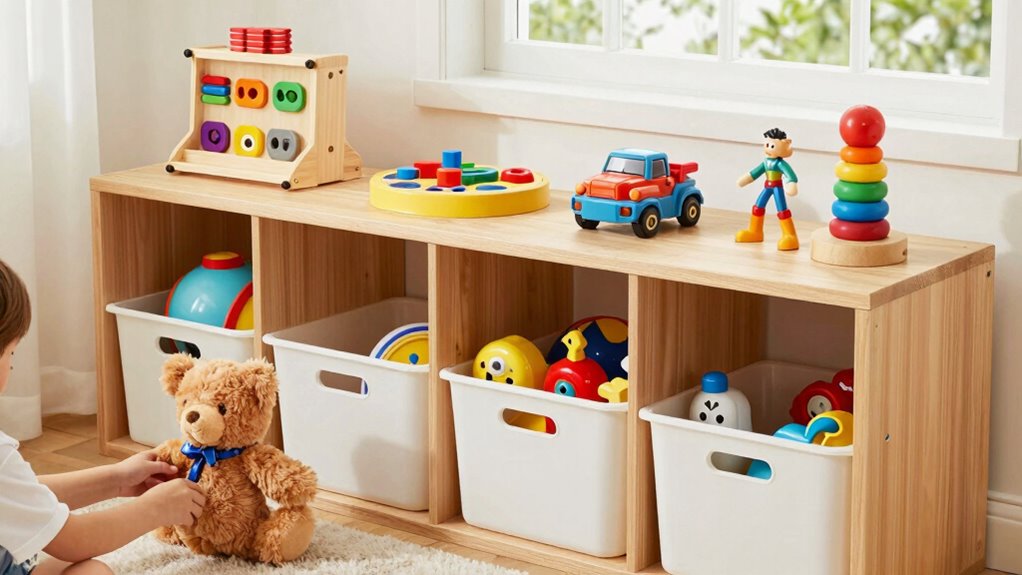
To keep your toy rotation system sustainable over time, focus on establishing simple routines and habits that fit seamlessly into your daily life. Consistent toy organization helps prevent clutter and makes rotating toys easier. Use a dedicated storage bin or shelf to keep current toys accessible, and swap them out regularly. Incorporate parenting strategies like involving your child in toy selection and cleanup, which encourages responsibility and reduces clutter.
Establish simple routines and organize toys to make rotation easy and sustainable over time.
Here are three tips to maintain your system:
- Schedule weekly or bi-weekly toy swaps to stay on track.
- Label storage containers for easy identification and quick access.
- Set reminders to review and refresh toy selections, ensuring variety and reducing excess.
These practices promote a sustainable toy rotation, saving time and energy for both you and your child.
Frequently Asked Questions
How Often Should I Rotate Toys for Optimal Engagement?
You should rotate toys every 2 to 4 weeks to keep your child’s interest fresh and guarantee they play with age-appropriate toys. Use storage solutions like bins or shelves to organize toys and make rotation easier. When switching toys, consider your child’s current developmental stage and preferences. Regular rotation prevents boredom, encourages new play experiences, and helps maintain a clutter-free space, making playtime more engaging and manageable.
What Are Some Signs My Child Is Bored With Current Toys?
You’ll notice your child shows disinterest, avoids toys, or quickly loses focus, which are clear toy preference signs. Watch for behavioral cues like fussiness or boredom, indicating they might need a change. If they seem less engaged or repeatedly ignore certain toys, it’s a sign they’re bored. Pay attention to their developmental cues, such as reduced curiosity or lack of challenge, which suggest it’s time to rotate their toys for renewed interest and growth.
Can Toy Rotation Help Reduce Clutter Long-Term?
Think of toy rotation as a garden’s seasonal pruning, opening space for new growth. It can markedly reduce clutter long-term by keeping only a select few toys accessible, while others are stored away. Using smart storage solutions, you prevent toys from taking over your space, making cleanup easier and your home more organized. This method keeps your child engaged and your environment tidy, like a well-tended garden thriving beautifully.
How Do I Involve My Child in Selecting Toys to Rotate?
You can involve your child in selecting toys to rotate by encouraging child-led choices during organized playtime. Set up an organizing strategy, like a bin system, and let your child pick which toys go into or out of storage. This way, they feel empowered and engaged, making the toy rotation process more fun and manageable. Regularly discuss their preferences to keep the selection fresh and exciting for both of you.
What if My Child Resists Putting Toys Away During Rotation?
If your child resists putting toys away during rotation, stay patient and use positive reinforcement to encourage cooperation. Offer gentle reminders and praise their efforts when they help clean up. Make it a game or set a timer to turn cleanup into a fun challenge. Your parental patience helps them feel supported, making it easier for your child to develop good habits and enjoy the toy rotation process.
Conclusion
Think of your toy rotation as tending a vibrant garden—you’ll need to nurture, prune, and replant to keep it thriving. By organizing and swapping toys thoughtfully, you create a space where your kids can explore and enjoy without feeling overwhelmed. Stick with your system, stay flexible, and watch your playtime bloom. With a little effort, you’ll transform clutter into a well-tended oasis of fun and learning.