
You can dramatically improve bathroom safety for your kids in just five minutes by quickly inspecting for hazards like slippery floors, loose rugs, or sharp fixtures. Install non-slip mats, secure or cover dangerous fixtures, and set water temperatures to prevent scalds. Organize items to reduce clutter and keep access to cleaning supplies out of reach. With these simple steps, you’ll create a safer bathroom environment—continue exploring for more quick safety upgrades.

Turn the school run and nap time into listening time
- Thousands of audiobooks, podcasts and originals
- Listen on your phone, tablet or Echo — also offline
- Cancel anytime
Key Takeaways
- Conduct a quick safety check for hazards like slippery floors, sharp objects, and electrical outlets before bath time.
- Install non-slip mats and cover sharp fixtures to prevent slips and injuries.
- Set and verify water temperature limits to avoid scalding risks.
- Organize safety items and ensure fixtures are secure and well-maintained for easy supervision.
- Always supervise children during bath time and keep hazardous items out of reach.
As an affiliate, we earn on qualifying purchases.
Perform a 5-Minute Bathroom Safety Check
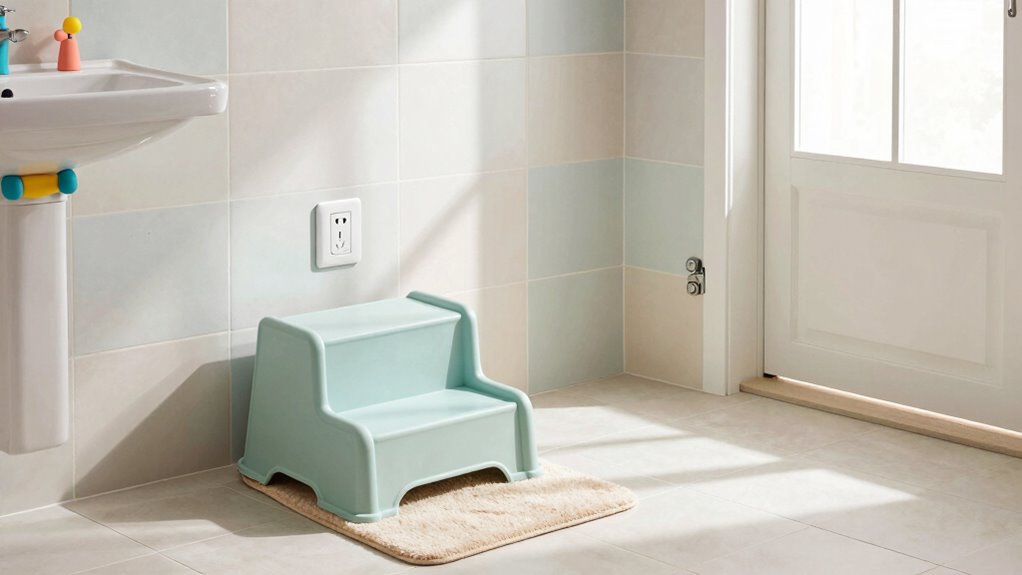
Before allowing your child to use the bathroom independently, take five minutes to perform a quick safety check. Start by inspecting the bathroom for any hazards, such as slippery floors or loose rugs, and verify the area is clean and dry. Check that bathroom cleaning has been recent; a clean space reduces germs and prevents accidents. Make sure cleaning supplies are stored out of your child’s reach. During this time, also review toddler supervision plans, confirming you can easily monitor your child without leaving the bathroom unattended. Confirm that electrical outlets are covered and that no sharp objects or small items are accessible. Additionally, ensure that safety accessories like grab bars or non-slip mats are properly installed and secure. It’s also helpful to evaluate the bathroom layout to identify any additional safety improvements. Being aware of household products and their proper storage can help prevent accidental ingestion or misuse. Familiarizing yourself with childproofing tips can further enhance safety measures. Conducting a thorough hazard assessment during this quick check helps create a safe environment, giving you peace of mind as your child practices independence.
Identify Common Bathroom Hazards for Kids
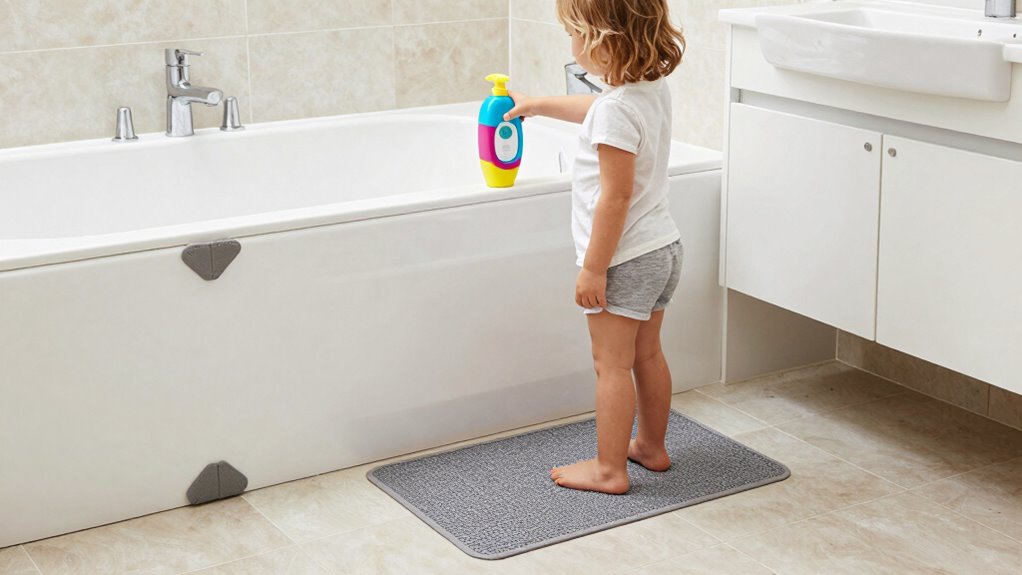
Bathrooms can pose several hazards for kids if you’re not careful. One major concern is toilet safety, as children might fall in or try to climb on the toilet, risking injury. Keep the lid closed and consider a toilet lock to prevent accidental falls or misuse. Bathroom cleaning is also essential; wet surfaces and soap residues can cause slips or skin irritation. Be sure to regularly clean and dry high-touch areas like faucets, handles, and counters. Sharp objects such as razors or scissors should be stored out of reach. Electrical outlets near water sources present another hazard—use outlet covers to prevent shocks. Childproofing bathroom fixtures can help minimize risks associated with everyday items. Additionally, using appropriate paint and coatings during bathroom renovations can help resist mold and moisture, contributing to a healthier environment. Incorporating water-resistant materials can further protect walls and surfaces from water damage and mold growth. Improving proper lighting can also enhance safety by ensuring visibility and reducing accidents in the bathroom. Understanding the importance of ventilation systems can help control humidity and prevent mold buildup, creating a safer space for your kids. By identifying these common bathroom hazards, you can create a safer environment where your kids can explore and learn without unnecessary risks.
Install Non-Slip Mats to Prevent Slips
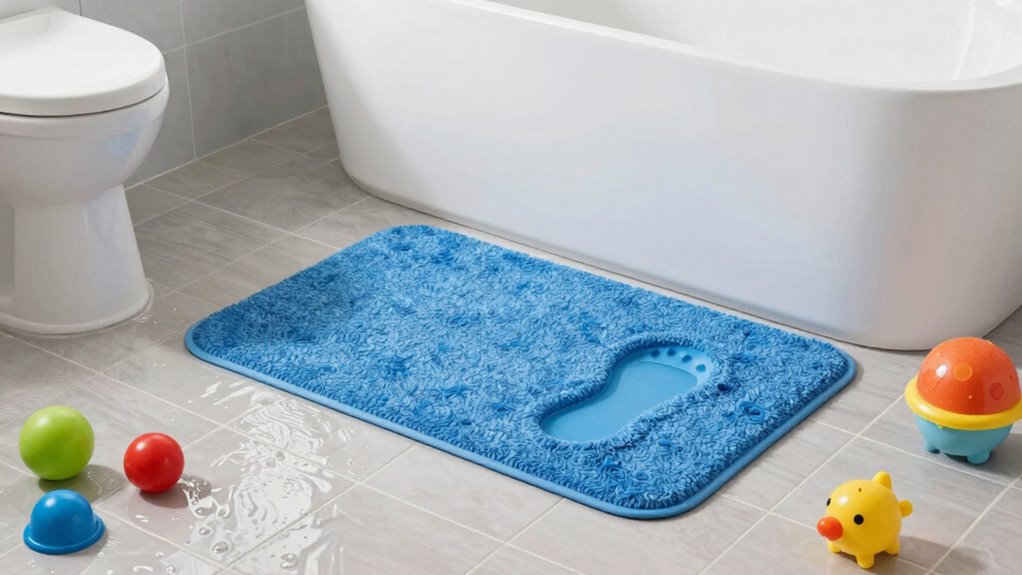
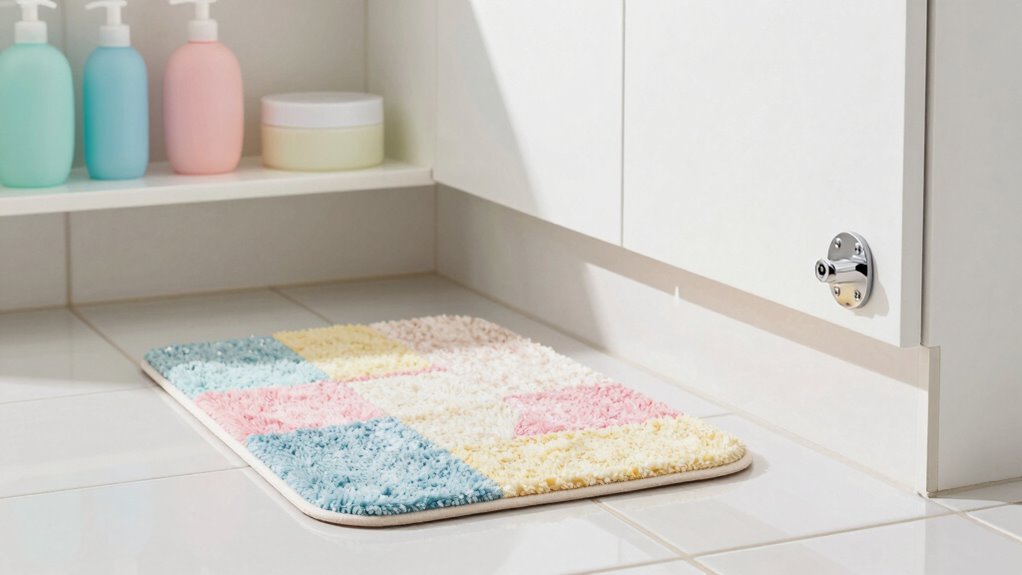
Installing non-slip mats in your bathroom is one of the most effective ways to prevent slips and falls. These mats enhance bathtub safety by providing secure footing, especially on smooth surfaces. Place them strategically inside the tub and on the bathroom floor to reduce the risk of accidents. Non-slip mats come in various colors and designs, allowing you to choose options that complement your bathroom decor while boosting safety. Make sure the mats are securely anchored and clean regularly to maintain their grip. Additionally, choosing mats with textured surfaces can further reduce slipping hazards, creating a safer environment for your kids during bath time and everyday use. Proper installation techniques ensure the mats stay in place and perform effectively. Using mats with textured surfaces can also improve their traction on wet surfaces, further enhancing safety. Quick to install, non-slip mats are a practical, affordable solution that considerably improves bathroom safety for your little ones.
Secure or Cover Dangerous Bathroom Fixtures
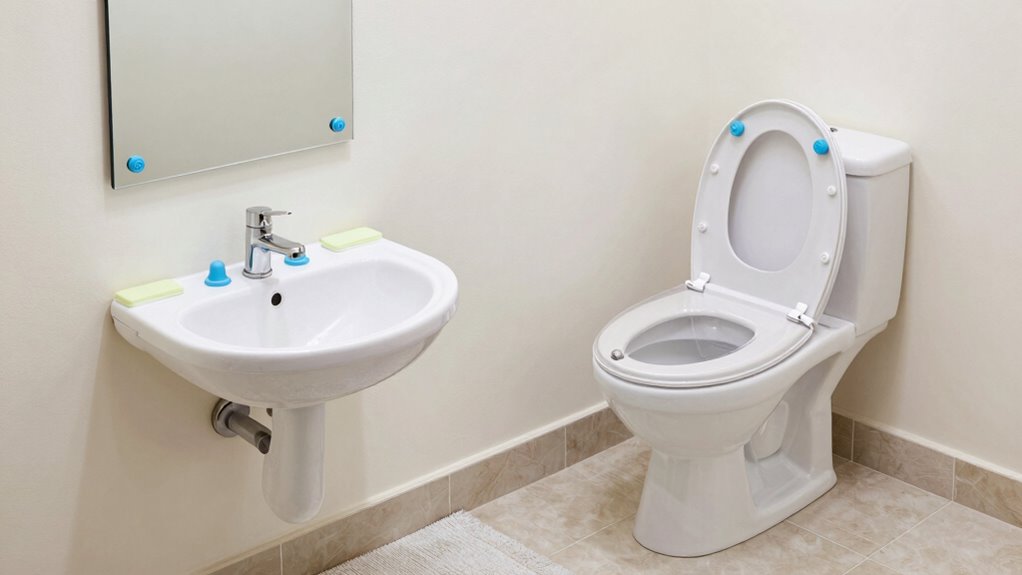
You should cover sharp edges on bathroom fixtures to prevent injuries. Make sure all fixtures are securely attached to avoid accidental falls or tipping. Taking these steps keeps your bathroom safer and reduces potential hazards for kids. Understanding seasons and environmental factors can also help you identify when bathroom fixtures may be more prone to damage or wear, improving overall safety. For example, temperature fluctuations can cause certain materials to weaken over time, increasing the risk of breakage. Additionally, being aware of humidity levels can help prevent corrosion or mold growth that may compromise fixture integrity. Proper cable management can also prevent accidental disconnections or damage, further enhancing bathroom safety. Being mindful of material durability helps select fixtures that withstand environmental stressors and last longer.
Cover Sharp Edges
Have you ever considered how easily a curious child could bump into or scrape against sharp bathroom fixtures? Sharp edges on sinks, tubs, or counters pose real risks. To prevent injuries, use edge protection solutions like foam bumpers or safety corner guards. These simple covers soften the impact if your little one accidentally bumps into a sharp corner. When applying edge protection, ensure they fit snugly and stay in place. Regularly check that the covers remain secure and undamaged. Covering sharp edges not only minimizes cuts and bruises but also creates a safer bathroom environment. Proper installation of these safety features ensures they effectively protect your child. Additionally, selecting child-safe materials for covers can prevent allergic reactions or skin irritations. Choosing non-toxic options can further reduce potential chemical exposure and promote sustainability. Incorporating environmentally friendly options can also reduce potential chemical exposure and promote sustainability. Ensuring the correct placement of covers can enhance their effectiveness and longevity. Taking this quick step can considerably reduce injury risks, giving you peace of mind while your child explores and learns in the bathroom.
Secure Loose Fixtures
Loose fixtures in the bathroom can pose serious safety hazards for kids. Unsecured bathtub fixtures or wobbly toilet handles can cause falls or injuries. To prevent accidents, tighten all fixtures securely or cover them with childproof caps. Imagine the difference:
| Fixture Type | Risk if Loose |
|---|---|
| Bathtub fixtures | Sudden leaks or burns from hot water |
| Toilet handles | Unexpected flushes, water splashes |
| Fixture Type | Safety Upgrade |
| Bathtub fixtures | Use silicone sealant or tighten fittings |
| Toilet handles | Install locking or easier-to-operate handles |
Ensuring these fixtures are secure minimizes hazards, keeps your child safe, and maintains a calm, hazard-free bathroom environment. Proper maintenance of bathroom fixtures can also prevent accidental injuries caused by unexpected movements or failures. Regularly inspecting fixtures helps identify potential issues before they become safety risks, emphasizing the importance of preventive maintenance in household safety. Incorporating personality assessments like the 16PF can also help caregivers better understand individual behavioral tendencies that impact safety practices.
Set Water Temperature Limits to Prevent Scalds
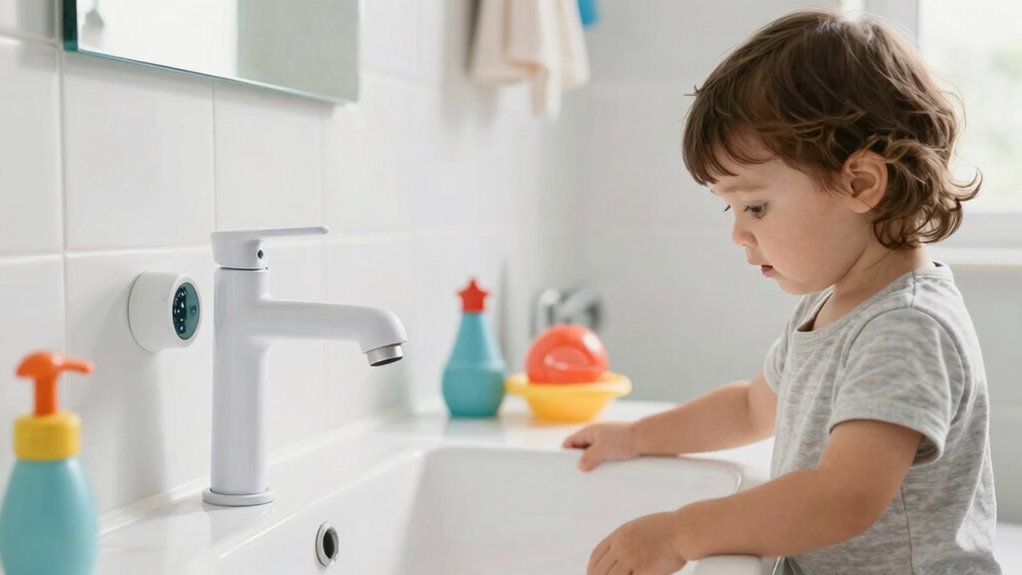
You can prevent scalds by using temperature regulators on your faucets. Set safe limits to guarantee the water isn’t too hot for your child. Regularly test the settings to keep them effective and make adjustments if needed. Additionally, filter sizing/flow can help ensure your water system operates efficiently and maintains safe water temperatures throughout your home.
Use Temperature Regulators
To help prevent scalding injuries, setting water temperature limits with regulators is essential. Using temperature regulators guarantees proper temperature regulation, enhancing water safety for kids. These devices automatically shut off or limit hot water flow when the set temperature is reached, reducing burn risks. Installing regulators on your faucets and showerheads is quick and effective.
- Choose regulators with clear temperature markings for easy adjustments
- Regularly check and reset the temperature limits as needed
- Ensure all fixtures in the bathroom are equipped with regulators for thorough water safety
Set Safe Limits
Setting safe water temperature limits is a crucial step in preventing scalding injuries in your home. To protect your kids, ensure the water heater is set to no more than 120°F (49°C). This temperature balances effective cleaning with safety, reducing burn risks. When your child uses the bathroom, maintaining bathroom privacy encourages independence while you keep an eye on water temperature and usage. Remember, adult supervision is key—never leave kids alone in the bathroom, especially during bath time. Also, consider installing anti-scald devices on faucets and showerheads to add an extra safety layer. By establishing these limits, you create a safer environment where your children can enjoy bath time without the danger of burns or scalds.
Regularly Test Settings
Regularly testing your water temperature settings helps guarantee your child’s safety during bath time. By routinely checking these limits, you prevent accidental scalds and ensure they stay safe. It’s also a good idea to incorporate bathroom cleaning and plumbing maintenance into your routine, keeping fixtures in top condition and reducing the risk of temperature fluctuations. Regular testing means you can catch any issues early, like if a thermostat setting changes or a valve malfunctions. Use a thermometer to verify water temperature before every bath, especially after plumbing work or cleaning. This simple step helps maintain consistent, safe water temperatures and gives you peace of mind.
- Check water temperature with a thermometer regularly
- Adjust thermostat settings as needed
- Schedule routine plumbing maintenance
Organize Items to Reduce Clutter and Trips

Keeping bathroom items organized is essential for preventing clutter and reducing the risk of trips and falls. Start by designating specific spots for essentials like soap, keeping soap storage tidy and accessible. During toilet training, ensure that potty chairs or training seats are stored out of walkways when not in use. Use shelves or bins to keep towels, toiletries, and cleaning supplies neatly arranged. Avoid leaving items on the floor or edges of the bathtub, as these can cause accidents. Regularly check that items are stored securely and are easy to reach, especially for little hands. A clutter-free bathroom not only makes the space safer but also encourages your child to develop good organization habits early on.
Maintain and Review Bathroom Safety Features Regularly

To guarantee your bathroom remains a safe environment for your kids, it’s important to routinely inspect and update safety features. Regularly review items like non-slip mats, lockable cabinets, and faucet covers to ensure they’re secure and in good condition. Proper bathroom cleaning helps prevent mold and soap buildup that can cause slips or bacteria exposure. Always supervise your child during bathroom use to minimize accidents, even with safety measures in place. Make it a habit to check for loose fixtures or damaged safety devices and replace them promptly. Staying proactive with child supervision and safety feature maintenance reduces risks and keeps your bathroom safe for your little ones. Consistent review is key to maintaining a secure space that adapts as your child grows.
Frequently Asked Questions
How Often Should I Perform a Bathroom Safety Check?
You should perform a bathroom safety check weekly to keep your space secure. During these checks, focus on bathroom organization, ensuring items are stored safely and out of reach. Also, review emergency preparedness plans, like knowing where the first aid kit is and how to shut off water or electricity if needed. Regular checks help prevent accidents and keep your bathroom a safe environment for your kids.
What Are the Most Overlooked Bathroom Hazards for Kids?
You often overlook slippery surfaces and choking hazards in the bathroom. Keep floors dry and use non-slip mats to prevent slips. Always check that small objects like bottle caps, razors, or soap lids are out of reach to avoid choking risks. Regularly inspect bathroom items for hazards, and teach your kids about bathroom safety. These simple steps make a big difference in keeping your children safe.
Which Non-Slip Mats Are Safest for Young Children?
Think of textured mats and bathtub grips as your child’s safety net. The safest non-slip mats feature a textured surface, providing maximum grip on wet floors. Look for ones with suction cups that securely stick to surfaces, preventing slips. Bathtub grips, like sturdy handles, give young kids something to hold onto, reducing falls. Prioritize mats made from non-toxic, durable materials, ensuring your little one stays safe and confident during bath time.
How Do I Secure or Cover Complex Bathroom Fixtures?
You can safeguard or cover complex bathroom fixtures by installing safety covers designed for those fixtures. Use safety covers for faucets, toilet handles, and exposed pipes to prevent injuries. Make certain they fit snugly and are made from durable, non-toxic materials. For fixtures that can’t be covered, consider using soft padding or cushioning around sharp edges. Regularly check these covers and pads to ensure they remain secure and effective.
What Is the Best Way to Set Water Temperature Limits?
Ever imagine a safe bathroom where kids can’t scald themselves? You can set water temperature limits by adjusting your thermostat on the water heater. Lower the temperature to around 120°F (49°C) to prevent burns. Simply find the thermostat dial on your water heater, turn it down, and save your little ones from accidental scalds. Regularly check the water temperature with a thermometer to guarantee it stays safe and consistent.
Conclusion
Just five minutes can turn your bathroom into a safe haven, like a gentle guardian watching over your little one. With quick checks and simple upgrades, you’re weaving a protective shield that catches slips before they happen and keeps scalds at bay. Think of it as tuning a melody—small adjustments that create harmony and peace of mind. So, take that five-minute pause today, and turn your bathroom into a safe, soothing space where kids can splash and grow safely.
Halloween Picks
halloween
As an affiliate, we earn on qualifying purchases.