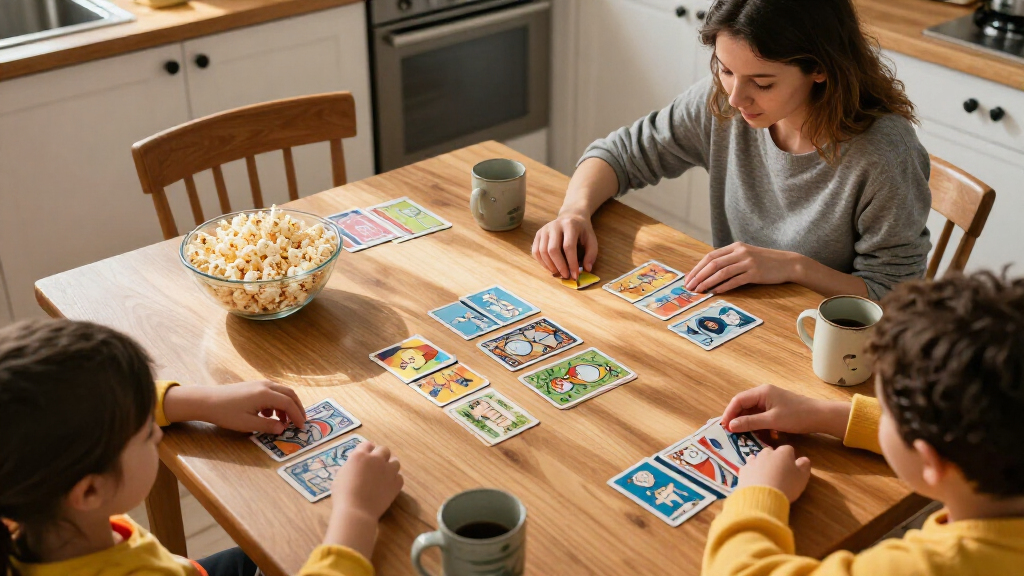

Choosing the best family card games requires balancing simplicity for younger children with strategic depth for adults. After comparing fifteen popular titles, UNO stands out as the best overall pick due to its universal recognition and flexible player count, while Spot It! offers the fastest setup for short attention spans. Monopoly Deal provides a more strategic alternative for older kids who understand resource management. The main tradeoff in this category is between rule complexity and replayability; simpler games are easier to teach but may feel shallow to adults, whereas deeper games require more time to learn. Continue reading for a detailed breakdown of which game suits your specific family dynamic.

Turn the school run and nap time into listening time
- Thousands of audiobooks, podcasts and originals
- Listen on your phone, tablet or Echo — also offline
- Cancel anytime
Complete the kit


Key Takeaways
- Games with under 10-minute rule explanations like Spot It! have the highest pickup rate for mixed-age groups.
- Traditional titles like UNO dominate for large groups (6+ players), while strategic games like Monopoly Deal cap out at 5 players.
- Card games with random elimination (like Dutch Blitz) often cause frustration in younger players compared to games with comeback mechanics.
- Theme familiarity (e.g., Monopoly Deal) reduces the learning curve more effectively than unique mechanics for casual gamers.
- Games requiring physical dexterity (Taco Cat Goat Cheese Pizza) are better for high-energy settings than quiet dinner table gatherings.
| Grandpa Beck’s Games Cover Your Assets Card Game |  | Best for Playful Rivalry | Players: 2–6 | Recommended age: 7 years and up | Playing time: 20–40 minutes | VIEW LATEST PRICE | See Our Full Breakdown |
| Asmodee Spot It! Classic Card Game, 2024 Refresh |  | Best for Quick Rounds | Players: 2–8 | Playing time: 10 minutes | Age recommendation: 6 years and up | VIEW LATEST PRICE | See Our Full Breakdown |
| Play Nine: The Card Game of Golf |  | Best for Casual Strategy | Players: 2–6 | Recommended age: 8 years and up | Included components: 108 cards, scorecards, pencil, game instructions | VIEW LATEST PRICE | See Our Full Breakdown |
| Do You Really Know Your Family? Family Card Game |  | Best for Conversation | Age range: 8 years and up | Players: 3–8 | Playing time: 3 minutes | VIEW LATEST PRICE | See Our Full Breakdown |
| Magilano SKYJO Card Game |  | Best for Low-Score Strategy | Players: 2–8 | Recommended age: 8 years and up | Playing time: Approximately 30 minutes | VIEW LATEST PRICE | See Our Full Breakdown |
| Five Crowns Rummy-Style Card Game |  | Best for Rummy-Style Strategy | Brand: PlayMonster | Players: 2–7 | Age range: 8 years and up | VIEW LATEST PRICE | See Our Full Breakdown |
| Mattel Games UNO Card Game for 2–10 Players, Ages 7+ |  | Best for Large Family Groups | Players: 2–10 | Recommended age: 7 years and up | Included components: 112 cards and instructions | VIEW LATEST PRICE | See Our Full Breakdown |
| Taco Cat Goat Cheese Pizza Card Game | 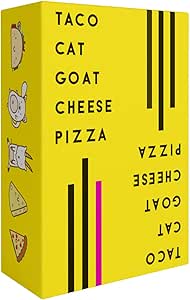 | Best for Quick, High-Energy Rounds | Players: 2–8 | Age range: 7 years and up | Play time: 10–15 minutes | VIEW LATEST PRICE | See Our Full Breakdown |
| Mattel Games UNO Show ’em No Mercy Card Game with Storage Tin |  | Best for Competitive UNO Fans | Brand: Mattel Games | Number of cards: 168 | Players: 2–6 | VIEW LATEST PRICE | See Our Full Breakdown |
| Happy Camper Trio Family Card Game |  | Best for Small-Group Memory Play | Brand: Happy Camper | Players: 3–6 | Recommended age: 8+ in title; manufacturer listing says 0–8 years | VIEW LATEST PRICE | See Our Full Breakdown |
| Cards Against Humanity: Family Edition Card Game |  | Best for Big, Joke-Loving Families | Players: 4–20+ | Age range: 8 years and up | Cards: 600 | VIEW LATEST PRICE | See Our Full Breakdown |
| Monopoly Deal Card Game |  | Best for Quick Family Sessions | Players: 2–5 | Age range: 8 years and up | Playing time: As little as 15 minutes | VIEW LATEST PRICE | See Our Full Breakdown |
| Five Crowns Collectible Tin Card Game |  | Best for Rummy Fans | Players: 1–7 | Recommended age: 8 years and up | Game type: Rummy-style card game | VIEW LATEST PRICE | See Our Full Breakdown |
| USAOPOLY Flip 7 Card Game |  | Best Press-Your-Luck Pick | Players: 3+ | Recommended age: 8 years and up | Playing time: 20 minutes | VIEW LATEST PRICE | See Our Full Breakdown |
| Dutch Blitz Original Card Game, 160 Cards |  | Best for Fast, Simultaneous Play | Players: 2–4 | Recommended age: 8 years and up | Cards included: 160 | VIEW LATEST PRICE | See Our Full Breakdown |
| family card game | Players | Included components | Recommended age | Material |
|---|---|---|---|---|
| Grandpa Beck’s Games Cover You | 2–6 | Cards | 7 years and up | Paper |
| Asmodee Spot It! Classic Card | 2–8 | 55 cards, 1 rulebook, 1 tin | — | Cardstock |
| Play Nine: The Card Game of Go | 2–6 | 108 cards, scorecards, pencil, game instructions | 8 years and up | — |
| Do You Really Know Your Family | 3–8 | — | — | Cardstock |
| Magilano SKYJO Card Game | 2–8 | 150 game cards, 1 game notepad, 1 manual | 8 years and up | Cardstock |
| Five Crowns Rummy-Style Card G | 2–7 | Cards and rulebook | — | — |
| Mattel Games UNO Card Game for | 2–10 | 112 cards and instructions | 7 years and up | — |
| Taco Cat Goat Cheese Pizza Car | 2–8 | Cards | — | — |
| Mattel Games UNO Show ’em No M | 2–6 | Cards and instructions | 7 years and up | — |
| Happy Camper Trio Family Card | 3–6 | — | 8+ in title; manufacturer listing says 0–8 years | Paper |
| Cards Against Humanity: Family | 4–20+ | Card game | — | Paper |
| Monopoly Deal Card Game | 2–5 | Cards and instructions | — | Plastic |
| Five Crowns Collectible Tin Ca | 1–7 | Cards and custom score card | 8 years and up | — |
| USAOPOLY Flip 7 Card Game | 3+ | 94 cards and rules | 8 years and up | Paper |
| Dutch Blitz Original Card Game | 2–4 | — | 8 years and up | Cardboard paper |
More Details on Our Top Picks
Grandpa Beck’s Games Cover Your Assets Card Game
Cover Your Assets gives families a lively mix of set collection and direct competition: players build asset stacks, then try to take or defend them. That push-and-pull gives it more tactical friction than Spot It! Classic, which focuses on quick visual matching, and suits a family that enjoys playful take-that moments. The rules are simple enough for ages 7 and up, while games of 20–40 minutes leave room for changing fortunes. Its compact package also makes it easy to bring to a visit or game night. The tradeoff is personal: having assets stolen can frustrate younger players or anyone who prefers cooperative, low-conflict play. I’d choose it for families who enjoy lively competition, not as the gentlest first card game.
Pros:- Straightforward rules help mixed-age groups get started.
- Set collection adds decisions beyond simple matching.
- Asset stealing and defense create direct interaction.
- Compact package is suited to travel and game nights.
Cons:- Stealing assets can feel frustrating to players who dislike take-that mechanics.
- Requires at least two players.
- A 20–40 minute game is a longer commitment than Spot It! Classic’s roughly 10-minute rounds.
Best for: Families with children 7 and older who enjoy set collection, tactical choices, and friendly competition.
Not ideal for: Players who dislike stealing or losing progress to opponents, and households looking for a one-player option.
- Players:2–6
- Recommended age:7 years and up
- Playing time:20–40 minutes
- Included components:Cards
- Material:Paper
- Package dimensions:5.5 x 4 x 1.1 inches
- Item weight:9.6 ounces
- Warranty:30 days against manufacturer defects
Our verdict“Choose Cover Your Assets for a family that likes accessible card play with lively competition and can take a setback in stride.”
Asmodee Spot It! Classic Card Game, 2024 Refresh
For a family game that fits between dinner and the next activity, Spot It! Classic is the quickest pick here: rounds take about 10 minutes, and five variations give the group more than one way to use the cards. Its matching race is a sharper test of visual speed than Do You Really Know Your Family?, which centers on conversation and silly challenges instead. Support for 2–8 players also makes it flexible for small households or a larger gathering, while the tin is easy to carry. The tradeoff is that speed at spotting symbols matters; slower readers or players who find visual races stressful may not enjoy the contest. It’s a strong short-session choice, but less suited to families seeking a relaxed, story-led game.
Pros:- Five gameplay variations give groups options for repeat sessions.
- Roughly 10-minute rounds fit short breaks and busy evenings.
- Supports a wide group size, from two to eight players.
- Rules are provided in English, Spanish, and French.
Cons:- Fast symbol spotting can disadvantage players who process visual information more slowly.
- The quick matching format offers less sustained strategy than Play Nine.
- Recommended age is 6 years and up, so younger children may not be ready to join.
Best for: Families who want a portable, fast-playing game for two to eight people and can enjoy a visual race.
Not ideal for: Players who prefer turn-based strategy or find quick visual matching stressful.
- Players:2–8
- Playing time:10 minutes
- Age recommendation:6 years and up
- Included components:55 cards, 1 rulebook, 1 tin
- Gameplay variations:5
- Rules languages:English, Spanish, French
- Material:Cardstock
- Packaging:Eco-Blister
- Dimensions:3.3 × 5.9 inches
Our verdict“Pick Spot It! Classic when your family wants portable, energetic rounds rather than a longer strategy game or conversation game.”
Play Nine: The Card Game of Golf
Play Nine gives a family a clear objective—finish with the lowest score—while leaving room for luck and choices about drawing, flipping, discarding, and trading cards. That mix makes it more measured than Spot It! Classic, where quick recognition drives the action, and a natural fit for groups that like to compare scores. It supports 2–6 players and is recommended for ages 8 and up, with scorecards, a pencil, and instructions included for keeping track from round to round. The main compromise is the draw: a good plan can still be disrupted by luck, so it won’t satisfy players who want outcomes to rest mostly on skill. There’s also no warranty listed. I’d put it ahead of a speed game for a relaxed family night, but not for a group seeking instant, no-scorekeeping play.
Pros:- Simple objective makes the game approachable for family groups.
- Draw, flip, discard, and trade decisions add strategic variety.
- Combines chance and planning rather than relying on only one.
- Includes scorecards, a pencil, and instructions.
Cons:- Luck of the draw can outweigh a player’s decisions.
- Scorekeeping adds a step that Spot It! Classic avoids.
- No warranty is listed.
Best for: Families with children 8 and older who enjoy low-pressure strategy, scorekeeping, and golf themes.
Not ideal for: Players who want a fast matching game or dislike luck affecting the result.
- Players:2–6
- Recommended age:8 years and up
- Included components:108 cards, scorecards, pencil, game instructions
- Card values:-5 to 12
- Unit count:1
- Warranty:No warranty
Our verdict“Choose Play Nine for a family that enjoys tracking scores and making casual decisions more than racing through quick matching rounds.”
Do You Really Know Your Family? Family Card Game
Do You Really Know Your Family? shifts the focus from winning through card tactics to learning how relatives think, using questions and silly challenges to prompt interaction. That makes it a social counterpoint to Cover Your Assets, where the fun comes from taking and defending stacks. It suits families with children ages 8 and up, teens, and adults, and its tin container is convenient to bring along. The listed playing time is about three minutes, so I’d treat that as a very brief session rather than a longer evening game; groups may want to keep drawing prompts to extend the conversation. It also needs at least three players, which rules it out for a two-person household. Pick it for shared stories and laughter, not for strategic card play or a substantial game arc.
Pros:- Questions prompt conversation across ages.
- Silly challenges add a playful activity beyond answering prompts.
- Tin container is convenient for storage and carrying.
- Designed for children, teens, and adults to play together.
Cons:- Requires at least three players.
- The listed three-minute playing time makes it a very brief activity.
- Conversation prompts offer less tactical depth than Play Nine.
Best for: Families of three or more, with children 8 and older, who want prompts for conversation and silly group challenges.
Not ideal for: Two-player households or families looking for a longer strategy game with a defined progression.
- Age range:8 years and up
- Players:3–8
- Playing time:3 minutes
- Components:Cards
- Material:Cardstock
- Language:English
- Container type:Tin
- Battery required:No
- Dimensions:2 x 4.7 x 6.7 inches
Our verdict“Choose this game when your family wants a short, social prompt activity rather than a strategy-focused card game.”
Magilano SKYJO Card Game
SKYJO asks players to reveal and exchange cards while trying to keep their total points low, giving families an ongoing puzzle of calculation, concentration, and probability estimation. Compared with Play Nine, which also rewards low scores, SKYJO supports up to eight players and includes 150 cards, making it the better fit for a larger family group. Its roughly 30-minute play time gives choices room to build across rounds, but it is not as quick to finish as Spot It! Classic. The tradeoff is a heavier focus on numbers and tracking; younger players or those who want a purely silly game may find it less engaging. The manual’s English availability is not guaranteed, so check the included language before relying on it for teaching. I’d choose it for families that enjoy score-conscious decisions over fast reaction play.
Pros:- Supports groups from two to eight players.
- Revealing and exchanging cards gives players choices throughout play.
- Encourages calculation, probability estimation, and concentration.
- Includes 150 cards, a game notepad, and a manual.
Cons:- Roughly 30 minutes is a longer session than Spot It! Classic.
- The low-score focus may appeal less to players who dislike calculation.
- English availability for the manual is not guaranteed.
Best for: Families with children 8 and older who like number-based decisions and need a card game for up to eight players.
Not ideal for: Groups seeking a brief, silly game, or buyers who need confirmed English instructions.
- Players:2–8
- Recommended age:8 years and up
- Playing time:Approximately 30 minutes
- Included components:150 game cards, 1 game notepad, 1 manual
- Languages:German, English, French, Spanish, Italian
- Material:Cardstock
- Made in:Germany
Our verdict“Choose SKYJO for a larger family that enjoys number-focused play and has time for a longer session than quick-match games allow.”
Five Crowns Rummy-Style Card Game
Five Crowns suits families who want more planning than a quick matching game, without moving into a long board-game session. Across 11 rounds, players build sets and sequences while the wild card changes, giving each hand a slightly different puzzle. That evolving rule keeps decisions fresh, though luck still affects which cards arrive and can blunt a strong strategy. Compared with UNO, it asks players to track combinations rather than simply match a color or number, so it may take longer for younger or less card-game-savvy players to feel comfortable. Its support for up to seven players and travel-friendly format make it a flexible family-night choice. The tradeoff is the fixed round structure: families after quick, high-energy rounds may prefer Taco Cat Goat Cheese Pizza.
Pros:- Changing wild cards add a new planning wrinkle each round
- Set-and-sequence play offers more strategy than basic matching games
- Supports 2–7 players
- Portable format works for travel and family game nights
Cons:- Card luck can outweigh careful planning
- Eleven rounds make it a less suitable pick for families wanting a very quick game
Best for: Families with children age 8 and up who enjoy building card combinations and want a game that accommodates up to seven players.
Not ideal for: Families seeking very short, action-driven rounds or players who dislike luck influencing a strategy game.
- Brand:PlayMonster
- Players:2–7
- Age range:8 years and up
- Game structure:11 rounds
- Included components:Cards and rulebook
- Model number:4001
Our verdict“Choose Five Crowns if your family wants an accessible rummy-style challenge with room for up to seven players.”
Mattel Games UNO Card Game for 2–10 Players, Ages 7+
UNO earns its place as the easiest all-around choice when a family needs a game most people can learn quickly. Matching colors or numbers keeps the core turn simple, while action and Wild cards give players ways to change the pace. Its 2–10 player range is broader than Five Crowns or UNO Show ’em No Mercy, making it a practical option for mixed-size gatherings. Graphic symbols that identify colors are a useful accessibility feature for color-blind players, though the game still depends on recognizing card colors and symbols at a glance. Customizable Wild cards invite house rules, but families seeking deeper planning may find the basic matching loop repetitive compared with Five Crowns. This version is a dependable pick for casual play, not the most strategic option in the lineup.
Pros:- Simple matching rules are quick to teach
- Accommodates 2–10 players
- Graphic symbols help distinguish colors for color-blind players
- Three customizable Wild cards support family-made rules
Cons:- The core matching loop can feel repetitive for players seeking more strategy
- Action-card swings can make outcomes feel unpredictable
Best for: Families with mixed ages or changing group sizes who want familiar, simple rules and space for as many as ten players.
Not ideal for: Players looking for sustained strategic decisions, or families who find repeated matching and action-card play too predictable.
- Players:2–10
- Recommended age:7 years and up
- Included components:112 cards and instructions
- Special features:Color-identifying symbols and 3 customizable Wild cards
- Language:English
- Model:GDJ85
Our verdict“Pick this UNO edition for an easy-to-teach family staple that can handle larger groups.”
Taco Cat Goat Cheese Pizza Card Game
Taco Cat Goat Cheese Pizza is the liveliest choice here for families who prefer quick reactions over planning. Players chant the title as they reveal cards, then race to slap the pile when a spoken word matches the card. Rounds take 10–15 minutes, so it is easier to fit into a short break than Five Crowns’ 11-round structure. Surprise action cards add variety, but the main appeal is speed and attention rather than strategy. That can make the game a hit with energetic groups, while also making it a poor fit for anyone who is uncomfortable with fast hand movements or the scramble around the pile. UNO offers a calmer, more deliberate turn structure; this game trades that control for noisy, reactive fun.
Pros:- Short 10–15 minute play time suits brief family breaks
- Simple rules are quick to teach
- Action cards bring variation to the matching challenge
- Compact card-only format is convenient for travel
Cons:- Fast reactions and slapping the pile are central to play
- Little room for long-term strategy or thoughtful turns
Best for: Families with children age 7 and up who enjoy fast, physical party games and want a compact game for travel or short gatherings.
Not ideal for: Players who need time to think, dislike slapping a shared pile, or prefer a calmer game with less competition over reaction speed.
- Players:2–8
- Age range:7 years and up
- Play time:10–15 minutes
- Included components:Cards
- Edition:Original
- Manufacturer:Dolphin Hat Games
Our verdict“Choose Taco Cat Goat Cheese Pizza for short, energetic family rounds rather than a calm or strategy-focused game.”
Mattel Games UNO Show ’em No Mercy Card Game with Storage Tin
UNO Show ’em No Mercy keeps UNO’s familiar card-discarding foundation but makes setbacks much harsher. Stacking draw penalties and swapping hands can send a comfortable lead sideways, while the Mercy Rule can eliminate a player before everyone else finishes. The option to win by clearing a hand or eliminating opponents gives it a more aggressive feel than standard UNO. That added conflict suits families who enjoy reversals and can laugh off a sudden knockout; it is less appealing for younger or easily frustrated players. Compared with the standard UNO in this lineup, this edition is built for higher stakes rather than broad, low-pressure accessibility. Its tin helps keep the larger 168-card set together for trips, though the game supports fewer players.
Pros:- Stacking and hand-swapping rules create dramatic reversals
- Two win conditions add a different competitive angle
- Storage tin helps contain the 168-card set
- Portable format works for family trips
Cons:- Mercy Rule can remove players before the game ends
- Tougher penalties create a more intense experience than standard UNO
- Maximum of six players is lower than standard UNO’s ten
Best for: Families with children age 7 and up who already enjoy UNO and want a more confrontational version for 2–6 players.
Not ideal for: Families who want gentle, inclusive play or whose players may be upset by elimination before the round ends.
- Brand:Mattel Games
- Number of cards:168
- Players:2–6
- Recommended age:7 years and up
- Container:Tin
- Included components:Cards and instructions
- Item weight:8 ounces
- Dimensions:8.66 in L × 0.78 in W
- Model number:HXT57
Our verdict“Choose Show ’em No Mercy if your family wants familiar UNO with sharper penalties and is comfortable with player elimination.”
Happy Camper Trio Family Card Game
Happy Camper Trio offers a quieter alternative to the quick slaps of Taco Cat Goat Cheese Pizza and the penalties of UNO Show ’em No Mercy. Players reveal or request cards and use memory and luck to collect three of a kind; two play modes plus team rules give families a little flexibility without adding a large deck of rules. At 15 minutes, it suits a short session, and its compact box is easy to pack. The main limitation is the group size: Trio requires at least three players, so it cannot fill the two-player role that Five Crowns or standard UNO can. The product information also gives conflicting age guidance—8+ in the title but 0–8 years from the manufacturer—so families should check age suitability before choosing it.
Pros:- Two play modes and team-play rules offer format choices
- Compact box is convenient for travel
- Memory and luck combine in a straightforward goal
- 15-minute playing time fits shorter sessions
Cons:- Requires at least three players
- Age guidance is inconsistent in the product information
- Paper cards may be less durable than sturdier game components
Best for: Families with at least three players, including children comfortable with memory-based card play, who want a compact game with team rules.
Not ideal for: Two-player households, families seeking a clearly stated age recommendation, or players wanting a game driven more by strategy than memory and luck.
- Brand:Happy Camper
- Players:3–6
- Recommended age:8+ in title; manufacturer listing says 0–8 years
- Cards included:36
- Playing time:15 minutes
- Play modes:2, plus team-play rules
- Material:Paper
- Package type:Box
- Model number:HCG2000
Our verdict“Choose Trio for a compact, short memory game when you have at least three players and can confirm the age fit.”
Cards Against Humanity: Family Edition Card Game
Cards Against Humanity: Family Edition gives larger groups a shared prompt-and-response game built around silly, deliberately juvenile humor. Its toilet jokes and oddball references are aimed at kids and adults playing together, so it offers a different kind of family fun from the pattern-matching pace of Spot It! The 600-card set gives groups plenty of material to mix and match, and the 4–20+ player range makes it a natural fit for gatherings where smaller games may leave people waiting on the sidelines.
The tradeoff is that the humor is the whole point: families who prefer quiet strategy or less bathroom humor may not enjoy it. It also needs at least four players, unlike Monopoly Deal, which works for two. Choose this when the group is large and ready to laugh, not when you need a flexible game for a small household.
Pros:- Designed for kids and adults to play together
- 600 cards provide many prompt-and-response combinations
- Supports groups from 4 to 20 or more players
- Its humor offers a distinct alternative to quick visual games such as Spot It!
Cons:- Requires at least four players
- Bathroom humor may not suit every family
- The prompt-and-response format may appeal less to families seeking tactical decisions
Best for: Families with at least four players who enjoy goofy, toilet-themed humor and want a game that can include a large gathering.
Not ideal for: Two- or three-player households, or families looking for strategic play and humor that avoids bathroom jokes.
- Players:4–20+
- Age range:8 years and up
- Cards:600
- Included components:Card game
- Language:English
- Material:Paper
- Dimensions:8 × 4.1 × 2.7 inches
- Weight:2.7 pounds
Our verdict“Pick it for a large, joke-loving family that wants silly group play; skip it if your group is small or prefers strategy over humor.”
Monopoly Deal Card Game
Monopoly Deal turns property collecting into a compact card game, with rent, swaps, steals, and debt payments pushing players toward three complete sets in different colors. Games can take as little as 15 minutes, making it easier to fit in a round than Five Crowns, whose full game runs across 11 rounds. Its 110 cards keep the goal and setup approachable, while action cards give players ways to disrupt a lead rather than simply wait for their turn to improve a hand.
That interaction can also be the drawback: a well-timed action or lucky draw can change the outcome quickly, so a carefully built plan may not hold. It suits families who like direct competition more than the simultaneous, hectic play of Dutch Blitz. The stated player range is two to five, so it won’t cover a big family gathering as well as the 4–20+ player Family Edition.
Pros:- Games can take as little as 15 minutes
- Action cards create opportunities to collect, swap, steal, and charge rent
- Straightforward goal makes setup and learning manageable
- Compact card format is suited to travel
Cons:- Luck can quickly change who is ahead
- Limited to two to five players
- Property and debt actions may feel confrontational to players who prefer low-conflict games
Best for: Families of two to five who want an easy-to-learn property game that can fit into a short break or travel day.
Not ideal for: Large groups, or players who dislike take-that actions and outcomes that can swing with a lucky draw.
- Players:2–5
- Age range:8 years and up
- Playing time:As little as 15 minutes
- Cards:110
- Included components:Cards and instructions
- Material:Plastic
Our verdict“Choose Monopoly Deal for short, interactive games with two to five players, but not for a large group or a low-conflict evening.”
Five Crowns Collectible Tin Card Game
Five Crowns is the rummy-style choice in this group, built around five suits, a wild card that changes each round, and hands that grow as the game progresses. Players aim for the lowest score over 11 rounds, giving the game a longer arc than Monopoly Deal, which can finish in as little as 15 minutes. That gradual shift rewards families who enjoy tracking how a hand changes and adapting as new wild cards appear, rather than chasing a single quick win.
Its 1–7 player range is unusually flexible: it accommodates solo play and small groups more readily than Flip 7, which requires at least three. The tradeoff is time and attention. Eleven rounds may be a long commitment for younger players or short family game windows, and the scorekeeping adds a step that fast, spontaneous card games avoid. The tin helps with portability, but doesn’t make the longer format shorter.
Pros:- Supports one to seven players, including solo play
- A changing wild card gives each round a different hand-building challenge
- Eleven-round structure gives the game a longer, score-based arc
- Collectible tin and custom score card make storage and scoring convenient
Cons:- The full game requires playing 11 rounds
- Growing hands and scorekeeping may be a lot for families wanting a simple filler game
- Rummy-style play may feel less lively than the action cards in Monopoly Deal
Best for: Families who enjoy rummy and want a score-based game that can accommodate solo play or a group of up to seven.
Not ideal for: Families seeking a very short game, or players who don’t want to track scores across multiple rounds.
- Players:1–7
- Recommended age:8 years and up
- Game type:Rummy-style card game
- Number of rounds:11
- Container:Collectible tin
- Included components:Cards and custom score card
- Language:English
- Dimensions:6.5 × 4.25 × 1.5 inches
- Weight:9.6 ounces
Our verdict“Pick Five Crowns for a longer, adaptable rummy game with flexible player counts, not for a quick round between other activities.”
USAOPOLY Flip 7 Card Game
Flip 7 makes the choice to keep going or bank points the center of each round: reveal a number you’ve already seen and you bust, while special action and modifier cards add extra possibilities. That push-your-luck decision gives players more agency than the fast-changing draws in Monopoly Deal, but keeps the rules simpler than the 11-round score management of Five Crowns. At a stated playing time of 20 minutes, it offers a focused session without requiring a long campaign of rounds.
The main limitation is the player count: it is designed for three or more, so it cannot fill the two-player gap that Monopoly Deal can. The tension also depends on enjoying risk; cautious players may prefer a steadier hand-building game, while aggressive choices can end in a bust. Choose this for a family that likes lively decisions and accepts that a gamble can go wrong.
Pros:- Quick to learn and teach
- Press-your-luck choices give players control over when to stop
- Special action and modifier cards vary the rounds
- Stated playing time is 20 minutes
Cons:- Requires at least three players
- Repeated numbers can bust a player, making risk-taking frustrating for some
- Less suited to players who prefer steady planning over chance
Best for: Families of three or more who enjoy quick decisions about whether to take a risk or bank what they have.
Not ideal for: Two-player households or players who prefer predictable, low-risk card play.
- Players:3+
- Recommended age:8 years and up
- Playing time:20 minutes
- Included components:94 cards and rules
- Material:Paper
- Language:English
Our verdict“Choose Flip 7 for a three-or-more-player family that enjoys quick risk decisions, and pass if you need a two-player option.”
Dutch Blitz Original Card Game, 160 Cards
Dutch Blitz is the most kinetic pick here: two to four players race to clear their Blitz piles by placing cards in sequence on shared piles, with everyone playing at once. That creates a lively family challenge quite unlike the turn-based decisions in Five Crowns or the stop-and-bank tension of Flip 7. Simple rules make it accessible to players ages eight and up, while the sequence-building gives quick thinkers a reason to stay alert instead of relying only on luck.
The simultaneous format is also its clearest tradeoff. Players who need time to plan or find it hard to track several shared piles may feel overwhelmed, and there are no turns to provide a natural pause. Its two-to-four-player limit keeps it from serving larger gatherings as well as Cards Against Humanity: Family Edition. Choose it for a small family that likes speed; skip it if a calm, orderly game is the goal.
Pros:- Simple rules make the game quick to learn
- Simultaneous play keeps everyone involved at once
- Sequence placement rewards quick thinking and strategy
- Includes four colorful decks with 160 cards
Cons:- Fast simultaneous play can feel hectic
- Players get no turn-based pause to plan or catch up
- Limited to two to four players
Best for: Families of two to four who enjoy quick reactions, simultaneous play, and a little friendly chaos.
Not ideal for: Large groups, or players who prefer turn-taking and time to plan each move.
- Players:2–4
- Recommended age:8 years and up
- Cards included:160
- Material:Cardboard paper
- Model year:2018
- Manufacturer:Flat River Group
Our verdict“Pick Dutch Blitz for a small, energetic group that likes racing in real time, but choose Five Crowns for calmer turn-based play.”
How We Picked
I evaluated these fifteen games based on three primary criteria: age range flexibility, rule clarity, and replay value. A game had to be genuinely playable by a 7-year-old without constant adult intervention to make the shortlist. I also prioritized games that offer meaningful decisions rather than pure luck, as this keeps older family members engaged. Finally, I considered component durability and storage efficiency, recognizing that families with limited shelf space need compact solutions. The ranking reflects how well each game balances accessibility for children with strategic interest for adults.
Factors to Consider When Choosing Best Family Card Games
Selecting the right card game involves more than just picking a popular brand; it requires matching the game’s mechanics to your family’s specific social dynamics and attention spans.Age Appropriateness and Reading Level
Many families overlook the reading requirement of card games. While UNO is mostly color and number based, games like Cards Against Humanity: Family Edition require strong reading comprehension and social nuance. If your youngest player is under eight, prioritize games with minimal text like Spot It! or Taco Cat Goat Cheese Pizza. For mixed ages, look for titles that allow for team play or handicap rules, which level the playing field between an adult and a child. Ignoring reading levels often leads to disengagement, as children cannot participate independently.
Game Duration and Attention Spans
Families with young children often struggle with long games. Game length is a critical filter; games like Monopoly Deal can drag if players are indecisive, whereas UNO and Dutch Blitz move quickly. I recommend choosing games with a hard cap on rounds or those that end naturally when cards run out, preventing one player from being eliminated early and left watching. Short, 15-20 minute sessions are ideal for keeping energy high and preventing meltdowns, especially during holiday gatherings.
Player Count Scalability
Consider your typical family size. Some games, like Five Crowns or Monopoly Deal, shine with 2-4 players but become chaotic or slow with 6+. Conversely, UNO and Taco Cat Goat Cheese Pizza thrive with larger groups. If you frequently host extended family, choose a game with a high maximum player count (8-10 players). For nuclear families, a game optimized for 3-5 players will offer tighter strategic interaction and faster turns, which is often more engaging for everyone involved.
Complexity vs. Strategy Balance
There is a fine line between simple and simplistic. Grandpa Beck’s Cover Your Assets offers light strategy that adults appreciate, while pure luck games like War (not included, but comparable to simple UNO variants) bore older siblings. Look for games with meaningful choices—such as which card to play or when to bluff—without requiring complex math or planning. This balance ensures that adults remain interested without excluding children who cannot yet execute advanced strategies.
Component Quality and Storage
Card games are prone to damage. Plastic-coated cards are easier to clean and more durable than paper, especially with snacks involved. Also, consider storage solutions; games like UNO Show ’em No Mercy come with tins, which are great for travel but harder to organize if you mix decks. Avoid games with excessive components like custom dice or boards if you want a pure card game experience; simplicity in setup often correlates with higher play frequency.
Social Dynamics: Cooperative vs. Competitive
Not all families enjoy direct competition. Highly competitive games can lead to arguments, especially with children who struggle with losing. Games like Happy Camper Trio or cooperative elements in some variants offer a shared goal that fosters teamwork. If your group is prone to rivalry, choose games with hidden information or indirect competition (like collecting sets) rather than direct attacks, which feel less personal and reduce frustration.
Frequently Asked Questions
Which family card game is best for very young children (ages 4-6)?
For ages 4-6, Spot It! is the strongest choice because it relies on visual matching rather than reading or counting. Taco Cat Goat Cheese Pizza is also excellent for this age group if the child has good reflexes, as it is purely reactive. I advise avoiding games like Monopoly Deal or Five Crowns for this age bracket, as the rules require abstract thinking and resource management that are developmentally challenging for preschoolers.
What is the best alternative to UNO for families who want more strategy?
Monopoly Deal is the most effective upgrade from UNO because it uses familiar Monopoly concepts but condenses them into a card game format. It introduces property management and negotiation, which adds strategic depth without the long playtime of the board game. Grandpa Beck’s Cover Your Assets is another good option, offering simple set collection with slightly more tactical decision-making than UNO, though it lacks the direct player interaction that makes UNO exciting.
Are there any family card games that are good for large groups (8+ players)?
Most strategic card games cap at 5-6 players, but UNO and Taco Cat Goat Cheese Pizza scale well to 8-10 players. Dutch Blitz can also handle larger groups, though it becomes chaotic and requires quick reflexes, which might disadvantage younger or slower players. For large groups, I recommend rotating between two different games or splitting into smaller tables to maintain engagement, as turn times can stretch excessively with too many players in a single game.
How do I prevent arguments when children lose in competitive card games?
Choose games with comeback mechanics or those that end quickly, such as Spot It!, to minimize the time a losing player feels stuck. UNO is popular partly because a player can come from behind with a single card, but it can still cause tears. For sensitive children, consider cooperative variants or games where the ‘winner’ is less defined, such as collecting points rather than eliminating opponents, which reduces the sting of direct defeat.
Is Cards Against Humanity: Family Edition suitable for all ages?
No, Cards Against Humanity: Family Edition is designed for ages 8 and up, but it requires strong reading skills and an understanding of sarcasm and irony, which many 8-year-olds lack. It is best suited for families with older children (10+) and adults. Younger children may not understand the humor or the sentence structure, leading to confusion or accidental inappropriate content. I recommend it only if your children can read fluently and grasp abstract humor.
Conclusion
To summarize, the best family card games depend entirely on your group’s age and energy level. For the best overall experience across mixed ages, UNO remains unbeatable for its balance of luck, strategy, and high player count. If you need a quick, visual game for younger kids, Spot It! is the ideal choice. For families seeking more depth and strategy, Monopoly Deal offers the best value and engagement for older children and adults. Taco Cat Goat Cheese Pizza is the best pick for high-energy, short-burst fun. Choose based on your youngest player’s ability and your group’s preferred pace, and you will find a title that keeps everyone at the table.