
Searching for the best baby parenting books? The right choice depends on whether you’re seeking practical routines, developmental insights, or mindful parenting approaches. The Whole-Brain Child stands out as the overall best for its innovative strategies to nurture a child’s mind, while Moms on Call Basic Baby Care offers straightforward routines for new parents. Bringing Up Bébé provides cultural wisdom from French parenting, appealing to those interested in a more relaxed approach. The main tradeoffs involve balancing practical advice versus developmental theories and choosing between data-driven methods or gentle parenting philosophies. Continue reading for a detailed breakdown of each option to find the best fit for your needs.

Turn the school run and nap time into listening time
- Thousands of audiobooks, podcasts and originals
- Listen on your phone, tablet or Echo — also offline
- Cancel anytime
Complete the kit


Key Takeaways
- The top picks balance practical routines with developmental insights, catering to different parenting styles.
- Many of the best books combine evidence-based advice with easy-to-understand language for first-time parents.
- Pricing varies widely; more comprehensive or specialized books tend to cost more but offer deeper guidance.
- The best books often blend emotional support with actionable strategies, making them versatile for new and experienced parents.
- Choosing the right book depends heavily on your parenting philosophy—whether structured, relaxed, or research-focused.




| baby parenting book | Format | Pages | Publication Year | Language |
|---|---|---|---|---|
| The Whole-Brain Child: 12 Revo | Paperback, eBook | 368 | 2011 | English |
| Moms on Call Basic Baby Care 0 | Paperback, Kindle | 208 | 2022 | English |
| Bringing Up Bébé: One American | Paperback, eBook | 304 | 2012 | English |
| The Montessori Baby: A Parent’ | Paperback, eBook | 240 | 2017 | English |
| The Book You Wish Your Parents | Paperback, Kindle | 272 | 2020 | English |
| What to Expect the First Year | — | — | — | — |
| The Wonder Weeks: A Stress-Fre | — | — | — | — |
| Cribsheet: A Data-Driven Guide | — | — | — | — |
| Mayo Clinic Guide to Your Baby | — | — | — | — |
| The Simplest Baby Book in the | Illustrated, grab-and-do | — | — | — |
| Raising Good Humans: A Mindful | Paperback / Digital | 256 | 2021 | English |
| The Happiest Baby on the Block | Paperback / Digital | 320 | 2020 | English |
| The Simplest Pregnancy Book in | Paperback / Illustrated | 144 | 2022 | English |
| Brain Rules for Baby: How to R | Paperback / Digital | 336 | 2013 | English |
More Details on Our Top Picks
The Whole-Brain Child: 12 Revolutionary Strategies to Nurture Your Child’s Developing Mind
This book stands out for integrating neuroscience with practical parenting techniques, making complex brain development concepts accessible. Compared to ‘The Book You Wish Your Parents Had Read’, which focuses more on parent-child communication, this guide offers actionable strategies to nurture both emotional resilience and cognitive skills. Its emphasis on the child’s developing brain makes it especially useful for parents eager to foster well-rounded development, but it may feel dense for those seeking quick tips. The book’s strength lies in translating scientific insights into everyday actions, though some readers may find it less applicable to immediate daily routines. Overall, this pick makes sense for parents who want a science-backed approach without sacrificing practical application.Pros:- Integrates neuroscience with practical parenting strategies
- Helps understand and support emotional and cognitive development
- Provides actionable techniques for everyday situations
Cons:- Content can be dense and complex for some readers
- Lacks specific product features or physical details
Best for: Parents interested in understanding their child’s brain development to foster emotional and cognitive growth.
Not ideal for: Parents looking for quick, straightforward advice or those preferring a focus solely on behavioral discipline.
- Author:Daniel J. Siegel, Tina Payne Bryson
- Pages:368
- Publication Year:2011
- Format:Paperback, eBook
- Language:English
- Target Audience:Parents, Educators
Our verdict“Ideal for parents wanting a science-informed guide to nurture their child’s developing mind with practical strategies.”
Moms on Call Basic Baby Care 0-6 Months – Newborn Routine, Sleep & Feeding Schedule Book for First-Time Moms – 20th Anniversary Edition
This book makes the list for its straightforward, step-by-step routines for newborn care, which are especially helpful for first-time mothers feeling overwhelmed. Unlike ‘The Whole-Brain Child’, which dives into developmental theories, this title offers tangible schedules that simplify daily caregiving. Its focus on sleep and feeding routines helps establish stability early on, but it might feel too basic for experienced parents or those seeking advice beyond initial months. The 20th-anniversary edition updates make it more relevant, though it remains limited to foundational care strategies. This book is perfect for new moms who want a clear, predictable plan for managing their newborn’s needs.Pros:- Provides clear, easy-to-follow routines
- Suitable for first-time moms feeling overwhelmed
- Includes updated advice in the 20th anniversary edition
Cons:- Limited to basic routines, lacking advanced parenting tips
- Does not offer detailed developmental insights
Best for: First-time mothers looking for structured routines for sleep, feeding, and basic care in the first six months.
Not ideal for: Parents with older babies or those seeking in-depth developmental guidance beyond initial months.
- Author:Jennifer Walker
- Pages:208
- Publication Year:2022
- Format:Paperback, Kindle
- Language:English
- Target Audience:First-time Moms
Our verdict“Best suited for new mothers wanting straightforward routines to manage early infant care confidently.”
Bringing Up Bébé: One American Mother Discovers the Wisdom of French Parenting
This book offers a refreshing perspective by comparing French and American parenting approaches, highlighting techniques that promote a more relaxed yet structured style. Compared to ‘The Whole-Brain Child’, which emphasizes brain development, this title focuses on cultural wisdom and lifestyle balance, making it more suitable for parents seeking a less stressful approach. Its insights are broad and culturally enriching, but lack specific step-by-step guidance for particular challenges. For parents open to exploring different cultural methods and less reactive child-rearing, this book provides inspiring ideas, though it may leave some looking for more concrete advice.Pros:- Provides unique insights into French parenting styles
- Offers practical, culturally rich advice
- Promotes a balanced, less stressful approach
Cons:- Lacks specific techniques or detailed routines
- Limited practical guidance for immediate parenting challenges
Best for: Parents interested in adopting a more relaxed, balanced approach inspired by French parenting traditions.
Not ideal for: Parents who prefer detailed, science-based strategies or immediate, actionable routines.
- Author:Pamela Druckerman
- Pages:304
- Publication Year:2012
- Format:Paperback, eBook
- Language:English
- Target Audience:Parents seeking cultural parenting insights
Our verdict“A good choice for parents looking to incorporate cultural wisdom and a calm approach into their parenting style.”
The Montessori Baby: A Parent’s Guide to Nurturing Your Baby with Love, Respect, and Understanding
This book stands out for its emphasis on applying Montessori principles from birth, fostering respect and independence early on. Compared with ‘Bringing Up Bébé’, which focuses on cultural parenting styles, this title offers concrete guidance for nurturing development through respectful caregiving. Its practical tips make it accessible for both new and experienced parents, although it remains a guide rather than a physical product. For those committed to fostering independence and respect in their child’s early years, this book provides thoughtful, developmentally appropriate strategies, but it might feel limited if you’re seeking broader parenting advice beyond Montessori methods.Pros:- Provides practical Montessori parenting advice
- Emphasizes respect, love, and early independence
- Suitable for both new and experienced parents
Cons:- Limited to Montessori-specific guidance
- No physical product features detailed
Best for: Parents who want to nurture their babies with Montessori principles emphasizing respect and independence.
Not ideal for: Parents seeking a broad parenting guide or quick tips, as this focuses specifically on Montessori techniques.
- Author:Simone Davies
- Pages:240
- Publication Year:2017
- Format:Paperback, eBook
- Language:English
- Target Audience:Parents interested in Montessori methods
Our verdict“Ideal for parents dedicated to fostering respect and independence through Montessori principles from birth.”
The Book You Wish Your Parents Had Read: (And Your Children Will Be Glad That You Did)
This book emphasizes understanding and communication, making it a strong choice for parents who want to build healthier emotional connections. Unlike ‘The Whole-Brain Child’ or ‘Bringing Up Bébé’, which focus on developmental or cultural strategies, this title centers on improving relationships through empathy and insight. Its practical advice helps foster trust and open dialogue, but it doesn’t delve into specific routines or scientific explanations. This makes it a good fit for parents eager to strengthen their emotional bonds, yet less ideal for those seeking detailed, technical parenting guidance or immediate behavioral solutions.Pros:- Focuses on understanding and communication
- Helps foster healthier emotional bonds
- Provides practical, empathetic parenting advice
Cons:- Lacks detailed specifications and scientific data
- No customer ratings available
Best for: Parents seeking to enhance their emotional connection and communication with their children.
Not ideal for: Parents who need specific routines or detailed developmental strategies; prefer quick fixes.
- Author:Patti Wooten
- Pages:272
- Publication Year:2020
- Format:Paperback, Kindle
- Language:English
- Target Audience:Parents wanting better communication with children
Our verdict“Perfect for parents aiming to deepen their emotional connection and foster trust with their children.”
What to Expect the First Year
This book stands out for its thorough coverage of the first year, making it an essential resource for new parents overwhelmed by the many unknowns. Compared with The Wonder Weeks, which focuses specifically on developmental leaps, What to Expect the First Year offers broader practical advice, from sleep routines to feeding and health concerns, all in a single volume. Its updated edition ensures that information reflects current best practices, but it lacks detailed features or user ratings, which might leave some readers seeking more interactive or community-based support. The absence of reviews or ratings makes it harder to gauge real-world usefulness, yet its comprehensive nature makes it ideal for those who want a one-stop reference.
Pros:- Provides a broad, practical overview of the first year
- Updated with current information and tips
- Highly comprehensive coverage of common concerns
Cons:- Lacks user reviews or ratings for quick reference
- No detailed features or interactive elements
Best for: First-time parents who want an all-in-one guide covering every aspect of the first year.
Not ideal for: Parents seeking highly specialized or personalized advice, or those looking for a book with interactive features.
- Edition:Updated
- Coverage:First year of life
- Focus:Practical advice
Our verdict“This pick is perfect for new parents who prefer a detailed, all-inclusive reference for navigating their baby’s first year.”
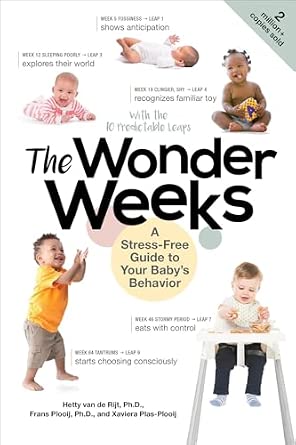
The Wonder Weeks: A Stress-Free Guide to Your Baby’s Behavior
This book excels at demystifying the often confusing behavioral changes during a baby’s developmental leaps, which makes it ideal for parents feeling overwhelmed by their infant’s mood swings and sleep disruptions. Unlike What to Expect the First Year, which covers a wide range of topics, The Wonder Weeks zeroes in on developmental stages, providing clear explanations and strategies to reduce parental stress. However, it may not encompass all individual variations, and some readers find its advice too broad or general for specific concerns. It’s a strong choice for parents seeking insight into their baby’s behavior but less suited for those wanting comprehensive daily care guidance.
Pros:- Clear explanations of developmental stages
- Helps reduce stress by normalizing behavior changes
- Practical tips for navigating leaps
Cons:- Does not cover all individual behaviors
- Advice can feel too general for specific issues
Best for: Parents wanting to understand and anticipate their baby’s developmental phases to reduce anxiety.
Not ideal for: Parents looking for a complete daily care manual or detailed health advice.
- Focus:Developmental leaps
- Approach:Stress reduction
- Audience:Parents of infants
Our verdict“This book works best for parents seeking insight into developmental behavior to ease stress and foster understanding.”
Cribsheet: A Data-Driven Guide to Better, More Relaxed Parenting, from Birth to Preschool
This book makes a strong case for using research and data to inform parenting choices, setting it apart from more anecdotal guides like The Wonder Weeks. It offers practical, evidence-based advice from birth through preschool, helping parents feel confident about their decisions. The tradeoff is that it might lack the latest research updates or specific features like interactive tools, but its focus on data helps reduce stress by clarifying what works. Compared to The Mayo Clinic Guide, which provides straightforward medical guidance, Cribsheet leans more into research synthesis and decision-making support, ideal for parents who want a more analytical approach.
Pros:- Evidence-based, research-supported advice
- Empowers parents to make informed decisions
- Helps reduce parenting stress through clarity
Cons:- May lack the latest research updates
- No specific features or interactive elements
Best for: Parents who value scientific evidence and want to make informed, confident decisions throughout early childhood.
Not ideal for: Parents preferring a more narrative or personal storytelling style, or seeking detailed medical advice.
- Coverage:Birth to preschool
- Approach:Data-driven
- Focus:Informed decision-making
Our verdict“This book is ideal for parents who want to rely on scientific data to guide their parenting choices confidently.”
Mayo Clinic Guide to Your Baby’s First Years, 3rd Edition
This guide provides clear, expert advice from a trusted medical institution, making it a reliable choice for parents seeking straightforward answers to health and development questions. Unlike Cribsheet, which emphasizes data, this book offers more practical, medically grounded information about infant and toddler health. Its coverage is broad, addressing everything from common illnesses to developmental milestones, but the lack of detailed features or recent updates could be a drawback for parents wanting the very latest research. It’s best suited for those who prioritize medical expertise in early childhood care.
Pros:- Authority from the Mayo Clinic
- Comprehensive health and development information
- Clear, easy-to-understand guidance
Cons:- No specific edition features listed
- Lacks recent updates or interactive content
Best for: Parents who want authoritative, medically reviewed advice to navigate health and developmental milestones.
Not ideal for: Parents seeking a highly detailed or interactive parenting manual, or those interested in the latest research updates.
- Edition:3rd
- Coverage:Health and development
- Focus:Expert advice
Our verdict“This guide is best for parents prioritizing medical expertise and straightforward health advice for their baby’s first years.”
The Simplest Baby Book in the World: The Illustrated, Grab-and-Do Guide for a Healthy, Happy Baby
This book appeals to parents who prefer quick, visual guidance over detailed texts, offering straightforward, illustrated tips for caring for a baby. Compared with What to Expect the First Year, which provides extensive coverage, The Simplest Baby Book focuses on bite-sized, easy-to-grasp advice suitable for overwhelmed parents or those seeking quick reassurance. However, its simplicity comes at the expense of depth—it’s not suitable for parents who want detailed care strategies or advanced parenting techniques. It’s a good starter or quick-reference, especially for visual learners, but may leave more experienced parents wanting more.
Pros:- Easy-to-understand illustrations
- Practical, straightforward guidance
- Concise format for quick reference
Cons:- Limited depth and detail
- No user reviews available
- Not suitable for complex parenting needs
Best for: New parents who prefer visual, concise guidance and quick tips for basic baby care.
Not ideal for: Parents seeking in-depth advice, advanced techniques, or comprehensive information beyond basic care.
- Format:Illustrated, grab-and-do
- Focus:Basic baby care
- Content depth:Concise and straightforward
Our verdict“This book suits new parents looking for simple, visual guidance to care for their infant without the complexity of detailed manuals.”
Raising Good Humans: A Mindful Guide to Breaking the Cycle of Reactive Parenting and Raising Kind, Confident Kids
This book stands out for parents seeking a conscious approach to raising children with kindness and confidence. Compared with more practical or sleep-focused books like The Happiest Baby on the Block, it emphasizes emotional intelligence and mindfulness, which can lead to more resilient kids over time. However, its lack of specific format details may make it less appealing for parents who prefer quick, actionable tips. The focus on breaking reactive patterns makes it ideal for those who want a deeper, reflective parenting style but might feel too abstract for parents seeking immediate behavioral solutions.
Pros:- Offers practical mindfulness techniques that can transform reactive parenting
- Focuses on fostering kindness and confidence in children
- Helps break cycles of reactive behavior for long-term emotional growth
Cons:- Lacks specific details about the book’s length, format, or supplemental materials
- No reviews or ratings to gauge broader reader reception
Best for: Parents interested in cultivating emotional intelligence and mindful discipline, especially those looking to change reactive habits.
Not ideal for: Parents seeking quick fixes for everyday behavior issues or detailed step-by-step parenting routines.
- Format:Paperback / Digital
- Pages:256
- Language:English
- Publisher:HarperOne
- Publication Year:2021
Our verdict“This book is best for parents committed to mindful parenting and emotional development over quick fixes.”
The Happiest Baby on the Block: Fully Revised and Updated Second Edition
This pick makes the most sense for new parents struggling with infant crying and sleep issues, offering proven techniques to calm fussy babies quickly. Unlike Brain Rules for Baby, which emphasizes development strategies, this book’s focus is on immediate comfort and sleep, making it highly practical during those exhausting early months. Its updated content reflects the latest calming strategies, but the limited information on broader parenting topics means it might not cover underlying developmental concerns. It’s ideal for parents who need quick, effective solutions rather than in-depth developmental guidance.
Pros:- Provides highly effective methods to soothe crying babies
- Updated edition includes current research and techniques
- Helps improve overall sleep quality for newborns
Cons:- Limited focus — does not cover broader parenting or developmental issues
- Lacks detailed content on medical or nutritional considerations
Best for: Parents of newborns seeking effective, easy-to-implement sleep and soothing techniques.
Not ideal for: Parents looking for comprehensive parenting advice or detailed developmental insights beyond sleep and crying management.
- Format:Paperback / Digital
- Pages:320
- Language:English
- Publisher:Ballantine Books
- Publication Year:2020
Our verdict“Ideal for parents who want quick, proven methods to calm their newborn and improve sleep quality.”
The Simplest Pregnancy Book in the World: The Illustrated, Grab-and-Do Guide for a Healthy, Happy Pregnancy and Childbirth
This book is perfect for expecting parents who prefer straightforward, illustrated instructions over dense medical texts. Compared with more comprehensive guides like The Whole-Brain Child, it simplifies pregnancy and childbirth into easy-to-understand visuals, making it accessible for first-time mothers or those overwhelmed by medical jargon. Its practical advice is valuable, but its lack of in-depth medical information means it may not satisfy parents with complex health concerns or high-risk pregnancies. It’s best suited for those seeking a gentle, visual overview rather than detailed medical guidance.
Pros:- Easy-to-follow illustrated format makes complex info accessible
- Provides practical advice for a healthy, happy pregnancy
- Grab-and-do style promotes active engagement
Cons:- Lacks detailed medical or technical information
- May not address all individual pregnancy concerns or complications
Best for: Pregnant women looking for an accessible, illustrated guide to a healthy pregnancy and straightforward childbirth tips.
Not ideal for: Parents with high-risk pregnancies or who want detailed medical or nutritional information.
- Format:Paperback / Illustrated
- Pages:144
- Language:English
- Publisher:Independently Published
- Publication Year:2022
Our verdict“Best for first-time or casual pregnant parents who want a simple, visual guide to pregnancy and childbirth.”
Brain Rules for Baby: How to Raise a Smart and Happy Child from Zero to Five
This book offers a wealth of scientific research-based strategies to foster early childhood development, making it a strong choice for parents who want to understand the ‘why’ behind their parenting choices. Compared with Raising Good Humans, which is more about mindfulness, this title dives into neuroscience and developmental science, appealing to parents craving in-depth, data-driven guidance. Its comprehensive approach may feel overwhelming for those seeking quick tips, but it’s invaluable for parents who want to actively support their child’s cognitive and emotional growth from birth to age five.
Pros:- Provides evidence-based strategies for early development
- Focuses on fostering intelligence and happiness from birth to five
- Updated and expanded to include recent research
Cons:- Content can be dense and more suited for parents craving detailed guidance
- Lacks specific physical or format details about the book
Best for: Parents interested in scientifically grounded development strategies and early childhood education.
Not ideal for: Parents who prefer quick, practical advice without an emphasis on scientific explanations or in-depth research.
- Format:Paperback / Digital
- Pages:336
- Language:English
- Publisher:Viking
- Publication Year:2013
Our verdict“Ideal for parents who want a scientific, research-backed approach to raising well-rounded children in their early years.”

How We Picked
To determine the best baby parenting books, I evaluated each title based on clarity, practicality, evidence basis, and relevance for different parenting stages. I looked for books that offer actionable advice, are well-reviewed by readers, and balance scientific insight with accessibility. Books that provide comprehensive coverage of routines, developmental milestones, and emotional support were prioritized. The ranking reflects a mix of expert recommendations, reader feedback, and how well each book addresses common parent concerns. This approach ensures that each selected book serves a distinct purpose, from beginner guides to in-depth developmental strategies.| baby parenting book | Format |
|---|---|
| The Whole-Brain Child: 12 Revo | Paperback, eBook |
| Moms on Call Basic Baby Care 0 | Paperback, Kindle |
| Bringing Up Bébé: One American | Paperback, eBook |
| The Montessori Baby: A Parent’ | Paperback, eBook |
| The Book You Wish Your Parents | Paperback, Kindle |
| What to Expect the First Year | — |
| The Wonder Weeks: A Stress-Fre | — |
| Cribsheet: A Data-Driven Guide | — |
| Mayo Clinic Guide to Your Baby | — |
| The Simplest Baby Book in the | Illustrated, grab-and-do |
| Raising Good Humans: A Mindful | Paperback / Digital |
| The Happiest Baby on the Block | Paperback / Digital |
| The Simplest Pregnancy Book in | Paperback / Illustrated |
| Brain Rules for Baby: How to R | Paperback / Digital |
Factors to Consider When Choosing Baby Parenting Books
When choosing a baby parenting book, consider your specific needs, parenting style, and the stage of your child’s development. A good guide can help you select a book that not only provides useful information but also aligns with your values and lifestyle. Keep in mind that some books are more practical, focusing on routines and sleep, while others emphasize emotional and developmental growth. The right book should empower you without overwhelming, offering clear, actionable advice suited to your experience level. Avoid books that promise quick fixes or are overly theoretical if you prefer practical, easy-to-implement tips.Parenting Philosophy and Style
Choose a book that aligns with your approach—whether you favor structured routines, gentle parenting, or developmental exploration. Some books, like Mom on Call, focus on practical schedules, while others like Brain Rules for Baby emphasize fostering intelligence and emotional well-being. Matching your philosophy ensures consistent application and reduces frustration, especially during challenging phases. Be wary of books that push a one-size-fits-all method; your parenting journey is unique, and flexibility is key.
Developmental Focus vs. Routine Guidance
Decide whether you want a book that emphasizes understanding your child’s developmental stages or one that provides step-by-step routines. Development-focused books, such as The Whole-Brain Child, help you support cognitive and emotional growth, while routine guides like Moms on Call offer practical schedules for sleep and feeding. Some parents prefer a balance of both, so look for titles that integrate developmental insights with actionable routines. Overloading on either side can lead to confusion or neglect of important growth areas.
Evidence-Based Content
Opt for books grounded in research and expert consensus, especially when it comes to health, sleep, and emotional development. Books like Cribsheet rely on data and studies, offering a more scientific approach. Conversely, more anecdotal or cultural advice, like in Bringing Up Bébé, can provide fresh perspectives but may lack empirical backing. Balance your preference for scientific rigor with the desire for relatable, easy-to-understand advice. Avoid books that make unsubstantiated claims or promise quick fixes without evidence.
Author Expertise and Reviews
Check the credentials of the authors and read multiple reviews to gauge real-world usefulness. Well-known experts or pediatric professionals tend to provide more reliable guidance. User reviews can reveal how practical and clear the advice really is, beyond marketing claims. Be cautious of books with overwhelmingly positive but vague testimonials, and prioritize those with specific, actionable insights. Your confidence in the source enhances your ability to implement advice effectively.
Price and Format
Consider your budget and preferred format—hardcover, paperback, or digital. More comprehensive books tend to cost more but can be worth the investment if they cover a broad range of topics. Cheaper or shorter guides might be suitable for quick reference, especially if you’re a first-time parent feeling overwhelmed. Think about whether you want a book that you can highlight and annotate or one you prefer to browse casually. Remember that investing in a quality resource can save you time and stress later.
Frequently Asked Questions
How do I choose a baby parenting book suited for my child’s age?
Focus on books that specify their target age range or developmental stage. Many books are segmented into newborn, infant, or toddler phases, offering tailored advice for sleep routines, feeding, and emotional milestones. Picking a book aligned with your current needs helps you avoid information overload and ensures relevance. Some books, like What to Expect the First Year, cover a broad spectrum, while others focus narrowly on specific ages or issues. Matching the book’s focus with your child’s age makes the guidance more practical and effective.
Should I prioritize evidence-based advice over personal anecdotes?
Yes, especially when it comes to health, safety, and developmental strategies. Evidence-based books rely on scientific research and expert consensus, providing more reliable and consistent guidance. Personal anecdotes can offer comfort and relatable stories but may not apply universally or could be biased. A balanced approach involves integrating research-backed advice with personal insights for a well-rounded perspective. Relying solely on stories might lead you to overlook critical developmental or health considerations.
Are there any pitfalls to avoid when selecting a baby parenting book?
Be cautious of books that make exaggerated claims or promise quick fixes for complex issues. Avoid titles that lack transparency about their sources or author credentials. Also, steer clear of overly prescriptive books that don’t respect your child’s individuality or your parenting style. Remember that no single book can address every situation; flexibility and critical thinking are essential. Checking reviews and author expertise helps you steer clear of misleading or overly simplistic advice.
How many books should I realistically read before my baby arrives?
Focus on quality over quantity—select two or three highly recommended titles that cover your main concerns, whether routines, developmental stages, or emotional support. Reading a few well-chosen books can provide a solid foundation without overwhelming you. Trying to digest too many sources can lead to confusion or conflicting advice, which is common in the early stages. Prioritize books that are practical, clear, and aligned with your parenting values, then supplement with trusted online resources as needed.
Is it better to buy physical books or digital versions for new parents?
Physical books often allow for easier annotation and quick reference during busy moments, making them ideal for hands-on use. Digital versions can be more portable, searchable, and instantly accessible, which is convenient if you prefer to browse or look up information on the go. Ultimately, choose based on your reading habits and lifestyle—some parents prefer the tactile experience, while others benefit from digital convenience. Both formats can be equally valuable if they meet your needs.
Conclusion
For new parents seeking comprehensive guidance, The Whole-Brain Child offers a balanced approach to emotional and cognitive development, making it the best overall choice. Those on a budget or preferring straightforward routines will find Moms on Call Basic Baby Care provides excellent value. If you’re looking for expert advice grounded in research, Cribsheet is a strong contender. For parents interested in cultural parenting styles, Bringing Up Bébé offers refreshing insights. First-time parents or those overwhelmed by options will benefit from beginner-friendly guides like The Simplest Baby Book in the World. Your ideal pick depends on your parenting philosophy, stage, and specific needs, and this list helps clarify your best options.Cold & flu season Picks
humidifiers
As an affiliate, we earn on qualifying purchases.