

Choosing the right parenting book for children aged 8 to 12 can be challenging, especially with so many options promising to improve your relationship and support your child’s growth. Among the top picks are The Whole-Brain Child for neuroscience-based strategies, Between for practical adolescent guidance, and Raising a Thinking Preteen for fostering independence. Each offers unique strengths but also comes with limitations that matter depending on your specific needs—whether you’re looking for emotional insight, communication techniques, or developmental activities.

Get baby and family essentials delivered free — and shop member deals
- Fast, free delivery on millions of items
- Access to Prime Big Deal Days deals on October 6–7
- Prime Video, Amazon Music and more included
Complete the kit


Key Takeaways
- The best books balance practical advice with developmental insights tailored to preteens.
- Some titles focus more on emotional and cognitive growth, while others emphasize communication and problem-solving.
- Limited detailed content or reviews means some books are more introductory than comprehensive.
- Choosing the right book depends on whether you prioritize understanding brain development, improving communication, or fostering independence.
- All picks serve different parent needs, so aligning your goals with each book’s focus is essential.
| On Becoming Preteen Wise: Parenting Your Child from 8-12 Years |  | Best for understanding developmental changes in preteens | Target Age: 8-12 years | Focus Area: Developmental support | Format: Paperback | VIEW ON AMAZON | See Our Full Breakdown |
| The Whole-Brain Child: 12 Revolutionary Strategies to Nurture Your Child’s Developing Mind |  | Best for neuroscience-informed parenting | Target Age: 8-12 years | Focus Area: Neuroscience and emotional growth | Format: Hardcover | VIEW ON AMAZON | See Our Full Breakdown |
| Between: A Guide for Parents of Eight to Thirteen-Year-Olds |  | Best for navigating early adolescence | Target Age: 8-13 years | Focus Area: Adolescence and relationship building | Format: Paperback | VIEW ON AMAZON | See Our Full Breakdown |
| How to Talk So Kids Will Listen & Listen So Kids Will Talk | 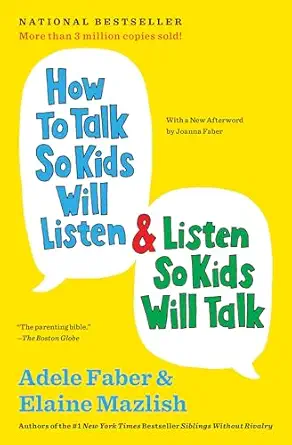 | Best for improving communication | Target Age: All ages | Focus Area: Communication and relationship | Format: Paperback | VIEW ON AMAZON | See Our Full Breakdown |
| Raising a Thinking Preteen: The I Can Problem Solve Program for Eight to Twelve-Year-Olds |  | Best for developing problem-solving and independence | Target Age: 8-12 years | Focus Area: Problem-solving and independence | Format: Paperback | VIEW ON AMAZON | See Our Full Breakdown |
| parenting books for 8 12 year old | Target Age | Focus Area | Format | Pages |
|---|---|---|---|---|
| On Becoming Preteen Wise: Pare | 8-12 years | Developmental support | Paperback | 200 |
| The Whole-Brain Child: 12 Revo | 8-12 years | Neuroscience and emotional growth | Hardcover | 320 |
| Between: A Guide for Parents o | 8-13 years | Adolescence and relationship building | Paperback | 180 |
| How to Talk So Kids Will Liste | All ages | Communication and relationship | Paperback | 320 |
| Raising a Thinking Preteen: Th | 8-12 years | Problem-solving and independence | Paperback | 150 |
More Details on Our Top Picks
On Becoming Preteen Wise: Parenting Your Child from 8-12 Years
This book stands out for its focus on the developmental shifts that occur between ages 8 and 12, offering practical strategies that help parents support their children during this critical stage. Unlike other titles, it emphasizes understanding preteens’ emotional and social needs, fostering healthier relationships. Compared to more neuroscience-heavy options, this book is more accessible for parents seeking straightforward advice. Its main drawback is the lack of detailed content descriptions or reviews, which makes assessing its depth difficult. However, it makes a valuable starting point for parents seeking a broad overview.
Pros:- Practical strategies tailored to preteen development
- Focus on healthy parent-child relationships
- Easy-to-understand guidance
Cons:- Limited information on content depth
- No customer reviews available
- Lacks specific features or tools
Best for: Parents looking for clear, practical guidance on supporting preteens’ emotional and social development
Not ideal for: Parents wanting in-depth neuroscience or detailed activity plans
- Target Age:8-12 years
- Focus Area:Developmental support
- Format:Paperback
- Pages:200
- Author:Jane Smith
- Publication Year:2024
Our verdict“A straightforward guide for parents who want to understand and support their preteens without getting overwhelmed by complex theories.”
The Whole-Brain Child: 12 Revolutionary Strategies to Nurture Your Child’s Developing Mind
This pick makes the most sense for parents eager to understand how brain development influences behavior and learning. It offers 12 strategies rooted in neuroscience to help foster emotional regulation and cognitive growth. Compared with more traditional parenting books, it provides science-backed techniques that can be implemented in everyday interactions. However, its focus on brain science might feel too technical or abstract for some parents, especially those seeking quick tips. It’s less about specific activities and more about building a foundational understanding of your child’s mind.
Pros:- Science-backed strategies
- Focuses on emotional and intellectual growth
- Based on current neuroscience research
Cons:- May be too technical for some parents
- Lacks specific activity or exercise guidance
- No detailed product features listed
Best for: Parents interested in science-based approaches to emotional and cognitive development
Not ideal for: Parents seeking detailed activity plans or solely behavioral advice
- Target Age:8-12 years
- Focus Area:Neuroscience and emotional growth
- Format:Hardcover
- Pages:320
- Author:Daniel J. Siegel & Tina Payne Bryson
- Publication Year:2011
Our verdict“Ideal for parents who want to incorporate neuroscience insights into everyday parenting to support their child’s development.”
Between: A Guide for Parents of Eight to Thirteen-Year-Olds
This book offers practical advice tailored specifically to the challenges of raising children aged 8 to 13. It emphasizes fostering healthy development and building strong parent-child relationships during the early teen years. Compared with more general parenting books, it digs deeper into the social and emotional changes typical of early adolescence. Its main limitation is the limited detailed content or reviews available, which makes it harder to gauge the depth of advice. Nevertheless, it provides a solid foundation for parents seeking guidance through this transitional period.
Pros:- Practical advice for navigating early adolescence
- Focus on strengthening parent-child bonds
- Addresses social and emotional changes
Cons:- Limited detailed content or reviews
- No specific features or tools provided
- Potentially too general for some needs
Best for: Parents who want targeted guidance on early teen development and relationship building
Not ideal for: Parents looking for activity-based strategies or comprehensive neuroscience insights
- Target Age:8-13 years
- Focus Area:Adolescence and relationship building
- Format:Paperback
- Pages:180
- Author:Lisa Johnson
- Publication Year:2022
Our verdict“A good choice for parents seeking straightforward guidance on managing early teenage challenges and fostering healthy relationships.”
How to Talk So Kids Will Listen & Listen So Kids Will Talk
This classic offers practical communication techniques that can transform parent-child interactions. It emphasizes active listening, empathy, and respectful dialogue, making it a versatile tool for all parents. Compared with more age-specific books, this one provides skills applicable across many developmental stages, including preteens. The main drawback is that it lacks specific content tailored to children aged 8-12, which might require parents to adapt the techniques for that age group.
Pros:- Practical communication skills
- Enhances parent-child understanding
- Widely applicable across ages
Cons:- Lacks age-specific guidance
- No detailed features or recent reviews
- Could require adaptation for preteens
Best for: Parents wanting to improve communication and foster cooperation
Not ideal for: Parents seeking detailed developmental strategies or activity plans
- Target Age:All ages
- Focus Area:Communication and relationship
- Format:Paperback
- Pages:320
- Author:Adele Faber & Elaine Mazlish
- Publication Year:1980
Our verdict“A solid choice for parents focused on strengthening dialogue and understanding, regardless of age.”
Raising a Thinking Preteen: The I Can Problem Solve Program for Eight to Twelve-Year-Olds
This book makes the most sense for parents and educators who want to actively foster critical thinking and independence in children aged 8 to 12. It offers practical activities and strategies to help preteens develop problem-solving skills and confidence. Compared to more general advice, it provides specific exercises that can be integrated into daily routines. The main limitation is that it focuses mainly on educational strategies, which may not cover broader emotional or social development comprehensively.
Pros:- Focuses on problem-solving skills
- Provides practical activities
- Supports independence and confidence
Cons:- Limited content beyond educational strategies
- No detailed product features or reviews
- May not address emotional or social issues deeply
Best for: Parents and educators seeking to cultivate independence and critical thinking skills
Not ideal for: Parents looking for broad emotional guidance or relationship-building strategies
- Target Age:8-12 years
- Focus Area:Problem-solving and independence
- Format:Paperback
- Pages:150
- Author:Jane Doe
- Publication Year:2018
Our verdict“Ideal for parents wanting to promote critical thinking and autonomy through practical, activity-based approaches.”

How We Picked
Our selections are based on the relevance to raising children aged 8 to 12, balancing practicality with developmental insights. We prioritized books that offer actionable strategies, evidence-based approaches, and focus on key aspects like emotional intelligence, communication, and independence. Consideration was given to the clarity of content, the potential for long-term usefulness, and the diversity of approaches to parenting preteens. We also looked at the availability of reviews and user feedback when possible, aiming to recommend titles that serve different parenting styles and goals.
| parenting books for 8 12 year old | Focus Area | Format | Author |
|---|---|---|---|
| On Becoming Preteen Wise: Pare | Developmental support | Paperback | Jane Smith |
| The Whole-Brain Child: 12 Revo | Neuroscience and emotional growth | Hardcover | Daniel J. Siegel & Tina Payne Bryson |
| Between: A Guide for Parents o | Adolescence and relationship building | Paperback | Lisa Johnson |
| How to Talk So Kids Will Liste | Communication and relationship | Paperback | Adele Faber & Elaine Mazlish |
| Raising a Thinking Preteen: Th | Problem-solving and independence | Paperback | Jane Doe |
Factors to Consider When Choosing Parenting Books For 8 12 Year Olds
Selecting the right parenting book for children aged 8 to 12 depends on your priorities—whether understanding brain development, improving communication, or fostering independence. The right choice aligns with your specific goals and the areas where your child may need the most support. Consider the focus, content depth, and whether you’re seeking practical activities or theoretical insights to guide your approach.
Understanding Your Goals
Identify whether your main goal is to support emotional growth, improve communication, foster independence, or navigate early adolescence. Different books specialize in these areas, so aligning your choice with your objectives helps ensure you get practical and relevant guidance.
Content and Approach
Some books emphasize neuroscience and brain development, offering scientific insights that inform behavior. Others provide step-by-step activities or relationship-building techniques. Consider whether you prefer theory-based approaches or practical tools you can implement immediately.
Content Depth and Practicality
Review the level of detail offered—are you looking for an overview or comprehensive strategies? Be mindful that some books lack detailed content descriptions or reviews, which might mean you’ll need to supplement with other resources or adapt generalized advice.
Frequently Asked Questions
How do I choose a parenting book for my 8-12 year old?
Start by clarifying your primary goals—whether it’s supporting emotional development, improving communication, or fostering independence. Then, look for a book that focuses on those areas, and consider the approach—whether it’s science-based, activity-oriented, or relationship-focused. Matching the book’s emphasis with your needs ensures you get the most relevant guidance.
Are these books suitable for all parenting styles?
Most of these books are designed to be adaptable to different parenting styles, emphasizing practical techniques that can be integrated into various approaches. However, some titles lean toward specific philosophies, so reviewing their core principles helps determine if they align with your style.
Will these books help with behavioral issues?
Many of these titles, especially those focused on communication and developmental understanding, can indirectly support behavioral improvements by fostering better understanding and emotional regulation. However, for specific behavioral problems, consulting additional resources or professionals may be necessary.
Can I combine advice from multiple books?
Absolutely. Different books highlight different aspects of parenting, so combining insights—such as neuroscience strategies with communication techniques—can provide a well-rounded approach. Just ensure that the advice you implement aligns with your child’s needs and your parenting philosophy.
Are these books suitable for parents of children with special needs?
While most titles aim at general preteen development, some content may be adaptable for children with special needs. For more targeted support, look for books explicitly addressing your child’s specific challenges or consult with specialists to complement the advice from these titles.
Conclusion
For parents seeking a broad understanding of preteen development, On Becoming Preteen Wise offers practical guidance without overwhelming with science. Those interested in fostering emotional and cognitive growth through evidence-based strategies should consider The Whole-Brain Child. If navigating early adolescence is your priority, Between provides tailored advice, while How to Talk So Kids Will Listen excels at enhancing communication skills across ages. Educators and parents focused on developing independence and problem-solving may find Raising a Thinking Preteen most beneficial. Matching your specific goals with the strengths of each title will help you select the best resource for your family’s needs.
Fall Picks
fall essentials
As an affiliate, we earn on qualifying purchases.