

Choosing the right parenting book can significantly influence how you connect with and guide your children. The best-rated options in 2026 include “The Whole-Brain Child” for its revolutionary approach to child development and “How to Talk So Kids Will Listen” for its practical communication strategies. While some books focus on discipline, others emphasize emotional intelligence or mindfulness, creating a broad spectrum of approaches. The main tradeoffs often involve balancing practical advice with philosophical perspectives or considering the age range they serve best. Keep reading for a detailed breakdown of these top picks and how they match different parenting styles and needs.

Turn the school run and nap time into listening time
- Thousands of audiobooks, podcasts and originals
- Listen on your phone, tablet or Echo — also offline
- Cancel anytime
Complete the kit


Key Takeaways
- The top-rated parenting books tend to fall into categories of communication, emotional intelligence, and discipline, reflecting core parenting priorities.
- Books that combine research-based strategies with practical tools tend to rank higher for usability and effectiveness.
- Many leading titles are tailored to specific age groups, so choosing a book aligned with your child’s developmental stage is key.
- Price and author credibility were significant factors, with well-known experts generally rated higher for trustworthiness.
- The best books often offer a balanced approach, blending gentle discipline with emotional understanding rather than relying solely on strict rules or permissiveness.
| How to Talk So Kids Will Listen & Listen So Kids Will Talk (The How To Talk Series) | 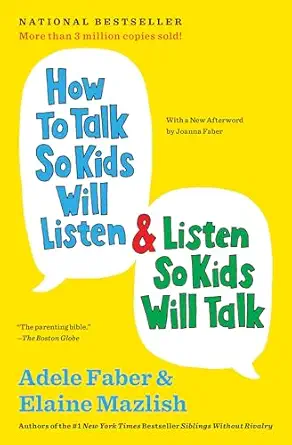 | Best Overall | Type: Paperback | Pages: 304 | Author: Faber & Mazlish | VIEW ON AMAZON | See Our Full Breakdown |
| How to Talk so Little Kids Will Listen: A Survival Guide to Life with Children Ages 2-7 |  | Best for Early Childhood | Type: Paperback | Pages: 224 | Author: Faber & Mazlish | VIEW ON AMAZON | See Our Full Breakdown |
| Tiny Humans, Big Emotions: How to Navigate Tantrums, Meltdowns, and Defiance to Raise Emotionally Intelligent Children |  | Best for Emotional Intelligence | Type: Hardcover | Pages: 240 | Author: Lindsey Biel | VIEW ON AMAZON | See Our Full Breakdown |
| The Whole-Brain Child: 12 Revolutionary Strategies to Nurture Your Child’s Developing Mind |  | Best for Brain Development | Type: Paperback | Pages: 336 | Author: Daniel J. Siegel & Tina Payne Bryson | VIEW ON AMAZON | See Our Full Breakdown |
| You Are the Parent: Move from Overparenting to Balanced Parenting and Become the Leader Your Child Needs |  | Best for Confident Leadership | Type: Hardcover | Pages: 256 | Author: Megan Leahy | VIEW ON AMAZON | See Our Full Breakdown |
| 1-2-3 Magic: Gentle 3-Step Child & Toddler Discipline for Calm, Effective, and Happy Parenting |  | Best Overall for Simple, Calm Discipline | Focus Area: Toddler and young child discipline | Approach: 3-step routine | Best For: Parents seeking simplicity | VIEW ON AMAZON | See Our Full Breakdown |
| No-Drama Discipline: The Whole-Brain Way to Calm the Chaos and Nurture Your Child’s Developing Mind |  | Best for Emotional and Cognitive Development | Focus Area: Whole-brain development and discipline | Approach: Emotional intelligence | Best For: Parents wanting a nurturing discipline style | VIEW ON AMAZON | See Our Full Breakdown |
| Punishment-Free Parenting: The Brain-Based Way to Raise Kids Without Raising Your Voice |  | Best for Respectful, Compassionate Parenting | Focus Area: Respectful, non-punitive parenting | Approach: Neuroscience-based | Best For: Parents seeking a stress-free, respectful discipline style | VIEW ON AMAZON | See Our Full Breakdown |
| Parenting with Love and Logic: Teaching Children Responsibility |  | Best for Teaching Responsibility and Decision-Making | Focus Area: Responsibility and decision skills | Approach: Respectful and practical | Best For: Parents of school-age children | VIEW ON AMAZON | See Our Full Breakdown |
| Good Inside: A Guide to Becoming the Parent You Want to Be |  | Best for Building Compassionate, Positive Relationships | Focus Area: Positive, compassionate parenting | Approach: Understanding and empathy | Best For: Parents aiming to strengthen emotional bonds | VIEW ON AMAZON | See Our Full Breakdown |
| The Book You Wish Your Parents Had Read: (And Your Children Will Be Glad That You Did) |  | Best Overall | Focus: Parent-child relationship and communication | Approach: Practical and empathetic | Content Depth: Basic insights, no detailed strategies | VIEW ON AMAZON | See Our Full Breakdown |
| Raising Good Humans: A Mindful Guide to Breaking the Cycle of Reactive Parenting and Raising Kind, Confident Kids |  | Best for Mindful Parenting | Focus: Mindfulness and emotional resilience | Approach: Gentle and conscious | Content depth: Practical advice, no scientific details | VIEW ON AMAZON | See Our Full Breakdown |
| Simplicity Parenting: Using the Extraordinary Power of Less to Raise Calmer, Happier, and More Secure Kids |  | Best for Minimalist Parenting | Focus: Minimalist parenting and environment | Approach: Simplification and decluttering | Content depth: Practical lifestyle advice | VIEW ON AMAZON | See Our Full Breakdown |
| Parenting by The Book: Biblical Wisdom for Raising Your Child |  | Best for Faith-Based Families | Focus: Biblical and faith-based guidance | Approach: Scripture-rooted | Content depth: Basic faith-based principles | VIEW ON AMAZON | See Our Full Breakdown |
| Hunt, Gather, Parent: What Ancient Cultures Can Teach Us About the Lost Art of Raising Happy, Helpful Little Humans |  | Best for Traditional and Cultural Parenting | Focus: Cultural and traditional parenting | Approach: Historical wisdom | Content depth: Practical advice with cultural emphasis | VIEW ON AMAZON | See Our Full Breakdown |
| rated parenting book | Approach |
|---|---|
| How to Talk So Kids Will Liste | — |
| How to Talk so Little Kids Wil | — |
| Tiny Humans | — |
| The Whole-Brain Child: 12 Revo | — |
| You Are the Parent: Move from | — |
| 1-2-3 Magic: Gentle 3-Step Chi | 3-step routine |
| No-Drama Discipline: The Whole | Emotional intelligence |
| Punishment-Free Parenting: The | Neuroscience-based |
| Parenting with Love and Logic: | Respectful and practical |
| Good Inside: A Guide to Becomi | Understanding and empathy |
| The Book You Wish Your Parents | Practical and empathetic |
| Raising Good Humans: A Mindful | Gentle and conscious |
| Simplicity Parenting: Using th | Simplification and decluttering |
| Parenting by The Book: Biblica | Scripture-rooted |
| Hunt | Historical wisdom |
More Details on Our Top Picks
How to Talk So Kids Will Listen & Listen So Kids Will Talk (The How To Talk Series)
This classic book stands out for its comprehensive approach to improving communication between parents and children. It offers practical techniques that foster cooperation and understanding, making it a valuable resource for parents who want to build stronger relationships. Compared with How to Talk so Little Kids Will Listen, it covers a broader age range and deeper communication strategies, though it might be less focused on specific age groups. Its main tradeoff is that it lacks detailed guidance on physical products or interactive tools, relying instead on written advice. This pick makes the most sense for parents seeking a foundational, all-around communication guide that can be applied across various developmental stages.
Pros:- Provides practical, easy-to-implement communication techniques
- Helps foster understanding and cooperation
- Suitable for a wide age range from toddlers to preteens
Cons:- Lacks specific details on edition or format
- May feel too general for parents seeking targeted strategies
Best for: Parents looking for a comprehensive communication guide to improve interactions with children of all ages.
Not ideal for: Parents seeking quick tips or physical tools, as this book is purely informational and broad in scope.
- Type:Paperback
- Pages:304
- Author:Faber & Mazlish
- Published Year:2012
- Language:English
- ISBN:9781451663884
Our verdict“Ideal for parents wanting a broad, foundational guide to better communication with children of all ages.”
How to Talk so Little Kids Will Listen: A Survival Guide to Life with Children Ages 2-7
This book makes a strong case for addressing the specific challenges of communicating with children aged 2 to 7. Its targeted advice helps reduce conflicts and improve cooperation during those tricky early years. Compared with How to Talk So Kids Will Listen & Listen So Kids Will Talk, it narrows the focus to younger children, offering simpler, age-appropriate techniques that are easier to implement on a daily basis. Its main tradeoff is that it doesn’t delve into older children’s communication needs, limiting its scope. This pick is best suited for parents of toddlers and early elementary kids who want straightforward, practical guidance for everyday interactions.
Pros:- Provides effective communication techniques for young children
- Helps reduce conflicts and promote cooperation
- Easy to understand and implement in daily life
Cons:- Limited to advice for children aged 2-7, not broader
- Does not include physical tools or interactive content
Best for: Parents of children aged 2-7 seeking practical, age-specific communication strategies.
Not ideal for: Parents of older children or teenagers, as the strategies may not scale well for older ages.
- Type:Paperback
- Pages:224
- Author:Faber & Mazlish
- Published Year:2012
- Language:English
- ISBN:9781501131634
Our verdict“Best suited for parents of young children who want simple, effective communication tips to ease daily conflicts.”
Tiny Humans, Big Emotions: How to Navigate Tantrums, Meltdowns, and Defiance to Raise Emotionally Intelligent Children
This book focuses on managing children’s intense emotions, making it a strong choice for caregivers aiming to boost emotional intelligence from infancy through age eight. It offers practical strategies for understanding and responding to tantrums, meltdowns, and defiance, unlike more general communication advice found in How to Talk series. The main tradeoff is that it’s primarily informational and doesn’t include physical tools or interactive elements, which some parents might prefer. It’s best for those who want concrete guidance on emotional regulation and building resilience in their kids, especially during challenging phases.
Pros:- Provides practical strategies for managing emotional outbursts
- Focuses on fostering emotional intelligence
- Suitable for children from infancy to age eight
Cons:- Content is mainly informational without interactive tools
- Requires time investment to apply strategies effectively
Best for: Parents and caregivers seeking strategies to handle emotional outbursts and nurture emotional intelligence in young children.
Not ideal for: Parents looking for quick fixes or physical products, since this is mainly a guidebook with no interactive content.
- Type:Hardcover
- Pages:240
- Author:Lindsey Biel
- Published Year:2021
- Language:English
- ISBN:0063306271
Our verdict“Excellent for caregivers wanting to understand and manage their child’s big emotions while fostering emotional growth.”
The Whole-Brain Child: 12 Revolutionary Strategies to Nurture Your Child’s Developing Mind
This book excels at translating neuroscience into practical parenting strategies, helping parents support both emotional and cognitive growth. Its clear explanations make complex brain science accessible, and the 12 strategies are easy to integrate into daily routines. Compared with How to Talk series, it emphasizes understanding the child’s brain development rather than just communication techniques. The main drawback is that some readers may find the strategies basic or time-consuming to implement. It’s ideal for parents interested in fostering well-rounded development and willing to dedicate time to applying brain-based techniques.
Pros:- Provides evidence-based, neuroscience-informed strategies
- Helps improve emotional and cognitive development
- Clear explanations suitable for non-experts
Cons:- Some strategies may be basic or require time to practice
- Not a physical product, purely informational
Best for: Parents interested in science-based approaches to support their child’s emotional and intellectual development.
Not ideal for: Parents seeking quick fixes or minimal time investment, as some strategies require consistent effort.
- Type:Paperback
- Pages:336
- Author:Daniel J. Siegel & Tina Payne Bryson
- Published Year:2012
- Language:English
- ISBN:0553386697
Our verdict“Great for parents eager to incorporate brain science into nurturing their child’s full developmental potential.”
You Are the Parent: Move from Overparenting to Balanced Parenting and Become the Leader Your Child Needs
This book advocates for a shift away from overparenting toward a balanced approach that emphasizes leadership and emotional boundaries. It offers practical strategies to help parents develop confidence and set healthy limits, contrasting with more permissive or overly controlling styles. Compared to The Whole-Brain Child, which centers on brain development, this book focuses on leadership qualities and discipline strategies. Its main drawback is that it lacks detailed physical tools or interactive content, relying solely on advice. It’s best for parents who want to cultivate their leadership skills and foster independence in their children, though it may require time to implement changes effectively.
Pros:- Provides practical strategies for confident, balanced parenting
- Focuses on developing leadership skills in parents
- Empowers parents to set boundaries and foster independence
Cons:- No physical tools or interactive elements
- Requires commitment and time to see results
Best for: Parents seeking to develop confident leadership and balanced discipline skills in their parenting approach.
Not ideal for: Parents looking for quick, ready-made solutions or expecting detailed physical tools, as it’s primarily advice-based.
- Type:Hardcover
- Pages:256
- Author:Megan Leahy
- Published Year:2022
- Language:English
- ISBN:0063448645
Our verdict“Ideal for parents ready to lead with confidence and foster independence through balanced discipline.”
1-2-3 Magic: Gentle 3-Step Child & Toddler Discipline for Calm, Effective, and Happy Parenting
This book stands out for its straightforward 3-step method, making it ideal for parents seeking a calm and effective approach to toddler discipline. Compared with No-Drama Discipline, which emphasizes understanding the child’s brain, 1-2-3 Magic offers a more structured and easy-to-implement routine, especially useful for busy parents who need quick guidance. However, it lacks specific tools or detailed strategies for complex behavioral issues, which might leave some parents feeling it’s too simplistic for challenging situations. Its focus on calmness and consistency makes it a solid choice for parents who prefer clear, no-nonsense tactics without extensive emotional discussion.
Pros:- Provides a simple, easy-to-follow discipline method
- Promotes calm, non-confrontational parenting
- Suitable for quick implementation with young children
Cons:- No specific behavioral tools or rewards included
- May require adaptation for different parenting styles
- Less effective for complex behavioral challenges
Best for: Parents of toddlers and young children who want a simple, effective discipline routine
Not ideal for: Parents seeking in-depth emotional or cognitive development strategies, or those looking for a more nuanced approach like No-Drama Discipline
- Focus Area:Toddler and young child discipline
- Approach:3-step routine
- Best For:Parents seeking simplicity
Our verdict“This pick is ideal for parents who want straightforward, calm discipline without complex emotional strategies.”
No-Drama Discipline: The Whole-Brain Way to Calm the Chaos and Nurture Your Child’s Developing Mind
This book makes the most sense for parents interested in understanding their child’s brain and fostering emotional intelligence alongside discipline. It differs from 1-2-3 Magic by emphasizing empathy, connection, and the importance of nurturing a child’s developing mind through practical, brain-based strategies. The techniques require patience and consistency, which might be challenging for parents expecting quick fixes. Compared to books that focus solely on behavior, No-Drama Discipline offers deeper insights into emotional growth, making it ideal for parents committed to long-term development but possibly demanding more time to see results.
Pros:- Provides practical, brain-based discipline strategies
- Focuses on emotional and cognitive growth
- Helps manage challenging behaviors through understanding
Cons:- Requires time to learn and implement new techniques
- Less focus on immediate behavior correction
- Some may find it emotionally intensive to apply
Best for: Parents who want to combine discipline with emotional and cognitive nurturing
Not ideal for: Parents seeking quick, straightforward discipline routines without a focus on emotional understanding
- Focus Area:Whole-brain development and discipline
- Approach:Emotional intelligence
- Best For:Parents wanting a nurturing discipline style
Our verdict“Best suited for parents who prioritize emotional growth and understanding alongside discipline.”
Punishment-Free Parenting: The Brain-Based Way to Raise Kids Without Raising Your Voice
This book is perfect for parents eager to eliminate yelling and punishment, leaning instead on neuroscience principles to foster respectful relationships. Compared to 1-2-3 Magic, which offers a more structured routine, Punishment-Free Parenting emphasizes understanding and compassion, making it ideal for parents committed to a non-punitive style. Its biggest challenge is that it requires a significant mindset shift, which might be difficult for parents used to traditional discipline. It’s best for those seeking a stress-reducing approach that promotes mutual respect rather than control.
Pros:- Promotes positive, respectful interactions
- Based on neuroscience principles
- Helps reduce parent-child conflict and stress
Cons:- Lacks concrete tools or routines for immediate behavior management
- Requires a mindset change that may be difficult for some
- Less structured than routine-based methods
Best for: Parents who want to raise well-behaved children without yelling or punishment
Not ideal for: Parents expecting quick behavioral fixes or who are comfortable with traditional discipline methods
- Focus Area:Respectful, non-punitive parenting
- Approach:Neuroscience-based
- Best For:Parents seeking a stress-free, respectful discipline style
Our verdict“Ideal for parents committed to respectful, brain-based discipline and reducing conflict.”
Parenting with Love and Logic: Teaching Children Responsibility
This book makes a strong case for fostering responsibility through respectful, practical strategies, differentiating itself from books like Good Inside by focusing more on behavioral accountability. It’s best suited for parents who want their children to develop decision-making skills and responsibility without authoritarian tactics. Its main drawback is that it lacks detailed content on emotional development or tools for handling extreme misbehavior, which might make it less suitable for parents dealing with persistent defiance. Nonetheless, it offers valuable tools for parents who want to teach life skills with respect and patience.
Pros:- Provides practical, responsibility-based strategies
- Fosters respectful parent-child relationships
- Emphasizes teaching life skills
Cons:- Lacks detailed content on emotional or attachment issues
- No specific tools for handling severe behavioral problems
- Limited guidance on emotional nurturing
Best for: Parents of school-aged children who want to instill responsibility and decision-making skills
Not ideal for: Parents looking for emotional or attachment-focused parenting strategies
- Focus Area:Responsibility and decision skills
- Approach:Respectful and practical
- Best For:Parents of school-age children
Our verdict“Best for parents prioritizing responsibility and decision-making in their child’s development.”
Good Inside: A Guide to Becoming the Parent You Want to Be
This book emphasizes understanding and compassion as the foundation for effective parenting, making it distinct from more behavior-focused books like 1-2-3 Magic. It’s best suited for parents who want to foster a positive, trusting relationship with their children through gentle guidance. However, its focus on emotional insight may leave parents looking for concrete routines or discipline strategies feeling somewhat unfulfilled. It’s a good choice for those aiming to deepen their connection with their children and develop their parenting style around kindness and understanding.
Pros:- Focuses on understanding and compassion
- Helps build strong emotional bonds
- Provides practical insights for positive parenting
Cons:- Limited details on specific discipline tactics
- May lack immediate behavioral tools
- Content depth on practical strategies is limited
Best for: Parents seeking to nurture emotional bonds and foster positive relationships
Not ideal for: Parents needing specific discipline routines or quick behavioral fixes
- Focus Area:Positive, compassionate parenting
- Approach:Understanding and empathy
- Best For:Parents aiming to strengthen emotional bonds
Our verdict“Ideal for parents wanting to cultivate kindness and emotional connection in their parenting approach.”
The Book You Wish Your Parents Had Read: (And Your Children Will Be Glad That You Did)
This book stands out for its accessible approach to improving parent-child relationships through effective communication and emotional understanding. Compared to more structured guides like The Whole-Brain Child, it offers practical insights that are easy to implement without requiring extensive background knowledge. Its focus on fostering connection makes it ideal for parents seeking a more empathetic approach, though it lacks detailed content on specific discipline strategies. The advice is straightforward, making it a good starting point for families wanting to strengthen bonds, but it might fall short for those looking for a comprehensive behavioral framework.
Pros:- Provides valuable insights into parent-child emotional dynamics
- Easy to understand and implement
- Focuses on strengthening relationships rather than just discipline
Cons:- Lacks detailed content or specific techniques
- No information on different child age groups or developmental stages
Best for: Parents who want to improve their emotional connection with children and prefer practical, easy-to-understand guidance.
Not ideal for: Parents seeking detailed discipline techniques or scientific explanations, as the book emphasizes emotional connection over behavioral strategies.
- Focus:Parent-child relationship and communication
- Approach:Practical and empathetic
- Content Depth:Basic insights, no detailed strategies
Our verdict“Ideal for parents looking to deepen emotional bonds and improve communication with their children.”
Raising Good Humans: A Mindful Guide to Breaking the Cycle of Reactive Parenting and Raising Kind, Confident Kids
This book is well-suited for parents eager to cultivate mindfulness, kindness, and confidence in their children. It emphasizes breaking reactive parenting patterns, which makes it stand out compared to more traditional discipline guides like 1-2-3 Magic. While it offers practical advice for fostering emotional resilience and positive behavior, it doesn’t provide detailed content or scientific evidence, and lacks reviews that could validate its effectiveness. Its focus on internal emotional work makes it a strong choice for parents interested in a more conscious parenting style, but it might be less appealing for those seeking quick, actionable discipline tips.
Pros:- Focuses on cultivating mindfulness and kindness
- Helps break reactive parenting cycles
- Practical advice for emotional development
Cons:- No detailed content or scientific backing
- Limited reviews or real-world validation
Best for: Parents interested in mindfulness-based, gentle parenting approaches that aim to develop confident and kind children.
Not ideal for: Parents seeking concrete discipline strategies or quick fixes, as the book emphasizes emotional awareness over immediate behavioral solutions.
- Focus:Mindfulness and emotional resilience
- Approach:Gentle and conscious
- Content depth:Practical advice, no scientific details
Our verdict“Best suited for parents committed to a mindful, emotionally aware approach to raising children.”
Simplicity Parenting: Using the Extraordinary Power of Less to Raise Calmer, Happier, and More Secure Kids
This book offers a compelling case for reducing clutter, overstimulation, and complexity to foster a calmer, more secure environment for children. Compared with Hunt, Gather, Parent, it emphasizes simplicity over traditional or culturally specific practices, making it ideal for parents overwhelmed by modern life. While it provides practical suggestions for decluttering and simplifying routines, it might not appeal to parents who prefer structured discipline plans or quick solutions. Its focus on creating a peaceful environment can lead to noticeable emotional benefits, but it requires a commitment to lifestyle changes that may not suit everyone.
Pros:- Provides practical advice for decluttering and simplifying routines
- Helps create a calmer, more secure environment
- Focuses on emotional well-being through simplicity
Cons:- Requires lifestyle adjustments that may be challenging
- Less useful for parents seeking quick discipline strategies
Best for: Parents feeling overwhelmed by modern life who want to foster calmer, more secure children through simplicity.
Not ideal for: Parents looking for quick discipline techniques or who prefer highly structured routines, as the book emphasizes lifestyle changes over immediate behavioral solutions.
- Focus:Minimalist parenting and environment
- Approach:Simplification and decluttering
- Content depth:Practical lifestyle advice
Our verdict“Perfect for parents ready to simplify their lives to promote emotional well-being in their children.”
Parenting by The Book: Biblical Wisdom for Raising Your Child
This book provides faith-based parenting guidance rooted in scripture, making it a strong choice for parents who want to incorporate biblical principles into their child-rearing. Unlike general parenting books like Raising Good Humans, it offers specific spiritual advice that can resonate deeply with religious families seeking alignment with their beliefs. However, it offers limited content on modern parenting challenges outside its faith framework and lacks detailed content descriptions. For those committed to faith-based parenting, it offers practical wisdom, but it might not meet the needs of secular or diverse spiritual families seeking broader strategies.
Pros:- Provides clear biblical guidance
- Practical advice rooted in scripture
- Supports faith-based child-rearing
Cons:- Limited content on modern parenting issues
- Lacks detailed explanations of strategies outside faith context
Best for: Parents seeking biblical guidance and spiritual principles for raising children within a faith context.
Not ideal for: Secular parents or those looking for evidence-based, non-religious parenting strategies, as the book is rooted in scripture and faith-based principles.
- Focus:Biblical and faith-based guidance
- Approach:Scripture-rooted
- Content depth:Basic faith-based principles
Our verdict“Ideal for religious families wanting to integrate biblical wisdom into their parenting approach.”
Hunt, Gather, Parent: What Ancient Cultures Can Teach Us About the Lost Art of Raising Happy, Helpful Little Humans
This book explores how ancient cultural practices can shed light on raising joyful, helpful children today. It offers unique insights, contrasting sharply with more modern, science-based guides like The Whole-Brain Child. While it provides practical advice inspired by traditional wisdom, it lacks scientific evidence and detailed steps, which could make its recommendations less convincing for some parents. Its emphasis on cultural traditions makes it appealing for those interested in historical methods, but it might not resonate with parents seeking structured, research-backed strategies or those with different cultural backgrounds.
Pros:- Provides unique insights from ancient cultures
- Offers practical advice rooted in tradition
- Focuses on raising happy, helpful children
Cons:- Lacks scientific evidence or modern research backing
- Limited practical implementation steps
Best for: Parents curious about traditional or cultural parenting methods and willing to consider historical wisdom for raising happy children.
Not ideal for: Parents seeking evidence-based, scientifically supported parenting techniques or quick, actionable strategies, as the book emphasizes cultural insights over empirical research.
- Focus:Cultural and traditional parenting
- Approach:Historical wisdom
- Content depth:Practical advice with cultural emphasis
Our verdict“Suitable for parents interested in integrating traditional cultural practices into modern child-rearing, understanding its limitations.”

How We Picked
These books were selected based on a combination of expert reviews, reader ratings, and their reputation for providing actionable, realistic advice. We prioritized titles that demonstrate evidence-based strategies, clear communication, and versatility across different parenting styles. Books that cater to specific age groups or parenting challenges were favored, but overall, the focus was on those with broad applicability and proven effectiveness. Our ranking also considers accessibility, readability, and the presence of practical tools, ensuring each pick offers tangible value to parents. This approach ensures the list covers a spectrum of approaches while highlighting the most impactful titles.Factors to Consider When Choosing Rated Parenting Books
When selecting a parenting book, it’s important to consider several factors that align with your values, your child’s age, and your parenting style. Not all books are equally effective for every family, so understanding these considerations can help you make a more informed choice and avoid common pitfalls like choosing overly theoretical or rigid approaches.Parenting Philosophy and Approach
Different books advocate for distinct philosophies—some focus on gentle, respectful discipline, while others emphasize structure and boundaries. Reflect on what aligns with your values and your child’s temperament. Picking a book that resonates with your style increases the likelihood you’ll implement its strategies consistently, leading to better outcomes.
Age Appropriateness
Many books target specific age ranges, such as toddlers or school-aged children. Using a book that matches your child’s developmental stage ensures the advice is relevant and practical. Avoid adopting strategies meant for older children if your child is very young, or vice versa, which can lead to frustration or ineffective discipline.
Research and Evidence Base
Look for titles grounded in psychological research or written by reputable experts. Books with a strong evidence base tend to provide strategies that are more effective and sustainable over time. Be cautious of books that rely heavily on anecdotal advice without scientific backing, which might not deliver lasting results.
Practicality and Usability
Choose books that offer clear, easy-to-implement strategies instead of overly complex theories. Practical tools like scripts, exercises, or step-by-step guides make it easier to apply concepts in real-life situations, increasing the likelihood of positive change in your parenting approach.
Cultural and Personal Values
Consider whether the book’s approach aligns with your cultural norms and personal beliefs. Strategies that work well in one cultural context may not translate directly to another. Selecting a book that respects your values ensures you feel authentic and confident using its advice.
Cost and Accessibility
While investing in a highly-rated book can be beneficial, balance cost with perceived value. Many excellent titles are available at different price points, including digital and used options. Avoid overspending on a book that doesn’t seem to match your needs; instead, look for one with good reviews at a reasonable price.
Frequently Asked Questions
How do I choose a parenting book that suits my child’s age?
To select a book that fits your child’s age, check the publication details or description for targeted age ranges. Books tailored to specific developmental stages address the unique challenges and needs at each age, increasing relevance. Using age-appropriate strategies helps ensure the advice is practical and effective, making your efforts more successful.
Are evidence-based parenting books better than anecdotal ones?
Evidence-based books tend to provide strategies backed by scientific research, which are generally more reliable and effective in the long term. While anecdotal stories can be inspiring, they may not work universally. Prioritizing evidence-based titles increases your chances of adopting methods that are proven to foster healthy development and positive behavior.
Should I buy multiple parenting books or stick to one?
Choosing one well-reviewed book that aligns with your parenting philosophy is usually more manageable than juggling several. However, supplementing with additional titles can broaden your understanding, especially if your child’s needs evolve. Be cautious not to get overwhelmed or conflicting advice—select books that complement each other and your parenting style.
How do I know if a parenting book will fit my family’s cultural values?
Read reviews or summaries to gauge whether the book’s approach aligns with your cultural norms and beliefs. Some titles explicitly address cultural considerations, while others may assume certain parenting paradigms. If possible, choose books authored by culturally aware experts or those that emphasize respectful, adaptable strategies.
Is it worth investing in a more expensive parenting book?
More expensive titles often feature comprehensive, research-backed content and expert credentials, which can offer greater depth and reliability. However, price isn’t the only indicator of quality—read reviews and sample chapters to assess usefulness. If you prioritize long-term, effective strategies, investing in a well-reviewed, slightly higher-priced book can be worthwhile.
Conclusion
For parents seeking an all-around reliable resource, “The Whole-Brain Child” offers a balanced approach to emotional and cognitive development, making it ideal for those who want evidence-based strategies. Budget-conscious parents may prefer “How to Talk So Kids Will Listen”, which provides practical communication tools without a hefty price tag. New parents or those unfamiliar with parenting literature will benefit from “Good Inside”, which emphasizes self-awareness and gentle guidance. For families with specific challenges, such as emotional regulation or discipline, titles like “No-Drama Discipline” or “1-2-3 Magic” are excellent options. Ultimately, your choice should align with your child’s age, your values, and your preferred approach, ensuring a supportive foundation for your parenting journey.
Halloween Picks
halloween
As an affiliate, we earn on qualifying purchases.