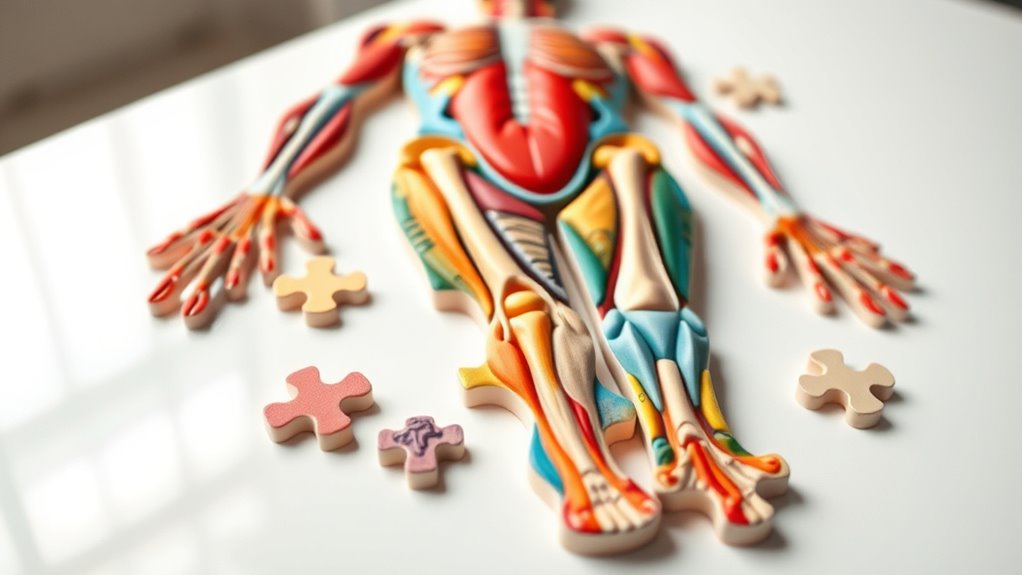

If you’re looking for the best 3-D human anatomy puzzles that make learning fun and interactive, I’ve found some great options. These include detailed models like the Discovery 3D Human Anatomy Model with glow-in-the-dark features, colorful puzzles like the Kidzlane Wooden My Body Puzzle, and educational sets from Melissa & Doug with magnetic parts. Whether for a classroom or home, these puzzles turn anatomy into an engaging hands-on experience. Keep exploring to discover more options that suit different ages and learning styles.
Key Takeaways
- Many top options feature realistic, detailed 3D models of human anatomy with engaging designs to captivate learners.
- Interactive puzzles often include glow-in-the-dark, magnetic, or multi-layer features that enhance tactile and visual engagement.
- They are suitable for various age groups, from young children to teens and adults, making learning fun and accessible.
- High-quality models promote hands-on exploration of organs, bones, muscles, and body systems, boosting understanding through active participation.
- Educational sets often include guides, labels, or posters that facilitate informative and immersive learning experiences.
Discovery 3D Human Anatomy Model with Glow-in-the-Dark Human Model


If you’re looking for an engaging and educational way to explore human anatomy, the Discovery 3D Human Anatomy Model with Glow-in-the-Dark Human Model is an excellent choice, especially for kids and beginners. This 28-piece model features realistic bones, muscles, organs, and veins, allowing hands-on learning of body systems. The glow-in-the-dark skeletal parts add a fun visual element, making it easier to understand anatomy concepts in low light. Designed for ages 8 and up, it encourages role-play as a doctor and supports tactile, visual, and kinesthetic learning. Despite some assembly challenges, its detailed design and educational value make it a standout tool for budding scientists.
Best For: children, beginners, and educators seeking an engaging, hands-on introduction to human anatomy and body systems.
Pros:
- Interactive 28-piece model that enhances tactile and visual learning of human anatomy.
- Glow-in-the-dark skeletal parts add a fun, visual element for low-light understanding.
- Well-designed for ages 8 and up, making it suitable for children, students, and beginner learners.
Cons:
- Some pieces, especially veins and organs, can be difficult to assemble due to tight fits.
- Assembly may require adult assistance, which could be challenging for very young children.
- Slightly fragile parts or tight fits might cause frustration during reassembly or handling.
Human Anatomy Kids Floor Puzzle
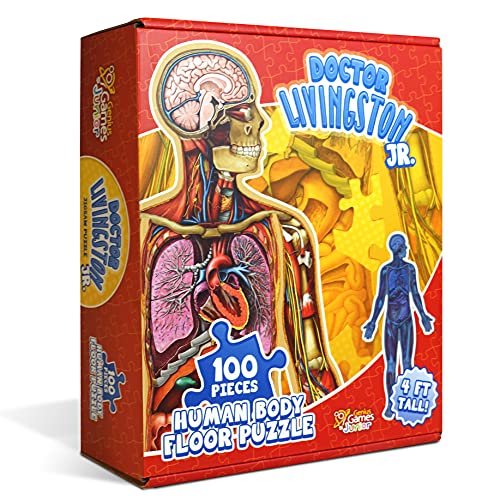
The Human Anatomy Kids Floor Puzzle by Dr. Livingston Jr offers a fun, hands-on way to learn about the human body. It features a 4-foot, life-size, medically accurate cross-section made of 100 sturdy pieces, perfect for kids ages 6-10. The vibrant colors and detailed organs help children recognize and understand different body parts and systems. Its size and durability make it suitable for classrooms, homes, or wall displays, providing repeated learning opportunities. Kids can assemble the puzzle independently or with help, reinforcing their anatomy knowledge while enjoying a challenging, engaging activity. It’s a practical, educational tool that makes learning about the human body both interactive and enjoyable.
Best For: children ages 6-10, educators, and parents seeking an engaging, educational tool to teach human anatomy in a fun and interactive way.
Pros:
- Medically accurate and detailed cross-section of the human body for educational depth
- Vibrant colors and sturdy construction enhance visual appeal and durability
- Suitable for independent or guided learning in classrooms, homes, or wall displays
Cons:
- May be challenging for very young children without assistance due to complexity
- Requires ample floor space for full assembly, which might be limited in small areas
- Some pieces might be lost or damaged over time despite the guarantee, requiring replacements
Pregnant Mother Anatomy Jigsaw Puzzle

For educators, expecting parents, or anyone fascinated by human biology, the Pregnant Mother Anatomy Jigsaw Puzzle offers a highly detailed and accurate visual experience. With 488 pieces forming a 3ft by 2ft poster-sized artwork, it beautifully illustrates the journey from conception to a full-term fetus. Created by Mesa Schumacher, a certified medical illustrator, the puzzle features scientifically precise artwork with die lines matching key structures like the uterus, placenta, and glands. Assembling it reveals how different systems support fetal development, making learning engaging and interactive. It’s an ideal gift for anyone interested in understanding pregnancy, combining education with hands-on fun.
Best For: educators, expecting parents, healthcare professionals, and anyone interested in human biology and pregnancy education seeking a detailed, interactive learning tool.
Pros:
- Scientifically accurate, detailed artwork created by a certified medical illustrator
- Interactive design with custom-shaped pieces matching anatomical structures for engaging learning
- Large poster size (3ft x 2ft) provides a comprehensive visual overview of pregnancy and fetal development
Cons:
- Relatively complex assembly may require patience and time, especially for younger users
- Higher price point due to detailed artwork and educational content
- Suitable primarily for older teens and adults; may not be ideal for very young children
Kidzlane African American Boy Wooden My Body Puzzle for Kids

Kidzlane African American Boy Wooden My Body Puzzle is an excellent choice for young children aged 1 to 3 who are just beginning to explore human anatomy. This 29-piece layered puzzle reveals five different body layers, including bones, muscles, and digestion, making learning interactive and fun. Its colorful, sturdy wooden pieces are easy for small hands to manipulate, helping develop fine motor skills. Designed to foster curiosity, problem-solving, and early biology understanding, it’s perfect for preschool and Montessori settings. With high ratings and durable construction, this puzzle makes exploring the human body engaging and accessible for toddlers.
Best For: young children aged 1 to 3 who are beginning to explore human anatomy through interactive play and hands-on learning.
Pros:
- Encourages early understanding of human body parts and systems through engaging, layered design
- Promotes fine motor skill development with sturdy, easy-to-manipulate wooden pieces
- Supports preschool and Montessori education with colorful visuals and tactile exploration
Cons:
- Suitable only for children aged 3 and up, limiting use for toddlers under 3
- Limited to basic anatomy layers, not detailed enough for advanced learners
- May require adult supervision for very young children to ensure proper handling and safety
Melissa & Doug Magnetic Human Body Anatomy Play Set

If you’re looking for an engaging, hands-on way to introduce young children to human anatomy, the Melissa & Doug Magnetic Human Body Anatomy Play Set is an excellent choice. It features 24 colorful magnetic pieces representing organs, bones, muscles, and body systems for both boys and girls. Made from durable wood, it promotes interactive learning, fine motor skills, and creativity without screens. The set includes a stand and guide to help kids identify parts, making it perfect for preschoolers and homeschoolers. While some note the magnets could be stronger and storage might improve, overall, it’s a fun, educational tool that sparks curiosity about the human body.
Best For: young children and preschoolers interested in learning about human anatomy through interactive, screen-free play.
Pros:
- Durable, high-quality wooden construction that lasts through active play
- Engages children in hands-on learning about body systems and organs
- Promotes fine motor skills, hand-eye coordination, and creative thinking
Cons:
- Magnetic pieces are sometimes weaker, causing them to shift during handling
- Lacks a storage lid, which can make keeping track of pieces more challenging
- Magnetic strength may not be sufficient for very young children or vigorous play
Wooden Body Puzzles for Kids

Wooden Body Puzzles for Kids stand out as an excellent choice for young children aged 4 and up who are curious about the human body. These puzzles feature both external body parts and internal organs like the brain, heart, lungs, and intestines, making learning engaging and hands-on. Crafted from high-quality, child-safe wood, they are durable yet require careful handling due to small pieces. Assembling the puzzle boosts fine motor skills, problem-solving, and understanding of anatomy. Bright, appealing designs capture kids’ attention and encourage independent play. Overall, these puzzles are a fun way to introduce early STEM concepts, fostering curiosity about how the human body works.
Best For: children aged 4 and up who are curious about human anatomy and enjoy hands-on, educational play.
Pros:
- Engages children with colorful, appealing designs that promote learning and curiosity.
- Enhances fine motor skills, hand-eye coordination, and problem-solving abilities through assembly.
- Serves as an effective early STEM educational tool for understanding basic human anatomy and organs.
Cons:
- Small and thin pieces may affect durability and pose a choking hazard for younger children.
- Some feedback indicates the lack of bone structures limits realism and educational depth.
- The wooden pieces may be less sturdy for rough or aggressive handling, requiring supervision.
Human Body Puzzle for Kids and Toddlers (90PCS)
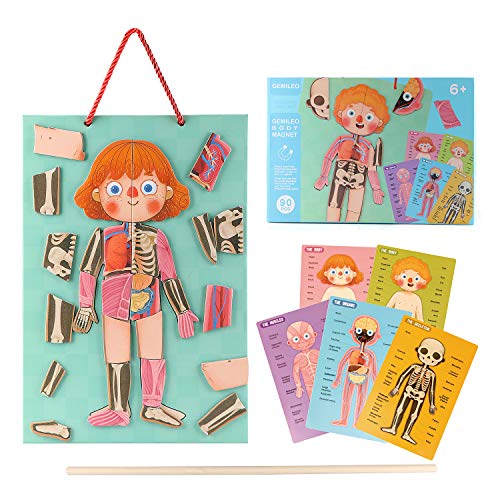
This Human Body Puzzle for Kids and Toddlers, with its 90 magnetic pieces, is perfect for young children aged 3 and up who are just beginning to explore human anatomy. It includes parts representing organs, muscles, bones, and body systems, with five different puzzles—girl, boy, skeleton, organs, and muscles. The magnetic pieces make assembly simple and secure, while the included boards and posters guide learning. Kids can hang the puzzles on walls or play with them on the floor. Designed to be durable and colorful, this set promotes hands-on learning, fine motor skills, and body awareness, making it an engaging educational tool for early science exploration.
Best For: young children aged 3 and up who are interested in learning about the human body through engaging, hands-on activities.
Pros:
- Educational and fun, promoting understanding of anatomy, organs, muscles, and bones
- Magnetic pieces ensure easy, secure assembly and durability for repeated play
- Includes guidance materials like boards and posters, supporting independent and guided learning
Cons:
- Small magnetic parts may pose a choking hazard if not used under supervision
- Requires space for floor play or wall display, which may be limited in small areas
- Some users may desire more detailed or accurate anatomical labeling for advanced learning
Be Amazing! Toys Interactive Human Body Anatomy Model (60 Pieces)
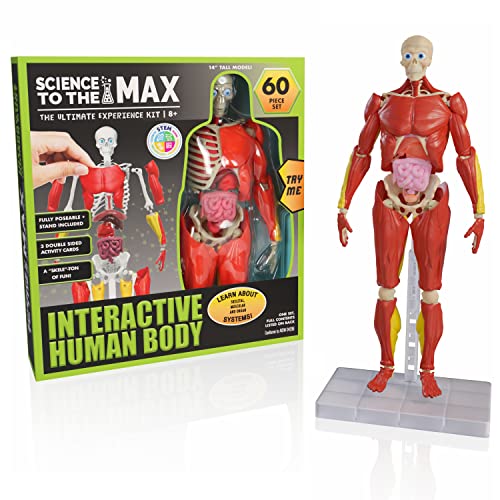
Designed for curious minds aged 8 to 14, the Be Amazing! Toys Interactive Human Body Anatomy Model is a fantastic hands-on learning tool. This 14-inch, fully articulated model features 60 removable pieces, including muscles, organs, and bones, making exploration engaging and realistic. Its adjustable stand allows for endless posing options, helping kids understand body structure and functions through interactive play. With colorful instruction cards explaining each part, it makes learning about the human body fun and accessible. Whether for school projects or home learning, this model sparks curiosity and promotes a deeper understanding of anatomy in a memorable way.
Best For: Curious children aged 8 to 14 who want an engaging, hands-on way to learn about human anatomy and biology.
Pros:
- Fully articulated and poseable for realistic demonstrations and fun play.
- Includes 60 removable pieces such as muscles, organs, and bones for detailed exploration.
- Comes with colorful instruction cards that enhance learning about body parts and their functions.
Cons:
- The model’s size (14 inches) may be small for detailed demonstrations for some users.
- Slightly lightweight at 0.32 ounces, which may affect stability when posed.
- Requires assembly and handling of small parts, which might be challenging for very young children without supervision.
ArtCreativity Anatomical Skull Puzzle (17 Pieces)

If you’re looking for an engaging way to introduce kids to human anatomy, the ArtCreativity Anatomical Skull Puzzle stands out as a perfect choice for ages 8 and up. This 17-piece 3D model offers hands-on fun by letting kids assemble a detailed skull cranium. It comes with educational cards that explain skull bones and assembly tips, making learning interactive and informative. The vibrant colors—yellow, purple, blue, pink, and green—add visual appeal, and its sturdy plastic construction guarantees durability through active play. It’s a fantastic gift for curious kids, helping them develop problem-solving skills while exploring human anatomy in a fun, memorable way.
Best For: parents, teachers, or science enthusiasts seeking an engaging, educational hands-on activity to teach children about human skull anatomy.
Pros:
- Promotes interactive learning and problem-solving skills through assembly.
- Bright, vibrant colors enhance visual appeal and make learning fun.
- Durable plastic construction ensures longevity through active handling and repeated use.
Cons:
- Designed for children aged 8 and above; may be complex for younger kids.
- Assembly requires patience and fine motor skills, which might challenge some users.
- Limited to 17 pieces, which may not fully represent detailed skull anatomy for advanced learners.
This is Me! Human Body Model for Kids

Kids aged 3 to 9 will love exploring their own bodies with the “This is Me! Human Body Model for Kids.” This large, 35.4-inch model features 30 colorful felt organs and bones that attach easily with Velcro, making learning hands-on and engaging. It’s perfect for homeschool, classroom activities, STEM projects, or just curious kids. Made of soft, safe felt with no sharp edges, it’s certified for safe play. The labels in five languages and versatile design let kids explore anatomy in multiple settings. Plus, its sturdy box makes it a fantastic gift to foster curiosity and understanding of the human body.
Best For: parents, teachers, and kids aged 3–9 who want a safe, engaging, and educational introduction to human anatomy through a colorful, hands-on model.
Pros:
- Bright, colorful felt organs and bones make learning visually appealing and fun
- Safe for young children with soft felt material and no sharp edges, certified under CPSIA and CE standards
- Versatile design allows attachment to walls or tables and includes multilingual labels for broader learning
Cons:
- Large size (35.4 inches) may require ample space for display or storage
- Felt pieces, while durable, may be less suitable for very rough handling over time
- Not a detailed medical model; primarily aimed at early childhood education and curiosity
3D Human Body Anatomy Model for Kids 8-12

The D Human Body Anatomy Model for Kids 8-12 is an excellent choice for young learners enthusiastic to explore human anatomy hands-on. I love how it features a transparent skeleton with removable parts, making it easy to see how organs, muscles, and bones fit together. The model’s durable PVC construction guarantees it holds up well, and the clear shell permits for safe inspection. Assembly is engaging, taking about 40 minutes, which helps improve problem-solving skills. Kids can reassemble parts repeatedly, fostering curiosity and understanding. Perfect for classrooms or home learning, this model makes complex anatomy accessible and fun for children aged 8 to 12.
Best For: young children aged 8-12 interested in hands-on learning about human anatomy, teachers, and parents seeking an educational science kit.
Pros:
- Engaging and interactive assembly that enhances problem-solving skills.
- Transparent design with removable parts makes complex anatomy easy to understand.
- Durable PVC construction and lightweight design make it safe, portable, and easy to handle.
Cons:
- Some parts may break easily due to fragility.
- Plastic smell can be toxic or unpleasant for sensitive users.
- Limited information in the manual and small parts requiring supervision for younger children.
eeBoo Human Anatomy 4-Puzzles Set for Kids

The eeBoo Human Anatomy 4-Puzzles Set is an excellent choice for children ages 8 and up who want a hands-on, educational introduction to the human body. It includes four 48-piece puzzles featuring detailed illustrations of the Skeletal, Muscular, Digestive, and Nervous Systems, plus a large educational poster. Assembling these puzzles helps kids learn about organs and body functions while developing pattern recognition, problem-solving skills, and confidence. The pieces fit easily, and the vivid images make learning engaging. The poster provides ongoing reference, making this set both fun and educational. It’s perfect for fostering curiosity about human anatomy in an interactive, screen-free way.
Best For: children aged 8 and up who are interested in hands-on, educational activities about human anatomy and enjoy puzzle-based learning.
Pros:
- Detailed, accurate illustrations enhance visual learning and engagement
- Promotes development of problem-solving, pattern recognition, and confidence
- Includes a large educational poster for ongoing reference and reinforcement
Cons:
- All puzzle pieces are initially stored in one bag, making sorting difficult
- Suitable primarily for ages 8+, may be too challenging for younger children without assistance
- Limited to specific body systems, which might require supplementary materials for comprehensive learning
Wooden Human Body Puzzle Toy for Toddlers

Designed specifically for toddlers aged 3 and up, the Wooden Human Body Puzzle Toy offers a safe, engaging way for young children to explore human anatomy. This 18-piece set features five layers representing organs, muscles, and bones, helping kids grasp basic biological concepts. Made from high-quality, smooth, non-toxic wood, it’s safe for little hands. As children assemble and disassemble the puzzle, they develop fine motor skills, problem-solving abilities, and spatial awareness. It encourages interactive learning and bonding with parents, making understanding the human body fun and memorable. Perfect as a gift, it combines education with play in a durable, Montessori-inspired design.
Best For: parents and educators seeking a safe, educational, and interactive toy to introduce toddlers aged 3+ to basic human anatomy concepts through hands-on play.
Pros:
- Made from high-quality, non-toxic wood with smooth surfaces ensuring safety and durability.
- Enhances cognitive development by promoting problem-solving, spatial awareness, and fine motor skills.
- Encourages parent-child bonding through interactive assembly, making learning about the human body engaging and fun.
Cons:
- Limited to basic anatomical layers, which may not satisfy advanced learners.
- Slightly higher price point compared to simpler puzzles, potentially limiting affordability.
- The 18-piece set might be small for very young children to handle comfortably without supervision.
Wooden My Body Puzzle for Toddlers & Kids

If you’re looking for an engaging way to introduce young children to human anatomy, the Wooden My Body Puzzle is an excellent choice. Its 5-layer design shows skin, muscles, organs, skeleton, and other body parts, making learning hands-on and fun. The puzzle includes multiple pieces per layer, with guides to help kids assemble it correctly, fostering curiosity and a love for science. Made from safe, durable wood, it’s perfect for children aged 3-5. The puzzle promotes cognitive development, understanding of body functions, and inspires interest in biology—all while providing a tactile, entertaining experience. It’s a thoughtful gift that combines education and play seamlessly.
Best For: young children aged 3-5 who are curious about human anatomy and enjoy hands-on, educational puzzles.
Pros:
- Engages children with a detailed 5-layer design that visually explains the human body.
- Made from safe, durable, child-friendly wood that meets safety standards.
- Promotes cognitive development, fine motor skills, and scientific curiosity through interactive learning.
Cons:
- May require adult supervision for younger children to ensure proper assembly.
- Limited to a specific age range, less suitable for older children or teens.
- The puzzle pieces could be small for very young children with limited dexterity.
Learning Resources Human Body Model (31 Pieces, Grades 3+)
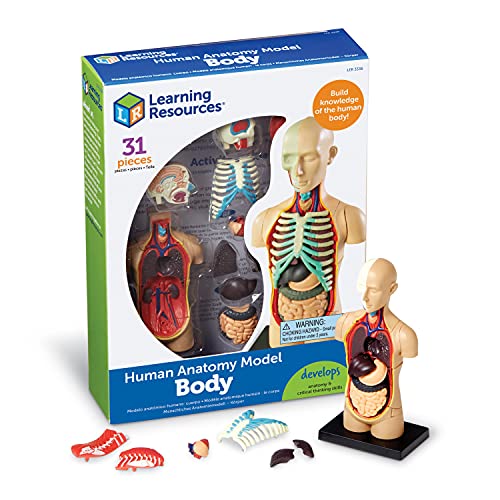
Looking for an engaging way to teach kids about human anatomy? The Learning Resources Human Body Model is perfect for ages 8 and up. This 31-piece, realistic plastic model assembles into a 4.5-inch 3D display, showing detailed organs like the brain, heart, lungs, liver, and intestines. It comes with a Fact Guide and assembly instructions, making learning interactive and fun. Kids can explore organ functions and develop observation skills while building their understanding of the human body. Whether for classroom lessons or homeschool projects, this model makes science hands-on and exciting, fostering curiosity and critical thinking in young learners.
Best For: educators, parents, and students aged 8+ interested in hands-on human anatomy learning.
Pros:
- Realistic and detailed 3D model enhances understanding of human organs.
- Comes with a Fact Guide and assembly instructions for interactive learning.
- Compact size (4.5 inches assembled) makes it easy to handle and display.
Cons:
- Plastic materials may be less durable over time with frequent use.
- Limited to basic organs, not suitable for advanced anatomy studies.
- Assembly may require adult supervision for younger children.
Factors to Consider When Choosing 3‑D Human Anatomy Puzzles
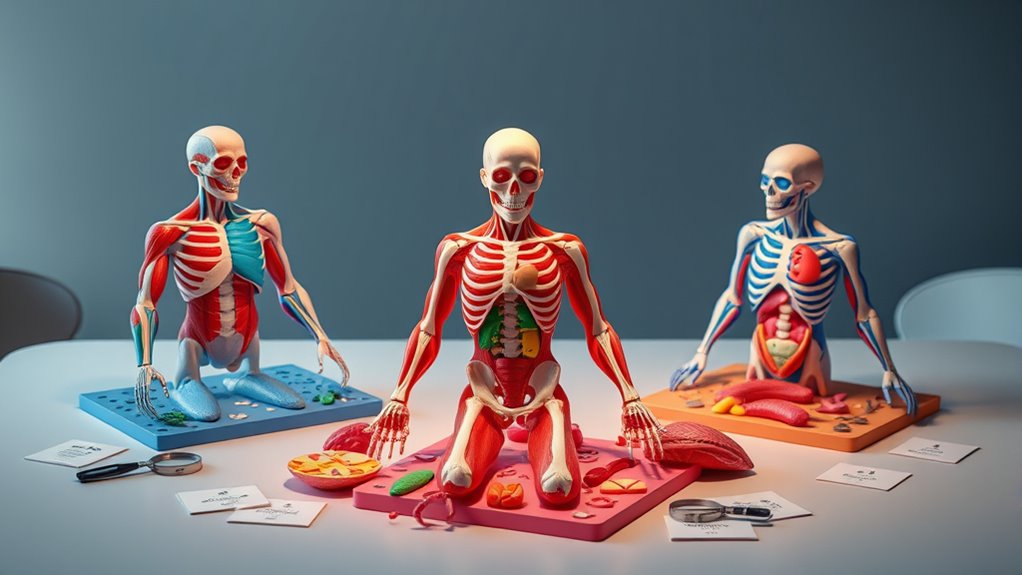
When choosing a 3-D human anatomy puzzle, I consider factors like age appropriateness and how much educational content it offers. I also look at the materials for durability and how complex the assembly process is. Finally, I want the puzzle to look realistic and help me understand the human body better.
Age Appropriateness
Choosing the right 3-D human anatomy puzzle hinges on matching its complexity and features to the child’s age and developmental stage. For younger kids aged 3-6, look for puzzles with large, sturdy pieces that are easy to handle and minimize choking risks. These puzzles should also feature simple visuals and basic concepts aligned with their understanding. As children grow older, especially from age 8 and up, opt for more detailed and intricate puzzles that challenge their fine motor skills and cognitive abilities. It’s important to verify that the puzzle’s educational content and visuals are suitable for their developmental level, ensuring they stay engaged without feeling overwhelmed or frustrated. Matching the puzzle to their age guarantees a safe, enjoyable, and effective learning experience.
Educational Depth
To guarantee a 3-D human anatomy puzzle offers meaningful educational value, I focus on its coverage of the body’s internal and external structures. I look for puzzles that provide a thorough view, including organs, bones, muscles, and systems, to ensure learners grasp the full complexity of human anatomy. Detailed labels, guides, or supplementary materials are essential, as they help clarify intricate concepts and improve understanding. I also assess the realism and accuracy of the puzzle, making sure it reflects current scientific knowledge and detailed anatomy. Additionally, I consider if the puzzle’s complexity matches the learner’s age and skill level, promoting active engagement and critical thinking during assembly. A well-designed puzzle should inspire curiosity and deepen anatomical comprehension through hands-on exploration.
Material Durability
Durability plays a vital role in selecting a 3-D human anatomy puzzle that will stand up to repeated use and handling. High-quality materials like strong plastics, sturdy woods, or thick cardboard are essential because they resist cracking, chipping, and warping over time. I look for puzzles with thick, flexible plastic parts, which are less likely to break compared to thinner or brittle materials. Well-finished edges without burrs or sharp points help reduce wear and tear, extending the puzzle’s lifespan. Additionally, choosing non-toxic, safety-certified materials guarantees the puzzle remains resilient even with frequent handling, exposure to moisture, or sunlight. Overall, durable materials guarantee that your investment pays off with a long-lasting, engaging learning tool.
Assembly Complexity
Assembly complexity is a key factor to contemplate because it directly affects how manageable and enjoyable the puzzle will be. Some puzzles can take over an hour to finish, while others take less than 30 minutes, depending on their intricacy. Puzzles with detailed internal layers or tiny parts are more challenging and require more patience. The number of pieces also plays a big role; over 100 pieces can make assembly more demanding compared to fewer than 50. Unique-shaped or custom-molded pieces increase difficulty, needing precise fitting. Luckily, clear instructions or visual guides can simplify the process, especially for beginners. Considering these factors helps you choose a puzzle that matches your skill level and keeps learning fun without frustration.
Visual Realism
When choosing a 3-D human anatomy puzzle, visual realism plays a crucial role in how accurate and engaging the learning experience will be. The level of detail in the depiction of bones, muscles, organs, and tissues directly impacts understanding. High-quality puzzles feature realistic textures, colors, and proportions that closely resemble actual human anatomy, boosting educational value. Incorporating scientifically accurate labels and detailed illustrations helps clarify complex relationships between structures. Some puzzles even include transparent or movable parts to demonstrate internal components, enhancing authenticity. Design choices like shading, coloration, and three-dimensional depth also influence how lifelike and convincing the puzzle appears. Ultimately, a visually realistic puzzle makes learning more immersive, helping users connect with the material on a deeper level.
Size & Portability
Choosing a 3-D human anatomy puzzle involves more than just considering its visual accuracy; size and portability also play a key role in how practical and versatile it will be. I recommend evaluating the puzzle’s overall dimensions and weight to ensure it’s manageable for storage and transport, especially for younger learners. Smaller, compact puzzles are easier to carry, fitting into backpacks or storage bins, making them perfect for on-the-go learning. Larger models, like life-size posters, offer detailed visualization but require more space and careful handling. The puzzle’s size often correlates with its piece count, so pick one suited to your needs—whether for classroom display or travel. Modular or foldable designs can also boost portability by allowing easy disassembly and compact storage when not in use.
Storage Solutions
Selecting the right storage solution for a 3-D human anatomy puzzle is essential to keep pieces organized and prevent losing small parts. A dedicated container or bag helps with easy cleanup and guarantees nothing gets misplaced. I look for models with interlocking or stacking features, making storage organized and accessible during assembly and disassembly. The puzzle’s material and design should support durable storage options, like nesting compartments or compartmentalized cases, to keep parts separated and intact. Packaging or accessories, such as foldable boxes or labeled sections, can also simplify storage. Most importantly, the storage solution needs to be age-appropriate, safe, and manageable, especially for younger users who benefit from simple, secure options. Proper storage keeps the puzzle in top shape and ready for the next learning session.
Price & Value
Considering the importance of proper storage, it’s also wise to evaluate the price and overall value of 3-D human anatomy puzzles. Comparing prices helps guarantee you’re getting quality educational content within your budget. Higher-priced models often feature more detailed, realistic parts and durable materials, which can enhance long-term learning and play. On the other hand, budget-friendly options may have simpler designs or fewer features, limiting their educational depth but still offering a hands-on experience. To determine the best value, consider the number of pieces, accuracy, and educational features relative to the cost. Keep an eye out for discounts or bundle deals, especially when buying multiple educational toys, to maximize your investment and enjoy a richer learning experience.
Frequently Asked Questions
Are 3-D Human Anatomy Puzzles Suitable for Children With No Prior Science Knowledge?
Yes, 3-D human anatomy puzzles are suitable for children with no prior science knowledge. I find they’re a great way to introduce kids to the human body in a fun, hands-on manner. These puzzles break down complex structures into simple, manageable pieces, making learning engaging and accessible. Kids can easily grasp basic concepts while having fun, which sparks curiosity and encourages further exploration of science and anatomy.
How Durable Are the Materials Used in These Anatomy Puzzles?
These anatomy puzzles are quite durable because they’re made from sturdy, high-quality plastics designed to withstand regular handling. I’ve found them to be resistant to cracking and breaking, even with frequent use. The pieces fit snugly, and the material feels solid in my hands. So, if you’re worried about durability, rest assured—these puzzles are built to last through many learning sessions and enthusiastic explorations.
Can These Puzzles Be Used for Professional Medical Training?
Yes, these puzzles can be useful in professional medical training, especially for visual learners or as supplemental tools. I’ve found them great for reinforcing anatomy concepts and enhancing spatial understanding. However, I wouldn’t rely solely on them for certification or detailed surgical practice. They’re best used alongside more advanced resources, but they definitely add value by making complex anatomy more accessible and engaging for students and professionals alike.
What Safety Features Are Included in Age-Specific Anatomy Puzzles?
Age-specific anatomy puzzles include safety features like rounded edges, non-toxic materials, and sturdy, secure pieces to prevent choking hazards. I always check for smooth, child-safe finishes and appropriate size for each age group. These features guarantee kids can explore and learn without risk. I recommend choosing puzzles designed specifically for the age of your child to maximize safety while making learning engaging.
Do These Puzzles Include Detailed Labels for Educational Purposes?
Yes, these puzzles include detailed labels that boost your learning experience. Some people worry labels might clutter the design, but they’re carefully placed to enhance understanding without overwhelming the visuals. I find that well-placed labels help me connect anatomy names with the structures, making studying more engaging and effective. So, if you’re looking for puzzles that combine fun with educational value, detailed labels are definitely included to support your learning journey.
Conclusion
Choosing the right 3D human anatomy puzzle is like finding the perfect key to open curiosity and learning. Whether you’re a student, parent, or teacher, these puzzles turn the complex maze of the human body into an engaging adventure. With the right puzzle, you’ll find yourself diving into a world where education feels like an exciting voyage, making learning about our incredible bodies as natural as breathing.